
Troubleshooting a Time-Side Mainspring Issue in a Kienzle Wall Clock

Kienzle might not ring a bell for many clock enthusiasts, but it was a major German producer of clocks for the general public.

Kienzle Uhren GmbH, was founded in 1822 by Johannes Schlenker in Schwenningen, in Black Forest region. Jakob Kienzle joined the family by marriage in 1883 and became the sole owner in 1897. He revolutionized clock production through mass production, leading to significant expansion. By 1939, the company employed over 3,500 people and produced around 5 million clocks annually. Kienzle eventually transitioned to wristwatch production and continues to operate as a watchmaker.

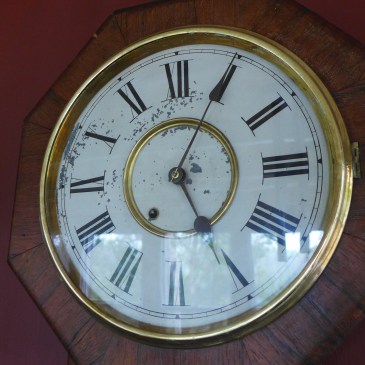
Kienzle wall clock C. 1930

This Kienzle wall clock was bought at auction in 2021. It was my second Kienzle, the first, an attractive desk clock from the early 1950s. But in general, I was unfamiliar with the maker. I later learned that the clock was missing some details: a case decoration above the number 12, both standoffs and the pendulum rod retainer was broken. However, the case itself is in relatively good condition.

The time and strike movement in this round top box clock is compact, with a 43 cm pendulum length and a beat rate of 104 per minute.

Kienzle movement

I serviced this movement in 2021 shortly after acquiring it. At the time I found It exhibited typical wear for its age, with the time side running relatively freely and the strike side being somewhat sluggish. After disassembly, an assessment revealed that the movement required 10 bushings: 6 on the backplate and 4 on the front. The work was completed without issues, the movement was reassembled and tested and the clock ran reliably until this year.

Front of movement

Now it has stopped. In short, I’m not entirely sure what caused it to stop.

Suspecting a power issue, I removed the movement from its case and took off the hands and dial face. I also let the mainsprings down but left enough tension to supply power. I unscrewed the crutch bridge to remove the pallets which allowed the escape wheel to run freely. So, not a power issue. I continued to inspect the wheels and pinions and found nothing amiss. While out of the case, I re-oiled the movement.

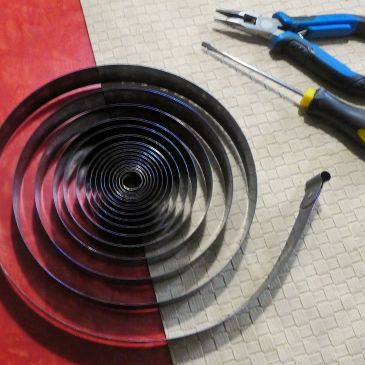
The issue seems to be with the time-side mainspring. Looking back at my notes, I serviced both mainsprings in 2021 and didn’t observe anything unusual about them at the time.
However, I’ve noticed that if I fully wind the time side, the clock is reluctant to start. This issue has happened more than once. Releasing the tension of the time-side mainspring with a wind-down key allows the movement to start running again. If I don’t wind the time side mainspring completely, the clock seems to run without any problems.

I can only conclude that I did not clean the mainsprings as thoroughly as I should have. Residual dirt and grime on the inner part of the coil seem to cause the spring to seize when wound tightly. In the meantime, the solution is not to wind the time-side mainspring fully.

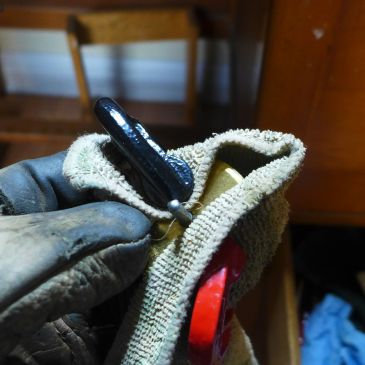
Unfortunately, the mainspring barrels cannot be removed separately as in the case of some German movements, necessitating the complete disassembly of the movement to replace/inspect the mainsprings in case of an issue. If it were feasible to remove the mainspring barrel independently, I would have taken the opportunity to remove the mainspring from the barrel and clean it more thoroughly.

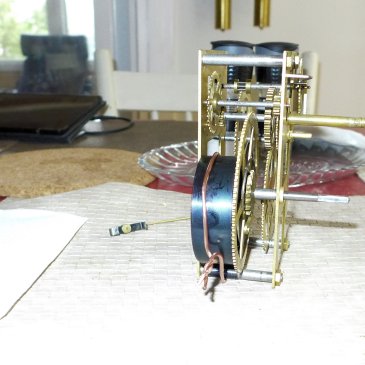
Testing the Kienzle movement on a makeshift test stand
Kienzle movement on the test stand

I am not about to disassemble the clock again as I have more pressing projects on the go but in the meantime, it will run as long as I do not wind the time-side spring too tightly.

Big Ben, the most famous tower clock in the world

The Great Clock of Westminister is in the center of London, England. However, if you mentioned that you saw the Great Clock in London you would be met with puzzled looks. Big Ben is the nickname for the great bell of the Great Clock of Westminster and by extension the clock tower itself.

Tower clock or turret clock? We’ll get to that later.

Big Ben and Palace of Wesminster
Big Ben

Big Ben stands at the north end of the Palace of Westminster.

Big Ben clock dial
Big Ben clock dial measures 6.9 metres

While most tower clocks in the UK have been decommissioned or extensively altered, the Big Ben tower clock mechanism has been running continuously since its installation in the 19th century, only stopping temporarily for repairs.

Commemorative stone

The difference between a tower clock and a turret clock

Both terms describe clocks installed in elevated, public places though there are subtle differences in the terms. “Tower clock” is a broader term referring to the visible aspect of the clock, whereas “turret clock” specifically refers to the mechanical device driving the clock, often with historical and technical connotations. Moreover, “turret clock” is a term often used in Britain to describe a clock mechanism specifically designed to be installed in a turret or a clock tower. The term is more often used by horologists and historians to describe older, traditional clock mechanisms found in cathedrals and castles.

Big Ben fun facts:

  1. It was the largest chiming clock in the world when completed.
  2. The tower was designed by Augustus Pugin and was completed in 1859.
  3. The tower is 96m tall, and from the ground to the belfry there are 334 steps.
  4. The base measures 12 metres square and the clock dial is 6.9 metres in diameter.
  5. In 2012 it was named The Elizabeth Tower to mark the Queen’s Diamond Jubilee.
  6. The Westminster Chimes, originally called the Cambridge Chimes, were first used at Great St Mary’s church in Cambridge but are now associated with Big Ben.
  7. The Great Bell weighs 13.7 tons and it does not swing.
  8. Quarter bells chime on the quarter hours.
  9. Big Ben is thought to be named after Sir Benjamin Hall, Chief Commissioner of Works at the time the bell was installed.
Photo by Dominika Greguu0161ovu00e1 on Pexels.com, taken from the London Eye

For the vacationer visiting the UK (count the author as one), no trip is truly complete without experiencing the iconic sight and sound of Big Ben. The majestic clock tower, offers a British experience that captivates tourists from around the world. As you stand in awe beneath its towering presence, the rhythmic toll of Big Ben’s bells marks the passage of time, creating a moment you’ll treasure.

Understanding Clock Pivot Wear and Bushing: Part II of Two-Part Series

In Part I, I explained the importance of bushing to mitigate wear on a mechanical clock movement.

In summary, bushing involves replacing worn brass around a pivot by drilling a new hole and inserting a new bushing, either using a bushing machine or hand tools. Severely worn pivots may need re-pivoting, which involves installing new pivots using a lathe. Minor wear can be managed with filing, polishing, and burnishing. Proper bushing and pivot work are crucial for maintaining clock movements, extending their lifespan, and ensuring reliable operation.

Now that we understand bushing wear, it is time to proceed with the bushing process.

The process of bushing a mechanical clock plate involves several steps to restore the worn pivot holes to their original condition. Here’s a detailed description of the process:

Disassembly: The clock movement is carefully disassembled, and the clock plates are removed to access the worn pivot holes. Resist the temptation to immerse the entire movement in a cleaning solution. Although this might offer a temporary fix, it prevents proper assessment of the pivots and pivot holes for wear.

indicating wjehere bushings will be installed
Wood picks identify where bushings will be installed

Cleaning of all parts: While manual cleaning with a solution is satisfactory, using an ultrasonic cleaner and a solution specifically designed for such a machine, yields better results by ensuring all dirt and grime are thoroughly removed from the brass and steel parts. The cleaning process also includes thoroughly drying all the parts.

Ultrasonic cleaner by L&R

Identifying Worn Holes: Each pivot hole is inspected for wear. Worn holes are typically oval-shaped due to the pivot’s repeated movement. I use a marking pen to identify those pivot holes that require a new bushing. I generally work on one train at a time, leaving the main wheels out during this process. I reassemble all the wheels of one train between the two plates, checking for wear by turning and pushing on the wheels. This allows me to observe any lateral movement and see how the gears mesh with each other.

A marking pen identifies a worn bushing hole

Centering and Drilling: A bushing machine with a centering tool is used to precisely center the worn pivot hole.

Centering prior to drilling
Centering tool Centering is used to center the pivot hole

A new, round hole is then drilled into the clock plate. This hole must be accurately positioned to ensure the clock’s gears will mesh correctly.

Drilling a hole with Bergeon bushing machine
Using a cutter to enlarge a hole in the plate

Selecting the Bushing: An appropriately sized bushing is chosen to fit the newly drilled hole. The bushing is usually made of brass and should match the original hole dimensions but is made larger than the hole to ensure a tight fit. For the Bergeon Bushing Machine, Bergeon brass bushings are used.

Pressing or punching the Bushing: The selected bushing is pressed or punched into the newly drilled hole. This can be done using a bushing machine, which ensures the bushing is inserted straight and flush with the plate. If done by hand, reamers and smoothing broaches are used to achieve a similar result. A chamfering bit, which does not come with the Bergeon Machine, is used to gently cut the edge of the bushing hole to ensure that the bushing is punched or pressed in neatly.

Punching the bushing home
Positioning the bushing prior to punching the bushing home

Reaming the Bushing: Once the bushing is in place, it is reamed to the correct internal diameter to fit the pivot. Reaming is achieved by using a five-sided reaming broach sized to fit the hole. Following the reaming process, a smoothing broach is used to smooth the walls of the bushing hole. A toothpick is then used to clean the hole and remove any debris left behind by the broaches. This entire process ensures that the pivot will rotate smoothly without excessive play.

Swiss made smoothing broaches
Swiss-made smoothing broaches

Polishing and Burnishing: The pivot that will run in the new bushing is polished and burnished to reduce friction and wear. A metal lathe is an indispensable tool for this procedure. This step is crucial for the longevity of the repair.

Taig lathe with 1/4 hp motor

Reassembly: The clock movement is reassembled, with the newly bushed pivot holes ensuring proper alignment and smooth operation of the gears. Clock oil is applied before the testing phase.

Testing: The reassembled clock is tested to ensure that it runs accurately and reliably. Any final adjustments are made to fine-tune the movement.

The process of bushing a mechanical clock plate involves disassembly, identification of worn bushing holes, precise centering and drilling, selection and insertion of appropriately sized bushings, followed by reaming, polishing, and burnishing of the pivot. Finally, the clock movement is reassembled and thoroughly tested to ensure accurate and reliable operation.

By following these steps, the worn pivot holes are restored, improving the clock’s performance and extending its lifespan.

Castle Combe’s Clock: Unveiling A 17th-Century Turret clock in the Cotswolds

Old clocks often have rich histories that reflect the technological advancements and craftsmanship of their time. Exploring these clocks provides a unique perspective on the history of timekeeping, engineering, and artistry in the UK. Many of these clocks are tied to significant historical events or figures, offering a tangible connection to the past.

High street in castle Combe
The village of Castle Combe

Many old clocks, especially those in historical buildings like churches or cathedrals, are masterpieces of design and craftsmanship. These clocks often feature intricate mechanisms and beautiful decorative elements that showcase the high level of skill and artistry of their makers. Exploring these clocks allows one to appreciate the aesthetic and technical achievements of the past.

St. Andrews church
St. Andrews church

While on vacation in the UK, I discovered an old clock in the charming village of Castle Combe, nestled in the Cotswold region of England. Visiting Castle Combe feels like stepping back into the 17th century. The village is located around 8 km northwest of Chippenham. Our tiny tour bus made it into the village, dodging the ban on large coaches that flood the area with tourists.

St Andrews church spire

No new houses have been built in the historic area since about 1600. Interestingly, the village takes its name from the 12th century castle which stood about 500m to the north. The site where the castle once stood contains the old earthworks and masonry, from the 12th century. Tourists seeking a castle might find themselves sadly disappointed.

The altar area inside St Andrews
The altar area

The clock is housed within St. Andrew’s Church, which can be reached by a pathway leading from the main street. Part of the chancel is 13th-century. In 1850–51 nearly all of the building, except the 15th-century tower, was taken down and reconstructed to the same plan. The church is very active, holding services every Sunday and serving as a hub for various activities and festivals throughout the year.

Surprisingly, instead of in the clock tower which one would expect, the clock is located inside the church itself and remains operational.

The turret clock in operational condition
The turret clock is in operational condition

The clock was converted to an anchor escapement and required the movement to be turned upside down consequently the striking train is at the bottom and the going train is at the top. This necessitated a redesign of the countwheel. The addition of the anchor escapement reflected new technology as old clocks were made more accurate and efficient.

This is one of the earliest working clocks in England and was likely installed when the tower was completed in 1500. Naturally worn parts notably the escapement have been replaced.

It is not the oldest in the UK. The turret clock at Salisbury Cathedral predates this one, dating back to 1386.

Salisbury Cathedral
Salisbury Cathedral, photo by Phil Ledwith on Pexels.com

There is no face on the St. Andrews clock for a good reason. In those days men working in the fields need only to know the hours; the hour is struck on a large bell. In 1984 the clock was brought down from the tower and now resides within the church walls. Prior to that, a person climbed the tower every day to wind it. At the same time in 1984, an electric winding mechanism was fitted.

In Summary

Searching for old mechanical turret clocks can be intriguing for several reasons.

For those interested in mechanics and clockwork, studying old turret clocks provides opportunities to understand their intricate mechanisms and how they were constructed and operated in different eras. These clocks offer insights into the technological advancements of their time periods and their roles in communities.

Most importantly, many turret clocks have fascinating stories and legends associated with them, adding to their allure and making the search for them even more compelling.

Understanding Clock Pivot Wear and Bushing: Part I of Two-Part Series

Is your mechanical clock experiencing issues such as intermittent stopping or simply not running at all? This might be due to several issues with the movement, one of which could be pivot wear.

This is a two-part series. In Part I, I will explain why it is necessary to bush a clock movement, and in Part II, I will describe my method for bushing.

What are pivots?

Pivots are the ends of the axles, known as “arbours” in horology, that rotate in small holes drilled into the clock plates as the clock runs. They are the turned-down ends of the arbour. These, along with the holes they rotate in, can wear down over time causing enlarged holes that will contribute to poor running or stopping. The pivot hole must be perfectly round, and the pivots need a mirror-like polish to minimize friction within the train of gears. To protect the surfaces and reduce friction, approved clock oil acts as a barrier between the pivot and the pivot hole.

Worn pivots or pivot holes can cause the wheel to drift away from the pinion, eventually stopping the clock as the gears fail to mesh properly. Clocks in need of bushings may run erratically or stop altogether.

Worn Pivot hole
A very worn pivot hole

Oiling a dirty or worn movement

If a clock movement isn’t routinely serviced (cleaned and oiled), the plates of the movement will experience wear at the pivot points. Applying new oil over old oil can free abrasive dirt and provide a temporary solution but accelerate wear on the steel pivot and brass bushing holes because the contaminated oil acts like a grinding paste.

Worn pivots are often found in clocks repeatedly oiled without proper cleaning. Proper servicing requires disassembling the movement, cleaning the parts, addressing wear issues, reassembling, and testing.

Punch marks

From time to time, there is evidence of punch marks located around the pivot hole which is an attempt to close worn pivot holes. While a common practice in the past, this is no longer considered an acceptable repair practice.

Bent pivot
A pivot – in this photo, the pivot is slightly bent
Punch marks on a movement

Pivots need periodic cleaning and polishing to turn freely in the clock movement plate hole. Worn pivot holes are easy to identify as they appear oval-shaped rather than round.

Close-up of bushing wear
Bushing wear – the left portion of the hole is elongated

What is bushing?

“Bushing” is the process of replacing worn brass around the pivot so that the hole is round again. A new hole is drilled into the plate, and a new, appropriately sized bushing is pressed into place using a bushing machine like the Bergeon Bushing Machine.

Bergeon Bushing Machine

Some clockmakers prefer to hand-bush using reamers and smoothing broaches, producing satisfactory results, though a machine simplifies the task and is more accurate.

Severely worn steel pivots must be replaced with new ones, a process called re-pivoting. This involves using a watch or clock lathe to drill into the end of the wheel arbor to install a new pivot made from pivot wire.

Minor wear is expected over a clock’s life and can be managed with careful filing, polishing, and burnishing.

In summary, bushing is an integral part of movement servicing. Well-maintained clocks may show minimal wear and may not require new bushings, while others, due to neglect or improper servicing, may require many bushings.

Proper pivot and bushing work can extend a clock movement’s lifespan, ensuring reliable operation for years.

In Part II of this two-part series, I will describe my method for bushing a clock movement

Back from the UK: Updates and Catching Up

My wife and I recently returned from a three-week vacation in the UK. Although the trip wasn’t specifically focused on clock museums and similar attractions, I still managed to gather a significant amount of information/photos about clocks.

Big Ben tower clock
Big Ben, perhaps the most famous tower clock in the world

Unfortunately, during our visit, a family member passed away, and I couldn’t keep up with my regular blog posts. I plan to catch up on those in the coming weeks.

Clock display at British Science museum
An impressive display of clocks at the Science Museum in London

In the meantime, I plan to catch up on the emails that have accumulated during my absence and to add many more blog articles about my travels. Please be patient, and I will respond as soon as possible.

Tick talk Tuesday #54 – Where to find a repair shop in Nova Scotia

Tick-Talk Tuesday is a special time when I respond to readers’ letters and comments about clock issues, challenges, and recommendations for specific clocks. When the comments and questions are especially complex, I consult with fellow clock enthusiasts within my circle to ensure I offer the most precise and helpful answers possible.

Clockmaker's shop
Clock-maker’s shop from days gone by

BC writes:

I stumbled across your blog in a search for reputable clock repair in Nova Scotia. A lifetime clock lover, I am fascinated by your posts, and I will most certainly be following along (and perusing older posts!).

I am hoping to have a much-loved, but very old family clocks repaired. I went to the NAWCC website as advised on your blog, but wasn’t able to find any businesses in Canada. You did, however, mention that you knew of two reputable clock repair shops in the province. I was wondering if you would be willing to share with me who they are so that I could be in touch with them about my clocks?

My response:

Hi and thanks for your email, BC. There are two reputable clock repair specialists in Nova Scotia. The first is located in Halifax and the second is in Bridgetown, Nova Scotia not to be confused with Bridgewater which is on the Atlantic side. I have had personal dealings with both, and they are both very capable. Expect your clock to be with them for several weeks if not months. 

Clock repair service can be expensive, and you may find the cost of repair to be more than your clock is worth, however, sentimental value always trumps a repair cost.

http://www.doctorclock.com/

https://www.facebook.com/BridgetownWatchandClock

BC writes back:

Thank you very much for your reply! I really appreciate it. 

My clocks, from my grandparents’ families, hold much sentimental value and have both been in the family since the 1800s, and so I hope to be able to budget for the repairs, but I also imagine that the gut strings on the long case grandfather clock, and likely somewhat haphazard repairs to the hall clock after damage from a break-in in the 70s will add to the challenge! On the plus side, they have both worked during my lifetime, so I will hold out hope!

I will check in with both shops to see what they suggest.
Thank you again for the speedy reply!

Upcoming clock articles – Join me as I travel to the UK

Retirement certainly offers its perks. In the coming weeks, I plan to delve into some of my clock-related adventures, which will involve traveling to the UK. I’ve always been captivated by the world around us, and I’m excited to explore as much as I can during this journey.

Unwanted or unloved long-case clocks in an antique shop

I believe travel can expand one’s outlook on life. I’ve always been intrigued by how others live and the places they call home. Travel has the power to expand one’s perspective because it exposes us to new cultures, ideas, and ways of life. Experiencing different environments and observing how others live can lead to a deeper understanding of the world and challenge our own assumptions and beliefs. It broadens our horizons and allows us to appreciate the diversity and richness of human experience.

The author is assisting with clock-winding duties at an old country inn

Britain holds great importance in horology, and I look forward to viewing clocks in museums and other places of interest. Britain also holds personal significance for me because my roots trace back there.

My upcoming trip to the UK offers a chance to explore not only my passion for horology but also my own heritage. I am excited to delve into the country’s rich history and culture while reconnecting with my roots.

The journey promises to be enriching and fulfilling, and I look forward to gaining a deeper understanding of horology. Stay tuned for more adventures ahead!

Tick Talk Tuesday #53 – A stolen Ansonia wall clock

Tick-Talk Tuesday is a special time when I respond to readers’ letters and comments about clock issues, challenges, and recommendations for specific clocks. When the comments and questions are especially complex, I consult with fellow clock enthusiasts within my circle to ensure I offer the most precise and helpful answers possible.

LS writes:

I ran across your web page searching for a particular clock and I’m hoping you might have the connections of which I don’t… in order to help me locate one.

The clock I’m looking to replace a clock that belonged to my parents and was stolen along with a lot of other treasures. It’s an Ansonia “Reminiscence” Model #647. Heavy solid oak, beveled glass with Westminster chimes/key.

If you happen to have one in a private collection you’d be willing to part with, OR if you have any clue where I might be able to locate one… I’d be forever grateful for your assistance.

Thank you so much, and with warmest regards.

My response:

Thank you for your email LS. Would you happen to have a photo of the clock? What style of clock are you referring to, shelf, wall, mantel, or tall case?

LS write back:
This was a wall clock, which I amazingly… still have all of the original paperwork on, that came with the clock when my moms mother, my grandmother, bought it for them back in 1989. (four pictures enclosed). The clock catalog I have displays 26 of their clocks produced from 1986-1989. I also included a neat little story that came with the packet, and some directions my mother transcribed, which were undoubtedly given by my father. This clock HAD to be taken care of just right; as nothing else would ever, EVER do! Just shows how attached they were to this clock.


Photo of Ansonia wall clock
Ansonia clock not made in the USA

My father was stationed at Hickam Field when the attack on Pearl Harbour happened. He was an instrument shop manager in the United States Air Corps. He also spent a good portion of his life in clock and watch repair, including working for a couple of local shops in the St Louis metro area after the war, and discharge. Until the day he died he still had many of the original springs, gears, tools, oil, eye magnifier pieces, etc… stored lovingly in a very nice, old humidor box that he custom built four removable shelves for… so as you can likely assume… this clock, was his “baby.” (I still have that humidor box and several of the pieces from it).
I am just heartsick that it was stolen, and when my mother was still alive (she passed in 2012, and dad in 1997), if I didn’t know any better… I might assume that this could’ve been part of what led to her ultimate demise. Truly, it hit extremely hard! Especially since her mother was also gone by that time.

I appreciate any help you can offer in trying to find a replacement for myself and MY family today. It would mean the world to me if I could happen across one. Even though not the original, don’t we all just need a little bit of comfort in our world today, and the warm memories that can sometimes be solely responsible for bringing that comfort? I certainly have all of the care instructions at my disposal! 😉

I’ve about exhausted all avenues in my search for this elusive clock, and unfortunately… Ansonia closed up shop in 2006; ironically, the same year my parent’s clock was taken.

My reply:

Hi, and thanks for the additional information.

Ansonia was a well-known maker of American clocks. The original company, which operated in Connecticut and New York ended operations in 1929.

The trademark was then sold off, more than once, I believe. In 1969 the Nofziger family of Lynnwood, Washington, re-registered the Ansonia trademark and issued clocks with the Ansonia name.

When the Ansonia Clock Co. was “making” clocks in Washington the company was a mere shadow of its former glory.

I say “making” because the company was likely assembling clocks sourced from West Germany with cases also sourced abroad. So, they were either importing the clocks fully assembled or in pieces to be assembled. Since they owned the Ansonia trademark, they simply added it to the dial face. So, not a made-in-America clock.

However, you probably know all this. It is the sentimental value that is most important, and finding the same clock or one similar is your present quest.

While I come across many Ansonia clocks, I have never come across one from the re-registered company. A search of eBay will bring up dozens of New York-made clocks but few if any of ones similar to yours. You will just have to keep looking. However, if one comes up I will certainly let you know.

Kienzle World Time desk clock

This clock stands out as one of the most distinctive pieces in my collection. At first glance, it appears to be an ordinary desk clock, but it has a fascinating history behind its production. I can easily picture it sitting on the desk of an import-export executive in the 1950s.

Kienzle World Time clock

The first Kienzle World Time clock was given to Adolf Hitler on his 50th birthday in 1939 by the government of Württemberg. The clock featured a classic design with a world map in the “Mercator” cylindrical map projection style and a rotating scale displaying the time in various cities. It was designed by Heinrich Johannes Möller, a renowned designer working for Kienzle from 1931 to 1970. Möller was hired at the age of 27 and became the principal designer at Kienzle.

The original clock had a bulky base and was adorned with a controversial pattern around the bezel. I have a photo of the original clock, but I chose not to share it due to the presence of swastika symbols on the clock. The swastika is now widely associated with hate and discrimination.

After the war, the design was updated: the decorations were removed, and the base was reduced in size, while the overall layout of the dial remained consistent across different versions of the clock. These versions ranged from early mechanical models to electro-mechanical versions and, eventually, quartz movements in the 1980s.

An interesting aspect of the clock is that it originally positioned Germany at the center of the world. In its update, the area around the center cannon shows North Africa.

The World Time Clock, also known as the Weltzeituhr model, was a long-running product available for purchase until Kienzle’s bankruptcy in 1996. When the World Time Clock was first introduced in 1939, Kienzle employed over 6,500 people and produced 5 million clocks annually.

Back of Kienzle clock
Kienzle clock showing the winding key and setting knob in the rear

In the late 1950s and 1960s, Kienzle clocks shifted away from their original stylistic prominence and began to follow contemporary international design trends. Despite this shift, Heinrich Johannes Möller continued to play a key role, influencing not only the design of Kienzle clocks but also the broader world of clock design.

Mechanical clocks are highly valued and sought after by collectors due to their craftsmanship and traditional design. These versions are typically considered more valuable than modern electromechanical and quartz alternatives.

Tick-talk Tuesday #52 – My father’s Forestville advertising clock

Tick-Talk Tuesday is a special time when I respond to readers’ letters and comments about clock issues, challenges, and recommendations for specific clocks. When the comments and questions are especially complex, I consult with fellow clock enthusiasts within my circle to ensure I offer the most precise and helpful answers possible.

GF writes:

I inherited a custom-made Forestville Electric Wall Clock from my father. He owned a restaurant business on Manitoulin Island for 55 years. (Editors note: Manitoulin Island is an island in Lake Huron, located within the borders of the Canadian province of Ontario). When he decided to sell the restaurant he gave me this Clock that had been in the restaurant for 30+ years. He knew I had always loved that clock and one day hoped it would be mine. 

Forestville advertising clcok showing Conlon's Men's Wear on the dial

How he attained it was given to him by a friend who closed a men’s clothing store in the same town. After the closure of that store, my father proudly hung it in the dining lounge of the restaurant for many years until the closure. 

Forestville advertising clcok showing Conlon's Men's Wear on the dial illuminated

I am now in my 60s and have a member of the family who gave it to my father interested in buying it from me. I don’t know what price to tell him. It still lights up and movements work very smoothly and keeps good time. The cord was replaced about 25 years ago and very minimal rust on it. 

Forestville advertising clock back of clock

I am attaching a few photos of it and would like to know if you would be kind enough to provide a dollar value of what it might be worth. 

Forestville advertising clock showing maker's name

My response:

Hi GF and thanks for your email. There was a time when clocks such as yours were plentiful and not worth a great deal but there seems to have been a resurgence of interest lately in electric clocks of this era, especially advertising clocks.

Many of these clocks would be valued in the $300 to $500 range. Your clock appears to be in especially good condition. The maker or more correctly, the distributor of your clock is the Forestville Clock Company of Toronto. Your clock appears to have been made in the 1960s shortly before Forestville ceased production.

Not a clock to be seen anywhere and that’s not a bad thing!

We enjoyed a week-long stay at a resort in the Cayo Coco region of Cuba, where the accommodations were fantastic and catered to all our needs. The goal was to unwind after spending the winter teaching at our local community college campus in rural Nova Scotia. There wasn’t a clock in sight, which was just as we expected.

beach scene

After a day or so we began to realize the absence of clocks started to shift our routines. At home we have breakfast early, lunch around noon, and dinner at 7 pm. But during our stay, we began to enjoy breakfast in the late morning, lunch in the mid-afternoon, and dinner between 8 and 9 pm.

While the resort offered Wi-Fi that was accessible from nearly every spot on the premises, we preferred to leave our phones in the room. Instead, we let our mood and appetite lead us through each day.

the grounds of a Caribbean resort

There is no doubt clocks plays a significant role in structuring our daily routines by providing a sense of time and establishing a schedule for various activities. Clocks help us manage our time by allowing us to plan and allocate time for different tasks and responsibilities throughout the day. A clock helps us create daily routines, such as set times for waking up, eating meals, and going to bed. This can contribute to a sense of stability and consistency in our lives.

moonlit night on a Cuban resort

While clocks help us organize and manage our lives, stepping away from them occasionally can offer a sense of freedom and relaxation from the pressures of a scheduled and regulated routine.

Resorts and spas aren’t the only places where clocks are uncommon. Religious spaces such as churches, temples, monasteries, and meditation centers often refrain from displaying clocks to promote spiritual practice and mindfulness without distractions. Similarly, art galleries and installations may omit clocks to keep the emphasis on art and creativity rather than the passing of time. In darkened settings like theaters and cinemas, clocks are absent to maintain focus on the performance or film. In minimalist homes, clocks may be left out to cultivate a serene and uncluttered atmosphere.

While clocks are a staple in many environments, all of the places mentioned above aim to foster a sense of presence and focus that can be disrupted by the constant awareness of time.

Now that we’re back home, our familiar habits quickly returned. The break was undeniably beneficial for us. It allowed us to step away from the usual hustle and bustle, providing a much-needed reset. Being free from the constraints of the clock gave us a chance to reconnect with our own rhythms and truly unwind.

Having a ticking clock in a bedroom may be the answer to a restless night

While many might not initially favour the idea of having a ticking mechanical clock in their bedrooms, its presence can actually offer significant benefits. Let me elaborate on why. Before I go further let me say I understand that some individuals may find the ticking sound disruptive to their sleep.

The therapeutic value of having a ticking sound in the bedroom to aid with sleep can vary from person to person. Some individuals find rhythmic sounds like ticking soothing and conducive to relaxation, helping them fall asleep faster. However, others may find it distracting or even irritating, disrupting their sleep. Overall, it largely depends on personal preference and individual sensitivity to sounds during sleep. Nevertheless, for some individuals, opting to tune into off-station frequencies or running a fan for background noise is their preferred method, whereas our method of choice is the mechanical clock.

Clock on a wall in a bedroom
Banjo clock hung in the bedroom

In my opinion, having a ticking mechanical clock in a bedroom can be advantageous. Although I have zero evidence to back my claim, it seems beneficial to introduce a rhythmic sound into a room to enhance sleep.

A number of years ago we found a Sessions Lexington banjo clock in an antique store in one of the New England states(USA). Before you conjure images of an expensive banjo clock crafted in Boston or elsewhere, let me clarify that this clock is likely one of the cheapest banjo clocks ever produced. It was made in the late 1920s, and many were sold to those who could not afford the more desirable weight-driven banjo clock, like the one in the next photo.

Sawin weight-driven banjo clock
Sawin banjo clock Ca. 1830

The Lexington may not even keep accurate time, but it excels in its primary function: providing background noise.

Lexington banjo clock CA. 1927
The modest Lexington banjo clock CA. 1927

If you are accustomed to American clocks you will note that they are loud tickers unlike finely crafted French and German clocks that are almost silent in operation. The loud ticking however is an advantage. The loud rhythmic ticking sound acts as white noise, helping some people fall asleep faster and masking other background noises.

time-only Sessions movement (top plate removed)
A mass produced time-only Sessions movement (top plate removed)

The Lexington is a time-only spring-driven clock that runs about 100 or so beats per minute. Although it may beat too fast for some, we’ve grown accustomed to it. In my belief, a slower beat is preferable, with 80 beats per minute being an acceptable compromise.

For those accustomed to it, the ticking becomes a comforting part of their bedtime routine. Using a mechanical clock reduces reliance on digital devices, potentially improving sleep quality by reducing screen time. When it comes to digital devices, it’s best to avoid bringing a cell phone into your bedroom. Learn to disconnect from the digital world. The digital world couldn’t care less about your need to get a good night’s sleep. If you need an alarm, consider investing in a high-quality radio alarm clock instead.

Sangean wr-22wl radio
Sangean table radio with alarm function

And lastly, the classic design of mechanical clocks adds aesthetic appeal to the bedroom, and their reliability ensures consistent timekeeping, even during power outages or when batteries die.

The Pequegnat Jewel and the Simcoe – similar yet subtly different

The newest addition to my collection of Pequegant clocks is the Jewel. That marks a total of nine Pequegnat clocks in my modest collection. I was not actively seeking a new clock. In fact, I haven’t purchased one in months, and mantel clocks weren’t even on my radar.

Arthur Pequegnat Simcoe
Arthur Pequegnat Simcoe, note the legs and side details

I bought the Simcoe (above) in 2018 from a shop in Victoria, British Columbia (Canada) and I think, at the time, I paid close to $200 for it. I located the Jewel in an antique shop about 20 minutes from where I live. I recognized it almost instantly, even though it was placed on a shelf nearly out of my reach.

The Jewel’s price was significantly lower so, why pass it up?

Was the seller confused about the maker?

The two clocks boast strikingly similar case designs. In fact, the dimensions of the quarter-sawn oak case are identical, although the Simcoe model is slightly taller due to its corner feet and wider due to the addition of lion-head handles on each side. Both contain the same 8-day time and strike movement.

Pequegnat Jewel time and strike mantel clock

Made in Canada before 1916, this clock has an 8-day, spring-driven time and strike movement with signature Pequegnat nickel-plated plates. Initially, I thought there might be brass bushing inserts on steel plates. However, upon passing a magnet over the plates, I discovered that the plating was not on steel but on brass. Plating over brass may not be the most practical solution, but aesthetically, it offers a pleasing appearance.

Although the movement bears the stamp “The Arthur Pequenat Clock Co., Berlin, Canada” there is no maker’s name typically found on the lower section of the dial face, a peculiarity I’ll delve into shortly.

Pequegnat Simcoe dial face
Simcoe dial with cracked and lifting paint

Both “Berlin” Simcoe and Jewel models feature pie-crust dials, setting them apart from later clocks with plain brass bezels.

Why are they called “Berlin” clocks? In 1916, the town of Berlin, Ontario faced considerable backlash due to the ongoing war in Europe, with its name being associated with the enemy of the time. These wartime tensions prompted the town to undergo a name change to Kitchener, Ontario. While Pequegant clocks lack a specific date stamp, the town’s name change serves as a useful reference point for dating these clocks. The company had a relatively short lifespan, being founded in 1903 and ceasing production in 1941.

Showing the time and strike movement of the Pequegnat Jewel
Jewel movement

The case is in excellent condition but I was drawn to the dial immediately. Something is certainly amiss. At first, I suspected the dial had been replaced, but upon closer examination, I realized that a previous owner had scraped off the paint from the dial, leaving the numbers intact. It’s not unexpected. With time, the paint on these dials tends to degrade, and it’s likely that it had deteriorated to such an extent that the decision was made to remove it altogether.

Should I overlook this issue and simply accept it as is, or address it by repainting the dial?

Paint scraped from the Jewel dial
Paint scraped from the dial

The most interesting aspect of this clock is the price. Although antique clock prices have been depressed in the last several years, Canadian-made Pequegnat clocks seem to hold their value quite well. A quick perusal of auction sites reveals that realized prices for the Jewel hover between $100 and $250 with the Berlin-made clocks commanding a higher price.

While the movement, unfortunately, does not run, based on my experience with other Pequegnat clocks in my collection, I suspect it may be gummed up with dirt and could potentially require a bushing or two to have it run as it should.

A worthwhile acquisition at an excellent price point.

An ordinary schoolhouse clock that had an ordinary life in an ordinary shoolhouse continues its ordinary life

Eight years ago I came across an intriguing find not far from where I reside—an antique Ansonia octagonal short drop, commonly referred to as a schoolhouse clock. While I estimate its manufacturing date to be around the turn of the 20th century, pinpointing the exact year eluded me.

Ansonia time only schoolhouse clock
Ansonia Schoolhouse Clock

The movement bears the stamped number “12,” which could denote the year “1912” or possibly the month of a particular year. Additionally, the letters “TT” are inscribed on the movement. 1912 would sound just about right.

Although not my only Ansonia clock I encounter the Ansonia name less frequently compared to other American clock manufacturers.

Ansonia clock face showing the name of the maker
Ansonia Clock Co., Made in the U.S.A.

To retreive the clock, my wife and I travelled to the small town of Berwick, nestled in the Annapolis Valley region of Nova Scotia. Berwick is best known as the centre of the province’s apple industry. We set out for a day trip eager to soak in the local scenery and make various stops at roadside stands/gardens along the way, fully aware that the clock we were about to acquire would come with no surprises. Well, it was not perfect!

The gentleman from whom I purchased the clock shared that it had been in his family for over 50 years, yet he had never seen it run. He parted with it during the estate liquidation process following his mother’s passing, as it held sentimental value for her but evidently not for him.

Number 12 and TT on the movement plate
The number 12 and TT stamped on the movement

It originated from a schoolhouse in Ontario, Canada, although the specific location eluded the seller. Despite minor issues, such as paint applied around the minute/hour pipe to conceal stains from years of handling, the softwood case remains in very good condition.

However, it was missing a bushing for the hour hand, an easy fix. Remarkably, I discovered remnants of rotted elastic banding on the pendulum rod just below the suspension spring, though its purpose remains a mystery to me.

Nevertheless, following several adjustments, including bending the crutch to ensure proper alignment, the clock functioned but a servicing was necessary. I found the need for 3 new bushings in the spring-driven time-only movement. While the wear wasn’t severe, it warranted attention. A new hour and minute hand, sourced from a supplier completed the servicing.

bushing wear on an Ansonia movement
The most worn bushing hole, highlighted to illustrate the wear

The Ansonia Clock Company’s storied history adds an intriguing layer to this find. Unfortunately, the company, formed in 1851, had a long history of supplying clocks to the masses but its demise prior to the 1929 stock market crash serves as a poignant reminder of shifting economic tides.

The clock is now gone but to a good home. Approximately three years ago, when my daughter was setting up an office in her new home, she expressed interest in acquiring the clock, which she considered the perfect decoration for her new workspace. “Certainly,” I replied, and now it proudly occupies a prominent spot in her office.

Antiquevintageclock.com all time best 10 list

Every blogger understands that building a successful blog takes time, often requiring months or even years to cultivate a loyal following. Challenges, patience, determination, and hard work eventually lead to finding a successful rhythm.

The author at work

With over 825,000 page views since 2015, and an average of 24,000 monthly views, I recently reviewed my blog’s statistics to identify the top 10 most popular posts of all time. Most entries on the list align with my expectations, catering to visitors seeking basic advice on clock acquisition, winding keys, or determining the value of their clocks. However, some are more unexpected.

Without further ado:

1. How to wind a mechanical clock – a How to Guide

2. Dating an Antique or Vintage Clock Part I

3. An 8-day clock – what does that mean?

4. Oiling Your Mechanical Clock – a Quick Guide

5. Cleaning an antique/vintage clock movement – Ron’s method

6. What is my clock worth?

7. Horolovar guide and how to determine the correct spring for your 400-day clock

8. Regulating your mechanical clock – it’s easier than you think

9. My antique clock stopped – what do I do?

10. Dating an Antique or Vintage Clock – Part II

More importantly, analyzing the top articles reveals that the majority of visitors to my blog are either newcomers to clock collecting or repair, recent owners of antique clocks seeking information, individuals with some knowledge looking to expand their expertise, or enthusiasts deeply engaged in the clock repair hobby seeking additional insights.

My office, and where I compose my twice-weekly articles

Experts in the field may seek information elsewhere, which aligns with my blog’s intended audience. My blog was never aimed at those operating clock repair businesses, involved in the antique clock market, or pursuing extensive restoration projects, but I provide a way for those dabbling into antique clocks for the first time or those seeking answers to common questions all in one easy-to-navigate place.

The Role of Macro Photography in Clock Repair

While explaining any process on paper serves its purpose, nothing quite replaces the effectiveness of a sequence of detailed still images that, in essence, tell a story. As the saying goes, “A picture is worth a thousand words.”

punch marks around a mainspring barrel
A shot of punch marks around a mainspring barrel arbour

First, what is macro photography?

Macro photography is a specialized form of photography that focuses on capturing extreme close-up images of small subjects, revealing intricate details that might not be visible to the naked eye. It typically involves using specific macro lenses to achieve high levels of magnification, allowing photographers to capture subjects at a 1:1 ratio or greater. Careful attention to lighting, focus, and depth of field will achieve the best results.

For best results, I recommend a dedicated camera paired with a quality macro lens. While cell phones can capture impressive images, they are a compromise since they often struggle with foreground-background isolation and fail to deliver clear macro shots. For shots that necessitate a low shutter speed, maintaining absolute stillness is crucial, making a tripod an essential accessory.

For me, photography seamlessly integrates into my various hobbies, so, taking pictures of clocks, movements, parts, and so on is a natural extension of my photography hobby. It goes without saying that having a reliable camera is indispensable for clock repair.

getting ready to punch a bushing into a clock plate
A brass bushing awaits punching into a clock plate

My preferred camera/lens/tripod combination

I own several cameras by Panasonic, Fuji, and Olympus. Although the former two are great cameras and have their uses, an Olympus E-330 camera manufactured in 2006 remains my preferred choice for macro photography.

Olympus E330 with 50 mm macro lens on a tripod
Olympus E330 with 50mm F2 macro lens on a Manfrotto ball head tripod

With its 7.5 megapixels, the Olympus E-330 interchangeable lens camera boasts ample resolution for my needs, especially when downsizing files for blog posts, ensuring detailed yet compact images—ideal for conserving server space on a blog platform.

An improvised click spring

No camera will perform well without a good lens. Paired with an Olympus 50mm F2 macro lens, it excels in capturing those extremely close clock shots and enables me to isolate my subject while maintaining a pleasing background blur.

Polishing a pivot

While artificial lighting is occasionally necessary, I predominantly rely on the natural light streaming in from a west-facing window in my workspace. When artificial illumination is necessary, I turn to a continuous studio light (with colour temperature adjustment), using the on-camera flash for rare occasions.

While the camera uses an older CF memory card, I can still procure these cards and even aftermarket BLM-1 replacement batteries. The camera will run until it fails and that day looks far off though perhaps it’s already telling me something. The memory card door clasp broke recently, so I must now keep the door closed with velcro tape otherwise I get an on-screen error message.

A distinctive feature of the E330 is its live view switch allowing the transition from automatic to manual focus mode through this switch, securely locking focus on extremely close subjects.

Live view A/B switch for manual and auto-focus

A tripod such as the Manfrotto 785B Compact is necessary for macro photography because it helps to stabilize the camera, ensuring sharp and clear images, especially when using slow shutter speeds or working with extremely close subjects where even the slightest movement can result in blur.

With any repair task, I meticulously capture dozens of photos from various angles. These images serve as invaluable references, particularly when encountering challenges during reassembly or when puzzled about the positioning of specific components like wheels, levers, washers, or springs. Furthermore, I diligently organize and catalog these photos for easy retrieval, years later, if necessary.

An arrow points to a kink in a movement hairspring

My advice is straightforward: Invest in a quality new or used camera equipped with a dedicated macro lens for clock repair. You don’t have to spend thousands; any older camera of good quality will suffice, although finding a compatible macro lens may be the biggest challenge. It should be capable enough to deliver satisfactory results. I was searching eBay today and found an E330 with 50 mm macro lens well under $450. Add about $100 or so for a decent tripod, $30 for a CF card and a CF card reader and you have everything you need for macro photography.

A very worn pivot on a Gilbert movement

Trust me, you’ll appreciate the benefits it brings to your craft.

The end of a key source for clock parts in Canada

In June 2024, H & W Perrin, a longstanding supplier of clock and watch parts based in Toronto, Canada, will permanently close its doors, citing undisclosed reasons for the shutdown.

For the past decade, I’ve relied on Perrin for all my clock supply requirements. While their prices weren’t consistently the most competitive, their prompt deliveries, fair shipping fees, and attentive customer service ensured I always obtained the supplies I needed with ease.

image form Perrin watch and clock supply

Most of the essential tools and equipment required for clock repair were sourced from Perrin, including some investments like an ultrasonic cleaner, a Bergeon Bushing Machine, and an Olie Baker spring winder. Additionally, various consumable items have been acquired from Perrin over the years.

Ultrasonic cleaner by L&R

Understandably, I feel disappointed, but I am confident that Perrin made a strategic business decision that led to the closure of its operations.

Moving forward, obtaining supplies will require sourcing them from international suppliers. While initial prices may appear favorable on their online sites, once expenses such as shipping, duties, exchange rates, and additional fees are taken into account, the overall attractiveness diminishes.

Olie Baker spring winder

In the meantime, there is an opportunity until June to stock up on parts.

There will always remain a glimmer of hope that a potential buyer will emerge as a savior, acquiring the assets of this company and continuing to supply clock parts to Canadian clock repair enthusiasts but I am not confident this will occur.

In the meantime check out an article I wrote on Clock Suppliers recently, minus Perrin of course.

Scottish tall-case clock five years later

From time to time, I enjoy reflecting on the progress of my projects after a certain period.

Five years ago I acquired a Scottish clock at auction, fulfilling my long-held desire to add an antique tall-case clock to my collection. Reflecting on it now, the decision to purchase the clock proved to be a wise one, as it has operated almost flawlessly except for a minor issue which I will detail later in this article.

The clock proudly graces a landing in our home. The location is interesting because it faces six steps that ascend to the upper level of our home. Four years ago, when I shared a photo of it on a clock forum site, someone warned me about the possibility of tripping on the stairs one early morning and colliding with the clock. Although it hasn’t occurred, the thought occasionally crosses my mind.

Scottish tall case clock circa 1848
Scottish tall-case clock

A description of the clock

It boasts a classic Scottish design dating back to the late 1840s. Its removable bonnet spans 23 inches at its widest point, while the waist measures 15 3/4 inches wide, and the base is 20 inches wide. Tapered columns adorn either side of the bonnet, with the dial access door covering the entire bonnet and swinging to the right. The solid wood access door on the waist measures 9 x 24 inches.

Standing just under 90 inches tall, the clock nearly reaches the height of our 8-foot ceiling so placing it on the landing means there is plenty of clearance above it.

The well-preserved sheet iron white dial features painted spandrels depicting ewes with lambs, and a painted arch top showing a man resting on a rock with two working horses behind him, telling me that it might have been made for a wealthy Scottish sheep farmer.

A well-preserved dial

The cast-iron weights are 10 lbs 11oz and 11 lbs 3oz, with the heavier weight hung on the strike side. The pendulum and rod weigh 2 lbs 6oz, and the sheet iron dial is hefty at 5 lbs 3oz.

Although the movement plates are over 3mm thick, there is no visible maker’s mark. The robust movement, crafted in the Guild style, features an anchor escapement. These movements are commonly known as an “English bell strike”. Common in 19th-century England they were made by craftsmen who were members of guilds, such as The Worshipful Company of Clockmakers which exercised strict control over clock-making within a certain radius.

time and strike movement made in Birmingham England
Time and strike movement (the spring on the lower left has been replaced)

The clock has a “false plate,” a cast-iron skeleton frame fastened to the front plate of the brass movement, with the dial attached to this frame. Stamped on the plate is “BIRMm,” referring to Birmingham, England, the birthplace of this time and strike movement.

The dial bears the names Wm McLachlan, Newton Stewart. Newton Stewart is a former burgh town in the historical county of Wigtownshire in Dumfries and Galloway, southwest Scotland. 

William (Wm) McLachlan, a clock and watchmaker in Newton-Stewart, Wigtownshire, advertised his business for sale on May 25, 1852, as listed in David Whyte’s book, “Clockmakers & Watchmakers of Scotland 1453 to 1900.” That is the extent of my research on Wm McLachlan. Of course, I would love to learn more about this clockmaker.

McLachlan also worked as an assembler, sourcing cases, dials, and movements for his customers according to their preferences. Rather than constructing clocks entirely in his shop, McLachlan purchased necessary parts from various manufacturers, finishing and assembling them before placing his name on the dial. He might have either crafted the cases himself or commissioned craftsmen to provide them as needed. This was a common practice during that era.

Since McLachlan operated a clock business he along with apprentcies/assitants, undoubtedly provided servicing for clocks within the local area.

Tall case clock on a landing with morning sun reflecting on the dial
The morning sun reflecting on the dial

One curiosity eludes me to this day. Despite featuring a calendar hand on the clock face, there is no functional calendar mechanism integrated with the movement. This suggests two potential scenarios: firstly, that the movement and dial were paired and assembled without a calendar function, or secondly, that the movement itself is a replacement.

All is not perfect

While the clock is reliable and has been an excellent timekeeper it suffers from one small flaw. On day six of the weekly cycle, the clock stops. As the weights descend to the level of the pendulum a harmonic phenomenon occurs. A harmonic phenomenon is defined as “a vibratory body responding to external vibrations to which it has a harmonic likeness”.

When the weights on a tall clock descend to the point where it’s at about the same height as the pendulum, the weights swing slightly. Since the power that drives the pendulum is now swinging the weights as well, the pendulum is robbed of its share of power and eventually stops. While this problem typically doesn’t arise with a new tall case clock, it’s a common issue when a clock ages. Despite a thorough cleaning and servicing of the movement, it’s apparent that some wear still persists.

To minimize sympathetic vibrations, I have secured the upper part of the clock case to the wall behind using a cable and additionally, I have inserted two small sponge blocks between the back of the case and the wall, aligning them with the pendulum bob’s height.

Nevertheless, after months of continuous vibration from the strike side, the sponge blocks slowly descend below the bob’s level, leading to the clock’s aforementioned behaviour. I might have to consider permanently securing the blocks in place with glue, although I am not particularly enthusiastic about this solution.

Despite the minor inconvenience, the clock has proven to be a reliable timekeeper and retains its pristine appearance, just as it did when I completed its restoration in my workshop five years ago.

Will I crash into it someday. I hope not!

The homeliest clock in my collection is also one of my favorites

My collection boasts more than 90 clocks, with 51 on display throughout my home, 6 at our summer cottage, and 19 running non-stop. The majority of my 90 clocks are operational, although I periodically switch out some of them to maintain the 19 that run continuously.

One clock remains in its place in an upper hallway. One might assume that the clock is the priciest, rarest, most intricately designed, or possesses highly unique features. However, it’s quite the opposite—it is very plain, unremarkable in appearance, and a clock that some would consider unworthy of repair. Opinions may differ but I leave it up to you, the reader.

It is a circa 1895 Ansonia Extra Drop wall clock made by the Ansonia Brass and Copper Co. but is missing two essential features, the brass bezel for the clock dial and the lower access door (more on the door later). Otherwise, the clock came with most of its parts.

This clock has seemingly journeyed through life with its smile turned upside down. It’s a genuine barn discovery, and one can only speculate about the years it had spent scattered in pieces gathering dust and rust without knowing that it would be resurrected one day.

Ansonia Extra short drop wall clock on a bench in pieces
I brought the clock home wondering what to do

After bringing the clock home, I found myself considering its future. At first, I debated whether to salvage the movement, the veneer, the finials, or the frame, or simply discard the clock altogether since its cost was negligible.

Then it dawned on me that despite missing some components, the clock could be revived. The idea of the clock languishing unused and neglected evoked feelings of sympathy, which I admit is a strange feeling for an inanimate object. In our throw-away world today perhaps the value in reviving and cherishing something that had been forgotten or overlooked, restoring its purpose and significance, led me to appreciate it even more.

Eight years ago, I was enthusiastic and eager to acquire clocks to work on them, and given my beginner status in movement servicing and case repair, I entertained the idea of using it as a learning platform for restoration. Repairing a broken clock always provides a valuable learning experience, allowing one to develop new skills in mechanics, craftsmanship, and problem-solving, which can be applied to future projects.

Let’s go through the steps I followed for this project.

The Movement

The time-only movement was encrusted with rust, presenting a significant challenge to restore it to working order. I spent considerable time scrubbing, cleaning, and meticulously sanding away the rust from the pivots and other steel parts.

The time only movement of an Ansonia wall clock
The movement was seized and coated in rust

While I initially considered replacing a severely rusted mainspring, upon closer inspection, I realized that much of the rust was superficial, leading me to reconsider the need for replacement.

Ansonia time-only movement on a test stand
On the test stand

Eventually, my efforts paid off, and I succeeded in getting the movement to run smoothly once again.

The case

Next, attention turned to the case. While a significant portion of the original label remained intact on the backboard, a section had broken off and was lost forever.

Ansonia backboard with partial label and a piece of backboard glued to an original piece of backboard
Ansonia backboard with partial label and glued piece

To remedy this, I found a suitable backboard piece from an old ogee clock cut a piece to fit, and glued it in place. The backboard is attached to the clock case in the photo below.

The clock came with no drop door
The clock came without an access door

The case was also missing its access door, and rather than leaving the clock without one, I built a door frame using pieces of softwood. I then applied salvaged veneer from another project, gluing it onto the frame. Shaping old veneer over doweling is a challenging task, but I did my utmost to accomplish it as well as I could.

Veneer glued to the softwood frame and Knob and hinges ready to be attached
Not a perfect veneer job but good practice nonetheless

The rest of the case repair involved bringing the pieces together with glue and then applying traditional shellac to enhance the intricate, fine-grained characteristics of the rosewood veneer. To complete the project the dial required some paint touchups and suitable hands were sourced from a clock parts supplier.

Ansonia Drop Extra wall clock hanging on a wall
Ansonia Extra Drop wall clock

While not the most aesthetically pleasing clock by any measure, it symbolizes the trials of restoring a seemingly hopeless clock, transforming it into a functional piece that serves its purpose reliably every day.

However, its greatest achievement lies in offering me a valuable learning platform that I can apply to future projects. Every time I pass by the clock It reminds me not only of the work I put into the clock but moreover, that not all is lost and that certain things are indeed worth preserving.

My 10-year NAWCC member pin arrived today

As I opened the package from the National Association of Watch and Clock Collectors (NAWCC) and found the enclosed lapel pin it dawned on me that I’d been a member of the organization for a whole decade.

Letter from NAWCC

Being a member of NAWCC has proven to be an excellent choice for me, and I believe other enthusiasts of watches and clocks would also benefit greatly from joining. Here are some reasons why.

By joining NAWCC, or any clock and watch association/club for that matter, you become part of a vibrant community of like-minded individuals who share your passion for watches and clocks. Networking with fellow collectors can provide valuable insights and advice. The organization often hosts events, meetings, and conventions where you can connect with others who share your interests.

A museum collection of mantel clocks

NAWCC offers a wealth of educational resources for members. This includes access to publications, online forums, workshops, and seminars covering various aspects of horology, from history to repair and maintenance techniques. Whether you’re a novice or a seasoned collector, there’s always something new to learn, and NAWCC provides the resources to expand your knowledge and skills.

In fact, nearly every day, I receive mail and sometimes the questions initially stump me, prompting me to delve into specific areas using the resources only available to NAWCC members and I usually gather enough information for an informed reply.

While joining the NAWCC is complimentary, and participation on the message board or forum is also free, members can tap into further advantages, including monthly newsletters/bulletins and research resources, through an annual subscription fee.

Within NAWCC, one has access to a network of experts and professionals in the field of horology. Whether you need advice on authenticating an antique clock or watch, restoring a family treasure, or understanding the intricacies of a specific movement, you can tap into the collective expertise of the organization’s members through the Forum site.

NAWCC forum site, registration is free

Many organizations like NAWCC partner with suppliers, manufacturers, and retailers in the horology industry to offer exclusive discounts and special offers to their members. These discounts may apply to purchases of watches, clocks, tools, books, and other related products and services. By joining NAWCC, you can take advantage of these benefits to save money on your collecting pursuits.

NAWCC sponsored clock mart, clocks and watches for sale plus access to suppliers

NAWCC plays a vital role in documenting, conserving, and sharing knowledge about the history, and craftsmanship of clocks and watches. NAWCC helps ensure that future generations continue to appreciate and understand the cultural and technological importance of watches and clocks.

NAWCC museum, Columbia Penn.

It might sound like a commercial promotion for NAWCC but for me, NAWCC offers not only personal benefits in terms of community, education, and resources but also contributes to the broader mission of preserving and celebrating the art and science of horology.

A smoothing broach completes the bushing process

Clock movements often require bushing for several reasons. Over time, the original brass bushings can wear out due to friction and other factors. When this occurs, the holes in the clock plates become enlarged and misshapen, resulting in a poor fit between the components that interact with each other. This wear and tear can lead to excessive play in the gears, causing the clock to run erratically or not at all.

Close-up of bushing wear
Close-up of a worn bushing hole

Bushing involves inserting new brass bushings into the worn-out holes of the clock plates. These bushings provide a precise and snug fit for the pivots, ensuring the gears move smoothly. Bushing prolongs a clock’s lifespan and maintains its accuracy over time.

Bergeon Bushing Machine

This proactive approach to maintenance can help preserve the integrity of the clock movement and prevent more costly repairs in the future.

Drilling a hole with Bergeon bushing machine
Cutting into a plate with a Bergeon bushing machine

The smoothing broach – what it does and how it’s used

When bushing an antique clock movement, the bushing machine, such as the Bergeon 6200 bushing machine, enlarges the pivot holes using a cutter. This cutter is responsible for creating a hole large enough to accommodate a bushing of the appropriate size, which is then pressed or punched into the clock plate.

When choosing a bushing It is advisable to select a bushing that has a slightly smaller inside diameter for optimal performance. Once the bushing is installed, a cutting broach is employed to enlarge the hole just enough to ensure the smooth movement of the pivot.

Installing or punching a bushing
Punching or pushing a bushing into the plate

A cutting broach typically resembles a slender, tapered metal rod with flutes or grooves along its length and is usually 5 sided. It is designed to remove material as it is rotated within a hole. The removal of the material enlarges the hole. The size of the cutting broach corresponds to the desired diameter of the hole being created or enlarged.

cutting and smoothing broaches

The final step is the smoothing process.

Smoothing broaches offer several advantages. Firstly, these broaches are designed to finish the holes in the clock plates, ensuring proper fitment of the bushings.

Smoothing broaches help to remove any remaining burrs, irregularities, or minor debris from the interior of the bushing holes, promoting the smoother operation of the gears and other components. This contributes to the overall performance and longevity of the clock.

Swiss made smoothing broaches
Swiss-made smoothing broaches

Needless to say, smoothing broaches are specifically designed for clockmaking purposes, meaning they are engineered to withstand the demands of the job and provide consistent results when used time and time again. This reliability is essential when working on valuable and delicate antique timepieces. Investing in high-quality smoothing broaches is advisable to ensure the best results, particularly when working on valuable and delicate antique movements.

Smoothing broaches are available in various sizes, so it’s crucial to select the one that matches the inside diameter of the new bushing. Once the cutting broach has completed its task of creating a hole of the correct size, the smoothing broach takes over as a finishing tool. Carefully twist or rotate the smoothing broach while gently cleaning the hole, inserting it from the inside of the plate and then the outside to ensure the hole is cleaned thoroughly and evenly. After the broaching process, the last step in preparing the new bushing hole for the pivot involves cleaning the inside of the hole with a toothpick to eliminate any minute debris left from the smoothing process.

Overall, the use of smoothing broaches when bushing an antique clock movement ensures proper fitment, smooth operation, precision, and reliability, all of which are crucial for preserving the integrity and functionality of a clock movement.

Proper clock servicing requires a comprehensive arsenal of equipment, with smoothing broaches being just one essential component.

Hamburg Amerikanische Uhrenfabrik: The Clock Company with an Alias

This article traces the historical journey of a significant German clock manufacturer, ultimately absorbed by the Junghans Clock and Watch Company in the late 1920s. After providing a brief overview of its history, the article will delve into the specifics of the clock movement that is next on my workbench.

Among clock collectors and admirers, the Hamburg American Clock Company is a well-known German company. It is otherwise known as Hamburg Amerikanische Uhrenfabrik or HAU and in many parts of the world, it is simply known as HAC or HAU.

The company was formed in Germany in 1873 by Paul Landenberger and Phillipp Lang. Originally called Landenberger and Lang, it became the Hamburg Amerikanische Uhrenfabrik in 1891. The company was very active from 1885 onward, became a cooperative in the mid-1920s, and eventually merged with Junghans, one of the world’s largest clock companies, in 1930.

HAC 14 day time and strike
HAC 14 day time and strike, a relative’s clock

Original investors insisted that “American” be in the company name but “American” also refers to the manufacturing system adopted from America. The name of the company adds confusion to the novice repair person who might assume that what they are working on is an American-made clock.

HAC trademark, crossed arrows
HAC trademark

HAU adopted the cross arrows as their trademark in 1892, and it became synonymous with the brand.


In 1925, a few years before its merger with Junghans, the company had a workforce of 2,200 individuals. Junghans remains a successful and thriving company today, specializing in the production of high-end wristwatches.

Before I embark on servicing a clock from my collection, I make an effort to gather information about the clock’s history. If details about the clock prove elusive, my fallback is to delve into the broader history of the company behind it.

Two Hamburg Amerikanische Uhrenfabrik clocks

The two HAC clocks in my collection are mantel or shelf clocks.

HAC mantel clock
HAC mantel clock

The clock pictured above was acquired several years ago.

HAC clock movement
HAC clock movement, with solid backplate

It has an earlier version of a HAC production movement because of the solid front and backplates. It is quite possible that this clock was made in or around 1900 or a little later.

HAC clock movement with solid front plate

Now, turning our attention to the second HAC clock in my collection, the one I will be working on next. The clock was acquired about two years ago from a clock collector in Ottawa, Ontario. The previous owner knew nothing about the clock but a plaque on the clock case gives a glimpse into the clock’s history.

This clock is a later production model because of the construction of the plates which I will explain further.

HAC clock number #2, model unknown, a later production
HAC clock number #2, model unknown, with a dedication plaque

While the wheel positions, levers, and movement size remain identical, there exists a noticeable difference between the two clock movements as can be seen by the solid front and back plates on the first clock movement and the various cutouts in the front and the back of the second movement.

Open plate, a later production movement

The use of open plates typically indicates a cost-saving decision made by the company. This choice is often driven by the aim to reduce manufacturing expenses by minimizing the amount of brass used in a movement.

HAC clock #2, #36 movement
HAC #2 movement

Aside from the four brass mounting straps and the slight difference in the positioning of one “V” shaped lever springs, HAC movement #2 has all the characteristics of the #36 movement pictured below.

No. 36 HAC time and strike clock movement

The story of two clocks made at different times in the company’s history is both captivating and compelling.

And finally, who is The Rev. J.H. Cox? A search online reveals nothing at this point.

Plaque mounted to the clock case

Before concluding that the clock was manufactured in 1926, it’s important to note that relying solely on plaques for dating may not always be accurate. The clock might have spent time on a retailer’s shelf, or it could have been acquired second-hand, introducing questions as to its actual production date. However, there is a 5,25 number on the upper left of the back plate which might be a date code. HAC was known to have begun dating their movements in the 1920s.

Now, on to servicing the clock movement the details of which will be covered in a forthcoming post.

Servicing a HAC Clock Movement

Among clock collectors and admirers, the Hamburg American Clock Company is a well-known German company. It is otherwise known as Hamburg Amerikanische Uhrenfabrik or HAU and in many parts of the world, it is simply known as HAC.

In this post, I will outline the procedures involved in servicing the movement of a HAC mantel clock produced circa 1925. It’s worth noting that HAC crafted clocks for international markets, and in the case of this particular clock, it spent a period in England after its initial manufacturing.

Time and strike mantel clock made by the Hamburg American Clock Co. known as HAC or HAU

Disassembling the movement

After removing the clock hands and releasing the six screws that attach the movement to the front dial board the movement can be maneuvered carefully around the bronze rod gong without having to remove the gong itself.

Front of type 36 HAC movement

Once out of its case, the first step is to remove the suspension spring and pendulum leader. A taper pin secures the spring onto the suspension post.

Next, safely let down the mainsprings using a letdown tool. On this movement, and I have not seen it elsewhere, there is a small pin on each rachet. Once the letdown tool is placed in the arbour, it is a simple matter of pushing the pin on the click with a small screwdriver and allowing the rachet to run freely, under control, of course.

The pin on the click is indicated by an arrow
The pin is indicated by an arrow

At this point, the two exterior wheels, both rachets with their retainers and the click springs can be removed as well as the “V” shaped stop lever.

On the front of the movement, two screws hold the pallet arbour plate, and with it comes the crutch. Note the position of the small pallet arbour plate for future reference. This is also a good time to remove the hammer from its arbour but the plates can be separated with the hammer still attached.

At this stage release the 4 nuts holding the movement and the back plate can be removed. There are two springs which look like stiff wire, one is for the count lever and the other for the hammer. Do not break these springs and be careful handling the plate once it is separated. The wire springs can be repaired if they break but it adds more work to servicing.

Plate is removed exposing wheels and levers
Plate is removed

Once the plate is lifted from the movement, the wheels and levers can be removed. Strike and time side wheels are then separated into containers. I like working from the top down and carefully removing each wheel one at a time. The centre cannon is the last wheel to be removed. The half-hour cam, a star wheel with two points, is on a tube which can be pulled off the arbour and the centre wheel easily lifts out. Once the centre cannon is removed the mainspring barrels can be extracted and put aside for servicing.

Assessing wear

Identifying whether a movement has undergone previous work can be challenging, but scratch marks around pivot holes typically suggest past work. An unmistakable sign of prior servicing is the presence of punch marks, as observed around the mainspring barrel on the time side. The aggressive punching suggests that the arbour hole was enlarged considerably. However, the arbour’s fit through the barrel appears sufficiently tight, indicating no immediate concern.

Time-side mainspring barrel showing punch marks

While it’s not approved today, punching pivot holes was a common practice in the past.

The movement is relatively clean but over-oiled the result of simply lubricating the clock over the years without actually checking to see if it required new oil.

There are very few issues with the movement with a potential need for two new bushings on the strike side and just one on the time side.

Cleaning the movement parts

Cleaning a clock movement’s parts is a fundamental step in the maintenance and restoration process. It not only improves the immediate performance of the clock but also contributes to its long-term durability and accuracy.

Cleaning a mechanical movement’s parts before reassembling a clock movement is crucial for several reasons, to remove dirt and debris, prevent wear and damage, optimize performance identify and any perfomance issues. Cleaning is often accompanied by the application of fresh lubrication to key components. Lubrication reduces friction between moving parts, minimizing wear and ensuring smoother operation. This step is vital for maintaining the health of the movement.

A challenge to anyone who can help unearth the history of the Craftline Clock Company

Who is Craftline and why do we know so little about a company that sold fine clocks that adorned the living rooms of many Canadian homes from coast to coast?

In the 1970s through the 1980s and into the 1990s, having a grandfather clock in the home was a symbol of success, and many families of means proudly displayed these elegant clocks in their homes much like having a Cadillac in the driveway.

My daughter’s Craftline grandfather clock

Two years ago, my daughter purchased a new home in a large city in western Canada. As part of the sale, a few pieces of furniture, including a grandfather clock, were left behind and offered for sale. Recognizing the seller’s disinterest in taking the clock along with them, my daughter made an appropriate offer, successfully acquiring the clock.

What they acquired was a Craftline grandfather clock purchased by the original owner in the 1990s. This model boasts impressive features and at one time would have been considered a high-end model within its range. It included selectable chimes, a seconds bit, a beveled glass lower access door, a 12-inch pendulum bob, a moon phase display, crank weights, and a beautiful solid wood (possibly Cherry) case with carefully chosen veneers.

Catalog page

It is a beautiful clock but not something that most folks would choose to furnish their home today.

Unfortunately, information about the Craftline company is elusive. What is known is that it was a Canadian company that made furniture but it also specialized in crafting clock cases, sourcing movements from Germany, possibly from Hermle and Urgos, as well as faces, pendulums, and weights.

The timeline of their production and when they ceased operations, likely in the early 1990s, remains a mystery. Nevertheless, the clock’s craftsmanship suggests that Craftline was a formidable competitor to renowned US brands like Howard Miller and Ridgeway.

In the end, while the era of every home having a grandfather clock may have passed, the presence of such a finely made clock serves as a reminder of a bygone era when these clocks were considered essential elements of a well-appointed home.

Catalog page

Online searches suggest that the company encountered obstacles in maintaining its copyright brand name due to numerous other businesses also operating under the Craftline name, resulting in search efforts leading to many dead ends. Join me in a challenge to uncover information about this company. With enough bits of information perhaps we can piece together a profile of this fine Canadian company.

We deserve to know more about the Craftline Furniture Company of Canada.

June 2025 update: The definitive source on Craftline Industries is an article I authored earlier this year.

Website Powered by WordPress.com.

Up ↑