Idioms and Expressions with the word “Clock” in Them | 2025 edition

Idioms are fixed phrases or expressions whose meanings can’t be understood just by interpreting the individual words. Their meanings are figurative and widely recognized within a particular culture or language. Every language has its own idioms. In horology, we have quite a few, and it’s fascinating how the word “clock” plays such a prominent role in our everyday language.

This is the most comprehensive list I have made so far, the 2025 edition, and I hope you enjoy some timely clock humor.

  • Around the clock: Describes something that is in effect, continuing, or lasting 24 hours a day: “We worked around the clock to meet the deadline.” Also, Around-the-clock service: Continuous service is provided 24 hours a day, seven days a week: “The hotel offers around-the-clock service for its guests.”
  • Clean someone’s clock: To defeat someone decisively: “In the final match, our team cleaned their clock.”
  • Beat the clock: To finish something before a deadline: “We had to beat the clock to complete the project on time.” Also, Race against the clock
  • Against the clock: Working on a task that has a tight deadline: “The team is racing against the clock to finish the construction before the event.”
  • Watch the clock: To be mindful of the time: “During the meeting, I had to watch the clock to ensure we stayed on schedule.” Also, He’s (she’s) a clock watcher
  • Turn back the clock: To return to a previous time or state: “Sometimes, I wish I could turn back the clock and relive those carefree days.” Also, Wind back the clock
  • Keep an eye on the clock: To regularly check the time: “I need to keep an eye on the clock so we don’t miss our train.”
  • Winding the clock: Engaging in a time-consuming or repetitive task: “His job felt like winding the clock every day, doing the same thing over and over.”
  • Kill time (on the clock): To pass time while waiting for something: “I often read to kill time during my lunch break on the clock.”
  • Work like a clock: To perform with precision and reliability: “Once the new system was in place, everything worked like a clock.”
  • The clock is ticking: time is running out so act fast. also, The clock is running: Which indicates that time is passing, often with a sense of urgency: “We need to make a decision; the clock is running on this project.”
  • Run out (or down) the clock: deliberately use as much time as possible to preserve one’s advantage: “Facinga tie, he decided to run out the clock in the final moments
  • On the clock: you’re working or being paid for your time and labour: “Oh, don’t bother him, he’s on the clock”. Also, Clock in/clock out:
  • Your biological clock is ticking: time is running out to have a child so act now: “Lisa felt the pressure of her biological clock ticking as she approached her 30s, prompting her to seriously consider starting a family.”
  • Punch the clock: be employed in a conventional job with set hours: “After a long day at work, I’m always ready to punch the clock and head home for some much-needed relaxation.”
  • Stop the clock!: to remain young indefinitely or “As the final seconds ticked away in the championship game, the quarterback made a game-winning throw that seemed to stop the clock for a moment, sealing their victory.”
  • As regular as clockwork (or, running like clockwork); a machine that runs perfectly and needs no adjustment. “Every morning, without fail, Jim’s neighbour would start his day as regular as clockwork, going for a jog at exactly 6 a.m.”
  • Face that could stop a clock; A face that is strikingly or shockingly unattractive; or “Jane walked into the room with a look on her face that could stop a clock, causing everyone to pause and wonder what had happened.”
  • Five o’clock shadow; a slight growth of beard on a man’s face; “After a busy day at the office, Tom returned home with a noticeable five o’clock shadow, a sign of the long hours he had put into his work.”
  • Running like clockwork: Operating smoothly and efficiently, without any problems: “The event was running like clockwork, thanks to the meticulous planning.”
  • Two o’clock courage: The bravery or confidence that comes late at night, especially after consuming alcohol: “He had a bit of two o’clock courage and finally asked her out.”
  • When the clock strikes (a certain time): Referring to a specific time on the clock. For example, “We’ll meet at the cafe when the clock strikes noon.”
  • Ticking clock: Refers to time running out or a sense of urgency.
    “With the deadline fast approaching, the ticking clock made everyone nervous.”
  • Clock in/Clock out – Refers to recording the time someone starts or finishes work, usually with a timecard. “I forgot to clock out yesterday, so my hours were recorded wrong.”

If you have more, let’s add to the list!]

Here are some new additions made by my readers.

Make good time

like clockwork

have the time of your life

crack of dawn

call it a day

buy time

the eleventh hour

kill time

race against the clock

once in a blue moon

You’ve got time on your hands

Updating Popular Posts for Growing a Community of Enthusiasts

I have decided to revisit and revamp my most popular blog posts to breathe new life into them, expand my blog’s reach, and keep my content fresh and engaging for loyal readers and new visitors. This will allow me to refine my writing, share updated insights, and ensure these and all posts continue to resonate while meeting today’s standards.

Updating Information

Some details in older posts are outdated, particularly when referencing market trends, clock values, or new information historical or otherwise, obtained during my research. As a seasoned clock collector and writer, updating posts with the latest insights solidifies my position as a trusted expert in the field.

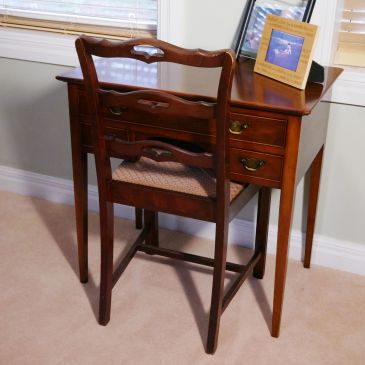
My office and where I compose my articles

Ensuring the information is accurate and relevant enhances the credibility of my blog and keeps it useful for readers. It is my hope that readers will see my blog as a go-to source for accurate and up-to-date information.

Improving Readability

Over time, my writing style and formatting preferences have evolved significantly. By revisiting these posts, I can enhance their flow and structure, ensuring they’re more engaging and easier to read. Updating them with clearer formatting and concise language will help create a smoother, more enjoyable experience for today’s readers, while also making the articles more visually appealing and accessible.

Aligning with Current Expertise

Over the years, my knowledge about clocks and horology has grown significantly. Revisiting old posts gives me a chance to add fresh insights or correct earlier misconceptions.

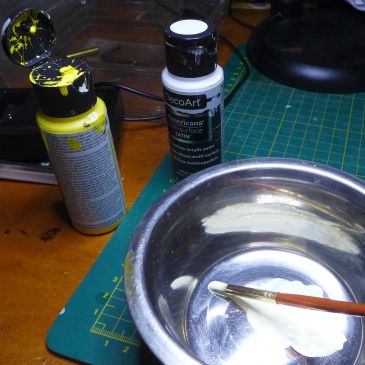
My basement workshop

Encouraging Engagement

Updating a popular post serves a dual purpose: it reminds long-time readers of some of my best content, and it also helps attract new visitors. Bringing in new readers is vital for the growth and sustainability of my blog. It not only expands my audience but also fosters a community of enthusiasts who share an interest in clock collecting and restoration.

Fresh perspectives from new readers can spark engaging discussions, inspire future posts, and ensure my content continues to reach a wider and more diverse audience.

Personal Growth

Over the past eight years, my writing has undergone significant growth, allowing me to showcase my skills in clock restoration and repair. As I’ve continued to evolve as a writer, I’ve become more focused on refining the structure of my articles to not only enhance their value but also ensure they serve as lasting references for my audience. This shift has led me to create more organized, accessible content that readers can return to over time.

I’ve also found that incorporating more photos, before-and-after restoration images, and step-by-step visual guides enriches the written content, offering readers a more hands-on and immersive experience. This evolution in my approach reflects my ongoing commitment to providing meaningful, well-rounded resources.

Strengthening the backboard on a Scottish Tall Case clock

Streamlining for New Audiences

Adjusting the tone and content of my posts to target newer clock enthusiasts helps create a welcoming space for those just beginning their journey into clock collecting and restoration. By breaking down complex concepts, avoiding overly technical jargon when possible, and focusing on practical, accessible advice, I can make the hobby feel more approachable.

This shift not only broadens the appeal of my blog but also contributes to fostering a new generation of collectors who might otherwise feel intimidated. Additionally, beginner-friendly content can encourage curiosity and engagement, as newer enthusiasts are often eager to learn and ask questions.

Centre crown support post
Repairing a wall clock crown mount

Balancing this approach with content that still satisfies more experienced readers ensures my blog remains a valuable resource for everyone, no matter where they are in their journey. At the end of the day, bringing new enthusiasts into the fold is one of my major objectives.

Most Popular Blogs Posts | The Top Ten

Most of the following articles were written in the early days of my blogging journey, during a period when I was still trying to identify and connect with my audience. While I’m not entirely sure why some of these posts have gained such popularity, it’s clear that they’ve sparked more interest than I originally anticipated. That being said, my ten most popular posts of all time are as follows.

Please feel free to browse the articles, and if you have any insights on the information presented or suggestions for improvements, I would love to hear them.

And finally, search engines favor fresh, updated content. Rewriting and optimizing posts can improve rankings and attract new readers who are searching for information on antique and vintage clocks.

Why I Changed My Mind About the Dial Bezel on a Pequegnat Jewel Mantel Clock

After working on the dial of a Pequegnat Jewel mantel clock, I was very pleased with the results of the repaint. While the detailing may not withstand close scrutiny, the clock looks excellent from a comfortable distance.

When I brought the clock home, it appeared that a previous owner, frustrated by the loss of some or most of the paint on the dial, chose not to source a replacement but instead stripped the paint entirely, leaving only the numerals.

Photo taken on the day the clock was purchased

Someone had gone to great lengths to meticulously scrape away all the paint, but the result is far from appealing.

Something Still Troubled Me

I decided to address the missing paint on the dial by repainting it and touching up the numerals, and the results met my expectations.

After repainting the dial and retouching the numerals

It continued to bother me that the glass surround had a brassy gold appearance, while the dial bezel exhibited a bronze-like tone.

Although brass is an alloy of copper and zinc, with variations in composition potentially explaining this difference, I suspect that’s not the case here.

Instead, I believe the glass surround was originally painted gold, as small flakes of paint came off while I was cleaning it with a toothpick and cloth. Should I leave it as-is or match the outer bezel to the inner one? I’d have to think about it—a two-toned dial looked odd.

A Decision Was Made

Since the dial and surround had already been altered, I decided to take it a step further and repaint the inner bezel as well. With the right shade of acrylic paint on hand, I went ahead and tackled the task.

Some might argue that I went too far with the repainted dial and bezel, believing that any changes made to the clock over time are part of its history. However, I don’t share that perspective. To me, a poor repair from the past justifies taking steps to set things right. Leaving a damaged dial on a clock case that is otherwise in near-perfect condition would be a shame.

From a different angle

I have no regrets about my decision—if anything, I’ve now contributed to its history.

By correcting such mistakes, I believe I honour the intent and skill of the original maker. Restoring a clock to a condition closer to its authentic appearance helps preserve its aesthetic value for future generations.

What do you think?

Pequegnat Jewel Dial Restoration | A Case For Inpainting | Part II

In Part I of this series, I shared my approach to restoring a clock dial through a process called inpainting. Inpainting is but one solution to the problem of a ruined dial. To restore a clock dial by bringing it back to its original state involves carefully mixing paint to match the original tones, gradually building up layers to cover exposed metal, and remedying prior modifications that detracted from the dial’s appearance. I also highlighted the challenges of repainting, emphasizing the precision and patience required. Part I concluded with the groundwork laid for further work on the dial.

The clock is an Arthur Pequegnat Jewel, manufactured before 1917. The exact year of manufacture is uncertain, as Pequegnat did not date stamp their clocks. The approximate period of manufacture is confirmed by the maker’s stamp, which includes “Berlin,” the original name of what is now Kitchener. The city’s name was changed in 1917 due to sentiments arising from the Great War. So, the clock was made somewhere between 1904, the first year of production for Pequegnat clocks, and 1916.

Arthur Pequegnat Simcoe mantel clock
Arthur Pequegnat Simcoe

This model shares the exact case dimensions as the Simcoe but lacks certain decorative elements, making it one of the more affordable mantel clocks in their range.

The clock case features a piecrust dial bezel like the Simcoe, which was later replaced by a plain bezel in later years.

Arthur Pequegnat Jewel time and strike mantel clock with stripped dial
Pequegnat Jewel as found

In terms of the dial restoration, Part II will build on the inpainting progress by applying additional coats, enhancing details like the numerals and chapter ring, and bringing the dial closer to its original elegance.

More Work Required on the Dial

After the second coat, the bare metal is still visible, indicating that at least one or two more coats will be necessary.

I decided to continue a shade darker for the next layer by adding a touch more brown, and after more thought, darker still for the next coat or two. Even at this stage, I’m beginning to notice a pleasant transformation in the dial, shifting from its stark metallic appearance to a more pleasing shade of cream.

Writer presenting the clock dial after a 3rd coat

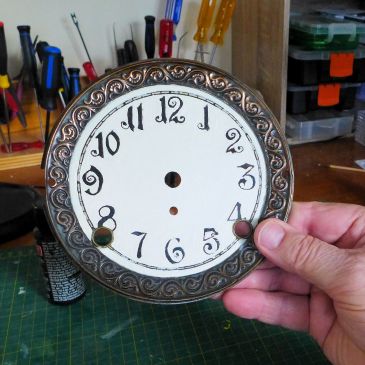
For the third coat, I aimed to soften the yellow and achieve a more aged look. It’s rough at the moment, but I’m confident it will come together once I start applying black paint to the numerals. The good news is that the bare metal is no longer visible.

repainted clock dial
The dial is done, now for the numerals

When placed against the case, the repainted dial is an improvement, but it’s clear that I’ll never fully replicate the original dial, even with my try at aging it.

The fourth coat has fully concealed the tin beneath, so, I’ll stop here. Next, I will focus on the numerals, using an artist’s detail brush and a Sharpie Ultra fine-point pen to carefully restore them.

Bezel test fit

Since the stripping process compromised the original numbers, I’ll use my Simcoe as a reference to reshape and refine their appearance. I’ll allow the paint to cure fully before moving on to the next step.

After cleaning the bezel, I noticed a distinct difference between the glass surround and the dial bezel. The glass surround has a brassy gold appearance, while the dial bezel exhibits a bronze-like tone. Although brass is an alloy of copper and zinc, with variations in composition potentially explaining this difference, I suspect that’s not the case here. Instead, I believe the glass surround was painted gold, as small flakes of paint came off while I was cleaning it with a toothpick. The bottom line? Best to leave it as is. Or match the outer bezel to the inner one? I’d have to think about that.

Here is the final result after a few touch-ups with black paint and some light polishing of the glass and both bezels.

Is it an improvement?

While it does not hold up to close scrutiny, there’s no denying it looks much better when viewed from a comfortable distance.

With the dial restored and the case cleaned, the final step will be servicing the time and strike movement to bring the clock to its full potential. While the improvement comes with its compromises, it’s satisfying to see the progress so far, and I’m eager to have this clock run smoothly after servicing.

Holiday Downtime | What’s Next for Antique Clock Lovers

As the holiday season is upon us, I’ve decided to take a break from writing and updating my blog to enjoy some much-needed downtime.

The past year has been filled with exciting clock-related adventures, research, and restoration projects, and now it’s time to step back, recharge, and spend time with loved ones. I look forward to returning in the New Year, refreshed and ready to continue sharing my passion for antique clocks, repairs, and restoration.

Upcoming articles in 2025 include:

  • Pequegnat Jewel Dial Restoration | A Case For Inpainting | Part II
  • What is My Clock Worth? (Revision of a past blog article)
  • Reflections on a Year of Clock Collecting and Repair (top purchases in 2024)
  • On My Workbench | Type 89 Movement by Seth Thomas and a Strike Side Issue
  • Essential Tips for Clock Case Care
  • When Clocks Had One Hand
  • Troubleshooting A Strike Issue on a HAC/HAU Movement
  • Restoring a Vintage Mauthe Box Clock | Evoking Family Memories | Part I
  • A Milestone | Celebrating One Million Views

And more to come.

Have some ideas? (Photo by Pixabay on Pexels.com)

I’m always on the lookout for fresh content, so if you have any clock-related topics you’d like me to explore, please feel free to share your thoughts and ideas!

Wishing everyone a wonderful holiday season, and I’ll see you again soon in 2025!

Mainsprings dilemma | To Replace or Not To Replace

As a clock repairer, there are several compelling reasons to keep the original mainsprings if they are still in good condition.

Keeping the original mainsprings ensures that the clock remains as close to its original condition as possible. Collectors and enthusiasts often value clocks with original parts, as they maintain the authenticity and historical significance of the clock.

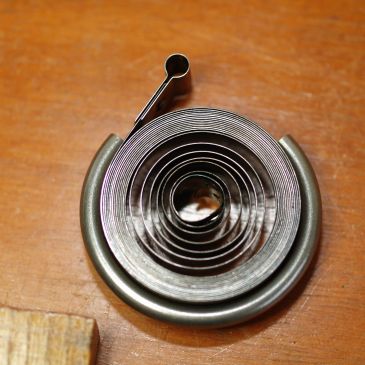
Brass mainsprings for Manross clock
Older brass mainsprings are not replaceable

Many older mainsprings were made with higher-quality steel and manufacturing techniques and modern replacements may not be of the same quality. Original springs, if well-preserved, may outperform modern equivalents in terms of durability and performance.

Consider the original design of the movement and how it is powered. The original mainspring is designed specifically for the clock’s movement, ensuring the proper balance of power delivery and running time. Replacements, even when sized correctly, may not deliver power consistently due to slight variations in material and design.

Modern mainsprings can sometimes deliver too much power, especially in delicate or vintage movements, leading to accelerated wear or damage to gears and pivots. Original springs are often “seasoned,” meaning they’ve been conditioned by years of use and may be gentler on the movement. Even replacements that have the same dimensions as the original are overpowered. Recommended replacement springs might overload the movement and lead to wear issues sooner rather than later.

Laurie Penman, who authors a regular feature in Clocks Magazine, stresses the importance of considering replacement springs in the September 2024 issue, stating “it bears repeating that if you fit a spring that approximates to the original nineteenth century the movement will be overloaded”.1

Cleaning an open mainspring

If the original mainspring is functional, reusing it can save the cost of purchasing a replacement. In fact, finding an exact replacement for some older or rare clocks can be very challenging for the repairer.

That said, we certainly do not need to send more items to landfill sites. Reusing parts when possible reduces waste and the environmental impact of manufacturing new components.

Inspect the mainsprings during every servicing

Part of servicing a clock movement includes inspecting and cleaning the mainsprings. While open mainsprings are easier to inspect and work with, some repairers may be tempted to skip cleaning those encased in barrels. It’s important to learn how to open mainspring barrels for proper maintenance.

Mainspring barrel
Mainspring barrel

Over time, the mainspring(s) can accumulate old oil, dirt, rust, and debris, which can impede its smooth operation. Removing the mainspring from the barrel or open springs from a movement allows for proper cleaning and lubrication, ensuring the clock runs efficiently.

Open mainsprings that have been serviced

Removing the spring also allows you to apply fresh mainspring oil evenly along the entire length of the spring. But that is not the only reason.

When Should You Replace the Mainsprings?

Removing the mainspring allows you to thoroughly inspect it for any signs of wear, fatigue, or damage that might require replacement. If the spring is in good condition but the hook end is cracked, it can be reused by cutting the spring and fashioning a new hook end. This will make the spring slightly shorter.

However, after a thorough cleaning, the movement will run more efficiently and require less power to run through its designed cycle, be it a day or a week, two weeks, and so, there may be little to no effect from a shortened mainspring. That said, the task of repairing a mainspring is best suited for an experienced clockmaker.

The most straightforward solution for the novice is simply to replace the spring.

Although they may appear set to some, this spring is perfectly usable

As a clock repairer, I rarely replace a mainspring. Even if a mainspring appears “set,” it often still has functionality. The important step is to return the spring to the movement and test it to ensure it meets the required standard by completing its designed cycle. If there is a significant loss, a running time of 2-3 days for an 8-day clock, and if there are no other obvious issues the mainspring must be replaced.

For some, ensuring a clock runs while preserving its original parts might take priority, even if the original mainspring cannot power the clock through its designed cycle. It is therefore essential to balance preservation with functionality.

Using a spring winder while working on a spring within a barrel

By carefully evaluating the mainspring’s condition and the specific needs of the movement, you can make an informed decision that respects both the clock’s history and its mechanical performance.

  1. Clocks magazine, September edition ↩︎

Pendulum Length Vs. Pendulum Weight in Clocks: What Matters More?

A clock’s pendulum is a swinging component made up of a rod or wire with a weighted bob attached at the end. It is a key part of pendulum clocks, responsible for regulating the movement and ensuring accurate timekeeping.

The pendulum swings back and forth in a precise, periodic motion, controlling the clock’s escapement mechanism and dividing time into equal intervals.

The topic of pendulum weight is a frequent subject of discussion among amateur and professional horologists.

The weight of the pendulum in mechanical clocks is not critical for precise timekeeping but must fall within an acceptable range. Let’s explore why in this article.

Controlling variables

The controlling variable is the length of the entire pendulum assembly (suspension spring, pendulum leader, pendulum bob) from the point where the suspension spring flexes to the center of mass of the entire pendulum assembly. Some clocks will have that length expressed in centimeters or inches stamped on the movement plate.

These numbers 34 and 116 are found on most German antique time and strike clocks
The number 34 refers to the length of the pendulum in centimeters

The weight of a pendulum has a much smaller effect on its timekeeping compared to the length. In an ideal pendulum, the time it takes to complete a swing (the period) is mostly determined by the length of the pendulum and the acceleration due to gravity, and not by the weight.

The weight of the pendulum

In practical mechanical clocks, the weight of the pendulum can affect the clock’s movement in subtle ways. However, the pendulum’s weight must fall within an acceptable range specified by the movement’s design.

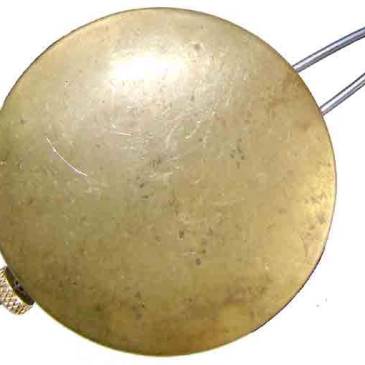
pendulum bob with adjuster
Pendulum bob with adjustment screw

Heavier pendulums are less affected by air resistance. A pendulum that is too light may slow down more over time due to friction with the air. Heavier pendulums tend to be more stable in motion and less affected by external forces like small drafts or air currents.

The weight of the pendulum can affect how much power is required from the clock’s escapement mechanism to maintain the pendulum’s motion. A heavier pendulum may need more energy to keep swinging. If the clock’s escapement is designed for a certain weight, using a much heavier or lighter pendulum could affect timekeeping accuracy.

Suspension spring post

On the other hand, heavier bobs tend to overcome mechanical friction more effectively. If the clock’s gears or escapement are under significant load due to weak mainsprings, old grease, or worn pivot holes, a heavier bob helps maintain consistent motion by stabilizing the escapement’s action. If the clock runs better with an overly heavy pendulum bob, it’s a sign of wear, indicating that the movement needs servicing.

Worn Pivot hole
Worn Pivot hole

Additionally, the attachment points (or suspension) of the pendulum and the escapement mechanism may experience increased wear or friction if the pendulum is too heavy. This could cause irregularities in the clock’s timekeeping over time.

In summary

While the length of the pendulum is the primary factor controlling the rate of timekeeping, the weight affects stability, efficiency, and how the clock interacts with the pendulum. However, the length of the pendulum, rather than its weight, is the primary factor in determining a clock’s accuracy.

For a more detailed or technical analysis, horological journals and bulletins delve deeper into the physics of pendulum design and weight. However, I hope this straightforward explanation will be sufficient.

How to Keep Your Clock In Beat

You have just brought a clock that was running smoothly when you first saw it. You bring it home, select a location to display it, reattach the pendulum, and give it a slight push but after a few seconds, it stops. One crucial aspect of keeping a mechanical clock functioning properly is making sure it is “in beat.”

This article assumes that your clock is equipped with a pendulum rather than a balance wheel or platform escapement. A pendulum on a clock is a weight suspended from a pivot so that it can swing freely back and forth. The pendulum’s regular, consistent motion is used to regulate the time on your clock.

What does In-beat Mean

When a clock is “in beat,” it means that the pendulum swings symmetrically, with equal time intervals between the ticks and tocks. This even rhythm ensures that the escapement releases energy consistently, which is essential for keeping accurate time. You will hear a steady “tick-tock” rhythm, with equal spacing between each tick and tock.

If the rhythm sounds irregular—like “tick-tick… tock-tock” or has uneven gaps—the clock is out of beat, meaning the pendulum is not swinging properly in balance.

Ogee clock showing replacement pendulum bob
Ogee clock showing a brass pendulum bob

As the pendulum swings, it controls the release of the clock’s escapement, which allows the gear train to move in a controlled manner, driving the clock’s hands forward.

How to Correct a Clock That’s Out of Beat

Method 1: Tilting the Clock

One way to fix a clock that’s out of beat is by gently tilting it sideways while listening for the sound to become even. Once you hear an even tick-tock pattern, prop the clock in place to maintain the tilt. While this method works, the clock may end up looking tilted and uneven in its position.

Method 2: Adjusting the Crutch

The second method is more precise and involves adjusting the crutch. The crutch is the rod that extends down from the pallets and rocks back and forth with the escape wheel. The pendulum rod passes through a crutch loop or fork at the end of the crutch, and it’s important to ensure the pendulum rod sits in the middle of the loop without being too tight or too loose. The crutch connects to the pendulum leader, which is then attached to a post with a suspension spring.

Mauthe movement back plate
Movement crutch and pendulum leader

For mantel clocks, making this adjustment is relatively straightforward, as they usually feature rear access doors. Through these doors, you can easily reach the crutch, pendulum rod, and bob. If your clock has a wire crutch (brass wire is pliable), gently bending the wire slightly at the midpoint in either direction will help correct the beat.

For English and German-style clocks, you can make a slight adjustment to the crutch on one side or the other since the crutch is connected to the escapement arbour and fits snugly but moves enough to make an adjustment. Moving it alters the entry and drop of the escapement pallet and corrects the beat.

Additionally, you may need to adjust the height of the escapement by loosening two screws on the suspension spring post and repositioning the pallet, a process that requires time and patience and is best performed on a movement test stand.

Wall clocks, on the other hand, require more effort to perform a beat adjustment. To access the crutch on a wall clock, you’ll need to remove the hands— the minute hand is held by a screw or pin, and the hour hand pulls off— and then remove the dial, which is usually attached with screws. Once these parts are removed the crutch can be adjusted.

Minor beat adjustments on wall clocks can also be made by slightly tilting the clock. The tilt may or may not be noticeable.

A One-Time Procedure

The good news is that you’ll only need to adjust the beat once. Whether your clock is a wall clock, mantel clock, time-only, time and strike, or time, strike, and chime, the principles remain the same. This is a straightforward DIY procedure, so professional help is not necessary.

Moving the Clock

If you relocate the clock to a different spot, it’s often necessary to repeat the process of checking and adjusting it to be in-beat. This is because changes in the environment, such as variations in surface level or vibration from nearby activities, can affect the pendulum’s swing. After moving the clock, always recheck if it is in beat. You may need to re-adjust the pendulum’s crutch to ensure a smooth and even tick-tock rhythm.

Final thoughts

If your clock is not running and efforts to put it in beat have no effect, several underlying issues require remediation. If there is significant wear of the pivots or pivot holes, wear in the pinions, there are broken components, or dried oil creating friction in the movement, all of which may need attention to restore the movement’s function.

After the movement has been serviced, adjusting the clock to be in-beat becomes a much easier task.

For a more comprehensive or technical examination, horological journals, articles, and bulletins provide in-depth insights into the physics of escapement design and theory. However, I trust that this simple explanation will suffice.

There’s something wonderfully calming about the rhythmic ticking of a perfectly in-beat clock.

Fall Getaway in Central Canada: Our Thanksgiving Tradition

Every year, my wife and I embark on a fall getaway to our cottage in central Canada to celebrate Thanksgiving. Thanksgiving is a time to express gratitude for the harvest and the blessings of the past year, celebrated with family and friends. It signifies togetherness, reflection, and the importance of giving thanks for life’s abundance. In Canada, Thanksgiving is celebrated in October.

This change of scenery offers us the perfect chance to relax with a few good books and spend quality time with friends and neighbours over a glass (or two) of wine and enjoy roast turkey and all the fixings.

With many of my blog posts written ahead of time, there will be no interruptions in the content I share throughout the fall getaway. As always, you can expect fresh posts on Tuesdays and Fridays at 6:00 am AST.

My blog continues to feature my clock collection, the joys and challenges of maintaining and restoring vintage and antique clocks, and a wealth of horological topics of interest.

While I may be a bit slower in responding to emails and blog comments during this time, rest assured that your questions and feedback are important to me and will be addressed.

During our travels, we’ll likely discover new clocks while browsing antique stores, flea markets, and junk shops. You can look forward to fresh stories, repair challenges, and perhaps a new major restoration project.

Feel free to use the search box to browse past articles, or click “follow” to have clock-related posts delivered directly to your inbox every few days. I hope you enjoy reading these posts as much as I enjoy researching and writing them!

The Stories Behind My Antique and Vintage Clocks

I often wonder about the stories behind my clocks.

Antique and vintage clocks evoke a time when life seemed simpler, a stark contrast to today’s frenetic pace. Old clocks serve as living memories, cherished relics of people and places that are long gone but not forgotten.

Ideally, they should be passed down through generations. Yet, when I look at online marketplaces, it’s clear that many clocks no longer stay within their original families. I can’t help but wonder—has sentimentality lost its place in today’s world?

Out of the 35 clocks displayed throughout our home (a small part of my collection), I wish I knew the stories behind every single one of them. If only they could talk! What tales they would share.

Still, two of my clocks come with stories that I hold dear to my heart.

Junghans Crispi time and strike wall clock

One of my clocks survived the 1917 Halifax Explosion. It is a Junghans Crispi wall clock. I know this because the previous owner had kept it in their family for over 100 years. It wasn’t in the condition you see it in today, though. It came to me as a box of parts, and I imagine they decided it was time to let it go after holding onto it for so long. They hoped that whoever bought it would bring it back to its former glory.

After restoring the clock, I contacted the former owner to show them what I’d done, sending them a photo of the clock in its restored state. I never heard back and I assume they experienced a bit of seller’s remorse.

However, I often look at the clock and try to imagine that fateful day, December 6, 1917, when it fell from the wall in a modest North Halifax home and broke into dozens of pieces.

Ingraham Huron shelf clock

Another story belongs to my Ingraham Huron shelf clock (circa 1878). It was a rare find considering it was made between 1878 and 1880. Some might call the style a balloon clock. It came from a small village outside Bridgewater, Nova Scotia. My wife and I made a day of the trip, enjoying lunch and some shopping after picking up the clock from an elderly couple who were in the process of separating.

The clock’s story unfolded when we met the couple selling it. The gentleman, in his early seventies, recalled seeing the clock in his grandmother’s home when he was a child. After some conversation, we learned that the couple was separating amicably, with the wife planning to move into an apartment nearby. “We need to get rid of a lot of stuff,” he told us. It was a bittersweet moment, knowing they were parting with something tied to childhood memories. My wife and I left with the clock, reflecting on how our connection to objects, even sentimental ones, can change over time.

It seems sentimentality can have a price. People grow tired of the things they once cherished or feel the need to unburden themselves of objects tied to past relationships and memories. Nostalgia can bring comfort, but for some, it may not be enough to hold onto the past.

I often wonder what will happen to my clocks when I’m gone. My wife knows that I’m not emotionally attached to all of them. Some were simply acquisitions that served to give me projects that helped me grow as a hobbyist. Yet, there are several clocks that I hope my children will keep—the ones I’ve spent countless hours restoring, the ones with stories and history.

Among them are my twelve Arthur Pequegnat Canadian-made clocks, two Vienna regulators, a Seth Thomas Empire-style clock, a Sessions Beveled No. 2, my Ingraham Huron, and my Junghans Crispi wall clock.

These clocks represent a blend of history, personal connection, and the passion I’ve poured into them. I think my kids will appreciate that.

Mechanical Clocks Guide | Tips for Selecting the Ideal Antique or Vintage Clock Gift

Are you searching for a unique gift for a friend or family member? Have you ever considered giving an antique or vintage clock? It is the perfect, memorable gift.

Whether you’re familiar with antique and vintage clocks or completely new to the world of horology, you will need guidance in finding the right clock for that special someone. Here are a few pointers, along with explanations of some common terms you face.

Why Choose an Antique or Vintage Clock?

Last year, I sold a clock to a young woman looking for a unique gift for her father. She told me it was exactly what she wanted because it reminded her of a clock they had when she was a child. Sentimental value, a love for antiques, a return to our simpler past, or the unique charm of an old mechanical clock are reasons why people are drawn to these timeless clocks.

Antique, Vintage or Collectible

Determining the age of a clock can be challenging, especially since listings often don’t specify the exact year the clock was made. However, you might come across phrases like “mid-century”, antique, collectible, or vintage which can give you a general sense of its age. A quick search online can also help you narrow it down.

As a rule of thumb, an antique is something that is over 100 years old, while a vintage item is between 30 and 100 years old. Anything less than 30 years old may sometimes be considered vintage, but it’s often labeled as collectible instead.

Choosing the Right Type of Clock

Space is a key consideration.

Seth Thomas Mantel clock

With the trend toward smaller homes, not everyone has room for a large clock. Mantel clocks, for instance, require a shelf or table. Some are small, time-only pieces, while others have more complex movements like Westminster chimes and are housed in larger cases. Alarm and desk clocks are the most compact.

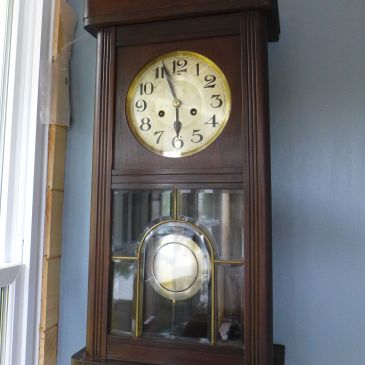
German wall box clock

Wall clocks are easier to place and come in a wide range of sizes, from small cuckoo clocks to large box clocks and Vienna regulators.

Ridgeway grandfather clock

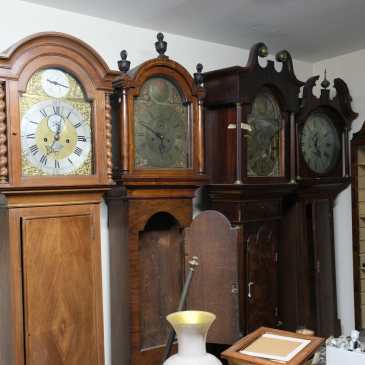
Floor clocks, also known as grandfather or grandmother clocks, tall-case, long-case, or hall clocks, are the hardest to accommodate. Unless the recipient has sufficient floor space and an appreciation for such a clock, it will not be the best choice.

What About a Non-Working Clock?

A working clock that has been recently serviced by a skilled clock repairer is ideal. However, if the clock is intended more as a decorative piece, a non-working clock may be less expensive. Just be cautious if it has a replacement quartz movement and know what you’re buying.

Tips for Buying a Clock

Here are a few tips to keep in mind:

  • Look for a working clock; it’s more likely to have been well cared for.
  • Consider sources like Facebook Marketplace, eBay, local online for-sale sites (in Nova Scotia, we have Kijiji), reputable estate auctions, antique stores, and word of mouth.
  • Most common clocks are reasonably priced because they are plentiful though rare or historically significant ones can be more expensive.
  • Meet the seller in person if you can. You can check the condition of the item firsthand, which might reveal issues not visible in photos or descriptions. You can ask the seller questions directly about the item’s history, usage, and any other details that might be important. You can verify the authenticity of the item, which is particularly important for valuable or collectible items and you can often negotiate the price more effectively in person.
  • Avoid clocks made in China or Korea, especially those with directional arrows around the winding points. They look inexpensive and are made with cost-saving in mind. The powerful mainsprings of a 31-day movement can be dangerous if they break.
  • The brand of the clock isn’t necessarily important. Many American clockmakers produced both high-end and budget-friendly models.
  • Consider whether it matters to you if the clock has been altered. For example, many old ogee clocks have had their movements replaced when the original failed. In the clock world, these are called marriages, and they may or may not be important to you.
  • Whenever possible, carefully inspect the clock in person before purchasing. Surprises are rarely pleasant when your online purchase doesn’t meet expectations.

A little research goes a long way, but knowing nothing is worse than knowing just a little.

I hope these tips give you something to consider as you search for that perfect clock. While I’m not in the business of selling clocks, I do occasionally sell one locally to keep my collection manageable.

A growing trend, perhaps | the move away from Smartwatches

I have worn a smartwatch (actually 2 of them) for over 5 years and am done with it. I have decided to move back to a watch. Call this post a bit of a rant but I have been contemplating this for a while.

While I profile mechanical clocks on my blog, I also have a small collection of watches and have always enjoyed their simplicity. I’ve been a watch enthusiast for many years, but I decided to give a smartwatch a try. Now I am done!

Photo by Fernando Arcos on Pexels.com

My Smartwatches typically needed to be charged once a week, whereas most of my watches can run for at least a year on a single battery and up to 10 years on my Citizen Eco-drive. The lack of dependency on frequent charging will be a relief.

Watches are timeless accessories that can complement various outfits and occasions. A watch that’s 20 years old looks just as fantastic today as it did back then. They offer a sense of style and elegance that some find lacking in smartwatches, which can appear more utilitarian. In fact, some look like wearing a small smartphone on your wrist.

Photo by Martin Pu00e9chy on Pexels.com

Smartwatches, with their myriad features and apps, are overwhelming and distracting. After years of being constantly connected through a smartwatch, I appreciate a break from technology. There is also a side benefit of reducing the dependency on an invasive digital device. Do I need to know how many steps I take in a day, my blood oxygen level, resting and active heartbeat, whether it will rain or not, and of course, the nagging notifications?

Watches tell time without any distractions or notifications, which can be a relief from the constant connectivity of smart devices.

Watches are more durable and reliable in terms of longevity and resistance to wear and tear compared to smartwatches, which can be fragile and prone to breakage. Although my smartwatches are said to be waterproof I am quite sure that I have shortened their life with the odd dip in the pool. Furthermore, after a year or two, the manufacturer informs you that your smartwatch is obsolete due to “new and improved” features.

My journey from smartwatches back to traditional watches has been a return to simplicity, reliability, and elegance. While smartwatches offer convenience and just about any feature you could ask for, they come with the constant need for charging, distractions from notifications, and a sense of impermanence as technology swiftly advances.

In contrast, traditional watches not only excel in durability and longevity but also embody a sense of style and craftsmanship that withstands the test of time. As I reconnect with the analog world of horology, I rediscover the joy of wearing a piece of art on my wrist that tells time without the noise of modern connectivity.

For those of you who regard the smartwatch as indispensable, have at it, you do you. For me, it’s a personal choice rooted in appreciating the functionality of a well-crafted watch, free from the pressures of technological obsolescence and the constant digital chatter. Call me rebellious but I don’t think I’m alone!

Mauthe Horse Crown Century-old Wall Clock

Another wall clock has joined my collection, so let’s take a closer look at what I’ve acquired and whether it was worth the price I paid.

Time and strike movement, 116 BPM

The clock was advertised locally in the Truro, Nova Scotia area. The seller knew little about it beyond its provenance, but what he did share was an interesting, albeit brief, story.

In the early 1980s, his wife brought the clock over from Holland, where it had been in her family for several generations. Sadly, his wife passed away three years ago. Had she been alive, I’m sure I would have learned much more about the clock’s history. The seller was understandably hesitant to part with it, as it served as a happy reminder of his past life. However, he was entering a new phase of his life with a new partner, which meant letting go of furniture and other possessions. Like him, I also view life as a series of phases. The clock was priced at $100, firm and non-negotiable.

This two-train (time and strike) spring-wound clock could be described as being in the style of a Vienna Regulator. As expected, the movement is quite dirty—a common issue for clocks like this that have often never been serviced. However, there are signs that adjustments were made at some point, evidenced by marks on several screws in the movement.

The clock is largely intact, except for a missing finial at the center of the bottom base. Why this particular part? According to the seller, the clock was brought over in a suitcase, and to make it fit, the bottom finial was snapped off and lost forever.

OLYMPUS DIGITAL CAMERA
Movement showing FMS Mauthe trademark

The clock is over 100 years old, with my research indicating it was made between 1895 and 1914, though the exact year of manufacture remains uncertain. The trademark—a Friedrich Mauthe of Schwenningen (FMS) emblem featuring three spokes with an eagle on top—is distinctive, as Mauthe trademarks are known to reflect the specific period during which the clock was produced.

Despite some benign neglect, the case is in good condition, and everything appears to be original, including the winding key.

OLYMPUS DIGITAL CAMERA
The crown

The crown fits into a slot at the top of the clock and can be easily removed if the clock needs to be relocated. The crown is made of wood, while the horse appears to be crafted from a casting material of some kind.

OLYMPUS DIGITAL CAMERA
The face

The dial is made of celluloid and has darkened with age. Inside the dial surround, there is a leaf-like emblem, a common design feature from this period.

OLYMPUS DIGITAL CAMERA
The base and bottom finials

The base is fairly plain, though the bottom center finial is missing. I plan to replace it.

OLYMPUS DIGITAL CAMERA
The coil gong

The coil gong and block with attached movement rails are characteristic of the period.

History of FMS Mauthe

Mauthe clocks have a long and distinguished history in Germany. In 1844, Friedrich Mauthe and his wife Marie founded the company in Schwenningen to produce watch parts. By the late 1860s, Mauthe began manufacturing its own wall clocks and movements. In 1876, Friedrich’s sons Christian (1845-1909) and James (1847-1915) took over the company. In 1886, Mauthe began producing its own springs. Around 1900, the company expanded its offerings to include alarm clocks, pendulum wall clocks, grandfather clocks, office clocks, and the so-called “Buffet Uhren” or “Buffet clocks.” In 1904, the third generation took charge: Eugene Schreiber (1877-1939), son of Christian Mauthe; Dr. Fritz Mauthe (1875-1951), son of Jacob Mauthe; and Alfred Mauthe (1879-1911), son of Jacob Mauthe, helped build upon the foundation of the company.

In 1925, Mauthe introduced a new trademark featuring a right-facing eagle with outstretched wings, clutching a three-part round plate inscribed with the letters F, M, and S. By the 1930s, the company was producing around 45,000 clocks per week, with approximately 60% destined for export markets like England. In the mid-1930s, Mauthe began manufacturing its first wristwatches, some of which were supplied to the German Army (“Wehrmacht”). After 1946, Mauthe resumed wristwatch production, but the company eventually entered a period of decline.

Was it worth $100? I would say yes, but it’s on the higher end of what I would typically pay for a clock like this.

Now, it’s time to clean the clock, install a new bottom middle finial, and add it to the queue for servicing.

Arthur Pequegnat Maple Leaf Kitchen Clock

In November 2015, I added an Arthur Pequegnat Maple Leaf “fan top” to my collection. The clock was advertised as non-running, and the seller’s description was accurate—it had its share of challenges. While gingerbread-style kitchen clocks don’t typically appeal to me, I felt that, as a Canadian, if I were to own one, it should be a Pequegnat.

This clock dates back to the Berlin era (before 1917, when Berlin was renamed Kitchener, Ontario) and features the signature nickel-plated steel plates with brass bushings, characteristic of most time-and-strike Pequegnat clocks.

RS Pequegnat fan top (3)
Arthur Pequegnat Maple Leaf Kitchen Clock

The clock is complete with its Maple Leaf bob, an original untouched dial, most of its label, and a remarkably well-preserved maple leaf decal on the front glass.

RS Pequegnat fan top (8)
Berlin Ontario label, mostly intact
RS Pequegnat fan top (18)
Maple Leaf bob
RS Pequegnat fan top (15)
Maple Leaf decal

I managed to get the clock in beat by adjusting the verge, but the minute arbor is quite loose, causing the minute and hour hands to stay stationary. Instead of attempting a full repair on my own, I’m considering having the clock professionally serviced. In the meantime, I plan to remove the movement from the case to examine the issue further. It could be a simple fix—or something more complex.

RS Pequegnat fan top (5)
The mottled finish on the entire case

The case poses another challenge. While it has no chips, cracks, or missing pieces, the seller believed the mottled finish added character. I strongly disagree—it’s far from appealing.

To gather restoration ideas, I shared this clock on the NAWCC forum site. Although the finish might be original, it appears the clock was stored in a hot environment, causing the finish to degrade. As one forum member explained, “The case was likely subjected to heat (stored in the attic), and the shellac finish has melted into the alligatored appearance you see now.” When shellac softens, it attracts airborne dirt, further compromising the surface.

Although I’m capable of refinishing the case, the movement also requires repair. After inspecting it, I’ve realized the cost of professional repairs is currently beyond my budget. However, I plan to educate myself on servicing antique clocks and intend to handle the repairs myself.

Website Powered by WordPress.com.

Up ↑