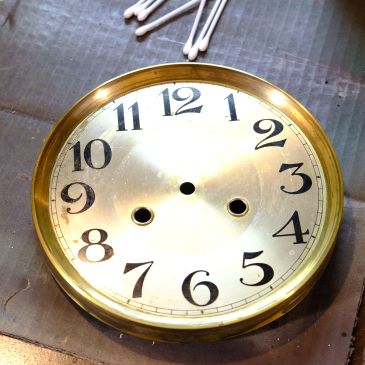
One of life’s unavoidable inconveniences is the act of adjusting our clocks either forward or backward in November and March. It is called Daylight Savings Time or DST. The goal of DST is to make better use of daylight by prolonging the amount of time we can spend outside during daylight hours.
The argument for the abolishment of Daylight Saving Time (DST) is gathering steam. It is cumbersome, and unnecessary in today’s world. Presently, out of 195 countries globally, approximately 70 utilize DST in some capacity, with notable exceptions being Japan, India, and China among major industrialized nations.
Around 1890, Sir Sandford Fleming, a Canadian engineer credited with significant railway projects and devising an internationally accepted standard time scheme, was instrumental in the early adoption of DST.
Currently, residents in these 70 countries, including Canada, must adhere to DST conventions, adjusting their clocks forward in spring and backward in autumn. In Canada, the saying “Spring ahead, Fall behind” helps in remembering the biannual time adjustments, occurring on the second Sunday in March and the first Sunday in November.
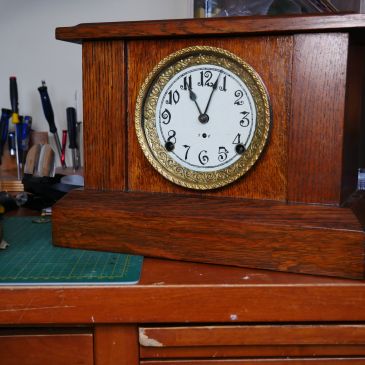
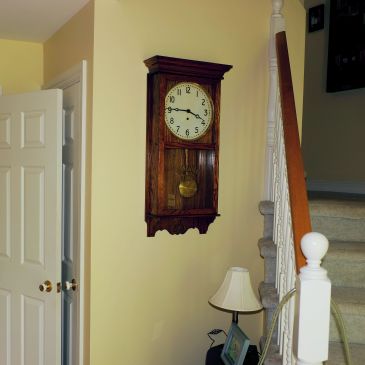
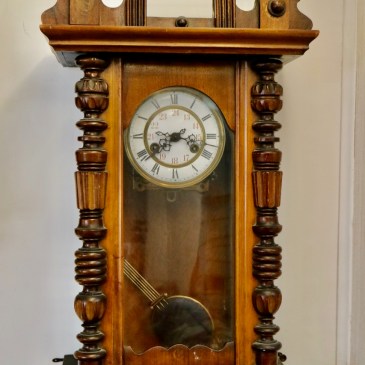
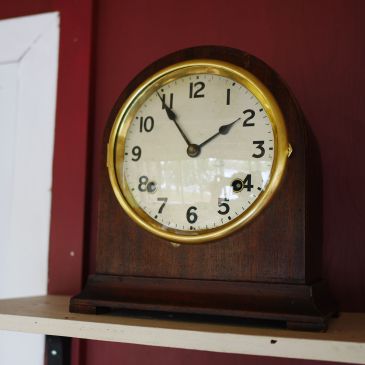
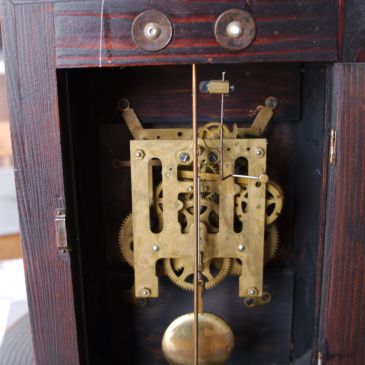
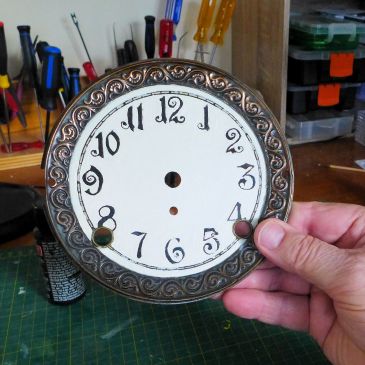
For mechanical clocks with analog dials, simply advance the minute hand by one hour on March 9th. If the clock has a chime or a mechanism with a countwheel strike, allow it to operate naturally at the quarter-hour or the half-hour.
Despite its widespread usage, there’s a growing movement in Canada to abandon DST, citing its impracticality and lack of necessity.
Idioms are fixed phrases or expressions whose meanings can’t be understood just by interpreting the individual words. Their meanings are figurative and widely recognized within a particular culture or language. Every language has its own idioms. In horology, we have quite a few, and it’s fascinating how the word “clock” plays such a prominent role in our everyday language.
This is the most comprehensive list I have made so far, the 2025 edition, and I hope you enjoy some timely clock humor.
Around the clock: Describes something that is in effect, continuing, or lasting 24 hours a day: “We worked around the clock to meet the deadline.” Also, Around-the-clock service: Continuous service is provided 24 hours a day, seven days a week: “The hotel offers around-the-clock service for its guests.”
Clean someone’s clock: To defeat someone decisively: “In the final match, our team cleaned their clock.”
Beat the clock: To finish something before a deadline: “We had to beat the clock to complete the project on time.” Also, Race against the clock
Against the clock: Working on a task that has a tight deadline: “The team is racing against the clock to finish the construction before the event.”
Watch the clock: To be mindful of the time: “During the meeting, I had to watch the clock to ensure we stayed on schedule.” Also, He’s (she’s) a clock watcher
Turn back the clock: To return to a previous time or state: “Sometimes, I wish I could turn back the clock and relive those carefree days.” Also, Wind back the clock
Keep an eye on the clock: To regularly check the time: “I need to keep an eye on the clock so we don’t miss our train.”
Winding the clock: Engaging in a time-consuming or repetitive task: “His job felt like winding the clock every day, doing the same thing over and over.”
Kill time (on the clock): To pass time while waiting for something: “I often read to kill time during my lunch break on the clock.”
Work like a clock: To perform with precision and reliability: “Once the new system was in place, everything worked like a clock.”
The clock is ticking: time is running out so act fast. also, The clock is running: Which indicates that time is passing, often with a sense of urgency: “We need to make a decision; the clock is running on this project.”
Run out (or down) the clock: deliberately use as much time as possible to preserve one’s advantage: “Facinga tie, he decided to run out the clock in the final moments“
On the clock: you’re working or being paid for your time and labour: “Oh, don’t bother him, he’s on the clock”. Also, Clock in/clock out:
Your biological clock is ticking: time is running out to have a child so act now: “Lisa felt the pressure of her biological clock ticking as she approached her 30s, prompting her to seriously consider starting a family.”
Punch the clock: be employed in a conventional job with set hours: “After a long day at work, I’m always ready to punch the clock and head home for some much-needed relaxation.”
Stop the clock!: to remain young indefinitely or “As the final seconds ticked away in the championship game, the quarterback made a game-winning throw that seemed to stop the clock for a moment, sealing their victory.”
As regular as clockwork (or, running like clockwork); a machine that runs perfectly and needs no adjustment. “Every morning, without fail, Jim’s neighbour would start his day as regular as clockwork, going for a jog at exactly 6 a.m.”
Face that could stop a clock; A face that is strikingly or shockingly unattractive; or “Jane walked into the room with a look on her face that could stop a clock, causing everyone to pause and wonder what had happened.”
Five o’clock shadow; a slight growth of beard on a man’s face; “After a busy day at the office, Tom returned home with a noticeable five o’clock shadow, a sign of the long hours he had put into his work.”
Running like clockwork: Operating smoothly and efficiently, without any problems: “The event was running like clockwork, thanks to the meticulous planning.”
Two o’clock courage: The bravery or confidence that comes late at night, especially after consuming alcohol: “He had a bit of two o’clock courage and finally asked her out.”
When the clock strikes (a certain time): Referring to a specific time on the clock. For example, “We’ll meet at the cafe when the clock strikes noon.”
Ticking clock: Refers to time running out or a sense of urgency. “With the deadline fast approaching, the ticking clock made everyone nervous.”
Clock in/Clock out – Refers to recording the time someone starts or finishes work, usually with a timecard. “I forgot to clock out yesterday, so my hours were recorded wrong.”
I enjoy writing about the clocks in my collection, but I often receive emails from fellow clock enthusiasts who have invested time and energy into their own collection. I’m sure they would love to showcase their clocks, but lack the necessary platform.
Here is my offer to you. If you have a clock in your collection that holds a special place in your heart, I invite you to share its story. Whether it’s a valuable antique, a common vintage clock that tells a story, something quite unusual, or a challenging repair story you’d like to share, I’d love to hear what makes your clock tick.
If this is something that interests you, please send me several photos along with some notes about the piece. Feel free to include the history behind it or any interesting details that make it stand out. There’s no need to write an article yourself; you can if you like but I’d be happy to craft one for you based on the details you provide. Just send the photos (under 1 MB, in .jpg format) and any information you’d like to include, and I’ll take care of the rest! Let me know if you’d like to review a draft of the article before it goes live.
A 1 mb image like this one preserves enough detailfor display online
To protect your privacy, I’ll use only the first and last letters of your name along with your country of residence—excluding specific locations. I’m excited to feature your cherished clock(s)! Please note that I have several articles in the queue, so it may take some time before yours appears.
By submitting your photos, you grant me permission to publish them along with your story on the blog.
I have a collection of 11 Arthur Pequegnat clocks, including three beautiful wall clocks which you can view on this 5-minute YouTube video.
I have written extensively about the Arthur Pequegnat Clock Company, but to summarize: the company was founded in Berlin, Ontario (renamed Kitchener in 1917) in 1904 and produced its final clock in 1941.
As regular readers know, I have been a passionate collector for 15 years, I take great joy in repairing and restoring old clocks. My collection has grown to 85 unique timepieces, each with its own story.
Background music and titles are provided only. If you have any questions about my Pequegnat collection or a specific clock, feel free to leave a comment.
For more about my journey and insights into clock collecting, explore my other blog articles.
It’s the little things that count in life. While this expression holds true in many aspects of our lives, it is equally true when it comes to antique and vintage clock repair.
This article highlights tools that can be invaluable for clock repair. Though not strictly essential, once you start using them, you’ll likely wonder how you ever managed without them. Additionally, these tools are relatively inexpensive and even more affordable on the used market.
Here is a list in no order of importance. Some of these items you will no doubt find more useful than others.
Magnetic flashlights
These tools are very handy for probing the dark corners of a clock case or troubleshooting the internals of a movement. They simply magnetically attach to the shaft of a screwdriver. The only drawback is the odd-sized batteries, which can sometimes be difficult to find.
The one on the left has two LED lights and turns on automatically when attached, meaning the battery drains if you forget to remove it. The one on the right, with one LED, has a push-button on/off switch. I like the one on the right.
This one is interesting because it features a telescoping magnet attachment, which is useful for illuminating an area when trying to retrieve a steel screw in a clock case, for example. It also uses readily available CR2025 button batteries.
Pivot Locator
I’ve seen a few different designs for pivot locators, but I find this one to be excellent for nudging and pulling those tiny pivots into place. If you’ve ever broken a pivot while reassembling a movement, you know how challenging it can be to fit a new pivot into an arbour. This little tool will avoid that agony.
And a closer view.
Movement Holder
I also have a set of four legs, otherwise called clamp assembly supports, that screw into the bottom plate when working on a movement, but I find they mar the corners of the movement and leave unsightly marks. A piece of 4-inch pipe cut from a plastic water or sewage pipe works perfectly.
Accessory Containers
A dollar store is a great place to find all sorts of practical containers that are both useful and very affordable. This one, with separate compartments, is ideal for storing an assortment of different-sized screws.
For storing brass and steel clock pins a camera filter container is perfect.
For storing all kinds of tiny items these containers can be purchased for a dollar or so per dozen.
Crucial for separating parts when disassembling a movement, they are also useful for preventing parts from going astray. Additionally, they are stackable and come in various sizes with the smallest size shown below.
Punch
I certainly do not advocate punching a clock plate to close a pivot hole, but a punch is useful for many other tasks. such as marking a spot for drilling, setting a reference point, or lightly shaping the edges of a part.
Precision Screwdrivers
They come in a multitude of sizes and head types, making them very useful for working with small screws on clock movements.
Slotted Screw Holding Driver
It’s called a driver, but its real purpose is to guide the screw into place.
I can’t tell you how many times I’ve dropped a screw into a case and spent time trying to fish it out while reinstalling a movement.
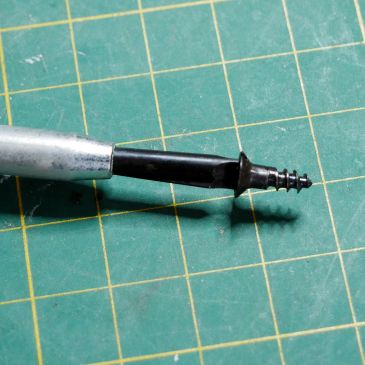
When I saw these, it felt like a miracle. While they can’t drive the screw all the way in, they allow you to turn it a couple of times, making it ready for a screwdriver to finish the job.
Compact tools and accessories may not be essential for clock repair, but they certainly make the work much easier and more efficient, offering valuable benefits. These tools are not only affordable but most are readily available, making them accessible for anyone looking to enhance their clock repair experience.
Whether you’re a seasoned professional or a hobbyist, investing in these practical, easy-to-find tools can make your work much less frustrating, helping you achieve better results with greater ease and fewer obstacles.
The Seth Thomas Type 89 movement is a robust and well-regarded mechanical clock movement widely used in many of Seth Thomas’ mantel and shelf clocks from the early 20th century to 1938.
The movement was introduced in 1900 and became one of Seth Thomas’ most popular and enduring movements.
There are several variants (89A, 89C, 89D, etc.), each tailored to specific clock models. The differences often involve small design adjustments like the escapement, strike train, or gearing. For example, some had solid back plates, some cut out, and some had a passing bell on the half-hour.
All Type 89 movements are time and strike and eight-day running and most use a strip pallet deadbeat escapement or according to Seth Thomas’s literature a “half deadbeat” escapement which is reliable and relatively easy to service. The most striking difference between the half-deadbeat and a recoil escapement is that the escape wheel teeth slant forward into the direction of rotation. Advantages: it was cheap to produce and still has fairly decent time-keeping ability.This video (no sound) shows the action of the escapement.
I consulted a chart (below) describing all the variations of the 89 and from what I can deduce this one is a type 89C movement.
Two Important strike-side Issues
The movement was in good condition overall. It was cleaned up and three new bushings were installed. The escape wheel bushings front and back were the most worn. The next was the fourth wheel front plate, adjacent to the escape wheel.
Testing the depthing of the wheels
One minor hiccup when reassembling was dealing with a broken helper spring on the lifting lever. Shortening the spring by taking one coil off the arbour did not pose any running issues.
Taken directly from the case on the day of purchase
However, once the cleaning and wear issues were addressed two other problems remained. The strike would not go into warning and the hammer did not move when the strike side was pushed to run.
It seems that whoever previously worked on it did not properly set up the strike side, likely neglecting to position the stop wheel correctly to ensure the strike mechanism would go into warning. Warning refers to a brief preparatory phase in the strike mechanism. This occurs just before the clock strikes. When the time approaches a strike point (such as the hour or half-hour), the movement enters the warning phase to prepare for the strike sequence. The warning phase is essential for ensuring the clock strikes consistently and on time. Improper setup of the warning phase can lead to the strike train failing to run.
While reassembling the movement, position the paddle lever in one of the indents on the cam while ensuring the paddle itself rests in a deep slot of the count wheel. The paddle should be straight into the deep slot without touching either side and pointed directly at the main wheel arbour.
The warning wheel can be adjusted after reassembly. Once all the wheels and levers are in their respective locations, carefully separate the plates slightly at the flywheel corner, ensuring no other components shift out of place. Then, when the pivot is out of its hole and the lantern pinion is disengaged from the adjacent gear, rotate the stop wheel until its pin meets the stop lever. If the levers are correctly positioned, the movement will enter the warning phase.
The stop wheel is at the upper right,with the pin
The second issue involved the hammer strike. A previous repairer had over-bent the strike rod, creating alignment problems. On the opposite side of the strike cam wheel are two striking pins, which the strike rod must reach to activate the hammer and sound the coiled gong. In this case, the rod had been positioned too close to the center, preventing it from contacting the strike pins. After some trial and error and careful bending of the strike rod, the movement is now properly aligned and able to sound the strike.
The final step is thorough testing. Placed on the test stand, the movement will be carefully monitored over the next several days to ensure everything functions smoothly and reliably.
A Special Note
I would also like to recognize Saint Valentine’s Day (February 14th) and I hope that everyone takes the time to cherish those around them, whether through a kind word, thoughtful gesture, or simply appreciating the moments that make life special. Happy Valentine’s Day!
I have decided to revisit and revamp my most popular blog posts to breathe new life into them, expand my blog’s reach, and keep my content fresh and engaging for loyal readers and new visitors. This will allow me to refine my writing, share updated insights, and ensure these and all posts continue to resonate while meeting today’s standards.
Updating Information
Some details in older posts are outdated, particularly when referencing market trends, clock values, or new information historical or otherwise, obtained during my research. As a seasoned clock collector and writer, updating posts with the latest insights solidifies my position as a trusted expert in the field.
My office and where I compose my articles
Ensuring the information is accurate and relevant enhances the credibility of my blog and keeps it useful for readers. It is my hope that readers will see my blog as a go-to source for accurate and up-to-date information.
Improving Readability
Over time, my writing style and formatting preferences have evolved significantly. By revisiting these posts, I can enhance their flow and structure, ensuring they’re more engaging and easier to read. Updating them with clearer formatting and concise language will help create a smoother, more enjoyable experience for today’s readers, while also making the articles more visually appealing and accessible.
Aligning with Current Expertise
Over the years, my knowledge about clocks and horology has grown significantly. Revisiting old posts gives me a chance to add fresh insights or correct earlier misconceptions.
My basement workshop
Encouraging Engagement
Updating a popular post serves a dual purpose: it reminds long-time readers of some of my best content, and it also helps attract new visitors. Bringing in new readers is vital for the growth and sustainability of my blog. It not only expands my audience but also fosters a community of enthusiasts who share an interest in clock collecting and restoration.
Fresh perspectives from new readers can spark engaging discussions, inspire future posts, and ensure my content continues to reach a wider and more diverse audience.
Personal Growth
Over the past eight years, my writing has undergone significant growth, allowing me to showcase my skills in clock restoration and repair. As I’ve continued to evolve as a writer, I’ve become more focused on refining the structure of my articles to not only enhance their value but also ensure they serve as lasting references for my audience. This shift has led me to create more organized, accessible content that readers can return to over time.
I’ve also found that incorporating more photos, before-and-after restoration images, and step-by-step visual guides enriches the written content, offering readers a more hands-on and immersive experience. This evolution in my approach reflects my ongoing commitment to providing meaningful, well-rounded resources.
Strengthening the backboard on a Scottish Tall Case clock
Streamlining for New Audiences
Adjusting the tone and content of my posts to target newer clock enthusiasts helps create a welcoming space for those just beginning their journey into clock collecting and restoration. By breaking down complex concepts, avoiding overly technical jargon when possible, and focusing on practical, accessible advice, I can make the hobby feel more approachable.
This shift not only broadens the appeal of my blog but also contributes to fostering a new generation of collectors who might otherwise feel intimidated. Additionally, beginner-friendly content can encourage curiosity and engagement, as newer enthusiasts are often eager to learn and ask questions.
Repairing a wall clock crown mount
Balancing this approach with content that still satisfies more experienced readers ensures my blog remains a valuable resource for everyone, no matter where they are in their journey. At the end of the day, bringing new enthusiasts into the fold is one of my major objectives.
Most Popular Blogs Posts | The Top Ten
Most of the following articles were written in the early days of my blogging journey, during a period when I was still trying to identify and connect with my audience. While I’m not entirely sure why some of these posts have gained such popularity, it’s clear that they’ve sparked more interest than I originally anticipated. That being said, my ten most popular posts of all time are as follows.
Please feel free to browse the articles, and if you have any insights on the information presented or suggestions for improvements, I would love to hear them.
And finally, search engines favor fresh, updated content. Rewriting and optimizing posts can improve rankings and attract new readers who are searching for information on antique and vintage clocks.
Buying your first clock is an exciting journey, but it can also feel a bit daunting. In this article, I’ll share some practical tips and advice to help you choose your first clock and discuss the various types of clocks to consider.
One of the goals of this blog is to introduce antique and vintage clocks to younger generations and inspire an appreciation for these remarkable mechanical devices from the past. In today’s modern age of a throw-away culture, how many items can you think of that still function flawlessly after more than a century? It is a short list indeed!
Before we get started, let me clarify two key assumptions. First, I’m assuming you’re not purchasing your first clock with the goal of turning a profit. If profit is your motive I won’t be much help to you. Having collected clocks for many years, I can tell you that buying and selling clocks rarely yields significant financial returns. Of course, there are always exceptions.
Second, this guide focuses on mechanical clocks rather than electric, quartz, or electro-mechanical models. While some of the latter are certainly attractive, there are other resources available for learning more about these types of clocks.
An antique mechanical clock operates through a system of metal gears and levers, powered by weights or springs, wound manually, and displays the time. These clocks were essential for daily life in the past, providing reliable timekeeping that helped people manage their routines, coordinate activities, and regulate work, particularly before the advent of modern electrical or digital timekeeping devices.
Let’s explore why you would want an antique or vintage clock.
Choosing an Antique or Vintage Clock
Is the clock for decoration, an expression of your new interest in horology, or are you starting a collection? Your motivation for acquiring your first clock is important, as it involves an investment of your money.
Establishing a budget is essential to guide your decision. If your primary goal is to use the clock as a decorative piece, the condition of the case may take priority, and whether the movement works might not be a concern. However, if you want a functional clock and the one you choose is not in working condition, you’ll need to account for potential repair or restoration costs in your budget.
When considering the clock’s condition, it’s important to assess whether it’s running or in need of repair. A case that shows significant wear often indicates that the movement may also be in poor condition. Some damage can be repaired, but other types of damage may be expensive to fix, and if the clock was inexpensive to begin with, the cost of repairs may outweigh the value. An example of this is pieces of veneer missing on a clock. While small imperfections may be acceptable, large areas of missing veneer can significantly affect the clock’s appearance. Replacing large sections of veneer should be left to a professional restorer.
The case requires new sections of veneer
Clocks with an interesting provenance may not only be more desirable to collectors but can also serve as fascinating conversation starters. Understanding who made the clock and where it was produced is crucial. A clock from a renowned manufacturer or region known for quality craftsmanship can be more valuable.
A clock with a well-documented ownership history, especially if it has been in the hands of notable individuals or has an intriguing backstory, can make it more desirable. If it was owned by a historical figure or used in a significant event, this can greatly enhance its appeal.
Look for original labels, receipts, or certificates of authenticity that confirm the clock’s origin, age, and maker.
If the clock has thorough documentation, be prepared to pay a premium price. Look for a clock with a known history of quality repairs or restorations, especially if these were done by reputable professionals.
The location and placement of the clock can influence your choice of type and size. For example, in a 600-square-foot apartment, a grandfather clock might not be the best option. A small mantel or novelty clock can be placed almost anywhere, while wall clocks don’t take up valuable floor or shelf space.
Antique and vintage mechanical clocks require periodic care and upkeep because their components are subject to wear and aging over time. The materials used in older clocks, such as metal gears, springs, and wood, can degrade or become less effective without regular maintenance. This should be taken into account when making your decision.
An emotional connection is important. You should select a clock that you genuinely connect with, as it will become a lasting part of your environment. Purchasing a clock simply because it’s inexpensive, but not to your taste, may lead to regret.
And finally, consider starting with a straightforward, reliable clock before diving into more complex or high-maintenance pieces.
Here are the Types of Clocks to Considerand Why
Mantel Clocks are compact clocks designed to sit on a mantelpiece or shelf. They often feature a strike while some might also feature a chiming mechanism such as Westminster chimes.
A mantel clock is a good entry point for beginners due to its manageable size and the many different styles and designs. In North America, popular examples come from manufacturers such as Seth Thomas, Ingraham, New Haven, Gilbert, and Pequegnat.
Wall Clocks are designed to hang on walls, ranging from simple schoolhouse styles to ornate regulator clocks. These clocks are ideal for those with limited floor space and looking for a functional piece. Look for clocks that are complete, with no missing parts, and inspect hands, glass, and the movement for any problems.
Grandfather Clocks otherwise known as Longcase Clocks, Tall Case Clocks, or Hall Clocks are tall, freestanding clocks often over six feet tall, with pendulums, often featuring intricate mechanisms and chimes. These clocks are statement pieces suitable for those with ample space.
Maintenance can be more demanding, and many of these clocks especially from the 1980s and 1990s have movements that are near the end of or at the end of their service life. A gently used tall case clock can provide many more years of service. While these clocks are undeniably charming, their sound might be a bit too loud for some individuals.
Cuckoo Clocks are typically from Germany, these whimsical clocks are known for their animated cuckoo bird and decorative carvings. These clocks are great for a touch of old country charm and fun, often appealing to families. All inexpensive ones require winding once per day and the cuckoo sound can be annoying for some. Look for an eight-day model instead.
Cuckoo clock
Ogee Clocks are classic 19th-century weight-driven clocks with a simple yet elegant design. They are an affordable entry into antique clocks and often come with a rich history. Ensure the glass and reverse-painted artwork are intact, as these are defining features. Shelf space is required as these clocks are not meant to be hung.
Most are 30-hour clocks that require winding once per day which some might regard as an annoyance if the intent is to have them running daily. Eight-day clocks are preferable since they require winding once per week. For a shelf clock, they are quite large and space could be a factor to consider.
Shelf Clocks are a broader category encompassing small to medium-sized clocks that fit on shelves or desks. They are practical and versatile, with a range of styles to suit different tastes.
Fancy clocks with intricate visible designs display beautifully and can serve purely decorative purposes.
HAC mantel clock
Anniversary Clocks feature mechanisms that can run a year or more, have glass domes, and feature a rotating pendulum. They make a striking display and serve as fascinating conversation pieces. Historically, they were often presented as wedding gifts.
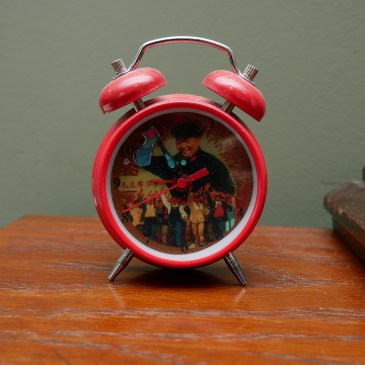
Novelty Clocks are clocks with unique designs, animations, or themes. They add personality and character to any room often sparking conversations. They can be as small as an alarm clock and can be placed just about anywhere in a room.
Buying your first clock is a rewarding experience that combines history, craftsmanship, and personal taste. By considering factors such as your budget, the clock’s condition, provenance, and placement, you can make an informed decision and choose a piece that brings lasting enjoyment.
Remember to select a clock that resonates with you personally, as it will become a cherished part of your space. With thoughtful planning and care, your first clock can be the start of a lifelong appreciation for the art and beauty of horology.
When selling an antique clock, proper preparation can make all the difference in attracting buyers and securing a fair price. Whether you’re parting with a cherished antique or vintage clock from a collection or selling one inherited from a loved one, taking the right steps ensures a smooth transaction.
Selling in lots might attract more buyers
In this article, I’ll use a real inquiry I received—where a clock owner sought guidance on selling a collection after the passing of a loved one—to walk you through the process. From assessing a clock’s condition and researching its value to choosing the best platform for the sale, this guide will help you make informed decisions and achieve the best possible outcome.
SN Writes
I have an odd question. I have several antique clocks that I need to sell. Can you give me insight on how to go about this? My husband passed away and collected them. I have funeral and taxes to pay and need to sell them. Thank you in advance for your help.
(I formatted my reply into bullet points for this blog post to make the information clearer and easier to follow for the reader.)
Light dusting is fine, but avoid over-cleaning or restoring
My Reply
I’m very sorry for your loss. Selling your husband’s clock collection can be overwhelming, but there are several ways to approach it to ensure you get a fair price:
Online Marketplaces:eBay reaches a global audience but involves fees and shipping. Etsy is good for decorative or unique clocks. Provide clear photos, detailed descriptions, and any history or provenance.
Local Auctions & Antique Dealers: Auction houses specializing in antiques attract serious collectors. Antique shops and dealers may buy outright, though often at a lower price for resale. Some shops also offer consignment.
Collector Communities: Facebook groups, clock forums, and local clock clubs can connect you with enthusiasts willing to pay fair prices.
Estate Sales & Local Listings: If selling multiple items, an estate sale might be an efficient option. Platforms like Craigslist, Kijiji, and Facebook Marketplace can also attract local buyers. Always meet in a safe location.
Appraisals & Pricing: Consider having the clocks appraised to understand their value. Research similar listings to set realistic prices.
Preparing to Sell:
Handle with Care: Light dusting is fine, but avoid over-cleaning or restoring, as collectors prefer originality.
Highlight Unique Features: Mention rare makers, historical significance, and craftsmanship.
Sell Individually or in Lots: Valuable clocks might fetch better prices when sold separately, while more common ones may do better in groups.
I went on to say that if SN wanted help with pricing, finding an appraiser, or choosing the best selling method for specific clocks, to reach out to me.
The maker of the movement is HAU or HAC. The familiar cross arrows trademark of the maker is stamped on the movement, in the middle of the backplate.
HAC was formed in Germany in 1873 by Paul Landenberger and Phillipp Lang and was originally called Landenberger & Lang Uhrenfabrik. The company changed its name to Hamburg Amerikanische Uhrenfabrik (HAU)/Hamburg American Clock Company (HAC) in 1883. The famous crossed-arrows became their trademark in 1892. In 1926 the company went into a cooperative with Junghans and in 1930 they finally merged with Junghans.
HAC trademark
HAC/HAU clocks can be difficult to date prior to Junghans acquisition of HAC/HAU in 1930. Once Junghans and HAC began their collaboration in 1926 some of the movements were date coded.
Now on to the adjustment of the movement that is the subject of this article.
Strike Adjustment Required
Earlier in the fall this time and strike mantel clock was serviced. During the servicing six new bushings were installed, all components were cleaned, the mainsprings serviced and the clock reassembled and tested.
The movement has been cleaned and serviced
However, during testing, the movement did not strike correctly. While there can be several causes, the most common of which is a misalignment of the hammer tail with the star points on the star wheel. This issue frequently arises during the reassembly of this type of clock movement.
Taking the time to carefully double-check the placement of parts, and ensure everything is in its correct place will help ensure the reassembly is smooth and successful. Once the wheels are in place there is only one multi-arm ever that resides between the plates. Position it such that the long arm rests in one of the deep slots of the count wheel while a short arm is placed in the cut-out of the cam wheel.
My usual practice is to position all the wheels and the lever(s) on the plate that has the movement posts, first. Once the wheels are correctly located, I lower the front plate onto the back plate. I secure two nuts to the mainspring end which prevents the movement plates from moving around as I position the upper wheels and their pivots in the train.
Setting up the strike side can be tricky. The wheels and levers must be set up correctly or the strike will not function. For instance, the width of the slots on the count wheel tells us that there is no “passing strike” on this movement. In some count wheel movements, for example, in many American-made movements, the half-hour is actuated by a cam on the centre arbour.
The pin-wheel, which is uppermost and one wheel removed from the fly on the strike side, is placed in approximately the 10 to 12 o’clock position, called the “warning” position. This allows for a half-turn to set up the strike.
To make the adjustment of the star wheel there is no need to completely disassemble the movement. Loosen the nuts on the strike side and gently lift the plate taking care not to dislodge the wheels on the time side. Disengage the star wheel from the adjacent wheel and rotate it slightly so that the hammer tail is in the middle of two of the star tips.
Tail and star point (arrows), in this photo, the tail is almost resting on the star point which is not the optimal position
The adjustment was made. On the test stand, the hammer tail isn’t perfectly centered between two of the star points, but it should function adequately.
If the hammer tail is in contact with the star point at the end of the strike sequence, it will hold in the raised position and the strike may not function at all from that point onward. While you are making this adjustment, ensure that the strike lever spring (which is a straight wire) is on the outside of the strike arbour.
In Sum
Adjusting the strike mechanism on an HAC movement requires patience, precision, and attention to detail. By carefully aligning the hammer paddle, star wheel, and other components, you can restore the clock’s striking functionality and ensure reliable performance. While challenges such as this are common when reassembling these movements, a systematic approach and an understanding of the mechanism’s function can make the process smoother.
Have you ever wondered where the terms “half past the hour,” “a quarter past,” and “a quarter to the hour” originate from? At one time these terms were practical and necessary for understanding time when precise minute readings were unavailable.
Stepping Back In Time
The practice of dividing an hour into quarters comes from the way timekeeping developed in medieval Europe. The concept of dividing an hour into halves and quarters predates mechanical clocks and can be observed in the use of sundials.
The shadow’s movement was tracked relative to hour lines and intermediate markings, reinforcing the habit of describing time in fractions of an hour.
Mechanical clocks, first appearing in the 13th century, used gears to divide the hour into equal parts: halves and quarters. Early tower clocks for example often lacked dials entirely. Since most people could not read a clock face, bells were a way of indicating the time.
The addition of dials in the 14th and 15th centuries made it possible for people to see the time visually, along with the auditory cues of the bells.
The Salisbury Cathedral tower clock is without a dial face(Photo by Phil Ledwith on Pexels.com)
Clocks with a Single Hand
Early mechanical clocks, which emerged in the late Middle Ages (around the 13th and 14th centuries), typically had only an hour hand. Minute hands were not introduced until the 16th century, and even then, they weren’t common until the 18th century.
The origins of phrases like “half past,” “quarter past,” and “quarter to” are connected to the period when early clocks had only one hand—the hour hand. These terms were practical and necessary for understanding time when precise minute readings were unavailable.
Half past two(taken at the NAWCC clock museum in Columbia, Penn)
These one-handed clocks divided the clock face into 12 hours, with each hour subdivided into 4 quarters. The divisions on the dial were marked to indicate these fractions, making it possible to estimate time to the nearest quarter-hour.
Standardized Terms
Terms became standardized as clocks became widespread and people needed a common language to express specific points in time.
The term “quarter” derives from the Latin quartus, meaning “fourth,” reflecting the division of an hour into four 15-minute segments.
“Half past” signifies that half of the current hour has passed. This phrasing likely became popular in English because it is concise and intuitive. “Quarter past” means 15 minutes past the hour, while “quarter to” indicates 15 minutes remaining until the next hour. This usage reflects a practical way of describing time, based on the idea of dividing the hour into quarters.
Reading Time with One Hand
Since these clocks could only approximate time, people described it in terms of the fractions visible on the clock face. Some common phrasings including some mentioned above are:
“Half past” meant the hour hand was halfway between two hour marks.
“Quarter to” referred to the hour hand being three-fourths of the way toward the next hour.
It’s six, without the o’clock
It’s half-five, referring to 5:30 for example
“Quarter past” indicated the hour hand had moved one-fourth of the way between two hour marks.
Some cultures use after rather than past, or to rather than till
Non-specific times such as around five or around 11
Or specifically, it’s exactly eight
Four of the clock, or 4 o’clock (taken at the NAWCC clock museum in Columbia, Penn)
Cultural ImpactThen and Now
This method of time-telling became ingrained in the language long before the widespread use of minute hands. Even after clocks with two hands became standard, the traditional phrases persisted because they were convenient and widely understood.
But today the phrases are beginning to leave our vocabulary.
Quarter to ten(taken at the American Watch and Clock Museum in Bristol Conn.)
These expressions seem to be fading from modern use reflecting changes in how we interact with time and the use of precise numbers when we communicate. As analog clocks become less prevalent in homes, schools, and workplaces, fewer people are exposed to the visual representation of quarters and halves on a clock face.
Despite this decline, these phrases still hold cultural and historical significance and are likely to persist in certain contexts, such as storytelling, or traditions involving analog clocks.
Indeed, many young people today struggle to read an analog clock or have difficulty understanding the meaning of the hands.
While writing this article, my wife asked me for the time. ‘It’s 5:47,’ I replied.
Regularly dusting a clock was once a key part of the cleaning routine in days gone by. The clock was an important feature in the home, and maintaining its appearance was a significant part of regular housekeeping. It often held a place of pride in the household.
Gustav Becker Vienna Regulator
While modern homes may generate less dust than those of the past, occasional dusting is still necessary to keep items clean.
Caring for your clock’s case is an essential part of maintaining its overall condition and preserving its appearance. Caring for your clock’s case is crucial because it helps maintain its visual appeal. The case protects the movement from dust, dirt, moisture, and physical damage. Over time, neglecting the case can lead to fading, cracking, or warping of the wood, which may affect the clock’s value. Regular cleaning, polishing, and protection from environmental factors such as sunlight and humidity can extend the life of the clock and preserve its historical and collectible value.
Your Cleaning Routine
Regular dusting is crucial, and using a soft, dry microfiber cloth is recommended to gently remove dust. Dust buildup can damage finishes over time, so it makes sense to make cleaning a regular practice.
Avoid using paper towels or rough cloths that may scratch the surface. Harsh chemicals and abrasive cleaners should also be avoided, as they can damage the finish. If necessary, a mild soap solution with water can be used, but always test it in an inconspicuous area first.
For wooden clock cases, use a high-quality furniture polish suitable for the wood type, such as wax or cream polish. Minwax Paste Finishing Wax works very well and ensures a durable long-lasting finish. Apply a small amount to a soft cloth and always rub in the direction of the grain. Be cautious not to over-polish, as it can build up residue.
If your clock has a glass door or side panels, clean it with a glass cleaner or a vinegar-water solution, spraying it on a soft cloth to avoid streaks, scratches, or spillover. Care should be taken not to get cleaner on the wood.
Additionally, protect the clock’s finish by keeping it out of direct sunlight, as prolonged exposure can cause fading or cracking. Avoid placing it near heat sources such as a register or heating vent or in overly humid areas.
Periodic servicing is important to ensure the clock case retains its original beauty, especially if the clock is older or of significant value. Over time, even with careful use, wood can become dry or scratched, finishes may dull, and joints may weaken. Regular cleaning, conditioning, and minor repairs can prevent these issues and help the case maintain its luster.
Call in a Professional, Perhaps
For higher-value or antique clocks, professional restoration might be necessary. This could involve refinishing the case, repairing cracks or veneer, and restoring or replacing any intricate details that might have worn over time. Professional restorers have the expertise and access to the right materials to ensure that the case is repaired or restored while maintaining its historical integrity. Proper restoration not only enhances the appearance but can also increase the clock’s market value by preserving its authenticity.
All the Metal Parts
When it comes to caring for metal parts in clocks, there are two main schools of thought.
One approach involves minimizing contact with oils and polishes, particularly on brass components. The idea behind this method is that applying oils or polishes can attract dust and grime, which could cause damage or wear over time. Additionally, frequent polishing of brass parts might cause the metal to lose its patina, which many collectors see as an important part of the clock’s character. In this approach, cleaning is done only when absolutely necessary, with a focus on preserving the natural finish of the metal.
The other school of thought advocates for the regular application of oils and polishes. A light coat of oil or polish helps protect metal parts, such as brass, from tarnishing and corrosion. This approach maintains the clock’s aesthetic appeal by preventing oxidation and keeping the metal parts shiny. Some prefer to polish brass regularly to maintain its lustrous appearance and use specialized oils to lubricate moving parts, ensuring smooth operation and reducing friction within the mechanism.
It’s Your Decision
Proper care and maintenance of your clock case are essential for preserving its beauty and functionality. Regular dusting, gentle cleaning, and using the right products can prevent damage to both the wood and metal components. Whether you prefer a more natural approach to preserving the patina or choose to regularly polish the wood and the metal parts, it’s important to prioritize the long-term health of your clock.
By following these simple guidelines, you can ensure that your clock continues to be a prized feature in your home for years to come, maintaining its historical charm and operational integrity.
After working on the dial of a Pequegnat Jewel mantel clock, I was very pleased with the results of the repaint. While the detailing may not withstand close scrutiny, the clock looks excellent from a comfortable distance.
When I brought the clock home, it appeared that a previous owner, frustrated by the loss of some or most of the paint on the dial, chose not to source a replacement but instead stripped the paint entirely, leaving only the numerals.
Photo taken on the day the clock was purchased
Someone had gone to great lengths to meticulously scrape away all the paint, but the result is far from appealing.
Something Still Troubled Me
I decided to address the missing paint on the dial by repainting it and touching up the numerals, and the results met my expectations.
After repainting the dial and retouching the numerals
It continued to bother me that the glass surround had a brassy gold appearance, while the dial bezel exhibited a bronze-like tone.
Although brass is an alloy of copper and zinc, with variations in composition potentially explaining this difference, I suspect that’s not the case here.
Instead, I believe the glass surround was originally painted gold, as small flakes of paint came off while I was cleaning it with a toothpick and cloth. Should I leave it as-is or match the outer bezel to the inner one? I’d have to think about it—a two-toned dial looked odd.
A Decision Was Made
Since the dial and surround had already been altered, I decided to take it a step further and repaint the inner bezel as well. With the right shade of acrylic paint on hand, I went ahead and tackled the task.
Some might argue that I went too far with the repainted dial and bezel, believing that any changes made to the clock over time are part of its history. However, I don’t share that perspective. To me, a poor repair from the past justifies taking steps to set things right. Leaving a damaged dial on a clock case that is otherwise in near-perfect condition would be a shame.
From a different angle
I have no regrets about my decision—if anything, I’ve now contributed to its history.
By correcting such mistakes, I believe I honour the intent and skill of the original maker. Restoring a clock to a condition closer to its authentic appearance helps preserve its aesthetic value for future generations.
As we enter a new year it is time to look back on the adventures and milestones I’ve experienced in the world of antique and vintage clock collecting and repair in the past year. 2024 has been one of discovery, growth, and deepening appreciation for the art of horology.
Over the past year, I have been shifting the focus of my collection. While I have acquired clocks from various countries, my interest has increasingly centered on Canadian clocks and those with a Canadian connection. This focus is evident in my acquisitions of the following clocks this year.
Adding to the Collection
My collection of Arthur Pequegnat clocks grew significantly this year with the addition of some standout pieces.
Arthur Pequegnat Hamilton Tall
The Dandyand Hamilton Tallmodels were particular highlights, each offering unique insights into the craftsmanship and history of the Pequegnat Clock Company.
Arthur Pequegnat Dandy
I also came across a rare find — a 30-hour Ogee clock by the Canada Clock Co., a true testament to Canadian clockmaking heritage. An interesting feature of this clock is the faux grain finish on the wood case, which was evidently a cost-saving measure by the company to make their prices competitive with American manufacturers at the time.
Canada Clock Co. Ogee
One of my most memorable acquisitions was an Arthur Pequegnat Simcoeclock (not pictured), purchased in 2018 from a shop in Victoria, British Columbia, for close to $200. This year, I added the Jewelmodel to my collection after spotting it on a high shelf at a local antique shop. Its price was surprisingly modest, coming in at less than a quarter the cost of the Simcoe making the find all the more satisfying. The addition of legs and side handles distinguishes it from the Simcoe.
Arthur Pequegnat Jewel
My most interesting acquisition was not a Canadian clock but a German-made Kienzle wall clock, which was given to me by a gentleman in Ontario (Canada).
Kienzle time and strike wall clock
The clock had been passed down from his grandfather, and the seller hoped to find someone who would truly appreciate it. He contacted me for advice and asked about its value. I offered some insights and mentioned that if he was unable to sell it, I would be happy to take it off his hands. Honestly, I never expected to hear back from him after that.
Several months later, he reached out to tell me that he would be gifting it to me. We arranged a hand-off in a small village in Quebec, and it has since become part of my collection. It is a handsome clock with a resonant two-tone strike that is one of the most “complete” clocks in my collection (for more on this clock go here).
Repairing and Restoring
In 2024, I spent less time repairing and servicing clock movements, instead focusing on my blog, researching clocks and clock companies and their histories, and maintaining my collection.
On the repair front, I tackled several challenging yet rewarding projects, including a Seth Thomas Type 89 time and strike and a HAC/HAU time and strike movement. These were standard servicing tasks that presented minimal issues.
Generally, my servicing philosophy is to avoid replacing original components as much as possible but I always test and ensure they meet the clock’s functional requirements. This year reinforced my belief that preserving original parts is vital to maintaining a clock’s authenticity.
HAC (Hamburg American Clock Co.) movement with plate removed
Among the repairs waiting their turn is the Danby model by Arthur Pequegnat which has been placed on the back burner due to other priorities. With three other movements to finish first, the servicing of those clocks plus the Danby will be projects for later in 2025.
Mauthe wall clock
Another project I’ll be tackling in 2025 is a family clock. This past year, I received my father-in-law’s clock for repair. It was passed down to my wife’s brother and has been out of service for over 25 years. I plan to return it fully serviced, and I hope that this stately Mauthe wall clock will take a prominent place in my brother-in-law’s home as a sentimental reminder of my wife’s father.
Sharing the Passion
This year celebrates seven years of blogging about clock collecting, repairs, and restoration. My blog has become a platform to share knowledge and stories, blending my love of writing, photography, and horology. Though I took a break for the holiday season, I look forward to returning this year with fresh content and inspiration.
One of the goals of this blog is to introduce antique and vintage clocks to younger generations and inspire an appreciation for these remarkable mechanical devices from the past. In today’s modern age of a throw-away culture, how many items can you think of that still function flawlessly after more than a century? It is a short list indeed!
A Special Milestone
In 2025, I will celebrate the remarkable milestone of reaching 1 million views, and I’ll be publishing a special article to mark the occasion. This achievement highlights the significant impact and reach of my content, demonstrating that my blog has resonated with a broad audience and built a dedicated following over time. Reaching this level of engagement is a testament to the value and quality of the information I share, making it an incredibly rewarding accomplishment as a creator.
A Broader Perspective
My collecting journey has always been intertwined with a sense of history and nostalgia. Yet, I’ve also faced the reality that interest in antique clocks is waning among younger generations. While my children may not share my passion, I find joy in preserving my clocks for future collectors or enthusiasts who might rediscover their charm. I hope that a younger generation will emerge and find value in collecting these old treasures.
My tastes and collecting habits are evolving, and I am increasingly focusing on Canadian-made clocks or those with a significant Canadian connection. This year, I may sell some of my more common clocks, which will reduce my collection to a more manageable size while still preserving my collection of 15 Canadian-made clocks.
Looking Ahead
As the New Year is upon us, I’m excited about the possibilities. My trip to the UK in 2024 provided opportunities to explore horological treasures, visit museums, and reconnect with my British heritage. Whether acquiring new clocks or deepening my understanding of their history, I’m eager to see where future journeys take me.
To all fellow enthusiasts and readers of my blog: thank you for your support and shared passion for these timeless pieces of history. Here’s to another year of celebrating the art and craft of clocks!
This blog post was first published in 2016, and it’s now time to revisit and update it to reflect the changes in market conditions and prices since then. There are many reasons why clock prices are low and continue to decline, but at the risk of oversimplifying, I will say that the law of supply and demand applies to this area of collecting, as it does to many others. Thousands of clocks were produced in the past, and antique clocks have flooded online marketplaces in recent years.
Every clock owner wants to know the value of their clock, and every seller wants to know the right price to ask. This guide aims to help both buyers and sellers by addressing key factors involved in assessing the value of an antique or vintage clock.
The Unpredictable Clock Market
In today’s unpredictable clock market, determining a clock’s value can be a challenge. What you think your clock is worth might not align with expert opinions or what buyers are willing to pay. Values can shift from day to day and are influenced by many factors. The market can be unpredictable, and the value of a clock may fluctuate significantly over time.
For example, take a typical ad for a mid-1990s Howard Miller grandfather clock on Facebook Marketplace. The seller may have paid $3,000 at the time and think that an asking price of $1,500 is fair. However, if the clock fails to generate interest, it could ultimately sell for much less. I’ve seen these clocks go for as low as $400 and even less. I’ll explain why at the end of this article.
The personal value the owner places on the clock often differs from its market value, leading sellers to either accept a lower price than expected or remove the ad altogether.
Easy to find, difficult to realize more than a few dollarsfor oneon a sale
Even expert appraisals are subjective, based on the condition and collectibility of the clock, and are subject to market shifts. For example, while my Ridgeway grandfather clock is in excellent condition and a standout piece in my home, it has little market value today.
Factors That Influence the Value of a Clock
Is the clock original? Sometimes it is difficult to tell if every part of the clock is original? But a completely original clock in pristine condition holds more value than one that has suffered the ravages of time, neglect, or poor restoration.
Original clocks attract more buyers. If a clock has undergone significant repairs or replacement parts, its value will decrease. Determining originality can be difficult unless an expert inspects the clock. Many “Vienna Regulator” clocks, for instance, have been assembled with mismatched parts or movements, affecting their authenticity and value.
Many Ogee clocks have replacement movements, dials, hands, weights, tablets, and so on
What type or style of clock is it? While some clocks, like certain American mantel clocks, have little value due to many thousands of them having been produced, other styles such as 18th-century English bracket clocks or ornate French Cartel clocks can fetch high prices due to their rarity and historical significance. Tall-case clocks, despite their age, will often sell for much less than their original value.
Mantel clocks were produced by the thousands and have little to no value
Does the clock have a label, trademark, or prominent name? Clocks with identifiable labels or trademarks tend to be more valuable. Prominent clockmakers’ such as E. Howard or Simon Willard, hold more value than similar, unmarked clocks. Replacement labels or unmarked movements lower the clock’s desirability.
This elegant 1830s banjo clock could have been crafted by a renowned clockmaker but is unmarked and holds minimal value.
Is it from the correct period, or is it a “knock-off” or reproduction? Many clocks, like the reissues of the Seth Thomas Regulator #2 in the 1970s, are less valuable than their original counterparts. Identifying subtle differences between originals and reproductions is key. Japanese and Chinese manufacturers produced “millions” of knock-off wall clocks that might fool the novice buyer.
Cheap and disposable Chinese-made clock, not worth repairingor buying
Does the clock have provenance? The history of a clock can add value. For instance, a clock with a documented history, owned by a famous person, for example, may command a higher price due to its historical significance. Intricately made tall case clocks with special provenance, made by noted clockmakers, for instance, will command high prices.
Ornate clocks such as this one are worth a small fortune
What is the age and condition? Much like antique cars, a clock’s age can contribute to its value, but condition plays a far more significant role. Just as a classic car with rust, missing components, or subpar restorations loses its appeal and worth, a clock with missing parts, poor repairs, or a poorly repainted dial will see its value diminish. Similarly, some clocks, despite their age, may lack desirability due to inferior craftsmanship or limited collector interest, much like certain vintage cars that fail to garner attention despite their years.
180-year-old woodworks clock; worth almost nothing, old is not gold!
Is the clock collectible? Rare or unique clocks are highly collectible. For instance, antique Canadian-made Arthur Pequegnat clocks are highly sought after in Canada, while the same clocks may have limited appeal outside specific regions.
For some reason, these Series I Kienzle World Time clocks tend to fetch high prices
What is the mechanism type? Generally, three-train clocks (time, strike, and chime) are more complex and valued higher than two-train clocks (time and strike). Weight-driven clocks tend to be worth more than spring-driven ones. Conversely, some collectors tend to steer clear of complex clocks due to the challenges involved in repairing them.
People Don’t Want Clocks Anymore
The declining interest in antique and vintage clocks stems from several factors. Modern lifestyles prioritize convenience, and digital devices like smartphones and smart home systems have replaced traditional clocks as timekeeping tools. Generally, I find that younger generations do not share the same appreciation for historical craftsmanship, focusing instead on technology or experiences over physical heirlooms.
Modern homes, often compact condominiums with limited space, leave little room for accommodating a clock.
Antique clocks often require maintenance and specialized knowledge to repair, which can deter potential buyers.
Changing interior design trends also play a role, as many people prefer minimalist or contemporary aesthetics that do not accommodate antique and vintage clocks.
In the coming years, the prices of clocks will decline further as Baby Boomers—many of whom have been the primary custodians of antique and vintage clocks—enter retirement, downsize their homes, or pass away. This generational shift often leads to an influx of clocks entering the market as these individuals or their families divest of heirlooms and collectibles, items their own children do not want. With younger generations generally less interested in owning or maintaining such treasures, the supply will far outpace demand. This over-saturation, combined with changing tastes and priorities, will drive prices down even further, making it a buyer’s market for those who appreciate the art and history of antique clocks.
Do Your Research
Research is the key to determining value. Study online auction sites, local sales, reputable clock shops, and message boards to gauge prices. Be aware that clock prices are highly volatile and can change quickly based on supply and demand.
Before buying or selling, also research prices on eBay, reputable auction houses, and through local dealers. Finding clocks similar to yours can give you a price range to gauge your clock’s value—whether for personal interest or if you’re planning to sell.
Understand that clock prices fluctuate, and markets can be unpredictable. Always do your homework, ask questions, and provide honest descriptions if selling. Keep in mind that certain mass-produced clocks, many from China, Korea, and Japan, are not in high demand among collectors. This was true in 2016 and true today.
With the Internet’s impact, many clocks once thought to be rare have flooded the market, which affects prices. The law of supply and demand dictates that as supply increases and demand decreases, prices will drop. However, high-end, collectible clocks continue to retain their value.
Summary
Determining the value of an antique or vintage clock can be challenging, influenced by factors like originality, condition, age, and market demand. While personal sentiment often plays a role in perceived value, the reality of the unpredictable clock market requires thorough research and realistic expectations. Whether you’re buying or selling, understanding what makes a clock desirable and collectible will help you navigate this ever-changing landscape. With patience and knowledge, you can uncover hidden treasures or find the right buyer for your timepiece.
Is now a good time to purchase that special clock? With careful research, you may find bargains, but tread lightly, the clock market can be a minefield.
In Part I of this series, I shared my approach to restoring a clock dial through a process called inpainting. Inpainting is but one solution to the problem of a ruined dial. To restore a clock dial by bringing it back to its original state involves carefully mixing paint to match the original tones, gradually building up layers to cover exposed metal, and remedying prior modifications that detracted from the dial’s appearance. I also highlighted the challenges of repainting, emphasizing the precision and patience required. Part I concluded with the groundwork laid for further work on the dial.
The clock is an Arthur Pequegnat Jewel, manufactured before 1917. The exact year of manufacture is uncertain, as Pequegnat did not date stamp their clocks. The approximate period of manufacture is confirmed by the maker’s stamp, which includes “Berlin,” the original name of what is now Kitchener. The city’s name was changed in 1917 due to sentiments arising from the Great War. So, the clock was made somewhere between 1904, the first year of production for Pequegnat clocks, and 1916.
Arthur Pequegnat Simcoe
This model shares the exact case dimensions as the Simcoe but lacks certain decorative elements, making it one of the more affordable mantel clocks in their range.
The clock case features a piecrust dial bezel like the Simcoe, which was later replaced by a plain bezel in later years.
Pequegnat Jewel as found
In terms of the dial restoration, Part II will build on the inpainting progress by applying additional coats, enhancing details like the numerals and chapter ring, and bringing the dial closer to its original elegance.
More Work Required on the Dial
After the second coat, the bare metal is still visible, indicating that at least one or two more coats will be necessary.
I decided to continue a shade darker for the next layer by adding a touch more brown, and after more thought, darker still for the next coat or two. Even at this stage, I’m beginning to notice a pleasant transformation in the dial, shifting from its stark metallic appearance to a more pleasing shade of cream.
For the third coat, I aimed to soften the yellow and achieve a more aged look. It’s rough at the moment, but I’m confident it will come together once I start applying black paint to the numerals. The good news is that the bare metal is no longer visible.
The dial is done, now for the numerals
When placed against the case, the repainted dial is an improvement, but it’s clear that I’ll never fully replicate the original dial, even with my try at aging it.
The fourth coat has fully concealed the tin beneath, so, I’ll stop here. Next, I will focus on the numerals, using an artist’s detail brush and a Sharpie Ultra fine-point pen to carefully restore them.
Bezeltest fit
Since the stripping process compromised the original numbers, I’ll use my Simcoe as a reference to reshape and refine their appearance. I’ll allow the paint to cure fully before moving on to the next step.
After cleaning the bezel, I noticed a distinct difference between the glass surround and the dial bezel. The glass surround has a brassy gold appearance, while the dial bezel exhibits a bronze-like tone. Although brass is an alloy of copper and zinc, with variations in composition potentially explaining this difference, I suspect that’s not the case here. Instead, I believe the glass surround was painted gold, as small flakes of paint came off while I was cleaning it with a toothpick. The bottom line? Best to leave it as is. Or match the outer bezel to the inner one? I’d have to think about that.
Here is the final result after a few touch-ups with black paint and some light polishing of the glass and both bezels.
Is it an improvement?
While it does not hold up to close scrutiny, there’s no denying it looks much better when viewed from a comfortable distance.
With the dial restored and the case cleaned, the final step will be servicing the time and strike movement to bring the clock to its full potential. While the improvement comes with its compromises, it’s satisfying to see the progress so far, and I’m eager to have this clock run smoothly after servicing.
As we welcome the New Year, antique clocks serve as quiet reminders of the passage of time, marking the shift from one chapter of our lives to the next.
Imagine a room with an antique clock, its steady ticking signaling the start of something new. These old clocks remind us that every moment is precious, especially as we say goodbye to the past year and look ahead to the future.
On New Year’s Eve, the ticking of the clock becomes a backdrop for reflecting on the highs and lows of the year gone by. Each tick seems to echo the shared experiences we’ve all had. As we step into the new year, let’s take the lessons we’ve learned and carry them forward, embracing the growth and opportunities that lie ahead in the new year.
The author
Amid the celebrations, let the ticking of antique clocks remind us of the new possibilities waiting for us. I wish you a Happy New Year filled with hope, joy, and time well spent with those you care about.
I also want to take a moment to thank you for supporting my blog. Your support keeps me motivated to push on with more clock articles, and I’m looking forward to creating more content for you in the coming year.
As the holiday season is upon us, I’ve decided to take a break from writing and updating my blog to enjoy some much-needed downtime.
The past year has been filled with exciting clock-related adventures, research, and restoration projects, and now it’s time to step back, recharge, and spend time with loved ones. I look forward to returning in the New Year, refreshed and ready to continue sharing my passion for antique clocks, repairs, and restoration.
Upcoming articles in 2025 include:
Pequegnat Jewel Dial Restoration | A Case For Inpainting | Part II
What is My Clock Worth? (Revision of a past blog article)
Reflections on a Year of Clock Collecting and Repair (top purchases in 2024)
On My Workbench | Type 89 Movement by Seth Thomas and a Strike Side Issue
Essential Tips for Clock Case Care
When Clocks Had One Hand
Troubleshooting A Strike Issue on a HAC/HAU Movement
Restoring a Vintage Mauthe Box Clock | Evoking Family Memories | Part I
I’m always on the lookout for fresh content, so if you have any clock-related topics you’d like me to explore, please feel free to share your thoughts and ideas!
Wishing everyone a wonderful holiday season, and I’ll see you again soon in 2025!
Wishing you all health and happiness this Christmas season!
Every year, my kids stress over what to get me for Christmas. They know I’m passionate about antique clocks and spend my time restoring and repairing them. “Is there anything he needs?” they ask their mum.
Holiday in Lego Land
Honestly, it’s the little things I really appreciate in my Christmas stocking. Kids, if you want to surprise me, just throw in a new pair of cloth gloves, a box of toothpicks, some cotton swabs, or a paintbrush, oh, and some solder (I did run out of that!) – that’s all I really need to know you’re thinking of me.
Christmas at home
Christmas is about joy, not about extravagant gifts unless they come with love and appreciation for those we care about. So, if you’re trying to find the perfect gift for the clock lover in your family, remember – it’s the simple things that count.
I hope this wonderful time of the year touches your heart and brings joy to you and your loved ones in a special way. And if there’s a clock under the tree, consider it a timely gift (get it!), reminding you of fond memories and family gatherings filled with love, laughter, and delicious food.
Hmm, wait a minute, about that extravagant gift…..ah, just kidding!
Thanks for all your letters! I may take a little longer to reply this time of year, but I appreciate each and every one.
As I continue to build my Pequegnat clock collection, I always seize a good deal when I find one, and the Jewel was too good to pass up. You might be wondering, what exactly is a Pequegnat clock and where does the Jewel fit into their model lineup?
A Pequegnat clock refers to clocks produced by the Arthur Pequegnat Clock Company, a renowned Canadian manufacturer active from 1904 to 1941 in Kitchener, Ontario, Canada. These clocks are celebrated for their quality craftsmanship and distinct place in Canadian horological history. Pequegnat clocks were a common feature in many Canadian homes.
I now have twelve Pequegnat clocks in my collection, consisting of several mantel clocks and three wall clocks.
Arthur Pequegnat Simcoe
In 2018, I purchased a Pequegnat Simcoe clock from a shop in Victoria, British Columbia, for nearly $200—a price I found fair at the time. More recently, I came across the Jewel model in an antique shop just 20 minutes from home. Though it was perched on a high shelf, I recognized it instantly. Given its significantly lower price, I couldn’t resist adding it to my collection.
An excellent price for a Pequegnat mantel clock
The case dimensions of both are exactly the same and each has the earlier Berlin-style piecrust dial.
Pequegnat Jewel
Three features differentiate the Jewel from the Simcoe. First, the Jewel was a less expensive clock. It is likely one of the least expensive mantel clocks in the Pequegnat mantel clock lineup, offering a more affordable option for many Canadian families.
Secondly, the Jewel lacks the lion’s head side handles and decorative feet found on the Simcoe.
Third, although the movement is identical to the Simcoe, the Jewel has a smaller gong block. A smaller gong block would still produce sound, but with a less resonant tone, which was considered an acceptable tradeoff for keeping production costs lower.
Condition of the dial
Unfortunately, the dial on the Jewel has been completely stripped of its paint. I’m willing to accept a dial with some imperfections—after all, the paint on the Simcoe’s dial is flaking, but that’s part of its aging process and what gives it its antique character.
A ruined dial
However, a dial completely stripped of its paint, aside from the chapter ring and numerals, is unsightly and distracting. I completely understand why this was done. More expensive Pequegnat clocks featured enamel dials, while the more common models had painted dials, which are prone to flaking after many years and this clock must have had extensive paint loss.
While some might have left the dial as it was, viewing it as part of the clock’s history, the extent of the modification made it impossible for me to leave it as is. The fact that the clock only cost me $45 also made me more willing to take the risk to remediate the dial.
Repainting a dial is usually a last resort for me, and I wouldn’t recommend it unless you have steady hands, plenty of patience, the necessary materials, or the option to outsource the work to an artist friend or an expert. Outsourcing might be a good choice, particularly for dials with sentimental value, as it ensures the work is handled with precision and care by an expert. Preserving the integrity and charm of a cherished clock often warrants entrusting the work to skilled hands such as The Dial House.
Some time ago, I restored the dial on a Seth Thomas clock using a technique called inpainting, and I was very pleased with the results. I also touched up the dial to a Pequegnat Canuck shelf clock with very satisfactory results.
A decision was made
As I considered my options, I decided that if the inpainting did not turn out as planned, I could always order a paper dial from an eBay supplier and place it over the original.
The paint was painstakingly scraped away, but the result was far from pleasing
However, the cost of the dial alone would exceed what I paid for the clock. Besides, I’m not particularly fond of paper dials.
I know that once I’m done with the dial, my artistic “talent” will be apparent upon close inspection. However, I’m confident it will be an improvement over its current state.
To carry out this procedure, the hands, dial/bezel must be removed. There are just two screws at 3 and 9 o’clock that hold the dial assembly in place. Once the assembly is removed, the glass and its bezel can be separated from the dial and set aside.
Once the dial was removed, I cleaned the stripped surface with isopropyl alcohol. It evaporates quickly and leaves no residue, and since the dial had no remaining paint aside from the chapter ring and numerals, I wasn’t concerned about damaging the finish and simply worked around the painted areas.
A small dab of yellow is enough
The dial was likely originally white but had aged to a darker cream color over time. To recreate this, I mixed a touch of canary yellow with cotton ball white to achieve the perfect shade. I used both a broad artist’s brush and a fine-point detail brush to apply the first coat. Multiple coats are necessary, but the first coat needs to be cured before adding another.
I’m using water-based acrylic paint, which is self-sealing and becomes permanent when baked at low heat however, this dial will not be spending time in an oven. Once another coat or two is applied I can use a pointed tip detail brush to reshape the numerals using black paint.
The first coat is acceptable, though a bit blotchy due to the uneven spread of paint across the dial. The tin was very visible, so I knew that more than one coat would be necessary.
I mixed the yellow and white paint the same way for the second coat, this time adding a touch of chocolate brown.
However, the bare metal is still visible, indicating that at least one or possibly two more coats will be needed. I’m considering going a shade darker for the next layer by adding a touch more brown, but I’ll take some time to think it over before deciding. I’m starting to notice a lovely transformation in the dial, shifting from its stark tin appearance to a more pleasing shade of cream.
That wraps up Part I of this two-part series. In Part II, coming in the new year, I’ll continue the restoration process by applying additional coats to the dials and refining the numerals and chapter ring. Stay tuned!
When discussing American clocks, the name Elisha Manross might not come to mind as readily as prominent makers like Seth Thomas, New Haven, or Waterbury. However, Elisha Manross (1792–1856) played a pivotal role as a pioneer in the development of Connecticut clockmaking.
In 1812, at the age of 20, Elisha Manross, along with John Cowls, opened a shop in Bristol, Connecticut. Initially focused on woodturning, Manross did not set out to be a clockmaker. In 1825, he began making clock parts for other clockmakers. By 1835, Bristol was home to over a dozen clock factories producing woodworks clocks, and that year, Manross started producing clocks of his own. The 1837 depression marked the decline of wooden movement clocks and the rise of brass movements, particularly those invented and produced by Jerome1.
In the early years of clock production, materials were limited, and brass was commonly used for most components.
Brass mainsprings are exceptionally rare, and a clockmaker could easily go their entire career without encountering one. This is because brass mainsprings were only used for a brief period in American clockmaking history. Although carbon steel springs were used in Europe as early as the 1760s this technology was not used in America until the late 1840s.
From 1836 to 1850, brass was relatively inexpensive and readily available as a mainspring material due to the high cost of steel at the time. Brass is certainly not the best material to use as a mainspring since it is not as strong as steel and it loses its elasticity over time.
Tempered brass mainspring, American Clock and Watch Museum, Bristol Connecticut, June 2019
In 1847, the tempered steel mainspring, designed for everyday clocks, was introduced. This innovation quickly rendered brass mainsprings obsolete, relegating them to a niche chapter in horological history.
It is common for 30-hour time-and-strike Gothic steeple clocks, like this one by Elisha Manross, to feature steel mainsprings. Why? Because the original brass mainsprings broke and were replaced. The fact that this clock retains its original brass mainsprings in excellent condition suggests that it has led a relatively gentle life despite evidence of other repairs made to the movement over the years.
Elisha Manross 30 hour movement, as found
While some might consider replacing the brass with steel mainsprings, my priority was to maintain the originals. These brass mainsprings represent a significant chapter in the history of American clockmaking and deserve to remain in the movement where they belong.
Clock repair and restoration can be a rewarding yet delicate process, requiring both skill and patience. Whether you’re working on an antique clock or a vintage movement, there are several common pitfalls that can easily derail your progress if you’re not careful. From handling mainsprings to ensuring proper oiling, small mistakes can lead to bigger issues down the road.
In this article, we’ll explore some of the most frequent mistakes made during clock repair and share tips on how to avoid them, ensuring your repairs are both successful and long-lasting.
Mainsprings
When working with mainsprings, always be cautious about how they are stored and handled. If two mainsprings are placed on top of each other, they may mate together in a way that makes it nearly impossible to separate them without damaging the springs. To avoid this, always position them so that they wind in opposite directions. This ensures they cannot interlock and will be easy to handle separately when the time comes.
Orientation of the Count Wheel
The count wheel plays a critical role in regulating the striking sequence of a clock. Different movements may have count wheels that rotate in opposite directions, so it’s essential to remember or note the orientation of the count wheel when removing it. If you fail to mark or track which way it goes, you may end up installing it incorrectly, which can result in malfunctioning strikes. Always take care to note the direction of rotation when removing any component like this.
Helper Springs
Helper Springs may look like an add-on but are part of the original manufacturing process. Novices are tempted to leave them out when servicing a clock reasoning that they were added later during a repair.
Helper springs are vital for the correct functioning of certain levers and gears in a clock’s movement. If these springs are not properly attached, the levers may fail to operate as they should, and the springs can even interfere with other components, preventing them from working as intended. Make note of the orientation of the helper springs during disassembly and always check that all helper springs are in place and attached securely before reassembling the movement.
Take Special Care with Pivots
Patience is key when working on clock movements. If pivots are difficult to fit or the plates don’t seem to align correctly, it’s tempting to apply more force. However, applying too much pressure can bend or damage the pivots, which may be difficult to fix without professional tools or techniques. Instead of forcing components, carefully assess the situation, ensure everything is aligned, and use minimal force to avoid damaging the pivots.
An especially designed pivot locator can be your best friend.
Pivot locator
Think twice before concluding a part is defective
It’s easy to jump to conclusions when diagnosing problems with a clock movement. You might assume that a part is defective or not functioning properly, but this is often not the case. Before replacing any parts, make sure you have thoroughly inspected the movement and confirmed that the part is indeed damaged or worn. Assumptions can lead to unnecessary replacements, costing both time and money. Always verify before proceeding.
Taking photos is a best practice
Taking pictures during disassembly is a common practice, but there’s a risk in doing this too early. If you take pictures before thoroughly understanding how the clock is put together, the images can become a source of confusion later on. You may forget specific orientations, parts, or connections, leading to problems when reassembling the movement. Instead, take the time to carefully observe and document each part’s position as you disassemble the clock. This will help ensure a smoother reassembly process.
Stop and Think Before Cleaning a Dial
Many a dial has been ruined by a repairer’s eagerness to clean it. If the dial needs cleaning, consider using a gentle hand-cleaning method (soap, water and a soft cloth will do) to avoid any damage like the damage to a UM Muller clock dial below.
Dials, especially antique ones, are delicate and can easily be damaged by the high-frequency vibrations in an ultrasonic cleaner. The cleaner may strip paint, damage decals, or even warp the dial if it’s not carefully handled. Always remove the dial before placing any components in the ultrasonic cleaner.
Proceed in a Safe Manner
When disassembling a clock movement, always ensure the mainsprings are securely restrained before you separate the plates.
Clamps for mainsprings ensure safety when working on movements
If the plates are removed without securing the mainsprings, they could unwind suddenly, potentially causing damage or injury. Use a mainspring winder, clamps, or similar tools to restrain the springs before beginning the disassembly process to avoid any accidents.
When using a spring winder, it’s important to wear thick leather gloves and eye protection to safeguard yourself from potential surprises if a spring fails. These precautions help minimize the risk of injury from sudden, high-pressure releases.
Resist the urge to bend things
During repairs, it’s easy to inadvertently bend parts while trying to make them fit or forcing them into place. Parts of the striking mechanism, especially on the striking levers, are particularly prone to bending. Once bent, they can be difficult to straighten and may not work correctly afterward. Always handle parts with care, and if something does not fit easily, take the time to inspect the alignment or find the correct adjustment method rather than forcing it into place.
Over-oiling is Never a Good Idea
As a person I knew once said; “if a little is good, a lot is better”. It’s tempting to apply generous amounts of oil when servicing a clock, but over-oiling can lead to a number of issues.
Excess oil can attract dust and dirt, which will gunk up the movement and cause it to run less smoothly. It can also seep into areas where it shouldn’t be, like on the dial or outside of the movement, leaving unsightly stains. Always use an approved clock oil sparingly, and only in the areas where it’s needed. A little goes a long way, and it’s better to apply no more oil than necessary rather than risk over-oiling the movement.
To Summarize
Clock repair requires not only skill but also a cautious approach to avoid common mistakes that can lead to damage or injury. By taking the necessary precautions—such as properly handling mainsprings, ensuring parts are correctly installed, and using minimal force—you can prevent costly errors and ensure a successful repair. Patience and attention to detail, will make all the difference in restoring a clock to its full functionality, allowing it to run smoothly for years to come.
Suggestions and tips for novices? Join the conversation.
For years, my Seth Thomas column and cornice clock rested atop an antique radio in our living room. However, after redecorating the space with hardwood flooring in place of the carpet, the radio and clock no longer suited the updated space.
Seth Thomas column and cornice “Empire” style time and strike weight driven shelf clock
I did not want to relegate the clock to storage, so I opted to find it a new spot in our home. Since most of the other rooms already had plenty of clocks, I decided to display it in my office.
This lovely Seth Thomas time and strike eight-day weight-driven column and cornice clock with hour strike features an attractive veneer case with cove molded crest, lyre movement, three-quarter columns in painted gold, and two glass doors, one with a reverse painted design, opening to the interior clock works which reveal a tin painted dial and the original printed and illustrated Seth Thomas clock makers label. It is 32″ tall, 18″ wide and 5“ deep.
The dial had some losses
The clock has one unique detail: while the lower tablet is original, the upper tablet was recreated from a photograph of hanging fruit, modified to complement the design below. Additionally, the dial, which had suffered some losses in the corners and chapter ring, was repainted.
The painted tin Roman Numeral dial has hand-decorated flower spandrels in all four corners with the centre portion of the brass lyre movement visible through the dial.
Among collectors an appropriate descriptor for this clock is “column and cornice” but it is also generally classified as a shelf clock. This particular clock features a hook on the top of its case, likely intended by a past owner for installation that way. While I have seen similar clocks mounted like this online, they were never originally designed to be hung.
However, the hook might serve an additional purpose. Given that these clocks can become top-heavy when fully wound, the hook could be an effective way to secure the clock to a wall, especially in areas where it might be easily bumped.
Building the Shelf
The first step was to build a shelf to accommodate the clock. I had some leftover 8-inch-deep pine boards from a previous project, which were ideal for this purpose. I purchased extra pine braces some time ago, and they turned out to be perfect for completing the project. I cut a piece about 22 inches long and painted it a shade of beige. The base of the clock is 18 inches leaving 2 inches on either side.
Pine board and braces
The next step was to mount the braces to the wall. Knowing the room had studs spaced 16 inches apart, I used a stud finder to locate the first stud and then measured 16 inches to find the second one.
Sixteen inches on centre
Once the braces were mounted and made level I installed the shelf using wood screws.
The clock is positioned on the shelf
Checking for the Correct Beat
Now to determine if the shelf is level and the clock is in beat. Using a Timetrax Clock Timing Machine I switched to the BAL feature to check the beat.
Timetrax microphone attached to the winding arbour
A beat adjustment was unnecessary as the clock was already leveled. If leveling were needed, it would simply involve slightly bending the crutch incrementally to find the beat. While checking the beat can easily be done by ear, it made sense to use my Timetrax device for greater precision.
Timetrax Clock Timing Machine
According to the Timetrax instruction manual If the beat is within plus or minus 20 the clock is in beat. In this case, it was almost dead on.
Seth Thomas clock mounted on a shelf (note repainted dial)
Once the beat is confirmed, the weights are replaced, the hands and dial can be reattached, and the pendulum is given a slight push.
After confirming the beat the clock was ready to be displayed in its new spot. This Seth Thomas column and cornice clock, with its exquisite veneer case and distinctive features, now takes pride of place in my office, where it brings an added touch of elegance to the room. Moreover, since the room houses many spring-driven clocks, a weight-driven clock will provide a more accurate reference for timekeeping.
I’m pleased to have found a new location for it, as it truly deserves to be on display.
As a clock repairer, there are several compelling reasons to keep the original mainsprings if they are still in good condition.
Keeping the original mainsprings ensures that the clock remains as close to its original condition as possible. Collectors and enthusiasts often value clocks with original parts, as they maintain the authenticity and historical significance of the clock.
Older brass mainsprings are not replaceable
Many older mainsprings were made with higher-quality steel and manufacturing techniques and modern replacements may not be of the same quality. Original springs, if well-preserved, may outperform modern equivalents in terms of durability and performance.
Consider the original design of the movement and how it is powered. The original mainspring is designed specifically for the clock’s movement, ensuring the proper balance of power delivery and running time. Replacements, even when sized correctly, may not deliver power consistently due to slight variations in material and design.
Modern mainsprings can sometimes deliver too much power, especially in delicate or vintage movements, leading to accelerated wear or damage to gears and pivots. Original springs are often “seasoned,” meaning they’ve been conditioned by years of use and may be gentler on the movement. Even replacements that have the same dimensions as the original are overpowered. Recommended replacement springs might overload the movement and lead to wear issues sooner rather than later.
Laurie Penman, who authors a regular feature in Clocks Magazine, stresses the importance of considering replacement springs in the September 2024 issue, stating “it bears repeating that if you fit a spring that approximates to the original nineteenth century the movement will be overloaded”.1
Cleaning an open mainspring
If the original mainspring is functional, reusing it can save the cost of purchasing a replacement. In fact, finding an exact replacement for some older or rare clocks can be very challenging for the repairer.
That said, we certainly do not need to send more items to landfill sites. Reusing parts when possible reduces waste and the environmental impact of manufacturing new components.
Inspect the mainsprings during every servicing
Part of servicing a clock movement includes inspecting and cleaning the mainsprings. While open mainsprings are easier to inspect and work with, some repairers may be tempted to skip cleaning those encased in barrels. It’s important to learn how to open mainspring barrels for proper maintenance.
Mainspring barrel
Over time, the mainspring(s) can accumulate old oil, dirt, rust, and debris, which can impede its smooth operation. Removing the mainspring from the barrel or open springs from a movement allows for proper cleaning and lubrication, ensuring the clock runs efficiently.
Open mainsprings that have been serviced
Removing the spring also allows you to apply fresh mainspring oil evenly along the entire length of the spring. But that is not the only reason.
When Should You Replace the Mainsprings?
Removing the mainspring allows you to thoroughly inspect it for any signs of wear, fatigue, or damage that might require replacement. If the spring is in good condition but the hook end is cracked, it can be reused by cutting the spring and fashioning a new hook end. This will make the spring slightly shorter.
However, after a thorough cleaning, the movement will run more efficiently and require less power to run through its designed cycle, be it a day or a week, two weeks, and so, there may be little to no effect from a shortened mainspring. That said, the task of repairing a mainspring is best suited for an experienced clockmaker.
The most straightforward solution for the novice is simply to replace the spring.
Although they may appear set to some, this spring is perfectly usable
As a clock repairer, I rarely replace a mainspring. Even if a mainspring appears “set,” it often still has functionality. The important step is to return the spring to the movement and test it to ensure it meets the required standard by completing its designed cycle. If there is a significant loss, a running time of 2-3 days for an 8-day clock, and if there are no other obvious issues the mainspring must be replaced.
For some, ensuring a clock runs while preserving its original parts might take priority, even if the original mainspring cannot power the clock through its designed cycle. It is therefore essential to balance preservation with functionality.
Using a spring winder while working on a spring within a barrel
By carefully evaluating the mainspring’s condition and the specific needs of the movement, you can make an informed decision that respects both the clock’s history and its mechanical performance.
The term minimal invasive intervention refers to the delicate decision-making process regarding how much work should be done to repair, restore, or conserve a clock without significantly altering its original character. It encapsulates a challenge many collectors face: balancing preservation with functionality.
Some argue that any work performed on an antique clock detracts from its value, much like installing new fenders on an antique car. While it may improve appearance or functionality, it might make the piece less desirable to purists. So, at what point does intervention—however well-intentioned—compromise a clock’s value?
When original parts, particularly the movement or key aesthetic features, are replaced with non-original or modern components, the clock often loses collector value. Authenticity is a cornerstone of desirability for collectors. Replacing a worn movement with a reproduction or modern equivalent significantly reduces value, even if it restores functionality.
Excessive restoration, such as refinishing to a like-new condition, can erase the patina, wear, or other marks of age that contribute to the clock’s historical character. Collectors value the evidence of a clock’s journey through time.
Alterations that cannot be undone, such as resizing a case, changing its design, or permanently altering the movement, reduce value. Reversibility is crucial in maintaining collector interest.
Intervention may not compromise value if the repair restores function without altering original materials or craftsmanship. Rebushing and cleaning are interventions but are generally considered acceptable practices.
I always maintain that there should be Respectfor Provenance, that is, preserving historical repairs, markings, documentation, and patina when they tell the clock’s story through the ages. In addition, using methods and materials appropriate to the clock’s era maintain authenticity.
Let’s look at some definitions.
Repair, Restoration, and Conservation Defined
Repair involves correcting faults or addressing prior poor repairs, often resulting in changes to a clock’s form or function. Repair in a museum context typically addresses specific problems to restore mechanical function or structural integrity while still respecting the clock’s historical value and authenticity.
Restoration seeks to return the clock to an “as new” condition, sometimes requiring reconstruction of parts of the movement or case. Restoration in a museum context involves returning an antique clock to a state that reflects its original appearance or function, often as close as possible to how it was when first made.
Conservation focuses on preserving the clock in its current state while protecting it from further deterioration. This approach aims to maintain the clock as close to its original condition as possible for as long as possible. Conservation in this context prioritizes maintaining the clock’s historical authenticity and ensuring it can be studied and appreciated by future generations. This approach is guided by principles of reversibility, documentation, and respect for the original materials and craftsmanship. A reversible repair means future conservators can undo them if needed.
Some amount of intervention is often necessary and even desired by collectors, but how much is always a delicate balance.
A Case in Point: 1878 E. Ingraham Huron Clock
E Ingraham Hurons were made between 1878 and 1880
Take, for example, an 1878 E. Ingraham Huron time-and-strike balloon clock from my collection. The 16-inch high rosewood case is remarkably well-preserved for its 146 years, with no breaks, cracks, or missing pieces. The hands, pendulum bob, sash, and bezel hardware are all original, as is the movement. The case has been gently cleaned with soap and water and given a light coat of shellac for protection.
The clock face retains a layer of grime that contributes to its aged character, which I chose to leave untouched. However, the movement has suffered from less-than-professional repairs, likely due to the lack of skilled clockmakers in small-town Nova Scotia (Canada) during the clock’s early life. These repairs include soldered joints and realigned gears with pivot holes drilled directly into the plates—techniques probably applied in the 1940s, when soldering guns became more accessible.
Solder repair on the Huronmovement
The clock ran for two or three days before stopping, and even nudging the pendulum provides only a temporary fix. On removing the movement from its case, the extent of these invasive repairs becomes more apparent. Even more apparent was the need for a full servicing.
Solder repair on the second wheel
Deciding on the Right Approach
After consulting a certified horologist, we discussed the options: repair, restore, or conserve? He shared an example of a customer’s kitchen clock (or “Gingerbread clock”), a common family heirloom. While these clocks are rarely of high monetary value, they often hold deep sentimental significance.
He typically repairs such clocks but occasionally replaces irreparable movements with period-correct ones—an option acceptable to many owners, but one that collectors generally frown upon and approach I did not care for.
In the case of my Huron, replacing the movement would significantly reduce its value as a collector’s item. Restoring the original movement, however, would maintain its authenticity and desirability. That is the route we took.
Guiding Questions for Intervention
When deciding how to proceed with any antique or vintage clock, I consider the following:
Does undoing damage from a previous poor repair qualify as overly invasive?
If the repair was performed soon after the clock was made and is historically documented (e.g., markings inside the case), should it remain untouched?
Does the poor repair add or subtract from the clock’s historical provenance, making it part of its story?
Would restoring the movement to its original state be considered a repair or a restoration?
Does removing all solder work qualify as a minimally invasive intervention?
Will the repair enhance or detract from the clock’s value?
Would leaving the clock unrestored qualify as conservation?
The poor repair needed to be addressed. I believe that correcting a subpar repair will always restore the clock’s functionality without diminishing its value. Since only minimal work was done on the case and nothing was done to the dial, I would classify this approach as a repair plus conservation.
The Collector’s Dilemma
Collectors often value clocks that remain as untouched as possible. A pristine, unaltered antique clock that runs is exceedingly rare. However, some intervention is inevitable if the goal is to preserve function, as long as it respects the clock’s historical and aesthetic integrity.
In my view, conservation and repair align most closely with minimal invasive intervention and restoration is inherently more intrusive. Deciding how far to go with a clock involves weighing its historical significance, its condition, and your goals as a collector or caretaker.
When I acquire a clock, the first question I ask is: what outcome am I aiming for based on the price I paid? For inexpensive mantel clocks, I’m willing to undertake extensive case repairs, recognizing that a clock purchased cheaply likely won’t gain significant value. However, for more desirable clocks, I adopt a more cautious approach, carefully determining the minimal work needed to restore functionality and enhance the case’s appearance.
I’d like to hear your views on this subject and how you approach this delicate balance!
You must be logged in to post a comment.