10 years of Clock Blogging | What I’ve Learned Along the Way

How It All Began: My First Steps with WordPress

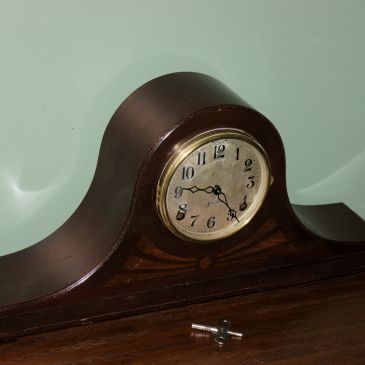
Ten years ago, I attended a staff development conference workshop on WordPress. The instructor promised that by the end of the three-hour session, we would each have a live blog up and running. Wow, now that’s impressive, I thought! I was intrigued and started thinking about a theme. Since I was already repairing and restoring antique and vintage clocks at the time, a blog focused on clocks seemed like the perfect way to document my experiences.

After ten years and many blog posts, it has been quite an achievement.

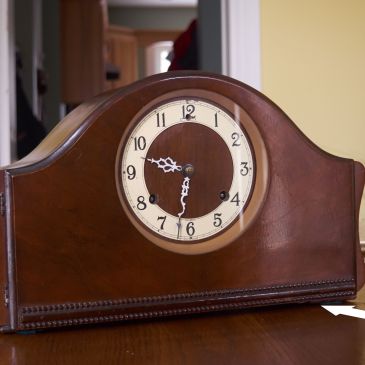
My very first antique clock, a Seth Thomas, which I still have today

Early Days: Learning and Growing

Looking back, my first posts profiled the clocks I had recently acquired. My writing skills weren’t the strongest back then, and looking back, I’m a little embarrassed that I published some of those early articles. I had low expectations then and was content to allow the blog to be a platform where I could improve my writing skills. But things gradually changed.

My first post featured work I had done on a German-made Dugena clock movement.


Finding My Rhythm and Audience

One of the challenges early on was figuring out whether I had the desire to keep writing and whether I could maintain a regular publishing schedule. Initially, I was bubbling with enthusiasm and felt I could publish every two or three days, but that pace was too much for me, and I quickly ran out of ideas. In those early years, I observed numerous blogs gradually fade away as their authors lost the motivation to continue. I often wondered: What is the secret to maintaining a consistent writing rhythm?

Since I was not an expert, I decided to focus on beginners like myself and began documenting the challenges I faced while repairing old clocks. I hoped that by sharing my learning experiences, I would inspire others who were just starting out.

Once I identified my audience, I began sharing my experiences with buying and selling clocks, repairing movements, restoring cases, and exploring their history. Along the way, I developed a deep appreciation for the clockmakers and the companies behind these old clocks.


How My Writing Style Evolved

In the early days, I wrote more like I was jotting down notes for myself. My tone was too casual, sometimes rambling, and I often skipped over important context, assuming readers knew what I meant. Over time, I became more intentional, structuring my posts clearly, guiding the reader, and choosing words more carefully.

I learned how to strike a balance between technical detail and storytelling, especially when describing a clock repair or sharing a bit of horological history. I was always mindful of not getting too technical, worried it might alienate some readers. Striking the right balance became really important. Now, my writing feels more like a conversation with fellow enthusiasts rather than just a personal journal.


Surprising Discoveries About My Audience

Over the years, I’ve learned just how important it is to know your audience, and I’ve often been surprised by who finds my blog. While I originally wrote for beginner clock enthusiasts like myself, I soon discovered that experienced collectors, casual readers, and even people simply curious about a family heirloom were stopping by. That realization encouraged me to keep things accessible and welcoming.


Embracing Imperfection and Meaningful Engagement

I also learned not to chase perfection. Some of the posts I was most hesitant to publish — the ones with rough edges or unresolved repairs — ended up resonating the most. They reminded readers (and me) that learning is a process and that nothing is easy.

As the blog grew, I began to care less about traffic stats and more about the comments, emails, and conversations sparked by a single post. That engagement, more than pageviews, has been the most rewarding part. And while I started with a narrow focus on clock repair, I found room to explore company histories, flea market finds, museum visits, and even the personal stories behind specific clocks. It turns out that having a niche doesn’t mean being limited — it just means you’ve got a solid foundation to build on.


Unexpected Skills I Learned Along the Way

One of the unexpected parts of blogging was the variety of technical and behind-the-scenes skills I had to pick up along the way. It was not easy. At first, I thought writing would be the main challenge, but I quickly realized that running a blog involves much more. I had to learn the basics of WordPress — formatting posts, block formatting, managing plugins, updating themes, and troubleshooting when something broke.

This clock from the 1920s, a Sessions, was my first repair success

I became familiar with SEO (even if reluctantly), learning how to write headlines and meta descriptions that search engines — and humans — would notice. I also improved my photography skills, especially when trying to capture the fine details of clock cases or movements. Editing images, managing file sizes, and even creating graphics for posts became part of the routine. I even tried using AI-generated images but learned quickly that not everyone appreciates seeing them on a blog, so I’ll use them more sparingly in the future.

And of course, there’s the subtle art of proofreading, learning to catch my own typos after staring at the same paragraph for too long. Some of those errors managed to slip through despite my best efforts.

None of these were part of the plan at the start, but over time, they became tools in the toolkit of a self-taught blogger.

My second post featured a schoolhouse clock made by Arthur Pequegnat, an early Canadian Clock Company.


Your Voice Matters, No Matter the Audience Size

If there’s one piece of encouragement I’d offer to anyone starting out, it’s this: your voice matters, even if your audience is small. In the beginning, it’s easy to feel like you’re writing into the void — a few pageviews here, maybe one comment there. But over a period of time, I came to realize that even a single post can make a difference to someone. Whether it’s helping a beginner get their first clock running or sparking a memory in someone who inherited their grandfather’s old clock, your words can reach further than you think.

The value of blogging isn’t just in how many people read it, but in the connections it creates. A niche blog may not have thousands of followers, but it can still be a trusted voice, a resource, or a source of encouragement for others.

Don’t wait until you have a big audience to write like you matter — because you already do.


Advice to New Bloggers: Keep Going

Starting a blog can feel exciting but also extremely frustrating, especially when the pageviews are low and the feedback is sparse. My advice to new bloggers is simple but powerful: don’t give up, and stay the course. Growth rarely happens overnight. It takes time to build an audience, find your voice, and develop content that truly resonates. There will be moments when you wonder if anyone is reading at all — and that’s completely normal.

Instead of focusing solely on numbers, try to enjoy the process of writing, learning, and connecting with even just a few readers. Every post is a step forward, a chance to improve, and a way to build your unique corner of the internet. Publish regularly, stay curious, and remember why you started. Persistence often pays off in ways you don’t immediately see, and the small, steady efforts add up to something meaningful over time.

My third post described the progress I was making on a newly acquired clock.


What does the Future Hold?

What does the future hold? I hope my blog will evolve into a go-to online resource for collectors, historians, and restoration hobbyists interested in American and Canadian horology. Over time, I may see more interaction, not just passive readers, but active contributors. People might begin submitting their own clock stories, restoration challenges, or photos for feedback. With that, the blog could grow into more of a community hub.

I already have the makings of a self-published book — a “Best of Tick Talk Tuesday,” a guide to identifying Canadian clocks, or a memoir-style chronicle of my collecting journey. It wouldn’t be difficult to compile some of my best posts and insights into something tangible and lasting.

Lastly, I would like to develop the backbone of my blog—the wheels and gears that make it work—by increasing visibility through plugins and SEO, optimizing site performance, and ensuring a seamless user experience for my readers. Although there’s a confusing array of information on YouTube and websites dedicated to optimization, I know the journey won’t be easy.

Thank You to My Readers

Finally, I want to extend a sincere thank you to everyone who has followed my blog over the years—especially those who have been with me from the very beginning—and to the 750 email subscribers who receive notifications whenever a new article is published. Your support, comments, and encouragement have made this journey so rewarding.

A recent acquisition, an Arthur Pequegant parlour clock

Whether you’re a longtime reader or someone who just discovered the blog, I’m grateful that you’ve taken the time to share in my passion for clocks and storytelling. This blog wouldn’t be what it is without you, and I look forward to continuing to explore, learn, and share together for many years to come.

The Role of Macro Photography in Clock Repair

While explaining any process on paper serves its purpose, nothing quite replaces the effectiveness of a sequence of detailed still images that, in essence, tell a story. As the saying goes, “A picture is worth a thousand words.”

punch marks around a mainspring barrel
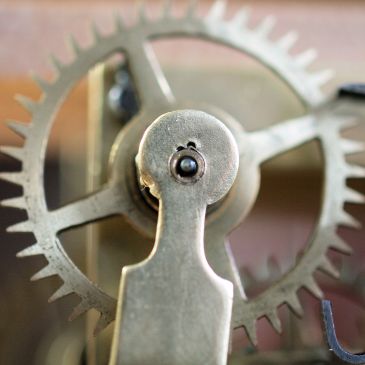
A shot of punch marks around a mainspring barrel arbour

First, what is macro photography?

Macro photography is a specialized form of photography that focuses on capturing extreme close-up images of small subjects, revealing intricate details that might not be visible to the naked eye. It typically involves using specific macro lenses to achieve high levels of magnification, allowing photographers to capture subjects at a 1:1 ratio or greater. Careful attention to lighting, focus, and depth of field will achieve the best results.

For best results, I recommend a dedicated camera paired with a quality macro lens. While cell phones can capture impressive images, they are a compromise since they often struggle with foreground-background isolation and fail to deliver clear macro shots. For shots that necessitate a low shutter speed, maintaining absolute stillness is crucial, making a tripod an essential accessory.

For me, photography seamlessly integrates into my various hobbies, so, taking pictures of clocks, movements, parts, and so on is a natural extension of my photography hobby. It goes without saying that having a reliable camera is indispensable for clock repair.

getting ready to punch a bushing into a clock plate
A brass bushing awaits punching into a clock plate

My preferred camera/lens/tripod combination

I own several cameras by Panasonic, Fuji, and Olympus. Although the former two are great cameras and have their uses, an Olympus E-330 camera manufactured in 2006 remains my preferred choice for macro photography.

Olympus E330 with 50 mm macro lens on a tripod
Olympus E330 with 50mm F2 macro lens on a Manfrotto ball head tripod

With its 7.5 megapixels, the Olympus E-330 interchangeable lens camera boasts ample resolution for my needs, especially when downsizing files for blog posts, ensuring detailed yet compact images—ideal for conserving server space on a blog platform.

An improvised click spring

No camera will perform well without a good lens. Paired with an Olympus 50mm F2 macro lens, it excels in capturing those extremely close clock shots and enables me to isolate my subject while maintaining a pleasing background blur.

Polishing a pivot

While artificial lighting is occasionally necessary, I predominantly rely on the natural light streaming in from a west-facing window in my workspace. When artificial illumination is necessary, I turn to a continuous studio light (with colour temperature adjustment), using the on-camera flash for rare occasions.

While the camera uses an older CF memory card, I can still procure these cards and even aftermarket BLM-1 replacement batteries. The camera will run until it fails and that day looks far off though perhaps it’s already telling me something. The memory card door clasp broke recently, so I must now keep the door closed with velcro tape otherwise I get an on-screen error message.

A distinctive feature of the E330 is its live view switch allowing the transition from automatic to manual focus mode through this switch, securely locking focus on extremely close subjects.

Live view A/B switch for manual and auto-focus

A tripod such as the Manfrotto 785B Compact is necessary for macro photography because it helps to stabilize the camera, ensuring sharp and clear images, especially when using slow shutter speeds or working with extremely close subjects where even the slightest movement can result in blur.

With any repair task, I meticulously capture dozens of photos from various angles. These images serve as invaluable references, particularly when encountering challenges during reassembly or when puzzled about the positioning of specific components like wheels, levers, washers, or springs. Furthermore, I diligently organize and catalog these photos for easy retrieval, years later, if necessary.

An arrow points to a kink in a movement hairspring

My advice is straightforward: Invest in a quality new or used camera equipped with a dedicated macro lens for clock repair. You don’t have to spend thousands; any older camera of good quality will suffice, although finding a compatible macro lens may be the biggest challenge. It should be capable enough to deliver satisfactory results. I was searching eBay today and found an E330 with 50 mm macro lens well under $450. Add about $100 or so for a decent tripod, $30 for a CF card and a CF card reader and you have everything you need for macro photography.

A very worn pivot on a Gilbert movement

Trust me, you’ll appreciate the benefits it brings to your craft.

Prolonging the Life of your antique or vintage clock

New owners of an antique or vintage clock might find it surprising that their recent purchase requires periodic maintenance. This realization often dawns upon them only when the clock stops, and they struggle to get it running again.

This Junghans wall clock, C.1899 is a daily runner

In this discussion, we explore regular clock maintenance, underscoring the importance of continuous inspection to ensure your clock enjoys a long and functional life.

Determining the ideal service interval of a running clock is a frequent topic of discussion among clock repairers, influenced by various factors that impact a clock’s lifespan. Factors include environment, age, frequency of use, manufacturers recommendations, complexity of the movement, user maintenance and cost of repairs.

Regular inspection

I conduct regular inspections of all clocks running continuously in my collection every 3-5 years, enabling me to pinpoint potential issues and remediate them if necessary.

Not all of my clocks are inspected on a regular basis. Among my collection of approximately 85 clocks, only a maximum of 27 clocks remain in continuous operation. Of the remaining ones, certain clocks may need specialized maintenance, are in various states of repair, some have fragile or rare parts, and others are reserved for special occasions.

Elisha Manross steeple clock from the 1830s

As an illustration of a clock that seldom runs, one of my clocks is a 30-hour time-and-strike Elisha Manross steeple clock dating back to the 1830s. This particular clock features brass mainsprings, making them irreplaceable if they were to break today.

Brass mainsprings for Manross clock
Brass mainsprings

Clocks that occasionally stop signal a need for immediate attention. I look for any immediate issues that might have caused the stoppage otherwise I focus on identifying green or black residues around the pivots. Contaminants mixing with clock oil create an abrasive paste, damaging bushing holes and pivots and in time the wear will stop a clock. If a clock stops after running continuously for years it is more often than not a wear issue. Disassembling the movement is imperative, enabling a detailed assessment of wear and determining the extent of intervention.

When dealing with a non-functioning clock no matter what procedures you have taken to get it running, the first step involves a visual inspection to identify evident problems like broken or bent parts, as well as missing components. This leads to the next step which is called servicing. True clock servicing involves comprehensive disassembly, inspection, cleaning, addressing wear and damage issues, reassembly, and thorough testing.

Factors that affect wear

Several factors affect wear, with the local environment playing a pivotal role. Humidity and temperature fluctuations, especially in older homes or those with wood stoves, impact a clock’s performance. Dust and pet hair, infiltrating the movement, also accelerate wear.

Clock cases that are tightly sealed with access doors help alleviate these concerns, and a properly sealed clock will extend the intervals between servicing.

Gustav Becker Vienna Regulator runs continuously

Different types of clocks exhibit unique wear patterns. Spring-driven time and strike clocks often wear on strike side pivots more often than the time side due to the shock of the half-hour strike. Chiming clocks face additional challenges due to the complexity of the chime/strike sides, where dried oils and dirt cause friction, leading to eventual stops. Weight-driven clocks, especially if not correctly in beat or with twisted cables, may suffer premature stops and require thorough investigation.

A mechanical clock as a decoration

Many people appreciate the decorative allure of antique clocks and opt not to operate them, choosing instead to display them as decorative pieces. However, leaving a mechanical clock unused poses risks.

Time and the environment, rather than operation, cause the most damage. Unused clocks primarily suffer from the thickening of the oil over time and the eventual breakdown of that oil. On the other hand, dried-up oil provides no lubrication for the pivots and leads to accelerated wear. Excessive enlarging of the brass pivot holes by the steel pivots will eventually lead to depthing issues (depthing, which is the correct meshing of one gear in relation to the next is a topic beyond the scope of this article).

Parts left motionless often tend to fuse, and rust accumulates, particularly in humid environments. Although the majority of clocks possess brass plates that are resistant to rust, there is a significant portion of steel components in them that are susceptible to corrosion.

In addition, mainsprings frequently become stuck due to thickening oil, causing the spring to fuse in position.

Running the clock even occasionally such as once per month is essential, enhancing longevity.

Clock cases also need attention

While maintaining the clock movement in good condition is crucial, cleaning the antique clock case is also important for several reasons.

Firstly, a clean case enhances the overall appeal of the clock, showcasing its design and craftsmanship.

Secondly, regular cleaning prevents the buildup of dust, dirt, and grime.

Thirdly, cleaning the case helps preserve the wood or other materials, preventing cracking and blistering and ensuring its structural integrity. I apply Minwax furniture paste wax on certain surfaces to protect the finish and maintain its appearance.

Junghans Corner feet finished
A clean clock case showcases its design – Junghans Sydney mantel clock C.1913

Overall, cleaning the antique clock case ensures its longevity, functionality, and visual appeal, making it an essential aspect of proper clock maintenance.

Health check for clocks

In my controlled home environment, with stable temperature, low humidity, and no pets, I prioritize regular health checks for my clocks as a preventive measure. Yet, due to the controlled environment in my home, I can prolong service intervals to around 4-5 years.

Shorter periods are recommended for clocks in less controlled or fluctuating environments, ensuring timely maintenance and preserving the clock’s longevity. Utilizing an Excel spreadsheet, I meticulously record changes, service intervals, and issues for each clock in my collection.

My goal is to ensure every clock’s durability, preserving them for future generations, and potentially passing them (well, at least some) down to my children.

Finding a Reliable Clock Repair Professional


If you’ve acquired a clock as a gift, through inheritance, from antique shopping, online purchases, or any other means, and it’s not functioning correctly, you have several choices in having it repaired.

Seth Thomas Adamantine mantel clock, C.1909

You might decide to try fixing the clock yourself, especially if it’s a simple or inexpensive clock. Basic tools and some luck might help with minor repairs or cleaning, but keep in mind that professional skills and patience are often required for clock restoration.

Repairing clocks is a specialized craft that takes years to master, and specialized equipment is often needed. For high-quality or rare clocks, it’s often best to trust a professional.

Ingraham Grecian
Ingraham Grecian, C.1872

Clock repair is becoming a rare and dwindling profession. Many clock repair businesses are closing as older experts retire, and there aren’t enough newcomers to continue the tradition. Finding a reputable clock repair person can be challenging and may require significant time and research.

Reputable clock repair establishments hire certified professionals who possess the expertise to handle a diverse array of clocks. Meanwhile, the availability of clock repair schools is decreasing, and there are fewer graduates, which leads to very few options in some areas.

Scottish tall case clock
McLachlan tall case clock, C.1848

Suppose you’ve made the decision to search for a clock repair specialist. In that case, here are some suggestions to consider in your quest.

Finding a Reputable Clock Repair Service:

  • Perform a Google search to determine if there is a clock repair shop in your immediate area.
  • Antique stores often have connections with reputable clock repair specialists. Attending antique fairs can also help you network with enthusiasts who can recommend experienced clock repair professionals.
  • Check with the Better Business Bureau to see if a repair shop is in good standing without complaints. If you find a potential clock repair service online, be sure to read reviews and testimonials from previous customers. This can provide valuable insights into their reputation and the quality of their work.
  • Consult the National Association of Watch and Clock Collectors (NAWCC) business directory, which lists reputable repair services in several countries.
  • Join local NAWCC chapters or forums (joining is free) to connect with experienced horologists and seek guidance on finding a repair person in your area.
  • If in the UK, look for individuals with memberships in the Antiquarian Horological Society (AHS) for clock expertise.
  • In Germany, the Deutsche Gesellschaft für Chronometrie is an excellent resource for finding clock specialists.
  • When contacting a clock repair specialist, don’t hesitate to ask for references from past clients. Speaking with satisfied customers can help you gauge their expertise and reliability.
  • Seek recommendations through word of mouth from people who have had their clocks repaired by reliable professionals.
  • Although not all watchmakers work on clocks, some may have the expertise or know of clock repair specialists in your area. Consider reaching out to watchmaking shops for referrals.
  • Contact local museums or historical societies that exhibit clocks. They often collaborate with or have connections to skilled clock restorers who can help maintain their collections.
  • Ensure that the repair person has the necessary qualifications and certifications, especially if you have a valuable or antique clock that requires delicate handling and expertise. You will feel more comfortable knowing it is in trusted hands.
  • If possible, visit the clock repair shop or specialist’s workshop in person. This gives you an opportunity to see their work environment, tools, and the types of clocks they are currently servicing.
  • Once you have found a clock repair individual get an estimate of how long the repair is expected to take. Complex repairs may require more time, so it is essential to have a realistic time frame in mind. Count on a turnaround time of months rather than weeks even for standard servicing.
Kienzle World Time clock
Kienzle World Time clock, C.1951

Whether you’ve come into possession of a clock through various means, finding a skilled clock repair specialist is essential to restore your clock to its former glory. While attempting DIY repairs can be tempting for simpler clocks, the intricacies of clock mechanisms often demand the expertise of a professional.

Complicated repairs are beyond the scope of the do-it-yourselfer

By following these guidelines and conducting thorough research, you can locate a reputable clock repair specialist who will provide the care and attention your clock deserves, preserving its beauty and functionality for years to come.

Why should I repair an antique clock if the repair exceeds its value?

An often-asked question is why should I repair an antique clock if the repair exceeds its value.

The decision to repair an antique clock if the repair exceeds its value ultimately depends on your personal attachment to the clock and its historical significance.

Let’s talk about sentimental value

If the clock has been in your family for generations or has sentimental value to you, repairing it may be worth the cost, even if it exceeds the clock’s current market value. Repairs might include restoration or significant repairs to the case but a working clock that presents well is the main objective. Having a ticking clock can add a touch of elegance and charm to a room, as well as provide a sense of history and provide an important connection to the past.

A clock with a homemade plywood case was worth the repair because of its family heritage

A clock that is rare is worth the repair if…

If the clock is rare or has historical significance, it may be worth repairing regardless of the cost. Some antique clocks may have been made by renowned clockmakers or may be associated with important historical events or figures, making them highly valuable.

Valuable antique clocks must be carefully repaired because they often have unique and irreplaceable pieces that require specialized knowledge and expertise to repair. Any repairs must be done in a way that preserves their originality and authenticity.

To repair certain clocks, it may be necessary to use rare and difficult-to-find components or even handmade parts. This highlights the importance of collaborating with a skilled and knowledgeable clock repair specialist who has access to these parts or can create them. Even a small error in repair can result in significant damage to the clock’s mechanism and timing, leading to a reduction in value.

Improper repairs can significantly reduce the clock’s value and historical significance. Valuable antique clocks can be fragile and delicate, with intricate mechanisms and delicate parts that require careful handling during the repair. Any damage to these parts can irreversibly damage the clock, leading to a loss in value.

Working with a qualified and experienced clock repair professional is essential to ensure that the clock is repaired correctly and maintains its value.

Kienzle World Time clock
This Kienzle World Time clock has maintained its value

A clock as an investment

If you believe that the clock’s value may appreciate over time, repairing it may be a wise investment.

Clock collecting for investment purposes is a complex and potentially risky endeavor that requires a significant amount of knowledge, research, and expertise. While some antique clocks may appreciate in value over time, the market for antique clocks can be unpredictable, and there is no guarantee that a clock will increase in value.

Additionally, the cost of purchasing and maintaining a collection of antique clocks can be significant, and the potential return on investment may not justify the expense. Clock collecting for investment purposes should be approached with caution and with a thorough understanding of the market and the value of individual pieces.

Appreciate an antique clock for what it is

Antique clocks are often rare and unique, making them a great conversation starter. Guests may be intrigued by the clock’s history and design, leading to interesting conversations and the opportunity to share knowledge and stories.

On the other hand, if the clock has little sentimental or historical value and is unlikely to appreciate in value, it may not be worth repairing if the cost exceeds its current value. Ultimately, the decision to repair an antique clock should be based on a careful evaluation of its worth and your personal attachment to it.

Junghans Corner feet finished
A common bracket clock made by Junghans

Antique clocks have a sense of history and nostalgia that can be comforting and grounding. They remind us of the past and the craftsmanship that went into making these timepieces before the era of digital clocks and watches.

While antique clocks may not be as accurate as modern timepieces, they can still keep time and serve a practical purpose in a room.

Navigating the Perils of Antique Clock Repair on YouTube: Why Caution is Key

Antique clocks are a fascinating and cherished part of our cultural heritage, valued both for their historical significance and their intricate mechanical workings.

However, the maintenance and repair of these clocks can be a daunting task, requiring a great deal of knowledge and expertise to ensure their preservation.

YouTube has become a popular platform for sharing information on antique clock repair, but this can often be a perilous journey, fraught with misinformation and potential hazards.

Read on and discover why the journey can be fraught with perils.

A time-only clock movement

A wealth of content and not all of it is good

One of the main challenges of researching antique clock repair on YouTube is the sheer volume of content available. While there are certainly many skilled and knowledgeable individuals sharing their expertise on the platform, there are also countless amateurs and hobbyists who may not have the necessary qualifications or experience to provide accurate or reliable advice.

This can make it difficult for novice clock enthusiasts to distinguish between reliable sources and those that may be less trustworthy.

Lack of oversight

Unlike traditional academic or professional settings, YouTube does not have any formal accreditation or certification processes to ensure the qualifications and expertise of those providing advice.

This can lead to a situation where individuals with limited knowledge or experience are able to present themselves as experts, potentially leading to poor repair outcomes or even irreversible damage to valuable antique clocks.

American time and strike movement

The quick fix

Many YouTube videos on antique clock repair focus on quick fixes and shortcuts rather than proper, long-term maintenance and repair. While these videos may be popular and offer a quick and easy solution to a problem, they can often do more harm than good in the long run.

An example is immersing an entire movement in a solution, a process often called “Duncan Swish” within clock repair circles. Although immersing an unassembled movement in a cleaning solution may provide prompt results and is a quick and easy solution, it is not a substitute for meticulous disassembly and repair. Quick-fix solutions like this can actually worsen the wear on a clock movement, rather than resolving the underlying issues.

Improper repairs or maintenance can cause irreversible damage to delicate clock mechanisms, potentially decreasing the value of the clock or even rendering it unusable.

An unusual click spring repair was done by a past repairer

Lack of background information or context

Another challenge with researching antique clock repair on YouTube is the lack of context or background information provided in many videos. Without a comprehensive understanding of the history and mechanics of a particular clock, it can be difficult to diagnose and address issues properly.

Some videos may not provide adequate instructions or guidance, leading to confusion or even dangerous situations if attempted by an untrained individual.

important steps are missing

Steps are missing because the person making the video may not have the necessary knowledge or expertise to perform a complete repair. They may be an amateur or hobbyist who is sharing their experience and techniques, but they may not have the same level of training and experience as a professional clockmaker.

Steps are missing because the video is intended to be a quick tutorial or overview, rather than a comprehensive guide to clock repair. In order to keep the video short and engaging, the person making the video may choose to skip over certain steps or focus only on the most critical parts of the repair.

An English Fusee movement

The person making the video assumes that the viewer already has a certain level of knowledge or expertise. They may assume that the viewer has a basic understanding of clock mechanics or has performed similar repairs in the past.

The video author also intentionally withholds certain steps or information in order to encourage viewers to seek out their professional services. They may provide a basic overview of the repair process but withhold more detailed or advanced information, in order to entice viewers to pay for their expertise.

Regardless of the reasons, it is important for viewers to approach these tutorials with caution and skepticism. Expanding one’s knowledge is crucial for making informed decisions when consulting multiple sources and determining the accuracy of clock repairs and this can only be accomplished through continuous learning and growth.

A worn regulating leaf gear

Youtube can have value to an enthusiast

Antique clock repair is a highly specialized field that requires a great deal of knowledge, skill, and experience. While YouTube can certainly be a valuable resource for those seeking to learn more about clock repair, it is important to recognize its limitations and potential hazards.

As your knowledge of clock repair expands, you will develop the ability to distinguish between those who provide constructive guidance and those who do not.

There are several youtube sources that I consider to be of value but I will not reveal them here because it is important for each clock repairer to assess and determine their own go-to sources for information and guidance. It’s important to critically evaluate and verify the information presented in any online source before applying it to your own clock repair work.

Finally

While YouTube can be a useful tool for those interested in antique clock repair, it is important to approach this journey with caution and skepticism.

With so much content available and a lack of oversight and regulation on the platform, it can be difficult to distinguish between reliable and unreliable sources of information. Many videos may focus on quick fixes or shortcuts rather than proper maintenance and repair, potentially leading to irreversible damage to valuable antique clocks.

When watching clock repair videos on YouTube, it is important to approach them with a critical eye and evaluate whether the procedures being shown are safe, and performed correctly and whether the repair will ultimately increase or decrease the value of your antique or vintage clock.

In my view, it is not a useful exercise to comment on a clock repair video that shows incorrect methods or practices as there are plenty of others who will take great joy in criticizing. Rather, it is more advantageous and less frustrating to find alternative sources that can provide valuable suggestions and guidance for clock repair.

Keep searching, those sites are out there, and once found you will be rewarded.

Can I repair my antique clock with common household tools?

While it is possible to repair an antique clock with common tools, there are limitations to what can be achieved. That’s the short answer. Let’s explore this a little further.

Repairing an antique clock with common household tools is possible, but it can be challenging, and it depends on the extent of the repairs needed and your knowledge of the internal mechanisms and workings of the clock.

Screw drivers, clock tools
Screwdrivers

If the repair needed is simple, such as adjusting the time or fixing a loose screw, household tools may be sufficient. However, more complex repairs such as replacing broken parts or restoring the clock’s intricate mechanisms may require specialized tools and expertise that may not be readily available in a typical household toolbox.

The simple task of cleaning a movement can be accomplished with tools such as a screwdriver and wrench in addition to other common household items. The springs on an open mainspring movement, for example, can be contained with heavy household wire or a worm gear hose clamp.

Cleaning brass movement plates can be achieved using common household soap, while toothpicks are a useful tool for cleaning out bushing holes. Fine steel wool is also appropriate for cleaning steel arbors and brass wheels.

A collection of clock movements in need of repair
clock movements in need of repair

Antique clocks are often delicate and require careful handling, so it’s important to exercise caution and work slowly and methodically when attempting any repairs.

The wheels of a typical American time and strike movement

If you’re unsure about your ability to repair the clock yourself, it may be best to seek the help of a professional clock repair person who has experience with antique clocks.

When financial resources are scarce and it is challenging to find an expert in clock repair, one must embark on a journey of self-discovery which includes learning and mastering the skills necessary to repair clocks oneself, thereby gaining valuable knowledge and self-reliance.

The mission of this antique and vintage clock blog is to help people feel confident in making basic repairs to their antique clocks when they stop functioning by identifying the problem, learning about the different types of clock movements, understanding the workings of the movement type, gathering the right tools, taking your time and exercising patience while attending to detail, practicing basic repairs through repetition and knowing when to seek expert help.

Beyond the basics – more advanced tools for clock repair

See this article for basic tools for clock repair

Let’s assume you have decided to take the plunge and you are at the beginning stages of building an essential tools list for clock repair. Let me help you with your journey.

In the fall of 2022, I wrote about the five essential tools for clock repair. The sidebar will bring you to that article. Tools for clock repair need not break the bank, in fact, you can begin for less than a $100 investment.

The five basic tool groups included the screwdriver, the letdown tool, the pivot locator, the box wrench, and the pliers. If you are ready to move forward with more challenging repairs here are the next set of tools you will require. Assuming you have already purchased the basic tools the 16 additional tools you will require are relatively inexpensive and are the prelude to making your first big jump to specialized and advanced tools.

This time our budget is less than $400 (all prices quoted in US funds).

Let’s begin.

Optivisor or eye loupe

The closer you can see the better. I prefer opti-type visors. I cannot get used to an eye loupe but it is certainly cheaper.

Opti-type visors are more expensive but hinged so that they can be pushed upward and out of the way. I have had a couple of visors in the past but the set I use now is the Magnivisor pro series from Carson which is about $60. The little light at the top goes through batteries fast and sometimes I forget to turn it off, so I don’t use it but you might find it helpful for those dark spaces.

$10 will get you a set of three eye loupes on Amazon.

Magnivisor by Carson

Movement test stand

A test stand is very helpful when disassembling a movement reassembling it and testing it before it is reinstalled in the case.

I have several types for different purposes but I think the one to start with is Gene’s test stand which is under $70. If you are handy in the workshop it is a relatively simple one-day woodworking project that you can build for half the cost.

Clock movement stand
Clock movement test stand

Clock movement work stand

I use two types. The first is movement plate standoffs and the second is a simple 4-inch high stand cut from a PVC pipe. The standoff set is anchored to the bottom plate by screwing brass end pieces to the four corners of the bottom plate (you can use three if you wish). The standoffs are sometimes called assembly posts and are around the $25 range in cost.

If you have 5-inch PVC pipe lying around simply cut off a 3 or 4-inch section.

Standoffs
Standoffs; either three or four can be used
Movement on standsoffs

The PVC is easy to work with and does not leave screw marks on the movement plates if you are particular about that sort of thing.

The movement is sitting on a piece of PVC pipe

Magnifier light

Florescent or LED. A color temperature of 6500k is the best compromise. Newer LED magnifying lights have custom color temperature settings. I see them on Amazon for about $50. Florescent bulbs have a shorter life than LED. Recently mine burned out and the replacement cost for the circular light itself is around $40 (for a $50 lamp!).

Worklight
Work-light

Clock oil and oil applicator

I have not had much luck with pen-type applicators and the few I have had have split with repeated use. Plus I am not sure the oil contained within is of very high quality. I am a bit old-school and use a cupped dipper and oil reservoir. Mobius and Keystone are good brands.

Count on spending $10 to $20 for quality clock oil. Motor oil, WD40, and 3-in-1 oil are not suitable substitutes and for me, the jury is still out on synthetic oil.

clock oil applicator
Clock pivot oil
Clock pivot oil

Movement clamps

When working with mainsprings, spring clamps are an absolute must for safety reasons. More than one beginner in clock repair has injured themselves by not restraining the mainsprings. A set of flat clamps (my preference) are around $17. If you wish to save money heavy steel wire will do.

Assorted clamps
Assorted clamps; flat clamp on the upper left

Tweezers

Useful for encouraging tiny pivots into place, picking up small clock parts, and a hundred other uses. A set will set you back $10. Bergeon will happily sell you a set for a few hundred dollars but cheaper blunt nose and needle nose tweezers will do.

Tweezers
Tweezers

Micrometer

Measurement in clock repair is important and a micrometer is essential. They are relatively cheap and can be had for under $20 at your local hardware store.

Using a micrometer to check pivot
Using a micrometer to check the pivot diameter

Cotton swabs

A general all-purpose probing cleaner for those tight crevices and corners. You will be surprised how quickly you can use up a box of 400. Under $3. Also useful for cleaning out your ears when determining whether or not your clock is in beat.

Cotton swabs
Cotton swabs

Toothpicks

There is no substitute for cleaning clock bushing holes. Buy them in the hundreds, you will need a lot of them. Get them at the checkout counter for under $2.

Toothpicks
Toothpicks

Mini level

A level surface is required to have a clock in beat. This one by Starrett is over $50 but you need not spend that much. Count on about $10.

Level
Spirit level

Spider key sets

The 4 and 5-prone sets in even and odd sizes will be enough for a vast number of clocks. As you move along in your hobby you will accumulate box loads of keys but a spider set is handier. Count on about $15.

4 and 5 prong keys and singles

Organizing trays

These are dollar-store items. Great for organizing clock parts (and not losing them). You can pick up a wide variety of sizes for under $10 total.

Organizing trays

Screw head holding screwdriver

I have a set by Klein Tools and find it a time-saver, especially when returning a movement to its case and holding and guiding that finicky screw in place. The gripping action holds, starts, and drives slotted screws in awkward, hard-to-reach places. A word of caution; they can be easily ruined if used to torque a screw in place.

I wish they can be purchased separately for a reasonable cost because I never have used the large one. About $60

Flashlight

Great for locating that nut that mysteriously flies through the air and lands on your floor sometimes never to be seen again. There are many other uses as well. The fancy ones are flexible but I have a penlight which is less than $10.

Flexible flashlight

Set of Single-Ended Scaler Probes

Okay, they are the same ones used by dentists to pick at your teeth but they are perfect for pulling that helper wire into position, guiding a pivot in place, or just about any time you need to pick at something, probe an area, de-scale a tooth (clock teeth, I mean), and so on. I bought mine at a dollar store but a set can be had for around $15.

Scalers

Concluding remarks

And there you have it.

For the next level, the costs begin to escalate but after purchasing these tools, and becoming familiar with clock movements through practice you will want to explore your hobby further. In a future article, I will describe how you spend big money on more specialized tools but also how you can get away with advanced repairs on the cheap.

Having a professional service your clock

Is it worth the time and expense to have a clock professionally serviced?

That is the question of the day.

I receive many letters from people who ask whether a clock handed down to them is worth repairing/preserving. It is not an easy question to answer. Shared history and stories connected with the clock can be passed down from generation to generation and it is fond memories that keep it alive and consequently, there is a desire to have a clock in running condition. Sometimes it is better to do nothing and simply remember the stories associated with the clock.

If the decision is made to do something, the first consideration is whether or not the cost of preserving or restoring the clock is worth it. If the clock has deep sentimental value, the cost of repair cannot be compared to its resale value.

In the early days of clock collecting, I sent out clocks to be serviced and happily absorbed the cost. I knew then that some clocks cost more to repair than they are worth but I wanted to preserve some and have them operate daily, so, professional repairs were necessary.

Junghans clock in pieces
Junghans clock before restoration

A case in point

In January 2017 I bought a box of old clock parts (above photo). I was determined to make my German-made circa 1895 Junghans Crispi wall clock into what it is today. It was my first huge restoration challenge. It was a steep learning curve for me but in the end, I was pretty happy with the results.

During the course of restoration, I attempted to repair the movement, which hadn’t run in over a hundred years and made some rookie errors. I had no other course of action than to bring it to a professional in order to correct my mistakes. At the end of the day, the total cost was $475 for the initial purchase plus the servicing.

Last year, after 4 years of reliable running the clock developed an errant strike which required investigation and disassembly (and a good cleaning while I was at it) but I would not blame that on the professional repair. Perhaps it is the nature of that particular Junghans movement requiring the odd adjustment every now and then.

Junghans Crispi wall clock

In the years since then, I have acquired the skills and necessary equipment to perform my own repairs.

Twenty-three of the clocks in my collection are daily runners, all serviced from time to time by myself over the years. I am not a professionally trained clock-maker and some procedures are clearly beyond my capabilities, things such as teeth replacement and repair and fashioning new parts from stock brass. 95% of repairs I can comfortably handle on my own.

Rare Ingraham Huron found on a local online for-sale site
Rare E Ingraham Huron professionally repaired

Should you bring your clock to a professional? This is a decision you will have to make after weighing all factors. Know that by relying on a professional you can be assured that years of knowledge and experience go into the repair of your precious clock which becomes part of the cost.

Reputable repairers have the correct equipment to tackle just about any repair, offer a warranty period, and will correct any problems that arise after servicing, often without an additional fee.

Clocks are machines and machines do not last forever, parts will wear and from time to time they, like any machine, require attention. If, after some years, the clock that you had professionally repaired stops, I would have no hesitation suggesting that you return to the same repairer for servicing unless, of course, you had a negative experience.

My Approach to Clock Restoration

Every clock enthusiast has their own way of doing things and each has a different approach to clock restoration. Am I different? Not really, but I have put some thoughts to paper that you might find interesting.

Like everyone I started out knowing virtually nothing about clock restoration but learned as I went. As I gained confidence and improved my skillset I took on greater challenges.

Not long ago I bought a nice 30-hour non-running Chauncey Jerome ogee. I would not consider this clock a huge challenge but it will help explain my approach to clock restoration.

The case is from the 1840s and based on my research, the movement is from the same period. There are a few things wrong with it and that is expected from a 176-year-old clock.

Four Options

The clock case and movement are very dirty and the clock certainly has some issues but I am happy to report that a lot is original. It is on my bench. Now, what do I do with it?

I have four options:

  1. Do nothing. Leave everything as-is, preserve the patina and display the clock without servicing the movement or cleaning the case.
  2. Service the movement so that it is in running order but do nothing to the case, again preserve the patina.
  3. Clean and refresh the case but leave the movement as-is.
  4. Service the movement and clean the case, making small repairs if necessary.

Option 1. There are very few clocks where I would do absolutely nothing. If the movement is beyond my capability or requires a complex repair and the case requires extensive repairs or any intervention on my part will potentially make it worse, I will leave it alone.

Option 2. Not a good option for me. There is no point in servicing a movement if is going back into a dirty case and risk the movement becoming contaminated with dirt and debris.

Option 3 If the movement is beyond my capability or requires a complex repair I will leave it alone and proceed with cleaning the case.

Option 4. This is my preference. My end goal is minimal invasive intervention which means that I will service a movement and address wear issues where necessary. I will refresh the case if it is grimy and requires a good cleaning. I am not a strong believer in patina which one reader opined is just another word for dirt. As much as possible, I use original materials and techniques when working on the case. This includes the use of hot hide glue, traditional shellac (flakes mixed with shellac lacquer), and fasteners like old slot head screws, and square nails.

In rare cases where I am met with a significant challenge, I will perform a complete restoration with the goal of bringing the clock back to its original condition. I call this extreme restoration.

Here are two examples. Both of these clocks are running daily.

Junghans wall clock before
Junghans wall clock – after
Mauthe wall clock – before
Mauthe wall clock – after

I believe that some amount of intervention is not only necessary but desired by collectors and I also believe that there are situations where a wholesale ground-up restoration is the only option.

In the case of this miniature Vienna Regulator cleaning and oiling the movement, and polishing the brass was the only intervention.

one-weight Vienna wall clock
Miniature one-weight Vienna wall clock

My position regarding changes to a clock

My end goal is a functional clock that presents well. As far as I’m concerned a non-working clock must become a working clock because that is the nature of its existence.

If a clock has important provenance and extensive repairs to the movement and/or case alter it in a negative way and I will leave it alone.

And what does the ogee clock i mentioned in the beginning of this article look like now?

Restored Jerome ogee

I am sure you will agree that it is not a dramatic change at all but it is now a working clock that presents well.

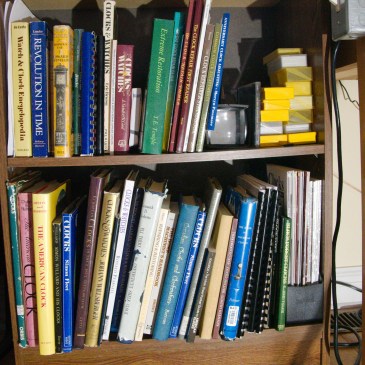
The essential clock repair library according to Antiquevintageclock.com

Whether you are working on your first clock movement or have repaired dozens, instructional resources, I believe, are essential. There is only so much information gained from a YouTube video (sadly some information is plain wrong) or how-to instructions online and there comes a point in time when you simply must have more detailed information.

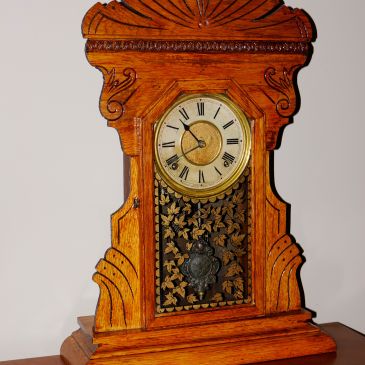
An example of a Canadian made gingerbread-style clock

Opinions vary as to what constitutes an essential clock repair library but in this post, I will present those resources for the novice in the clock repair world and for those of you who have taken further steps in your journey.

Most of my work is with American and Canadian clocks, though some are German, some French, and of course, some British. Here are my go-to books starting with the Steven G. Conover series.

My Four Conover books (or manuals) are:

  • Clock Repair Basics
  • Striking Clock Repair Guide
  • Chime Clock Repair
  • Clock Repair Skills

Conover is very hands-on with plenty of diagrams and detailed step-by-step instructions. He will walk you through the repair of a broad range of clocks while discussing trouble areas, repair how-tos and challenges.

I am always on the lookout for clock repair books but sadly most of what I have has gone out of publication years ago although some can be found in the sections of used books on Amazon


Next are my Laurie Penman books.

They are;

  • The Clock Repairer’s Handbook
  • Common Clock Escapement

While some of his descriptions are quite technical and more targeted towards advanced clock repair he explores the basics as well.

Working with Anniversary or 400-day clocks requires the Horolvar 400-day Clock Repair Guide. 400-day clocks can be quite finicky and you are asking for trouble if you do not have this resource. The perfect companion is Mervyn Passmore’s book entitled Anniversary Clock Adjusting. It is a little short on depth but simple and to the point.

Horolovar 400 Day Clock Repair Guide

Next are three books by Philip E. Balcome

  • The Clock Repair First Reader – Second Steps for the Beginner
  • The Clock Book – An Overview of Heirloom and Contemporary Clocks in the American Home (not a repair book per se but a guide to identifying clock parts, types, styles, and trends)
  • The Clock Repair Primer – The Beginners Handbook

Balcome books are easy reads and are targeted for beginners and more advanced repairers as well.

Canadian John Plewes’s Repairing and Restoring Pendulum Clocks is an excellent resource for Canadian homegrown clocks. He explores specific clocks, describes repair challenges as well as provide tips and tricks on a number of clocks from not only Canada but all over the world.

Extreme Restoration By T. E. Temple should be in everyone’s library. Temple explores everything from evaluating a project, clock case refinishing, restoring glass, and tablet renewal. His how-to step-by-step instructions are easy to follow. Although the photos in his book are black and white to reduce cost, a companion website provides colour photos.

Though not directly related to clock repair the Home Machinist’s Handbook by Doug Briney explores bench tools, home lathes, Milling machines, treating and finishing the final product.

Temple and Briney books

I am always on the lookout for clock repair books but sadly most of what I have has gone out of publication years ago although some can be found in the sections of used books on Amazon. I  scour used book stores and flea markets to grab pretty much anything I can find.

Although I do not have any of Tran Duy Ly’s excellent reference books I am always on the lookout for them. Of course, they are not about clock repair specifically but they are great resources for identifying the many models and types of clocks from dozens of makers over the years.

A typical reference in Tran Duy ly’s Ansonia clock book

Well, there it is, my essential library of clock repair resources. Of course, there are many other resources and if there is anything else you feel should be on this list, let me know.

Interesting clock repairs, some good, some not so good

While I admire the ingenuity and creativity of clock repairpersons many years ago some of the repairs are downright scary and dangerous. I say clock repairpersons because may were back yard mechanics with minimal clock skills that were paid to “just get his thing running”.

In this article, I will describe some of the strange repairs in clocks I have worked on over the years.

Let’s start with this interesting wheel repair.

Tooth repair on a 30-hour time and strike

I would call this a passable tooth repair. It is functional but it could have been dressed properly and filed down to improve its appearance. I left it as-is.

Continue reading “Interesting clock repairs, some good, some not so good”

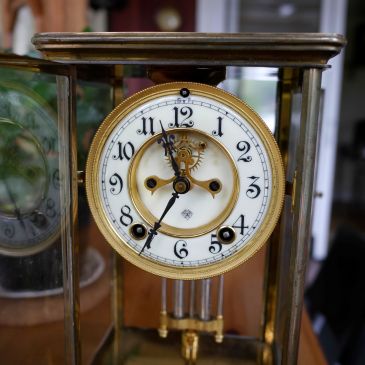
Ansonia crystal regulator clock – Part II – the movement

This is Part II of a three (3) part series. In Part I, I discuss disassembly and servicing the mainsprings. In this, Part II, the movement and in Part III we will look at restoring the brass case.

My wife found this 1910 Ansonia Crystal Regulator in the late summer 2018 while antique shopping. What a great choice! We were in a hurry and despite a price reduction we should have asked the proprietor to show us that it worked. We returned home and to our dismay, it was not running.

In Part I of this two part series I discuss disassembly and the big question; how to service the mainsprings.

Front of movement showing visible escapement

The movement

There are 4 screws that release the plates. The 3 pin gathering pallet and hour gear must be removed to facilitate servicing. It is possible to re-assemble the movement without removing those two parts but it is very frustrating. To remove them assemble the plates. Using two small blades (small screwdrivers) positioned 180 degrees apart from one another will work. As these movements are visible, any scratches will show, so, placing masking tape on the plate will prevent scratches. Wedge both screwdrivers and the parts should pop off. The gathering pallet flew across the room (not ideal) but it worked.

Twisting the top regulator pivot bracket on the front plate upwards allows the pallets and crutch to come out from between the movement plates.

Clean parts in the usual way but do not put the pallet assembly in the ultrasonic if the pallets are jeweled. The ultrasonic machine will loosen the pallets.

Rack and snail assembly on the back plate

The movement required 5 bushings and all on the front plate; S2, S3, T2, T3, and T4. Unusual but understandable given the placement of the gears.

Getting it all back together

Putting the plates together with gears in place is fairly straightforward. It takes a gentle twisting to get the pallet assembly in position however, there is no need to force anything.

Most of the strike assembly is on the outside but it is important to set up the warning correctly. There are two wheels with stop pins.

Thanks to reader Bob G. for explaining the following. The wheel with the stop pin closest to the outside of the plate is the stop wheel. That is held back by the tab coming through the plate from the back of the movement. The next wheel that has a stop pin is the warning. As the hour arbor lifts the lever to begin the strike sequence, the warning pin holds everything back until the correct moment. That second stop pin should be at about the four o’clock position when looking at the movement from the front.

If the stop pins are in the correct position, you must adjust the position of the pins on the gathering pallet. If you hold the wheel next to the fly, you can grip the pallet with a needle nose pliers and turn it until the pins clear the rack. Otherwise, the pins on the gathering pallet will lock the rack and the clock will only strike once on the hour and half hour.

All adjustments have been made and the movement has been fully assembled and now onto the movement test stand.

Dry home and clock case issues

Winter, along with the dry conditions of a typical Canadian home, can play havoc with wooden clock cases. In Canada we generally shut the doors and windows to keep the cold air out from mid November to mid March and we may stay inside for days at a time. During our Canadian winter we have difficulty controlling indoor humidity. Most modern homes have a commercial style air-exchanger that is designed to control relative humidity but it can only do so much.

I have dozens of clocks and most do not seem to mind the changes in humidity from season to season other than a rate adjustment. Those vintage clocks that are adversely affected tend to be clocks with thin veneers that separate from the frames of the cases. Less affected are Ogee clocks with thicker veneers.

My Ingersoll-Waterbury time and strike clock from the mid 1940s is a 70 year old clock and not a particularly valuable one to begin with but has been affected with peeling veneer. The peeling veneer is unsightly and must be addressed.

I am not opposed to using modern materials to repair a vintage clock and in this case yellow carpenters glue was used to close the gaps on both the left and right rear of the case. Yellow carpenters glue has a bonding strength of 3 tons and for maximum effect is should be clamped for 24 hours.

Split veneer on left side, rear

Both sides of the case were splitting open. The right was slightly worse than the left. Although I have several clamps I only had one to spare for this little project so, the job was spread over a few days.

Right side is clamped

Wax paper is placed between the clamp and the veneer to prevent the glue from adhering to the clamp itself.

Once the glue has bonded, the case is lightly sanded in the affected areas, the remaining cracks treated with wood filler and touched up with a dark stain.

Stain-able filler in the small cracks that remain

Two coats of shellac are then applied.

Not perfect but an improvement.

Clocks and museums

I am not fanatical about humidity as far as my collection is concerned but museums go to great lengths to control humidity. In museums temperature and humidity are interrelated, and must be monitored and controlled in conjunction with one another towards the goal of preservation. Room temperature is usually established according to the needs of visitors, and is set between 18 and 20°C. The relative humidity for the correct conservation of the works displayed usually lie in the limited range between 45 and 50%.

Clocks react to humidity differently. Clocks with wood pendulum rods need seasonal adjusting as the wood contracts and expands with changes in humidity. Wall clocks that have tight doors in the summer are easier to open in the winter as wood contracts.

High humidity can be mitigated through the use of humidifiers if there is sufficient concern about dry air and its effect on clock cases. It is a good option in the winter months.

If you have a modest collection of clocks I would not worry about humidity issues but you can be assured that seasonal changes can have an affect on your clocks.

Gilbert tambour clock with Normandy Chime – movement servicing

Gilbert mantel clock 1925

This Gilbert tambour style mantel clock is model 2038 with a bim-bam strike or what Gilbert called a Normandy chime. The model number along with the words “Normandy Chime” are stamped on the bottom of the case. Gilbert called this the “Normandy Chime” as it was reminiscent of the old bells of Normandy (Corneville) in France. In terms of nomenclature within clock circles, calling it a “Chime” certainly adds to the confusion as this would be considered a striking clock rather than a chiming one.

Whoever did the past bushing work chose to avoid the motion works area, and for good reason

The Movement

And now to service the movement.

Dis-assembly of the movement is done in the conventional manner with the exception of two items. Both the striking disk (upper arrow) which runs off the cam wheel and the passing strike L bracket (lower arrow) which runs off the centre cannon are friction fit and must be pulled off beforehand to work on the movement. I don’t have a puller but two small screwdrivers positioned across from each other will lift the parts off with minimal effort. Do not polish the ends of these two rear pivots.

Arrows showing striking disk and passing strike L bracket

A prior examination of the movement revealed that it is generally good shape. Overall, the lantern pinions are in good condition with minimal wear. There has been extensive bushing work completed in the past. I see six replacement bushings on the back plate and seven on the front for a total of thirteen which suggests that there was a lot of wear. They are all in very good condition which tells me that the work was done fairly recently.

It also tells me that whoever did the past bushing work chose to avoid the motion works area and for two reasons. It is a tough one to fix because there is so little brass to work with and there is not a lot of torque on this wheel so it can be left as-is.

Although the following photo does not show it well, there is a lot of play in the bushing hole. This is the only one that is addressed in this servicing because I wanted to ensure good meshing of the motion works gears.

Motion works gear with bushing wear

To address the motion works bushing I sought advice from my colleagues at the NAWCC forum site with comments ranging from doing nothing to immediate replacement. The best advice came from a member who suggested I install a smaller diameter bushing and broach out the hole to fit the pivot and that is exactly what I did. A #46 Bergeon bushing was chosen with a diameter of 3mm and an inside diameter of 1.30mm. The pivot is 1.48mm and the result is a side wall that is about 0.80mm. This should allow the gear to mesh nicely and since there is not a lot of torque on this gear the fix should last a long time.

Re-assembling was straightforward. There are no helper springs on this movement so there was no tension pushing on the levers. The only adjustment I had to make was to pull the movement slightly apart to correctly align the stop pin to the stop lever so that the movement strikes as it should.

Arrow showing stop pin (my healing thumbnail from a mainspring that let go)

Since the movement has a Normandy chime the striking hammers are located outside and to the bottom of the movement.

Striking hammer assembly for Normandy Chime

The final process in re-assembly is to attach the hammer mechanism. But before doing so two parts are re-attached, the strike wheel and the L bracket which are pushed back into place. Once in place they can be moved slightly to sync the hourly and half hour strike.

Some folks give Gilbert movements a bad rap but they are not much different than a Sessions, or similar inexpensive movement of that period and the fact that this one is still functioning after over 90 years has to say something for its engineering.

Spring comes early this year but not by much! Adjust your clocks

The first day of spring is called the vernal equinox (sometimes also referred to as the spring equinox or March equinox) and it is almost always either March 20 or March 21 though it will fall on March 20 for the next two years in a row. The first day of the spring season is the day of the year when the Sun crosses the celestial equator moving northward.

Spring is often called the season of rebirth and renewal. It is also seen as the time of the year when we Canadians crawl out of winter hibernation and greet longer and warmer days with enthusiasm and renewed energy.

1910 Ansonia Crystal Regulator

In the pursuit of horological interests what will Spring mean for this writer?

This weekend (March 2019) my wife and I are in Fredericton, New Brunswick. Part of our mini vacation is to check out antique shops and flea markets for interesting clocks.

Otherwise, at home I am putting the finishing touches on the servicing of an Ansonia Crystal Regulator and determining next steps for a recently acquired Gilbert tambour clock.

Gilbert tambour style mantel clock circa 1925

Clocks coming up on the bench are an Arthur Pequegnat Brandon for inspection and oiling, another Gilbert Mantel clock for servicing and case repairs and a Jauch wall clock that I am servicing at for a friend.

Arthur Pequegnat Brandon II

In June I am attending the National Association of Watch and Clock Collectors national conference in Massachusetts (USA) where I hope to interact with like-minded individuals within the world of horology and perhaps learn new things. I am looking forward to it.

Time to get busy!

Website Powered by WordPress.com.

Up ↑