The Clock That Wasn’t Complete: My Waterbury Suffolk Discovery

This clock wasn’t one I set out to find. My wife and I were wandering through a sprawling antique shop in Almonte, Ontario—the kind of place where time itself seems to stand still. She drifted upstairs while I lingered below, each of us lost in our own quiet hunt. A few minutes later, she appeared at the top of the stairs and called down, “Take a look at this!” I climbed up, curious, and there it was—a clock that neither of us had expected to see, yet somehow felt right. We looked it over, exchanged a knowing glance, and decided the price was fair. A few moments later, it was ours.

For a while, I admired the clock just as it was—until a small detail caught my attention and led me down another path of discovery.

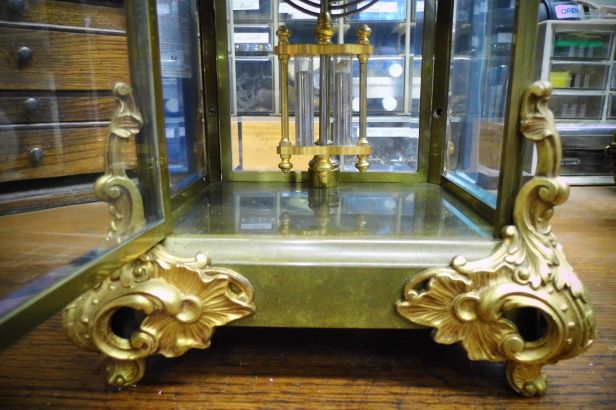
I initially thought the clock was complete until I posted a query on an online clock forum site and discovered that it was missing two trim pieces.
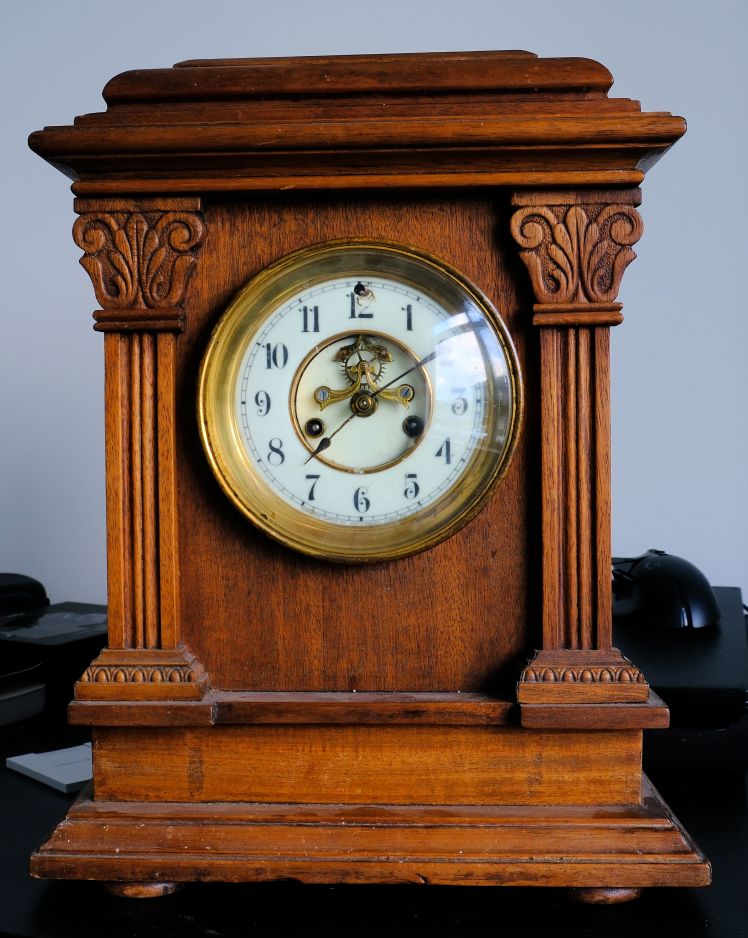
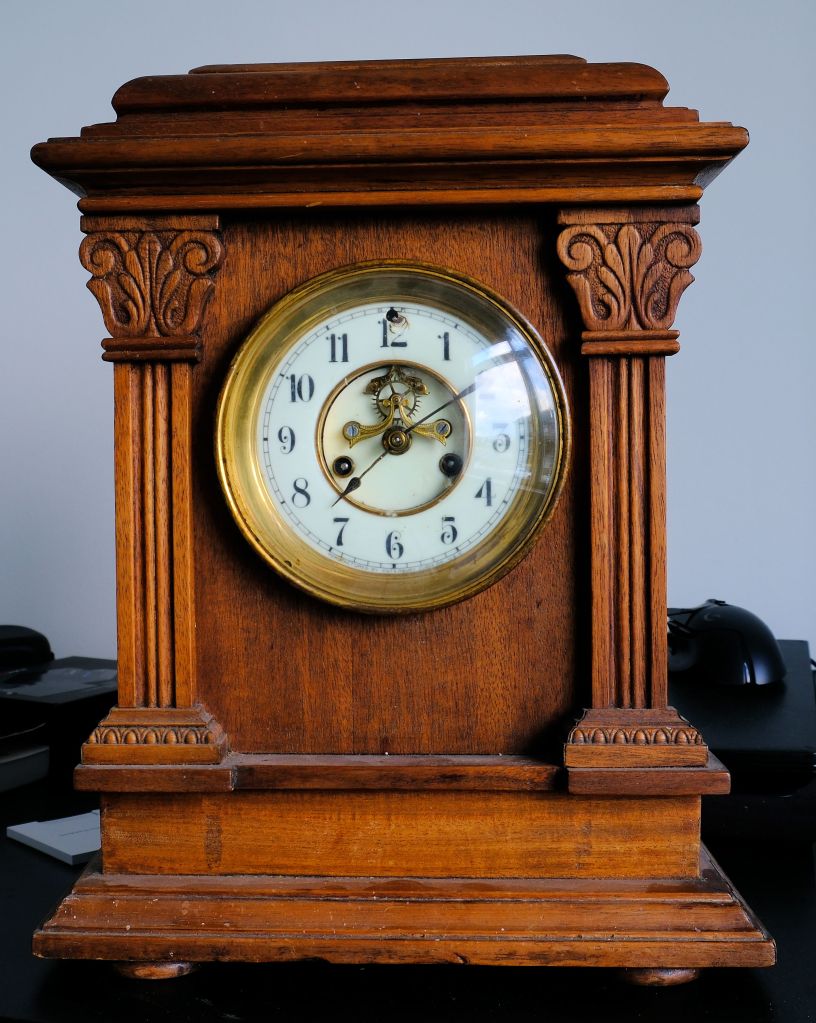
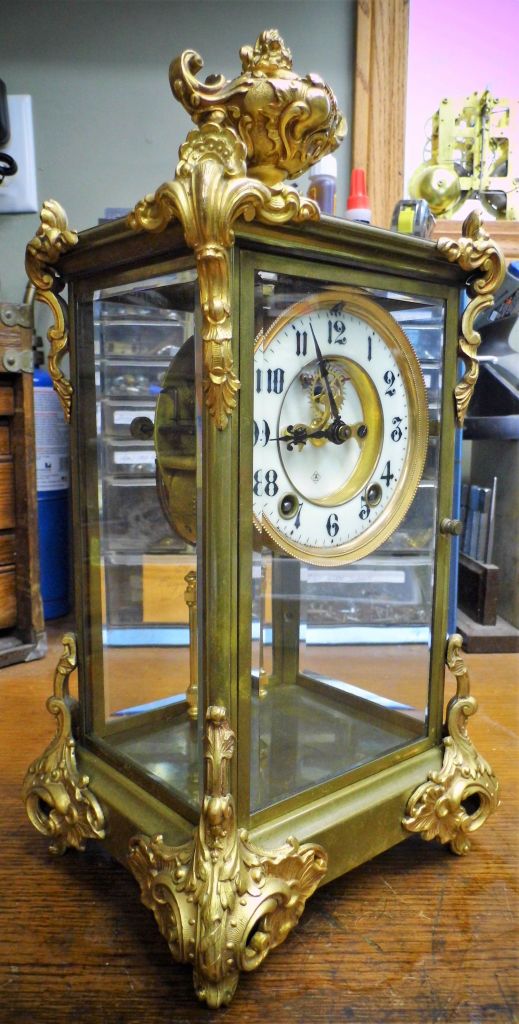
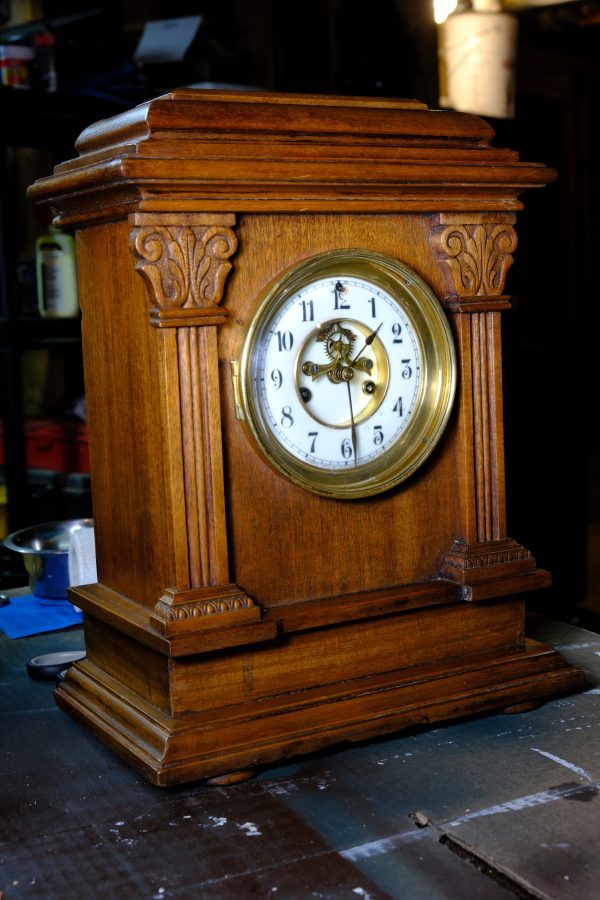
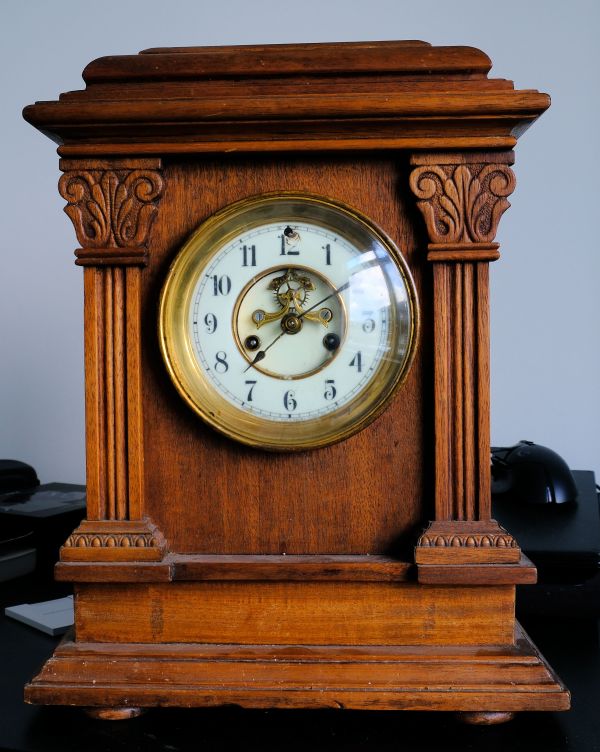
First photo of the clock

However, I also learned that the clock was named the Suffolk and was offered for sale by Waterbury from about 1907 to 1915. The clock is shown in Tran Duy Ly’s Waterbury Clocks book on page 270, which includes an image.
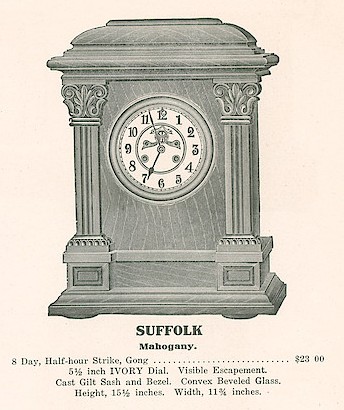
It is cased in mahogany, has an eight-day movement, and features a half-hour strike with a coiled gong. The six-inch “ivory” (porcelain?) dial has spade and spear hands and a visible or open escapement. It includes a cast gilt sash and bezel with convex beveled glass. The clock is tall at 15½ inches and 11¾ inches wide, with wooden biscuit feet.
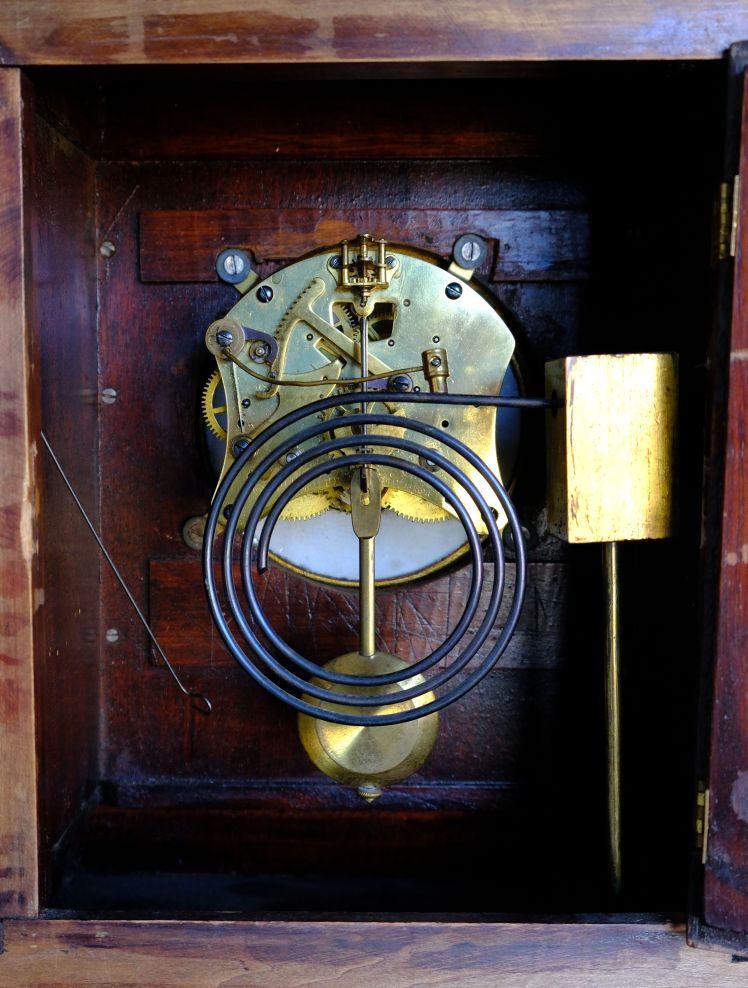
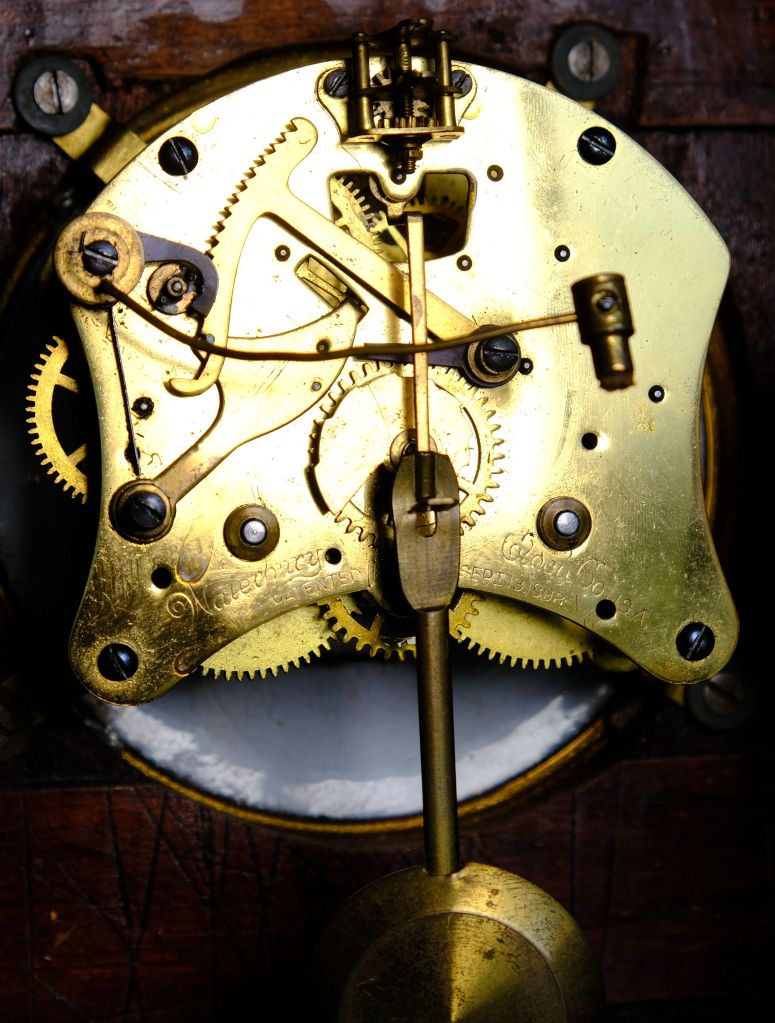
The time and strike movement on a coiled gong

I asked myself what I should do about the missing trim pieces. I also wondered how they had fallen off, but it appears they were glued on at the factory and may have been vulnerable to coming loose if struck. In my experience, once a piece comes off and becomes separated from the clock, it is unfortunately lost forever.

The original pieces were carved mahogany blocks with a center cut-out. Since I don’t have the tools to duplicate that process, and the router bits I have are far too large for this type of work, I decided to come up with what I felt was an acceptable alternative.

I didn’t have any mahogany among my scrap wood selection, but then I remembered some trim pieces I’d received from a friend’s old pump organ about a year ago. At the time, I had no idea how I would use them, and as I suspected, they turned out to be made of mahogany.
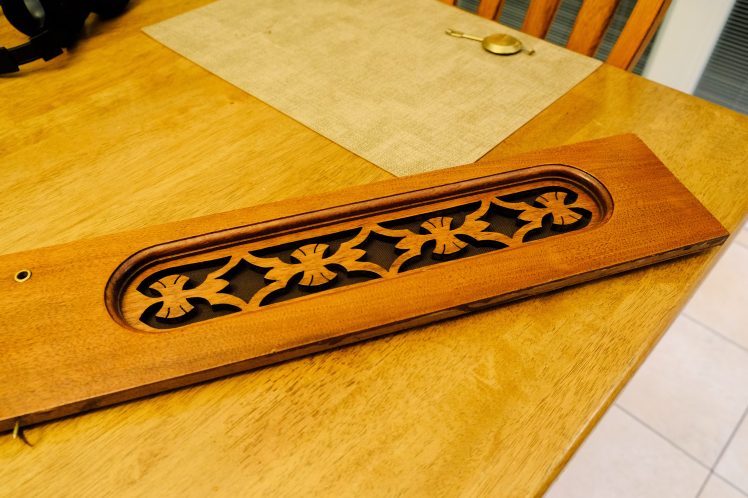
Using a table saw, I cut out two test pieces to determine if the repair would work. They looked acceptable, even if not quite sized correctly, and since I had enough mahogany, I set about carefully measuring the final pieces. I decided to stack thinner sections in a relief style—quite the opposite of the original design.

Because the clock’s case parts varied slightly in tone, I knew the new pieces would end up a shade darker.
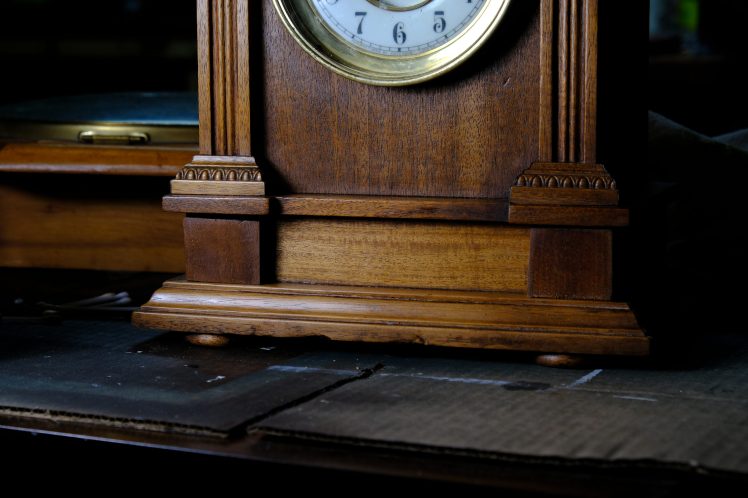
Test pieces, narrower than the final pieces

I then cut the final pieces, sanded off the finish, glued the sections together, and attached them to the base of the clock using carpenter’s wood glue. The final step was applying two coats of finishing paste wax. The clock now looks more complete, and unless one is familiar with the original design of the missing pieces, they would be hard-pressed to notice the difference.
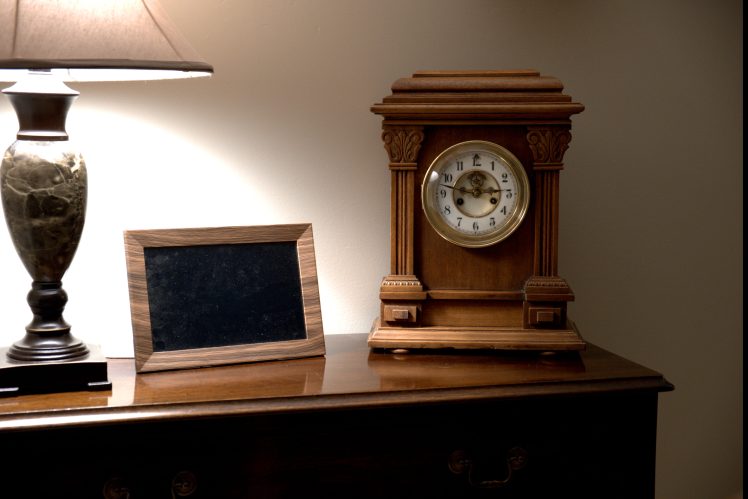
The final outcome

Making changes to a clock’s case is never easy, for each alteration risks straying from what once was. Yet restoration is, by nature, a communication between the past and the present—to reconcile what time has taken and what care can restore. Though the change departs slightly from the original, it brings balance to the design in my view, and renews the clock’s quiet dignity. In that sense, I am content with the outcome.

Restoring the Suffolk reminded me that even small imperfections can lead to creative solutions. While my replacement trim pieces differ from the factory originals, they complement the clock’s character and preserve its charm—proof that restoration is as much about craftsmanship and ingenuity as it is about authenticity.

For those who appreciate a visual commentary, check out a 3 1/2 minute video I made during the project:
Discovering a Rare Waterbury Clock in Almonte, Ontario

Almonte, Ontario, (Canada) is a town that practically invites you to slow down and explore, and that’s exactly what my wife and I did one afternoon in September. In fact, it is called “The Friendly Town”. We drifted from one antique shop to another, discovering all sorts of curiosities. But in one store, I found something that stopped me in my tracks—a stately Waterbury time and strike mantel clock. It felt like uncovering a hidden story, and I couldn’t resist bringing it home.

There are many antique stores in Almonte, but this is where the clock was purchased

I was drawn to the open escapement and porcelain dial—features that are relatively rare in a common American clock.

Untouched and before a cleaning

At first glance, it looked intact, but after posting the clock on a popular clock collectors’ website, I was informed that the case appeared to be missing the lower parts of the columns. I asked the poster to supply a photo for comparison. In the meantime, I carefully examined the case myself and did not find any anchor points or residual glue traces that would suggest something had originally been attached there.

However, further research revealed that there were indeed trim pieces under the columns. This photo, taken from the 1909–10 Waterbury Clock catalog, shows the complete clock. You will note that in 1909–10, the clock was listed at $23.00, slightly more than a typical middle-class worker’s weekly wages in 1910.

The clock is called the “Suffolk”, as shown in Tran Duy Ly’s Waterbury book on page 270 (and the catalog photo above). It is cased in Mahogany, has an 8-day movement, and has a half-hour strike with a coiled gong. It has a six-inch “ivory” (porcelain?) dial with spade and spear hands, and a visible or open escapement. It features a cast gilt sash and bezel with convex beveled glass. The clock is tall at 15 1/2 inches and is 11 3/4 inches wide with wooden biscuit feet.

As an aside, Waterbury also produced a Suffolk model in 1891, which is entirely different from this clock.

The poster said that it is also shown in the 1915 catalog. The patent date on the movement plate is September 1898, so it is quite possible that Waterbury offered the movement for this and other models for a number of years.

When I first looked over the movement, I could see it had been well cared for, still showing a bright, clean finish. But then I noticed something odd: the pendulum was hooked directly onto the crutch. That explained everything—of course, the clock wouldn’t run! It was likely this simple issue that led the seller to list it ‘as is,’ and therefore at a better price.

While trying to think of a way to make a new suspension spring and rod, I thought, why not check the bottom of the case? Sure enough, the original suspension spring and rod had been tucked into a crevice at the inside bottom of the case.

With the suspension rod attached and the gong in place

After installing the suspension spring and rod, I wound the movement, gave the pendulum a gentle push, and to my relief, the clock sprang to life. I’m holding off on letting it run too long until I oil the pivots. Once that’s done, I’ll let it run for a while to see if it can make a full 8-day cycle. After that, it will be set aside for proper servicing.

Despite the missing lower trim pieces and the slight chipping around the number 12 on the porcelain dial, it remains a very nice clock and is reasonably well-preserved.

From the tucked-away suspension spring & rod to the moment the pendulum first swung, it reminded me how even the simplest details can make all the difference in getting a clock to run. While it will eventually need a full servicing, seeing it come to life again was a rewarding reminder of why I love collecting and caring for these fascinating pieces of history.

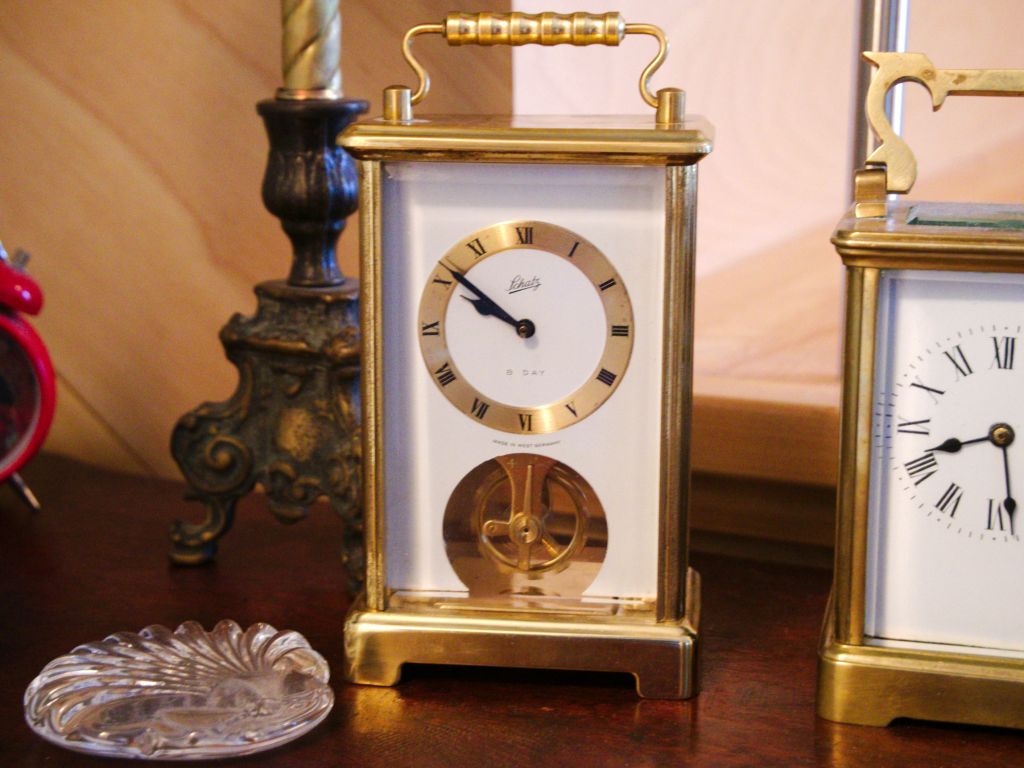
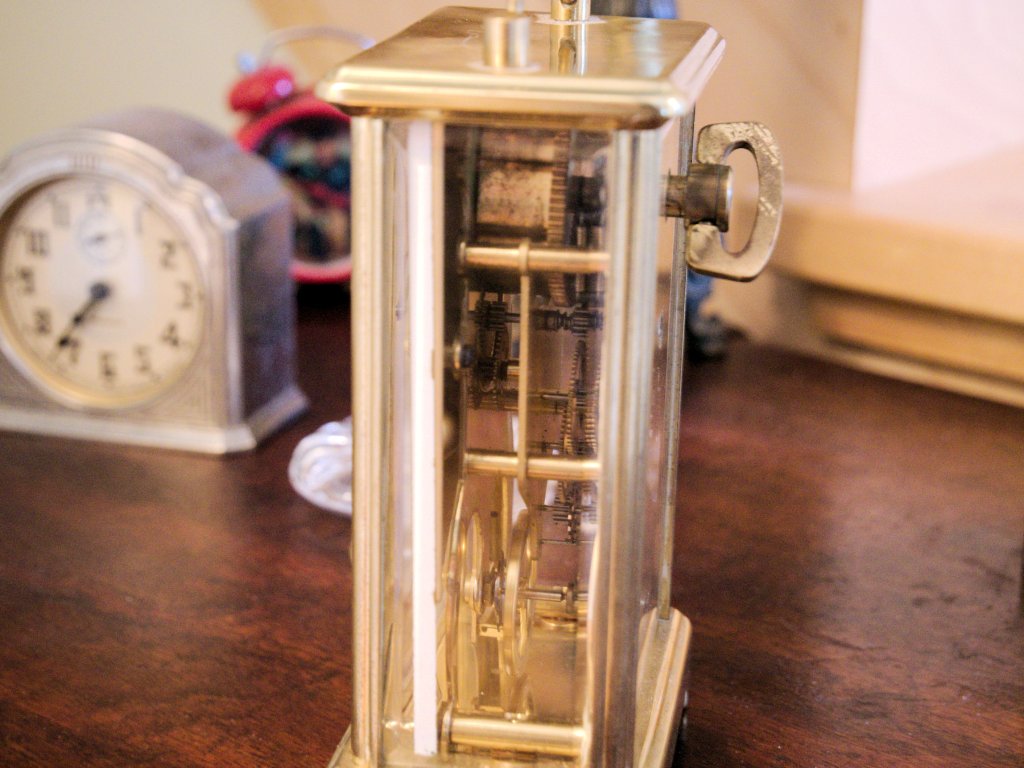
Schatz carriage clock with an interesting visible escapement

My wife found this 8-day Schatz carriage clock while she was browsing for antiques on Facebook marketplace for what we both felt was an attractive price. I had dealt with the seller in the past and he is known for his honesty and selling clocks at a reasonable price. I do not believe his intention is to make a lot of money.

Schatz carriage clock

My wife likes it and when we picked it up we were not disappointed, it has a quality look. It was made in the 1970s and probably many thousands were given as gifts.

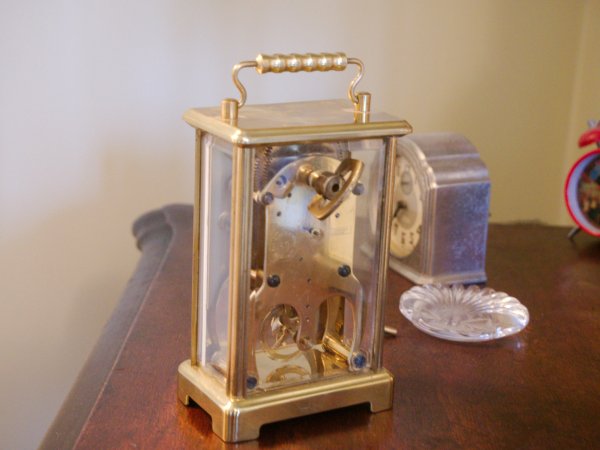
It is lighter than it looks and does not have the heft of a traditional antique carriage clock. The plates are thin, the brass casing is thin, the glass is not very thick although it is beveled and that accounts for the light weight. The winding key protrudes through the back glass panel, another nice touch.

View of the back panel

Schatz was likely looking for a certain price point and it was necessary to keep the costs down. Pretty, but not designed for long life. But after 40 years it is still running, to a point!

Side view

The seller said it runs for about four days and stops. It is not a big deal as far as I’m concerned but I am curious to take it apart to see if there are any issues beyond a good cleaning.

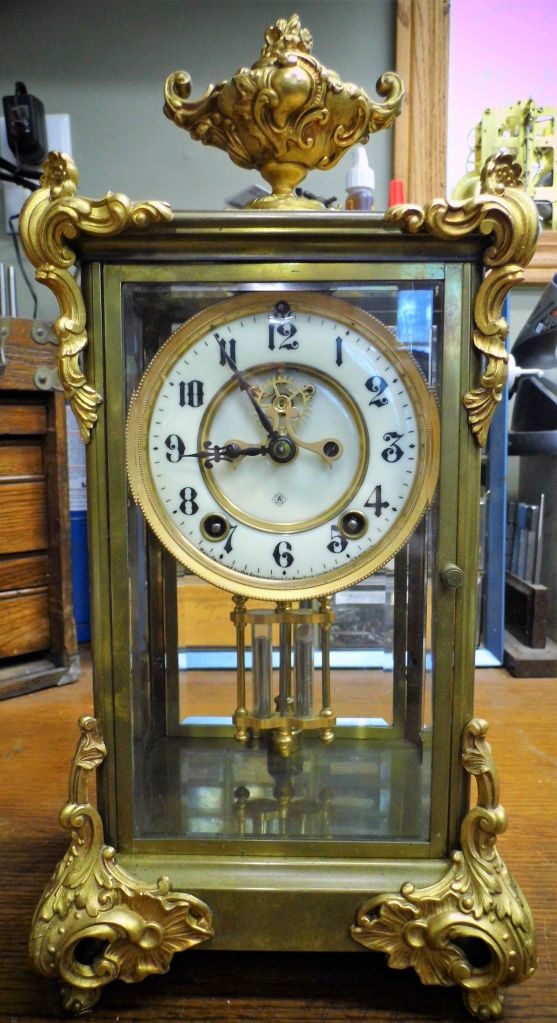
Ansonia Marquis crystal regulator – a reader’s clock

Ansonia Marquis crystal regulator circa 1904

I asked reader and fellow horologist Bob G. if he could kindly give me permission to profile one of his favorite clocks, an Ansonia Marquis crystal regulator circa 1904. This is a very impressive clock that showcases the best of Victorian style at the turn of the twentieth century.

The photos are Bob’s and I will let them largely speak for themselves. But first some information about the company.

Much has been written about the Ansonia Clock Company. The company’s history can be found here. Formed in 1844 the Ansonia Clock Company had a relatively long life but went into receivership just prior to the infamous stock market crash of 1929. The machinery and dies were sold to a Russian holding company thus ending the long reign of one of Americas best known clock companies.

“…there came an order to supply the Soviet union with men and machines to make watches and clocks, neither of which products ever had been manufactured there. Representatives of Amtorg went to the Ansonia Clock Company in Brooklyn and to the Duber Hampden Watch Company of Canton, Ohio, and bought them lock, stock and barrel. Then they hired most of the skilled employees of the plants to go to Russia and operate the familiar machines. These have been installed in a new, many-windowed building in Moscow, where Russian apprentices are beginning to master the trade.”

An inglorious end to a fine clock-maker. Now to Bob’s clock.

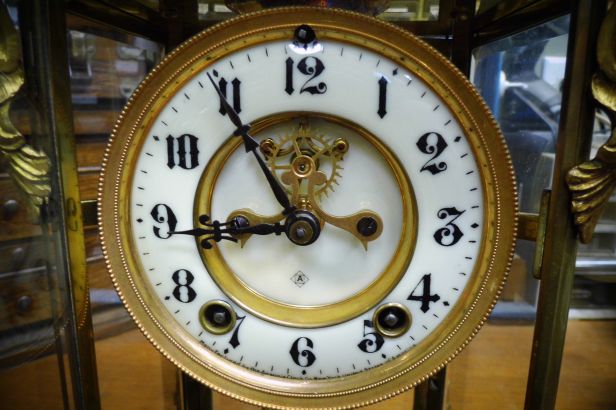
Clock face showing Brocot “open” escapement

Bob writes:

the Ansonia “MARQUIS” crystal regulator mantel clock is an eight-day time and strike with open escapement, jeweled pallets, porcelain dial, thick beveled glass and a brass bezel. The hands and pendulum appear original and it came with an old key which is probably a replacement. There are no hairline cracks or chips that I could see in the dial or the beveled glass. The pendulum is the same as the one shown in the 1904 catalog.

Pendulum bob showing faux mercury in two glass tubes

Ansonia listed the MARQUIS in its 1904 catalog. It may have been produced a couple years either side of that date. The original price in 1904 was a whopping $40.00, not cheap for that time period. $40.00 in 1904 is equivalent in purchasing power to $1107.48 in 2019.

The clock measures 15½ inches high and 7½ inches wide with a 4-inch porcelain dial. The case is listed in the catalog as polished brass, “rich gold” ornaments.

Side view of the Marquis

I purchased this clock as part of a large collection. The owner had passed away, and his grandson was settling the estate. The grandfather had opened a jewelry store and clock shop over 73 years ago and the store is still in operation today.

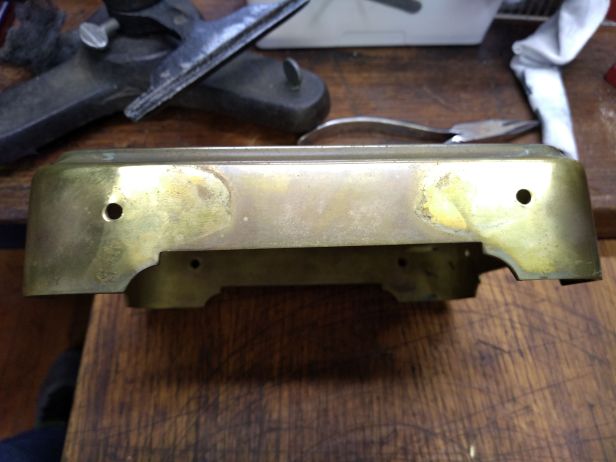
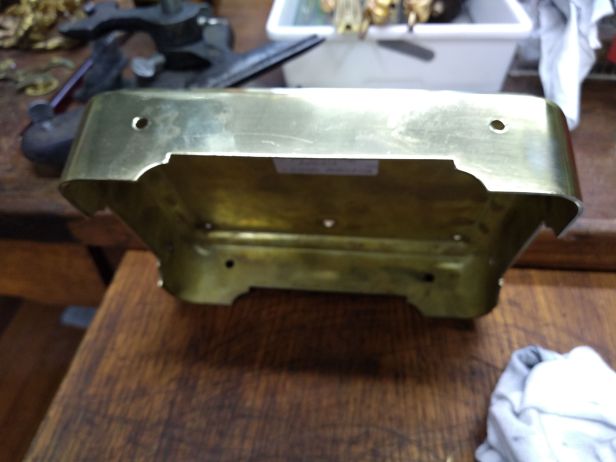
This clock needed a good cleaning, and the brass was badly tarnished.

Tarnished brass base

After cleaning and polishing

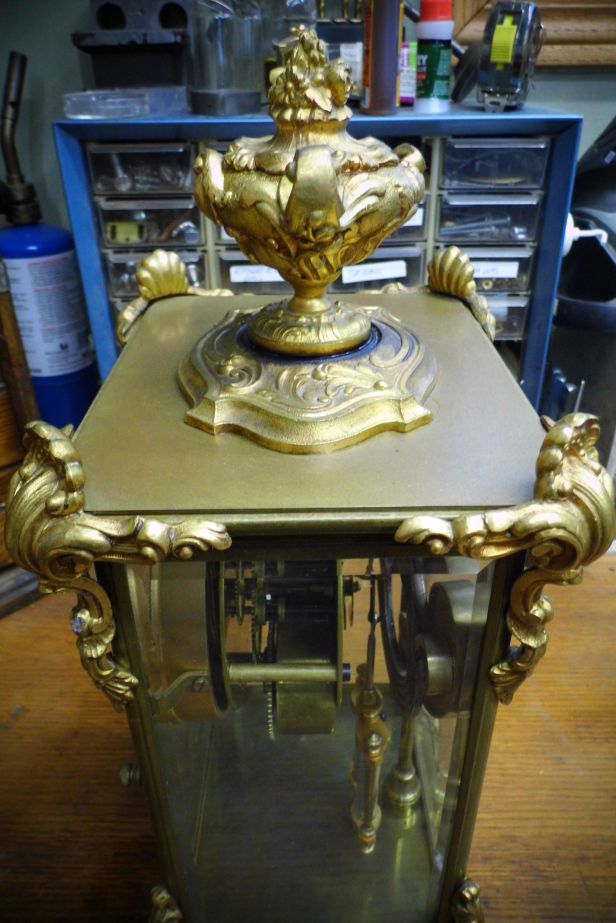
The gold ornaments were left intact to preserve the rich patina.

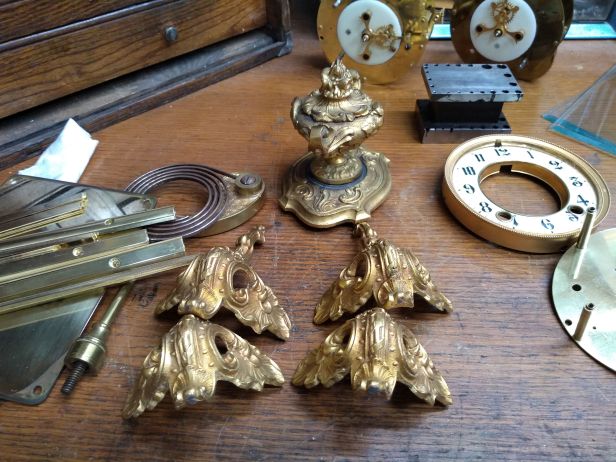
Ornamental features, the legs and crown

The entire clock was disassembled, and the brass parts were run through an ultrasonic cleaner, then polished.

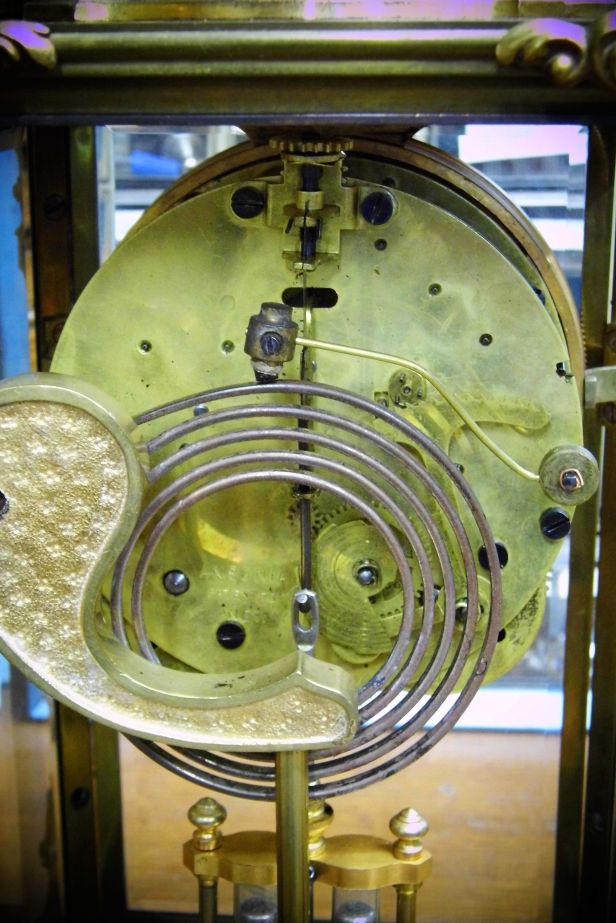
Back plate, coiled gong and hammer

The movement was also taken apart and cleaned. All the bushings and pivots were in good condition. One of the jeweled pallets needed to be adjusted and reset with shellac.

Trim pieces in place

It took about a week to get this beauty all back together and running again, but it was worth the effort to see it ticking away and keeping great time.

Thank you Bob. A most impressive clock.

The jeweled pallets are made from garnet, a precious stone consisting of a deep red vitreous silicate mineral. Here is an interesting 1905 catalog showing Ansonia’s collection of crystal regulators. Page 24 shows the Marquis with a price increase to $41.80. As Bob pointed out, a hefty price for a clock in its time.

Website Powered by WordPress.com.

Up ↑