
The Hidden Dangers of Idle Mechanical Clocks

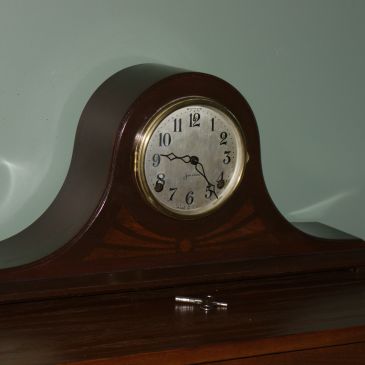
A lot can happen to a mechanical clock over time. Even if your clock is primarily a decorative piece or a cherished family heirloom you’re hesitant to touch for fear of damaging it, it’s still wise to run it occasionally. Read on to learn why.

An Unused Clock

Surprisingly, it’s not regular operation that wears a clock down — it’s the passage of time and the surrounding environment. An idle clock may seem “preserved,” but several slow-acting processes can do more harm than the gentle motion of its gears.

The most immediate issue is oil degradation. Over time, clock oil (especially natural or mineral-based varieties) thickens, becomes sticky, or even congeals into a waxy film or becomes blackened. This thick sludge attracts dust, forming a gritty paste that can damage pivots and bushings if the clock is later restarted without servicing. Even synthetic oils, while more stable, are not immune to age-related breakdown, though many clockmakers agree they deteriorate more slowly and predictably.

Very dirty movement
A very dirty movement that would be damaged without a cleaning

Another concern is oxidation. Brass plates survive well over time, but steel pivots and levers, especially in damp environments, are prone to corrosion. The longer a clock remains idle, the more likely moisture will begin to affect exposed parts, particularly if the movement isn’t well-sealed or has residual acidic contaminants from old oil. In coastal regions or humid climates, this process accelerates significantly.

Idle clocks are more vulnerable than you think

Idle Clocks Are More Vulnerable Than You Think

When the clock is left sitting, its tiny steel pivot ends are especially vulnerable. Over time, they can begin to pit or even lightly fuse to the inside of their bushing holes — a form of micro-seizing. This can lead to hesitation or jerky motion if the clock is later wound and restarted without proper inspection.

Leather parts such as hammer ends, wooden parts, can also dry out or warp over time. If the case is made of wood, as most are, lack of movement combined with seasonal humidity swings can lead to cracking, loose joints, or swelling that shifts the alignment of the movement inside the case. Warped cases or mounting brackets can throw a movement out of beat without any warning.

This worn pivot is an example of extreme wear

Another issue is that clocks not running are often neglected. Dust collects not only inside but also on and around the movement, often unnoticed. A clock that’s quietly sitting for years on a mantel or shelf might seem pristine, but a peek inside can reveal a surprising buildup of cobwebs, dust, or insect debris. I’ve found everything from spider nests to dead cluster flies inside clocks that had simply “sat for a few years.”

All Mechanical Things Age Better When Exercised – Just Like A Car

All mechanical things age better when exercised. All mechanical things age better when exercised, and a clock is no different than a car in this respect. Letting a car sit idle for months or years without driving it leads to flat spots on the tires, battery drain, stale fuel, and dried-out seals. My advice is to run your clocks from time to time — even just once a month. Let the gears move. Let the escapement tick away for a day or two or a complete cycle (a week if it’s an 8-day clock). It’s not only beneficial to the movement, but it also gives you a chance to observe how it’s performing.

And if you’re not quite ready to wind it fully, gently rotating the hands through a full 12-hour cycle once a month can help loosen things up, distribute any remaining oil, and identify warning signs like stiffness, resistance, or skipping.

A regulating pinion – not discoverable unless a movement is disassembled

Running your clock periodically also helps you maintain a connection with it. You’ll be more likely to notice subtle changes — a sluggish tick, a missed chime, a new sound — all of which can tell you something’s off long before a major issue arises. But even if something is slightly off, a service is a precautionary measure.

In my own collection, I maintain a controlled environment: consistent temperature, low humidity, no pets (I have no issue with pets!), and clean air — essentially a museum-like setting. Even so, I schedule regular health checks for all my clocks as a preventative measure.

I have a lot of clocks and I record work done on them to stay organized. I log every servicing, observation, and adjustment in an Excel spreadsheet. This not only helps me track wear patterns and service intervals but also creates a valuable record I can pass along with the clocks themselves, whether to my children or to future caretakers.

If you have only one clock or just a few, simply make a note on a calendar to remind yourself of any actions taken, whether it’s running the clock through a full cycle or even just moving the hands around the dial. You will thank me.

Website Powered by WordPress.com.

Up ↑