
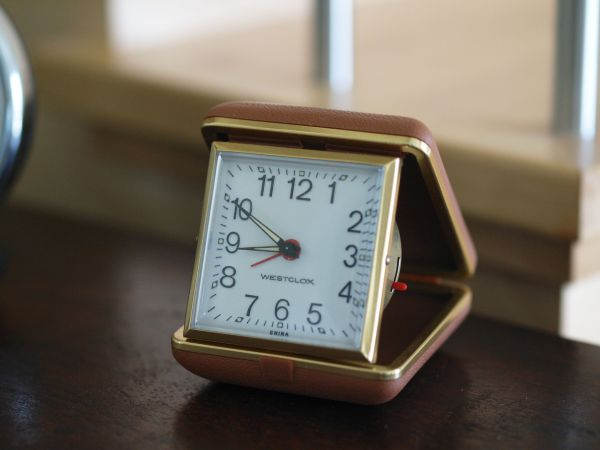
I received an email from a blog fan this week who posed an interesting question. She was concerned that a number of clocks offered for sale at a local antique store had radium dials. I assured her that I know of no maker of mantel, shelf, or long case clocks that used radium on their dials but had there been alarm clocks, wristwatches, and even antique compasses on display her concerns would have been justified.

As a matter of fact, it reminded me of the number of times I have been in antique and junk stores and have seen clocks with luminous dials and the danger I might have faced during a brief exposure, say within a meter or so and the more serious danger of being irradiated had I purchased and serviced them.

As a clock collector, I have a limited number of alarm clocks none of which have luminous dials. I understand the potential danger of radium and that is why I confine my collecting to alarm clocks with non-luminous dials only.
Even a clock that has lost its luminescence may still have traces of radium on its dial or particulate matter that has fallen from the clock face which makes them equally as dangerous.

Since radium has a half-life of hundreds of years even old radium dials are very hazardous. If working on a clock with a radium dial care should be taken to prevent the inhalation or ingestion of flakes or dust which may contain radioactive materials. My advice is to not work on them at all.
In the past several years radium dials have largely been replaced by phosphorescent – or occasionally tritium-based light sources. Therefore clocks produced after the 1970s had safer luminous material applied to the dials but modern alarm clocks are not nearly as attractive as antique clocks from the 1920s or so.
Clocks with luminous radium dials are certainly a danger to avoid and as far as I am concerned, not worth the risk.
 Antique and Vintage Mechanical Clocks
You must be logged in to post a comment.