Best clock acquisition of 2022

Well, it’s that time of the year. What is my best clock acquisition of the past year? You can decide for yourself and leave a comment but I will reveal my favorite at the end of the post.

As a clock hobbyist, I have had little difficulty locating interesting clocks and every year I have managed to find a winner or two. 2022 was no exception.

In the early days of collecting, time and strike vintage mantel clocks were my principal focus with the goal of taking them apart and making them work, an important part of my learning. Many of those clocks have been either sold or gifted. I have shifted my focus toward collecting interesting clocks, rare clocks, clocks that have a special provenance, and growing my collection of Canadian-made clocks.

My wife is my best clock finder. Our discussions may go something like this; “did you see that wall clock on Facebook/xxx auction house?”. “Let me see. Yeah, it looks good, what do you think? Make an offer?” and off we go. Sometimes I will accept the offer from the seller without negotiating because it is a fair price but there are times when a little wheeling and dealing takes place prior to the sale.

In no particular order, here are my finds for 2022.

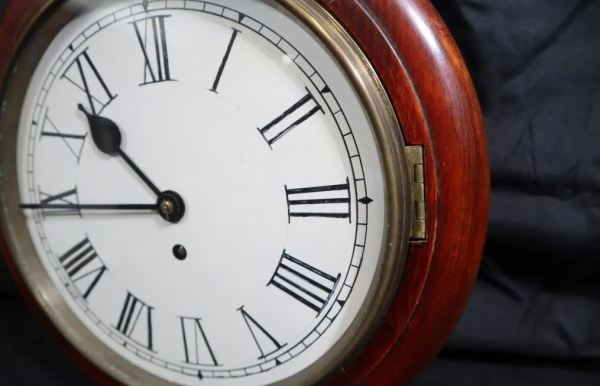
Fusee gallery clock
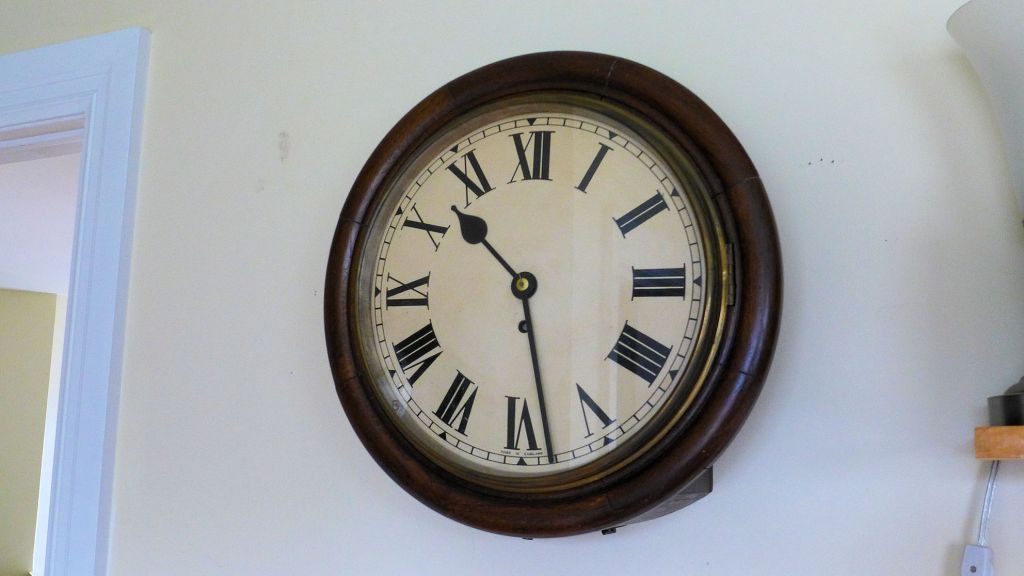
Gallery or dial clock, unknown maker

The clock is also called a dial clock in England which is where it was made. There are no markings anywhere on the clock save an obscure trademark that I have been unable to identify. It is a time-only fusee clock with a 12-inch dial, a very common size. It might have had a chain drive at the beginning of its life but it now has a cable. I have not serviced this clock because I don’t know enough about fusee movements, particularly the method of preloading the powerful mainspring.

E N Welch marine clock
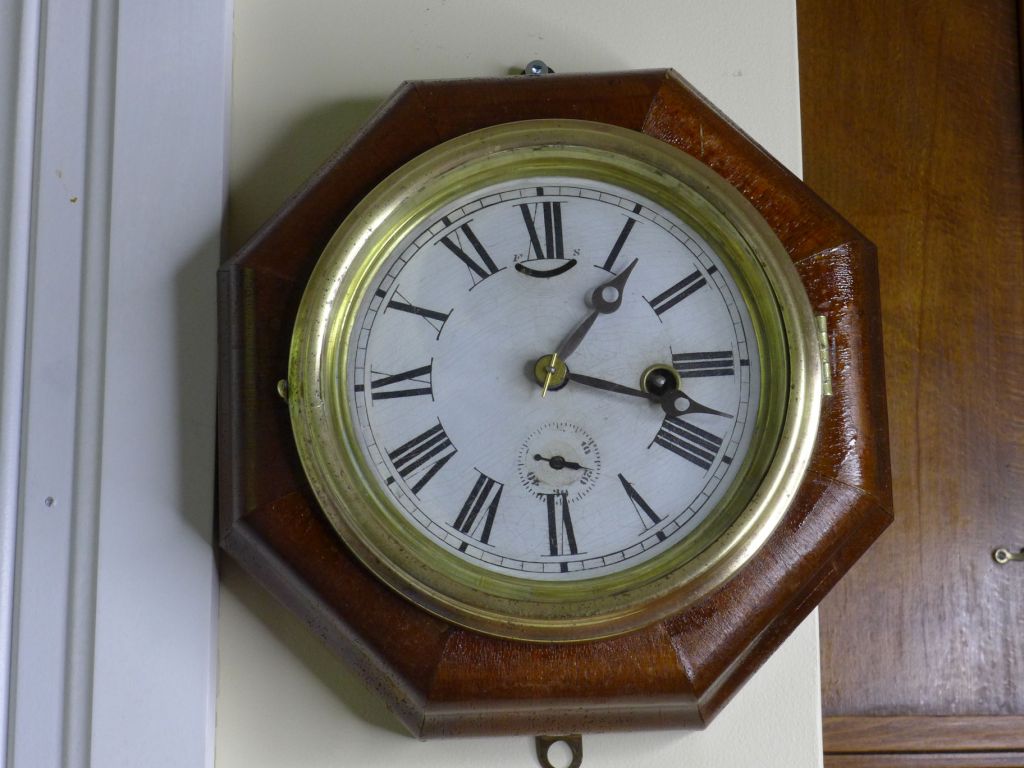
Marine clock by E N Welch

This 30-hour spring wound clock with a hairspring lever escapement simply tells the time. It was made in the 1870s and perhaps earlier. It has been serviced, bushed, and cleaned, but my challenge at the moment is setting up the hairspping. It will work but not well.

Hamilton clock co ogee

Hamilton time and strike ogee clock, Canadian made

Acquired in the spring of 2022 this ogee clock was made in Hamilton, Ontario (Canada). The movement was serviced but the case challenged my veneering skills. It looks quite presentable now but was in poor condition when I bought it.

Jerome and Co. Rose Cottage clock

Rose Cottage clock by Jerome & Co.

Quite honestly I was going to throw the case out after having serviced the movement. It simply looks too far gone. However, I have accepted the challenge of bringing back this clock to its former glory. So far it is a work in progress.

Jauch calendar clock

Jauch 8-day calendar clock

From a distance, this clock looks good but a closer examination reveals a cheaply made time-only movement and an equally inexpensive pine case. It is clear that this German company was attempting to cash in on the antique American schoolhouse clock that was popular in the 1970s.

Wag on the wall
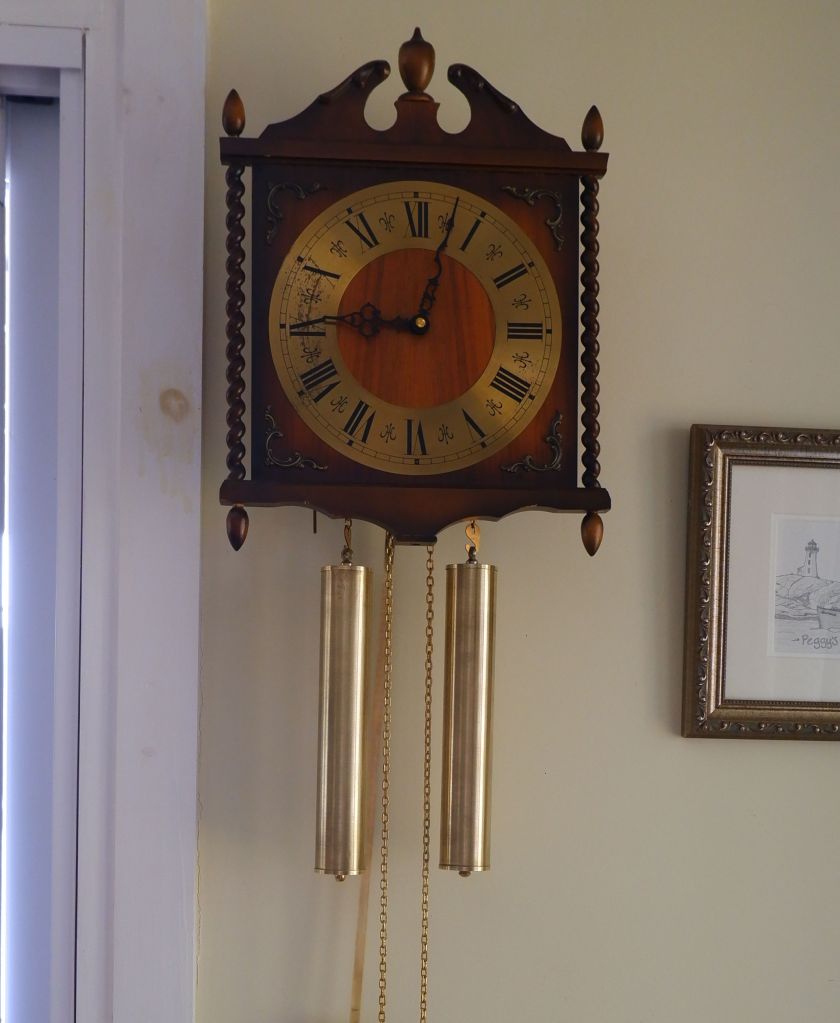
Wag on a wall

This has a well-made German movement, possibly by Mauthe or Hermle. It is a time-and-strike weight-driven clock and keeps very good time. Its only negative is that it has a cheap 1960s look about it but the only thing missing is a bottom middle finial.

Sessions Grand Assortment
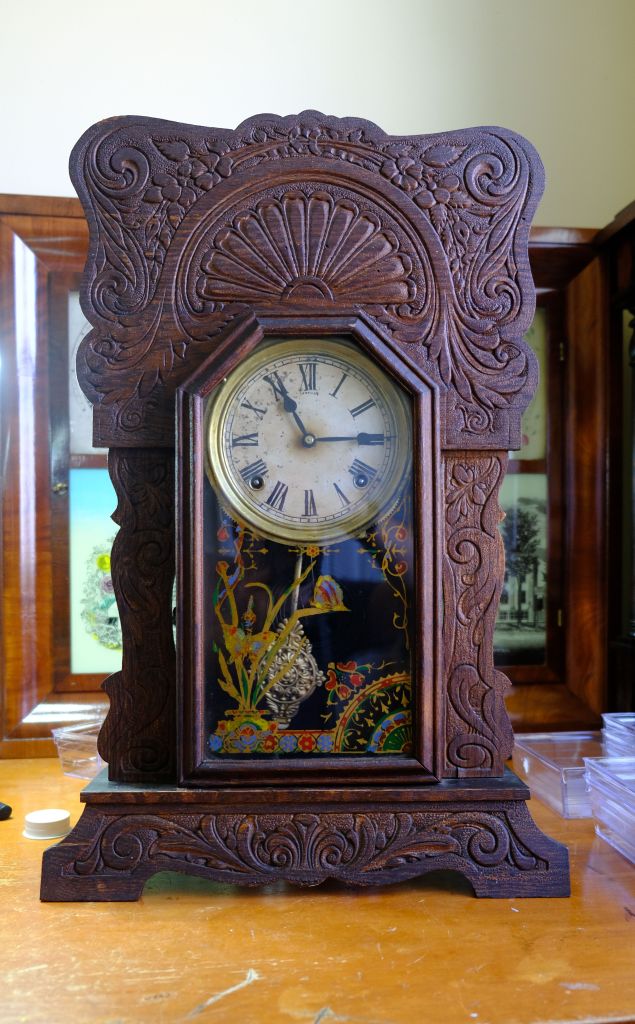
Grand Assortment by Sessions

Perhaps the ugliest gingerbread clock ever made. The photo is the exact clock I worked on two years ago since the clock is apart at the moment and I have stripped down the case (a last resort).

Sessions Mission clock
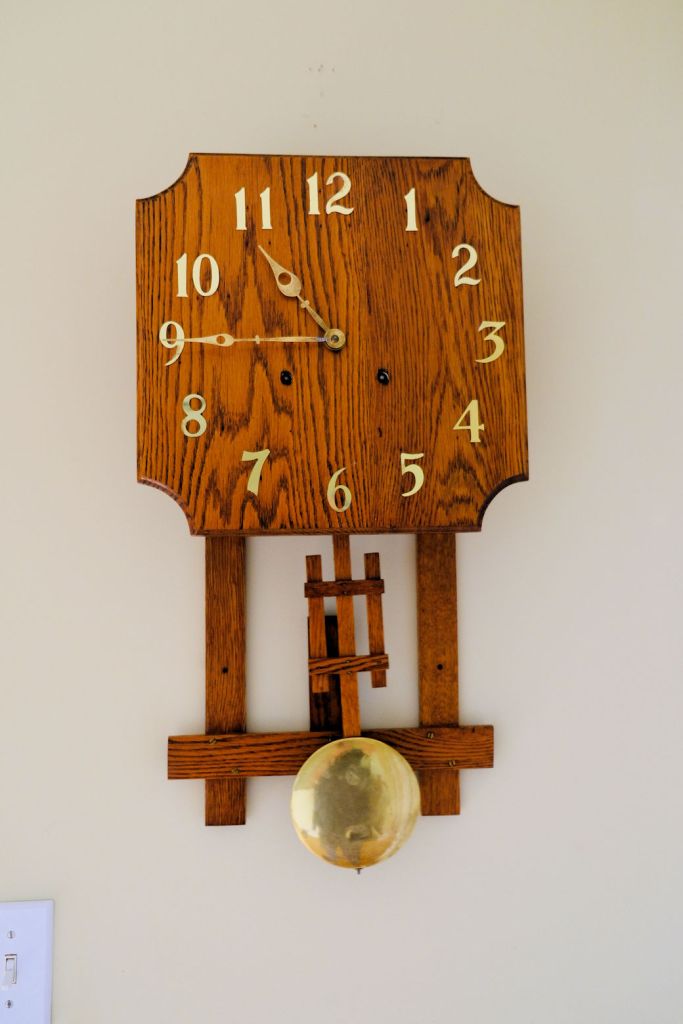
Sessions Mission clock, 8-day time and strike

I like this clock not only because it is a 10$ thrift store find but it has very nicely styled mission clock and it works very well, keeping decent time for a spring-driven clock.

Empire gallery clock
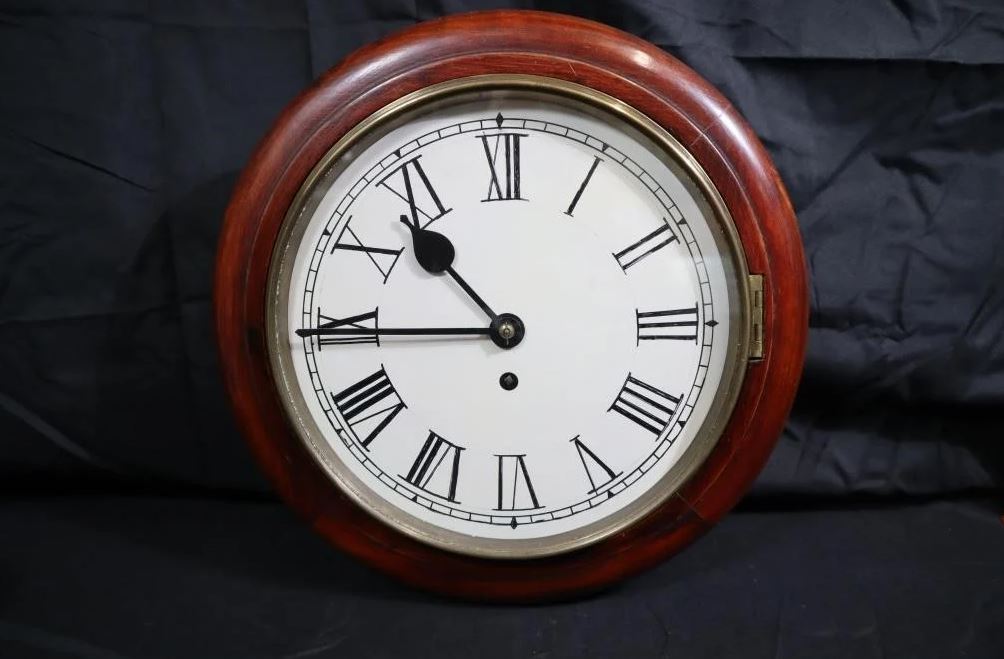
English gallery clock with 10-inch dial

I was hoping this was a fusee clock when I bid on it on an online auction in the spring of 2022 but it is a spring-driven 8-day clock with a fairly robust movement that was intended for commercial use, a store, an office environment perhaps.

Daniel Pratt Jr woodworks clock
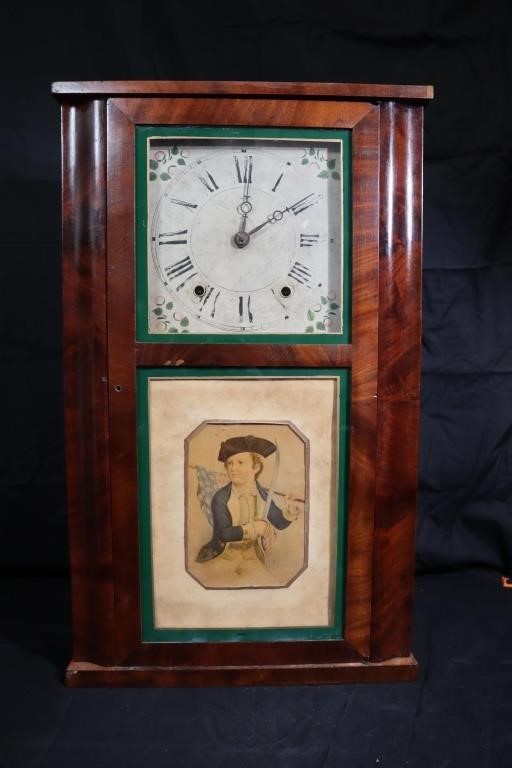
Daniel Pratt Jr woodworks clock

I have a couple of Danel Pratt woodworks clock. Unfortunately, this one is missing its topper. Servicing woodworks movements takes special care and attention and I may tackle this clock in the spring.

Ansonia 30-hour parlour clock

Ansonia 30-hour parlour clock

I seem to gravitate toward 30-hour clocks. This is a time-and-strike clock and is in decent condition requiring only a few touchups.

My favorite?

Well, it has to be the time-only fusee which is probably why I subconsciously placed it first on the list. It well built industrial-strength clock that was designed to last for years. It looks great on any wall, is very quiet, and quite accurate which is what fusee movements are known for.
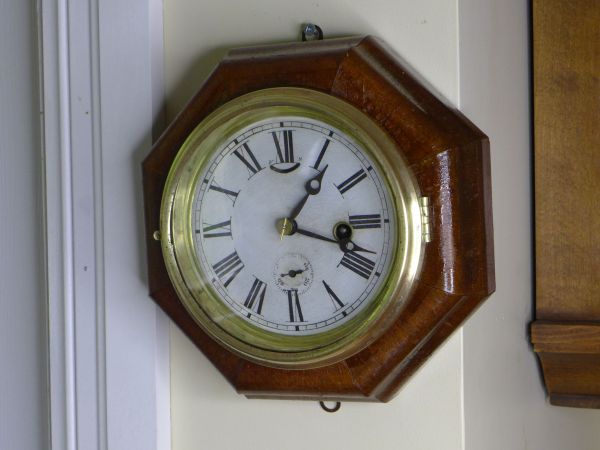
30-hour Welch Marine clock loses 10 minutes per hour

Ten minutes per hour! That is slow. American-made spring driven clocks are poor timekeepers and if yours loses or gains a minute or two a week that is just about the best you can expect.

After having worked on the case a few months ago it is past time to work on the movement.

The clock was in running condition when I acquired it though it did manage to run its rated 30-hour cycle.

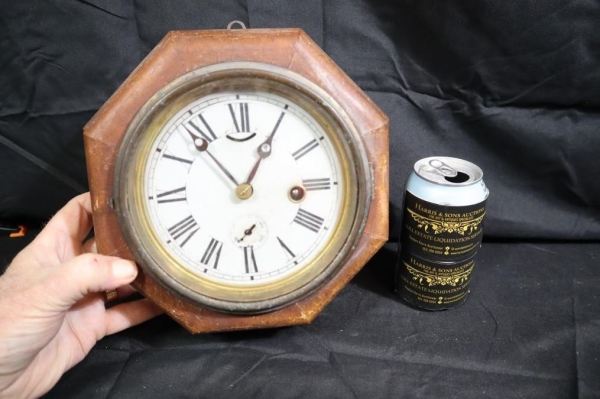
Welch Marine clock 30-hour time-only wall clock

Something is definitely amiss. Wear, a good cleaning or something more serious. Read on and we’ll find out what is slowing this clock down.

A Ship’s Bell clock is a type of marine clock but in clock circles, there is a distinct difference between it and the clock you see here.

Marine clocks either tell the time or strike the hours like a normal domestic clock and because they have a balance wheel escapement they can be placed on a moving object such as a train or a boat whereas Ship’s Bell clocks originated in sailing ship days when the crew of a vessel was divided into Port and Starboard Watches, each on duty for four hours, then off for four hours.

An assortment of Marine and Ship’s Bell clocks at the National Association of Watch & Clock Collector museum in Columbia, Pennsylvania

One stroke of the ship’s bell indicates the first half hour of the watch. Then an additional bell is struck for each succeeding half hour for a total of 8 bells.

As seen when acquired

Based on a quick inspection I see nothing amiss other than a crimped hairspring on the balance escapement. I wonder if that might be the issue?

The movement is accessed by removing the hands and dial

Now, let’s take this apart and see what we have. Look for a future article as I detail the servicing of the movement.

Welch marine clock – two issues addressed before servicing the movement

A couple of weeks back I featured this Welch marine style wall clock. A marine clock can also refer to a ships’ bell clock. Ship’s bell time originated in sailing ship days, when the crew of a vessel was divided into Port and Starboard Watches, each on duty four hours, then off four hours. One stroke of the ship’s bell indicates the first half hour of the watch. Then an additional bell is struck for each succeeding half hour for a total of 8 bells.

E. N. Welch marine clock

This is not a ship’s bell clock. However, this is a clock that can be used at sea or in a rail car that simply tells the time. Lever and balance wheel escapement clocks are ideal for ship or train applications because pendulum clocks on do not work in those environments.

The movement was made for the E. N. Welch Clock Co. and I would date it around 1860, so, a 162 year old time-only clock with a balance wheel escapement and a seconds bit running off the second wheel.

The clock was bought at auction earlier this year.

The case is dirty but there are no veneer issues

From the photo above the case appears to be very stressed but under that grime and blackish tarnish could be a jewel of a clock.

Tarnished brass

The exterior of the clock has probably not been cleaned in decades or perhaps not at all.

In the old days folks cared for their furniture with weekly or monthly waxing/wiping/dusting or polishing of brass. That was simply the accepted practice. Items were not designed to be thrown-away and it was common to hold onto possessions as long as practicable.

This little clock has certainly been neglected over the years although there is nothing missing, the movement runs just fine and the open spade hands are likely original. Yes, it is dirty! You might call it patina and many collectors would accept the wear and tear over the years as part of the character of the clock. I take the view that it was meant to be shown and a little bit of intervention is perfectly acceptable.

I don’t have time to service the movement and it can wait till later this year but I was able to clean the case and polish the brass.

The brass took a lot of elbow grease and I am sure I went through half a bottle of Brasso but I like the final result. The case required cleaning with Murphy’s soap and one coat of traditionally prepared shellac.

Before

Since it is a 30-hour clock I doubt I will be running it much and servicing the movement can wait.

After

In the meantime I have an Empire gallery clock that I would like to service for summer cottage duty.

E. N. Welch marine style 30 hour wall clock

Marine movements were in high demand by the 1850s as boat and rail traffic increased. The marine movement is a specific type that does not have a pendulum. Pendulum clocks do not work on a ship or train because they require a stable base. A marine clock has either a balance wheel or lever escapement and were the perfect choice at sea.

This is an E. N. Welch 30-hour marine clock.

Many makers including E.N Welch would buy ready made movements from other shops, assemble them and sell the finished product under their name.

A short history of E. N. Welch. The E. N Welch company was formed on July 6, 1864. Elisha N. Welch (1809 to 1887) had been making clocks at a factory site on East Main Street at Forestville, Conn. since taking over the bankrupt business of J. C. Brown in or about 1856.

Marine style clock by E. N. Welch

The Welch firm was well known for its handsome rosewood cases, though in 1885, with changing styles in furniture, the surviving firm began to introduce new models with solid walnut cases and discontinued some of the older rosewood veneered cases.

After the death of Elisha Welch in 1887, the firm steadily declined, selling off some of its assets and issuing new stock to raise much needed capital. In May of that year the factory was closed down and a receiver was appointed. The receiver spent nearly two years selling off stock and settling the debts of the firm. It was not until 1896 that the firm resumed production.

But the company continued to struggle, would not survive and in 1902 its assets were bought by the Sessions Clock Co.

This movement was not made by E. N. Welch but was sourced from Laporte Hubbell. There were many variations of this movement but the basic two plate layout was identical. In this particular movement the minute wheel is in the two o’clock position and there is the addition of a seconds arbour running off the second wheel just above the “maker’s” stamp. From 1857 to 1863 the E. N. Welch Co. used this 2-plate, 30 hour marine movement. The exact year? Certainly no later than 1863. (source, NAWCC Watch & Clock bulletin, Nov-Dec 2013)

Otherwise, the case is in good condition with two small veneer chips, the brass bezel is very dirty, almost black from years of grime, the dial has minor losses and the movement is running well at this point though at its fastest speed it is running slow.

The plan is to service the movement, and refresh the case. It should be a fun little project.

Website Powered by WordPress.com.

Up ↑