
Clocks at our summer retreat

At our seasonal cottage located in central Canada, we enjoy displaying a small selection of clocks, during the summer months.

The first clock, displayed for a number of years, was a Danial Dakota time and strike clock, which we had converted to a quartz movement. This clock, originating from the 1960s, incorporated Chinese design elements that were inspired by American clocks of that era. It required minimal maintenance and provided very good accuracy.

To operate, it relied on a “C” cell battery. This chiming clock offered both Westminster and Whittington chimes, with my wife and I favouring the Whittington chime.

Converted quartz Daniel Dakota

However, after a period of time we grew weary of the clock’s artificial electronic musical tone, and thus we decided to replace the Danial Dakota clock with a proper mechanical clock.

The Mauthe time and strike box clock we acquired as a replacement at the cottage features a raised maple leaf on its crown. This detail leads me to believe that it was likely sold under a Canadian brand, possibly marketed specifically for a department store or jewellery store. The distinctly Canadian touch with the maple leaf emblem, adds to its charm and appeal in our Canadian cottage setting.
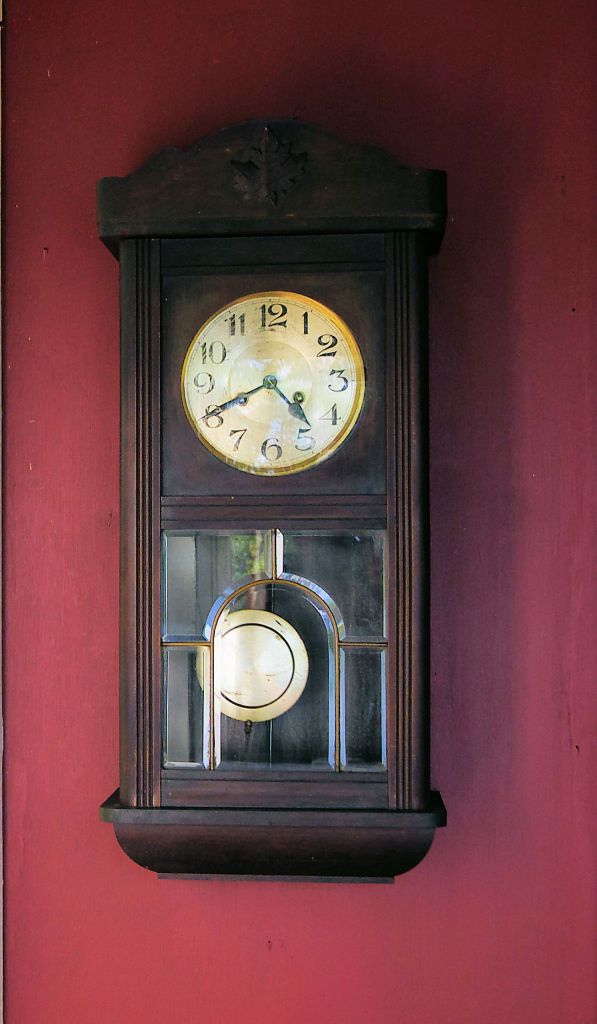
Mauthe box clock
Mauthe box clock with maple leaf emblem on the crown

Next to the box clock is a captivating oak-cased gallery clock produced by the Empire Clock Co. of England. It was acquired through an auction in Nova Scotia and boasts a unique feature — a 10-inch dial instead of the more common 12-inch dial seen in similar gallery clocks.

Despite its resemblance to a fusee clock, it operates with a conventional spring-driven mechanism, which means its timekeeping performance is average at best.
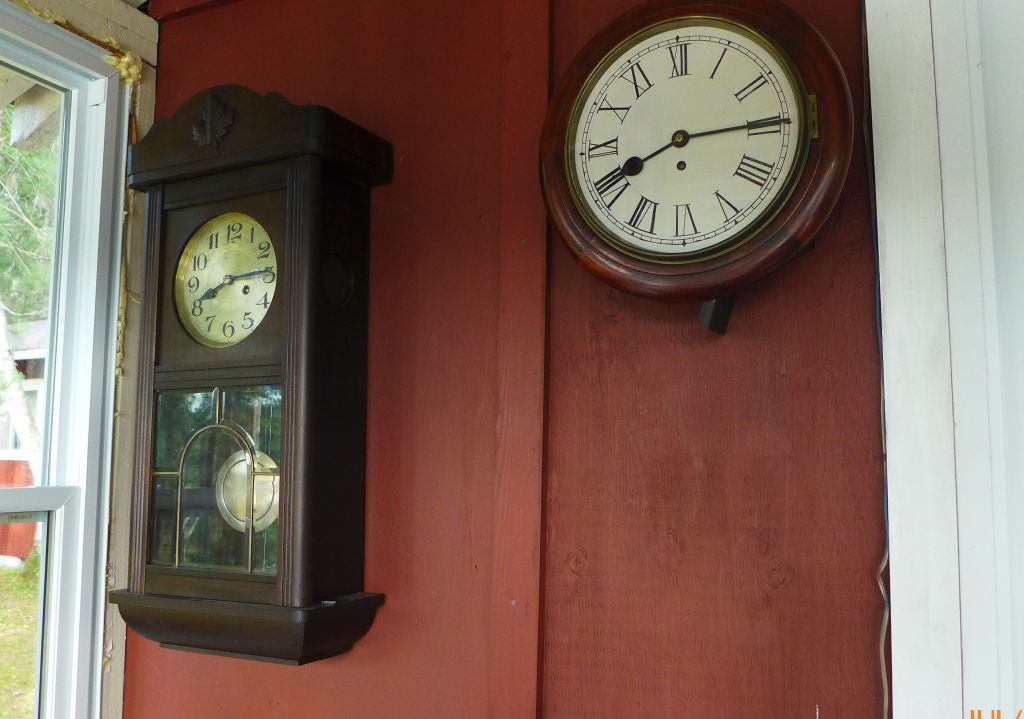
Box clock and gallery clock

Adorning the wall of our sunroom is a familiar time-only schoolhouse clock that was recently gifted to me. It features a sizable 12-inch Roman Numeral dial and a pendulum visible through reverse-painted glass.

Although it has a few minor veneer imperfections that I plan to address later this year, I have already examined the movement and confirmed its excellent condition. After re-oiling it, I carefully placed the movement back into its case.

Schoolhouse clock

Displayed in our family room is a Hermle clock that harkens back to a nostalgic design known as the “wag-on-a-wall” style. This clock operates on a weight-driven mechanism and includes both timekeeping and striking functions. It emits a delightful bim-bam sound by striking on three rods.

The design aesthetic of this clock strongly resembles the clocks manufactured in the 1960s, which aligns with its likely production period. While it possesses a plain and unadorned appearance, it carries a certain charm and serves as a reminder of that era.

Wag on a wall

Among our collection of cottage clocks, we have a New Haven ogee-style clock that operates on a 30-hour time and strike mechanism. It is smaller than a conventional ogee clock and might be referred to as a mini ogee standing at just 18 inches high.

From afar, it presents an appealing appearance, capturing one’s attention. However, upon closer examination, it becomes apparent that the clock has undergone a removal of its veneer at some point in its history. The absence of the veneer adds a touch of character and reveals the clock’s journey through time, offering a glimpse into its past.
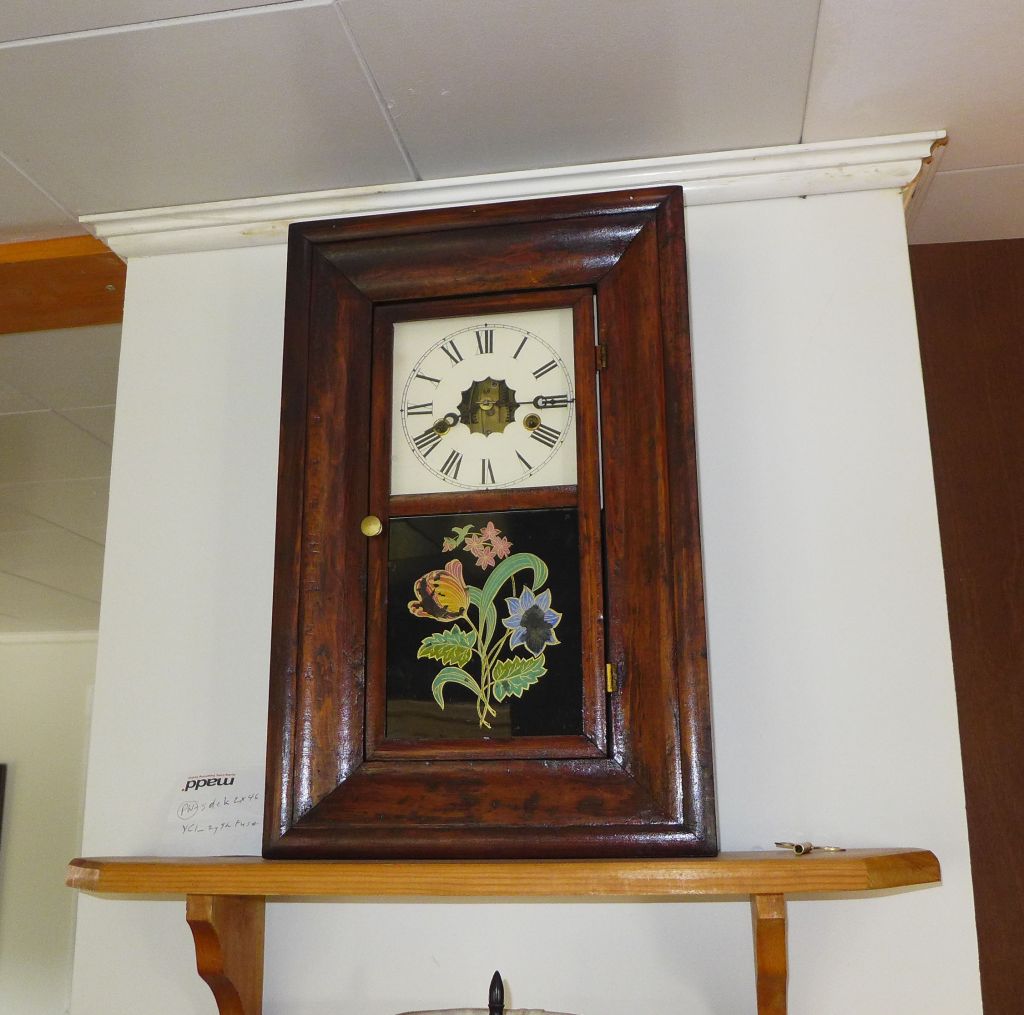
New Haven ogee clock

Finally, a well-worn 30-hour cottage Ansonia clock graces a bedroom dresser.

A cottage clock at the cottage

Despite its visible signs of use, this clock continues to perform well, a testament to the remarkable engineering employed by the clock’s manufacturers. Craftsmen at the time anticipated the rigours of wear and tear, and their foresight in creating such durable movements showcases their longevity.

Clocks at our summer cottage not only serve as functional timekeepers but also carry with them a unique charm and nostalgia.

Each clock tells its own story, displaying the marks of time and the craftsmanship of its makers. Whether it’s the captivating gallery clock with its distinctive dial or the familiar schoolhouse clock with its endearing imperfections, these clocks create a harmonious blend of functionality and aesthetics within the cottage.

As their hands tick away the hours, they remind us to slow down, appreciate the present moment, and savour the timeless tranquility of a summer retreat.
Empire gallery clock servicing – no bushing work this time

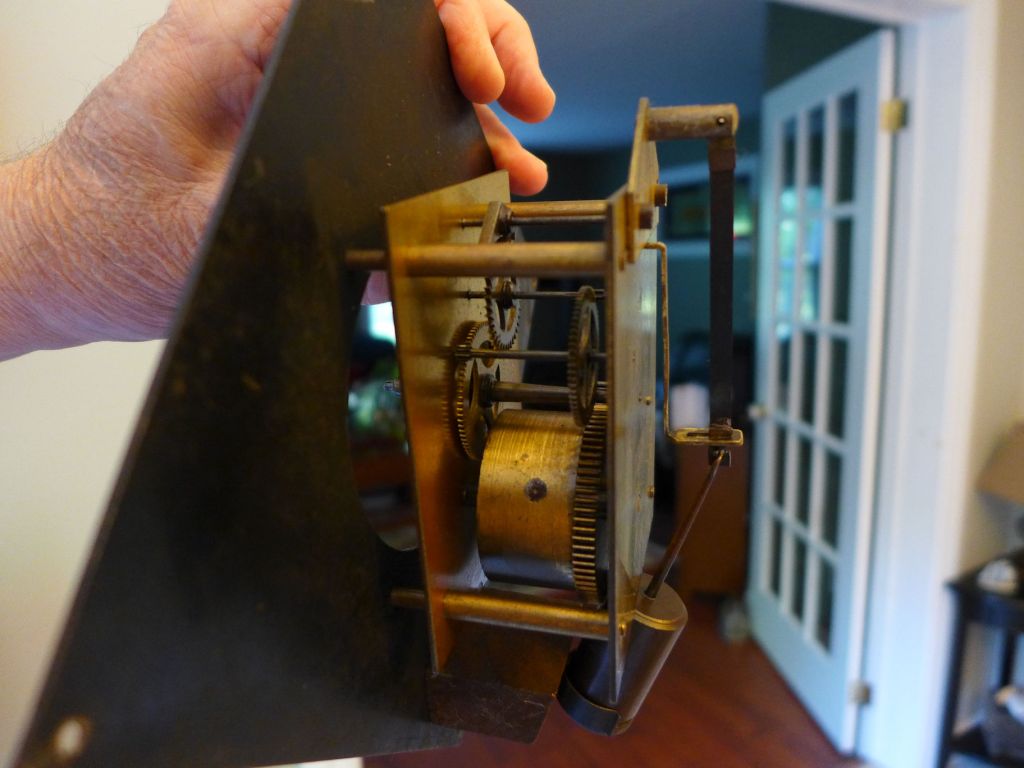
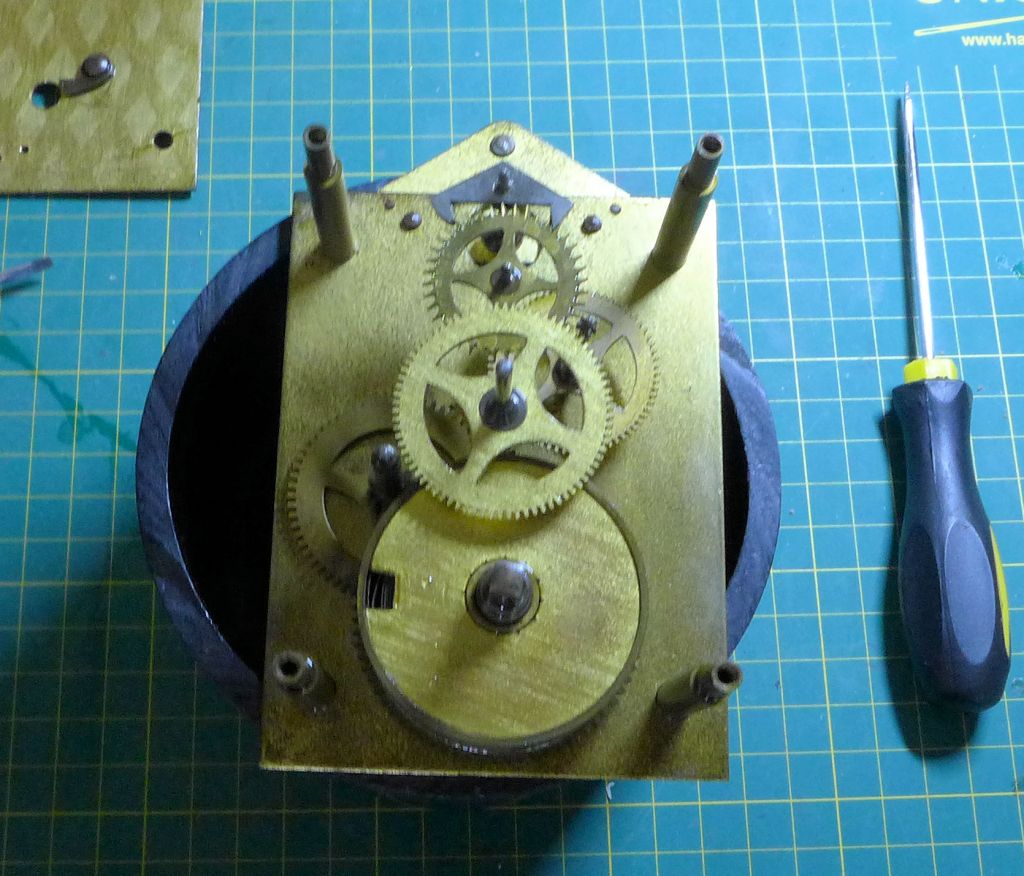
An attractive gallery clock made by the Empire Clock Co. of England was bought at auction this past spring. It has a very conventional time-only movement and as with most time-only movements there are only a few wheels to worry about when servicing. The minute and hour wheel are outside the front plate.

Empire gallery clock

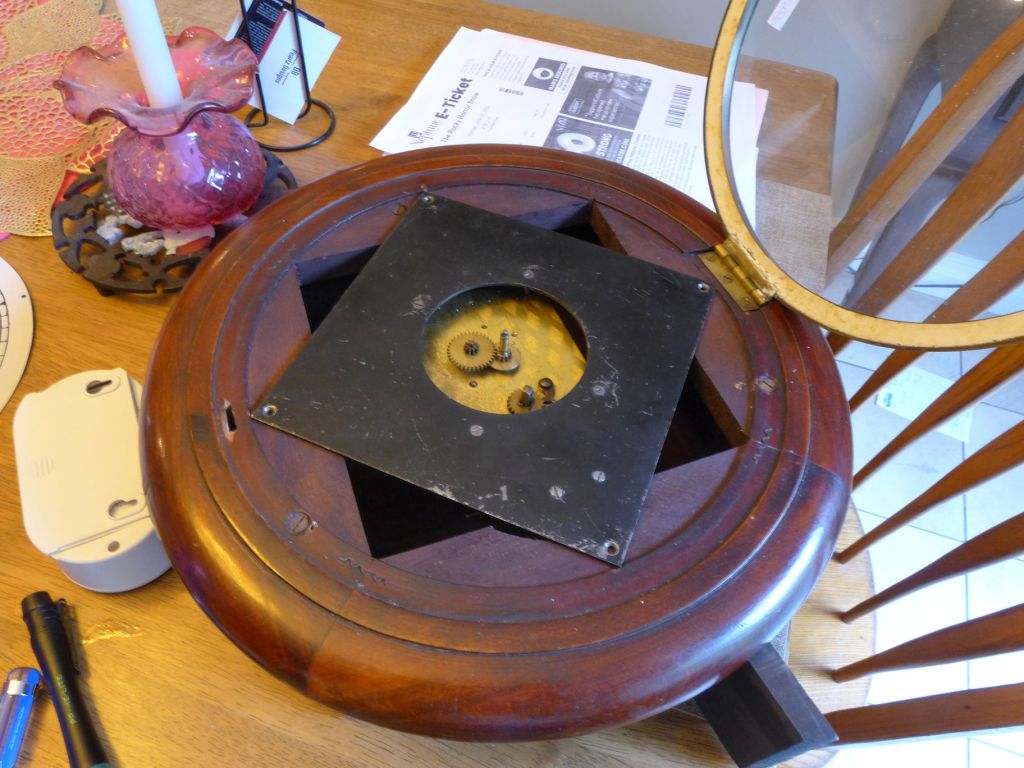
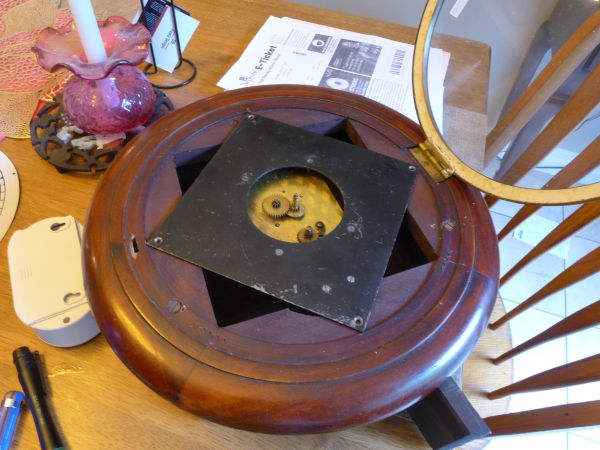
The movement is rather large for a time-only movement and is well built. It is attached to a heavy steel plate that is screwed onto the front of the movement. The whole assembly mounts just under the dial. It has a very German look to it, though it is definitely English-made.

To access the movement the dial must be removed which is a relatively simple process of removing the hands and three small screws.

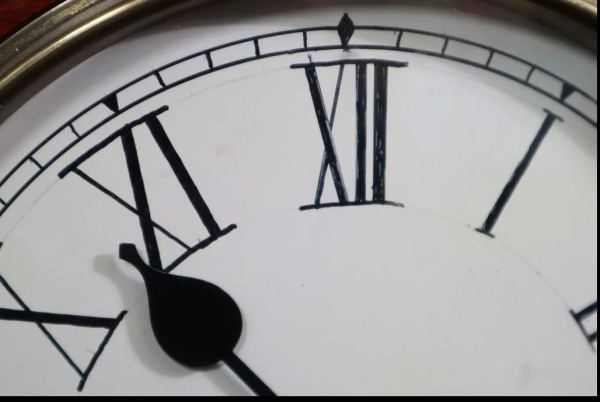
Hour and minute wheel

Four slotted screws secure the movement to the steel plate.

Time-only movement made by Empire

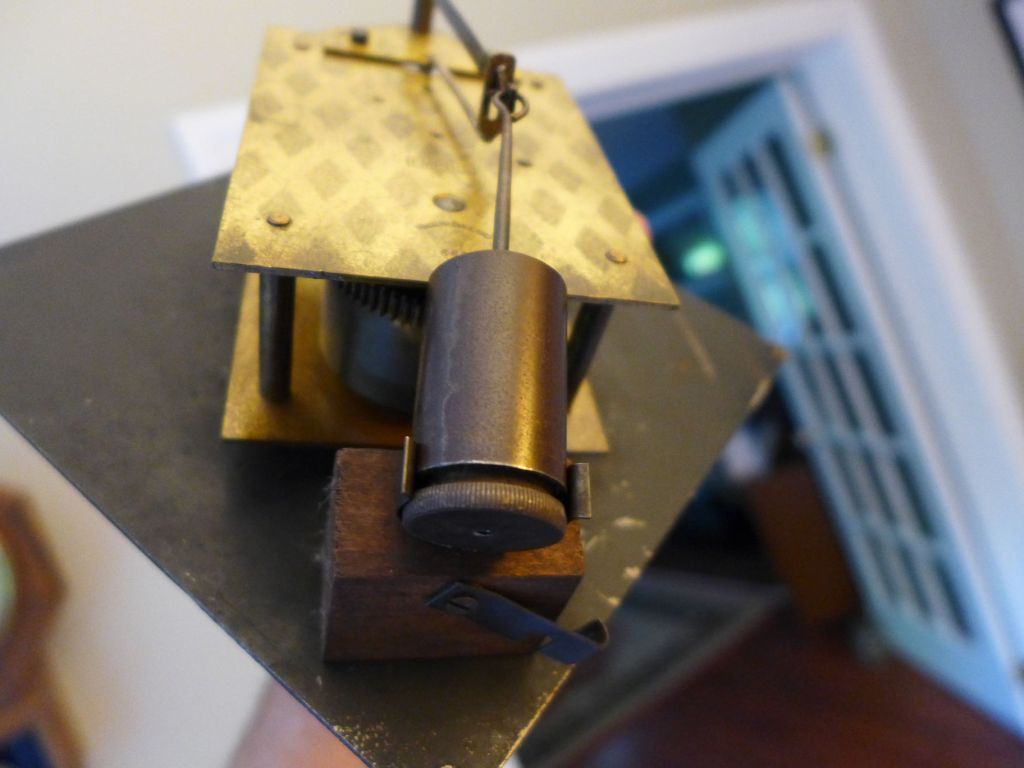
An curious feature is a cylindrical pendulum with a large rotating adjustment screw on the bottom. The pendulum clips into a two piece caddy system for easy transport.

Conventional wheel arrangement

For a fairly modern (1920s) movement I was surprised to find taper pins used to secure the plates. The spring barrel is no larger than one would ordinarily find in the average time and strike clock made in England or Germany.

As the movement was drenched in oil all the parts had to be wiped down before going into the ultrasonic cleaner.

I did not expect the plates and wheels to brightly shine after the ultrasonic but all the parts cleaned nicely just the same. After polishing the pivots and pegging out the holes the movement was assembled and tested.

After working with a number of American movements in the past months the pivots on this movement are comparatively tiny. This is not a movement one muscles to put back together, the pivots must be carefully guided into their holes.

English gallery clock by the Empire Clock Co. is not a fusee

When I placed my online bid on this time-only gallery-style clock (local auction house) in June 1922 I had hoped it had a fusee movement since a clock with a fusee movement has always been on my wish list.

A fusee (from the French fusée, wire wound around a spindle) is a cone-shaped pulley with a helical groove around it, wound with a cord or chain which is attached to the mainspring barrel. A fusee movement improves timekeeping by equalizing the power of the mainspring over its rated running cycle. In short, it keeps better time than a conventional spring driven clock throughout its 8-day cycle.

This clock does not have a fusee movement!

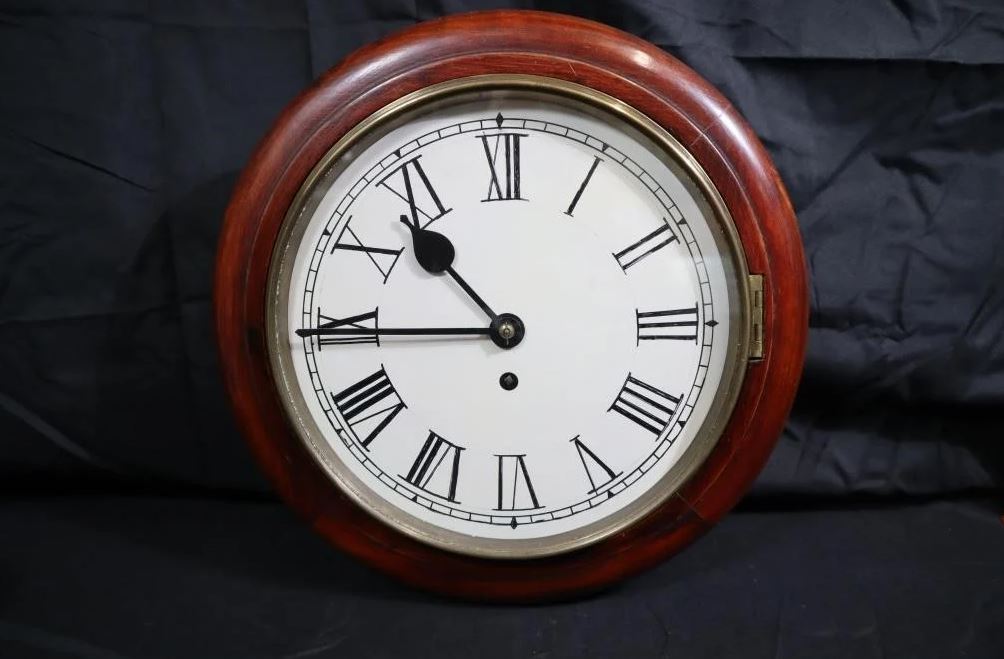
Auction photo

It’s still a nice clock, however!

Most would agree that this a gallery clock, but it is also known in some circles as a pub, office, domestic or canteen clock. The dial face is 10 inches across and the case measures 14 inches in diameter. It has Roman Numerals with spade hour hand and a rod minute hand. The wood surround, which is in very good condition, appears to be mahogany. It has a high quality conventional spring driven time-only movement.

Am I disappointed that it is not a fusee? Well, a little! But the price I paid was far less than a fusee would have cost.

The movement is rather large for a time-only movement and is well built. It is attached to a heavy steel plate that is screwed onto the front of the movement. The whole assembly mounts just under the dial. It has a very German look to it, though it is definitely English-made.

Steel plate

To access the movement the dial must be removed which is a relatively simple process of removing the hands and three small screws.

Time-only movement made by Empire

Four slotted screws secure the movement to the steel plate.

An curious feature is a cylindrical pendulum with a large rotating adjustment screw on the bottom. The pendulum clips into a two piece caddy system for easy transport.

Cylinder pendulum and transport caddy

The movement is stamped “Empire” with #6617 and “made in England” at the bottom of the rear plate. The movement plates have an interesting checker-board design not unlike some German clocks of the time.

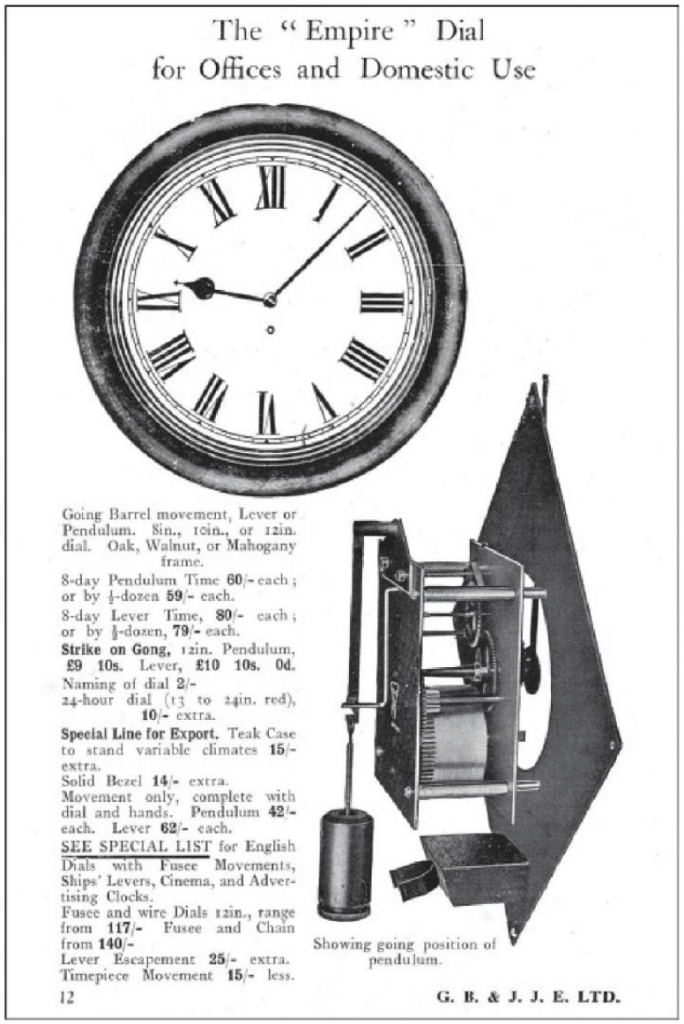
The Empire brand was introduced by The English Clock & Watch Company (a merger of H Williamson & Grimshaw & Baxter) in 1924. The company was short-lived and purchased by Smiths in 1932. Although Smiths acquired the Empire trade names there is no indication the Empire name continued after 1932.

This catalogue image below describes the clock in various configurations. “GB” refers to Grimshaw & Baxter, J.J.E Ltd, is a mystery to me, a distributor perhaps.

It needs a good cleaning but I’ll run it a week or two first and service the movement.

An English gallery clock that is made to look like a fusee that isn’t!

Website Powered by WordPress.com.

Up ↑