Sessions Grand Assortment – finally completed!

I am not a huge fan of gingerbread clocks which were very popular in America at the turn of the 20th century. Every major manufacturer made them and they sold like hotcakes. Thousands have survived and a quick perusal of online auction sites any day of the week will reveal dozens if not hundreds of them.

The Sessions Clock Company of America was a prominent clock manufacturer in the early 20th century, producing a wide range of clocks that included mantle, wall, and grandfather clocks. Founded in 1903 in Connecticut, the company quickly gained popularity for its combination of both traditional and modern styles. Although the company ceased production in the 1950s, Sessions clocks remain popular among collectors and clock enthusiasts. Sessions gingerbread clocks were particularly popular.

The gingerbread designs were created by using high-pressure rotary presses on oak wood that had been pre-steamed to soften it.

The Grand Assortment 8-day time and strike gingerbread clock from around 1915 was a big seller for Sessions and the model was found in many American homes of the day.

And so, we have my Sessions clock won at auction in early 2022. This clock has had a hard life of neglect.

This clock took many months to complete. I was not quite certain what to do with the case so I worked on the movement initially. I have serviced a fair number of Sessions movements over the years so servicing was fairly routine with the exception of one small issue mentioned below.

Rather than leave the case as-is I knew I knew that invasive intervention was the only option.

Auction photo

The case was completely stripped, not something I wanted to do but it was in such poor condition. For example, note the bottom right base section shown below.

The entire case was similar to this

After much rubbing, scrubbing, using a commercial nontoxic stripper, and the application of 2 coats of traditional shellac the results were better than expected.

The clock is complete, the slight darkness on the right is my shadow

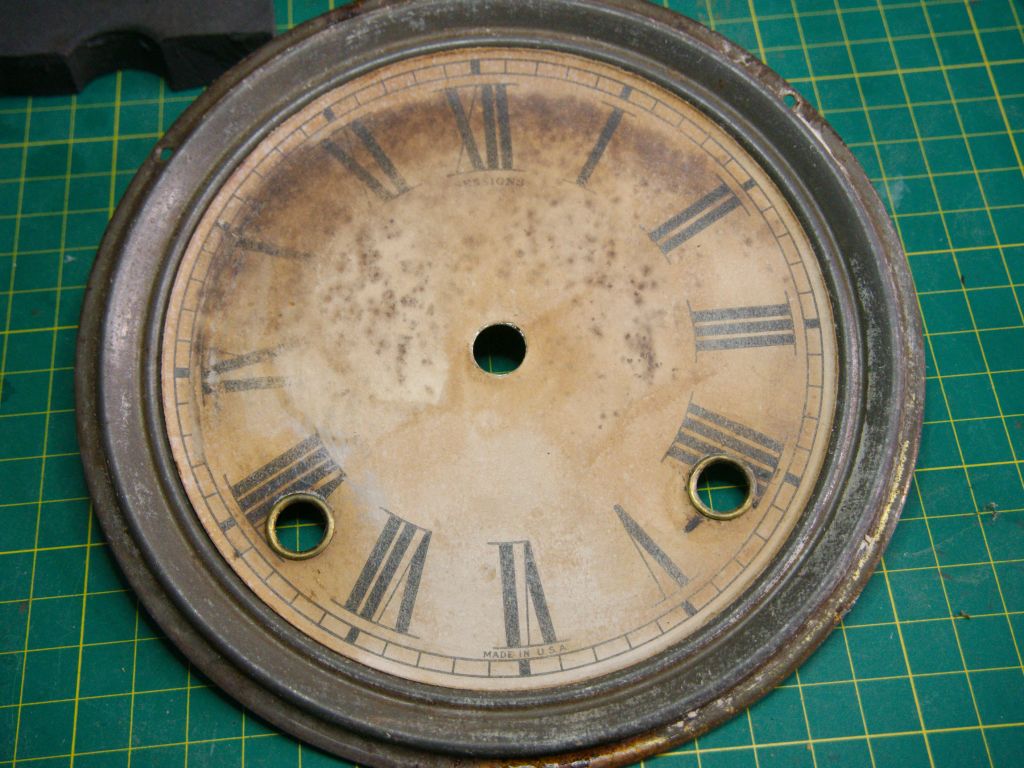
I can usually resurrect a dial but this one had too much foxing as they say in the clock world. Foxing is the gradual process of rust oxidizing through the paper dial over a long period.
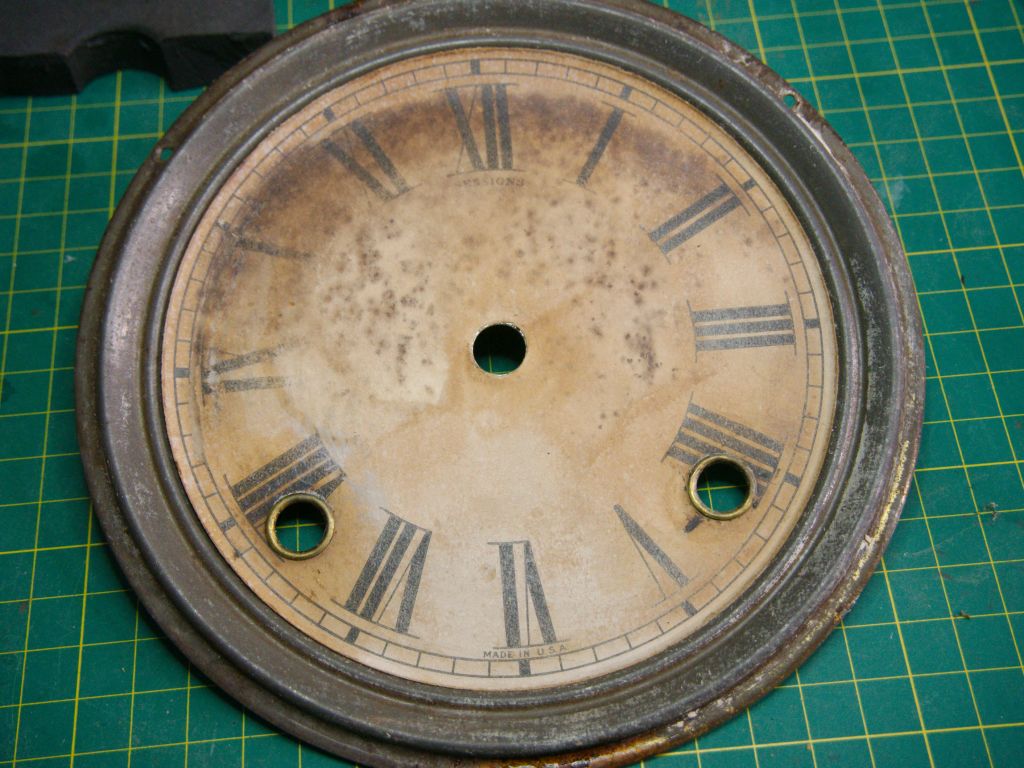
Sessions dial pan

Rather than source a new paper dial I decided to go with a dial from an Ingraham gingerbread parts clock and since the diameter, the center arbor and winding holes are standard it was an easy fit.

Anyone familiar with the Grand Assortment line would note that they were fitted with Roman Numerals rather than Arabic dials but I don’t think the buyer of a clock like this would see it as an issue.

Here is the clock from a slightly different angle.
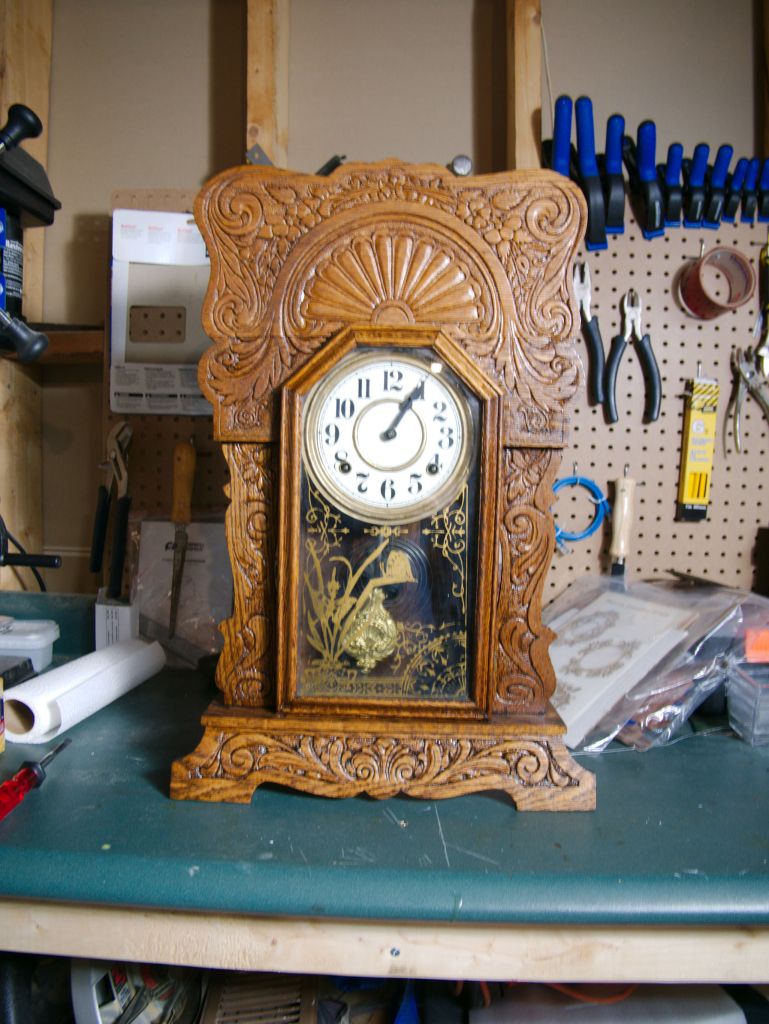
Straight on shot

The Movement

I began with new bushings on the escape wheel rear plate and third and fourth wheels on the time side and finally the second wheel back plate for a total of 4 bushings on the time side.
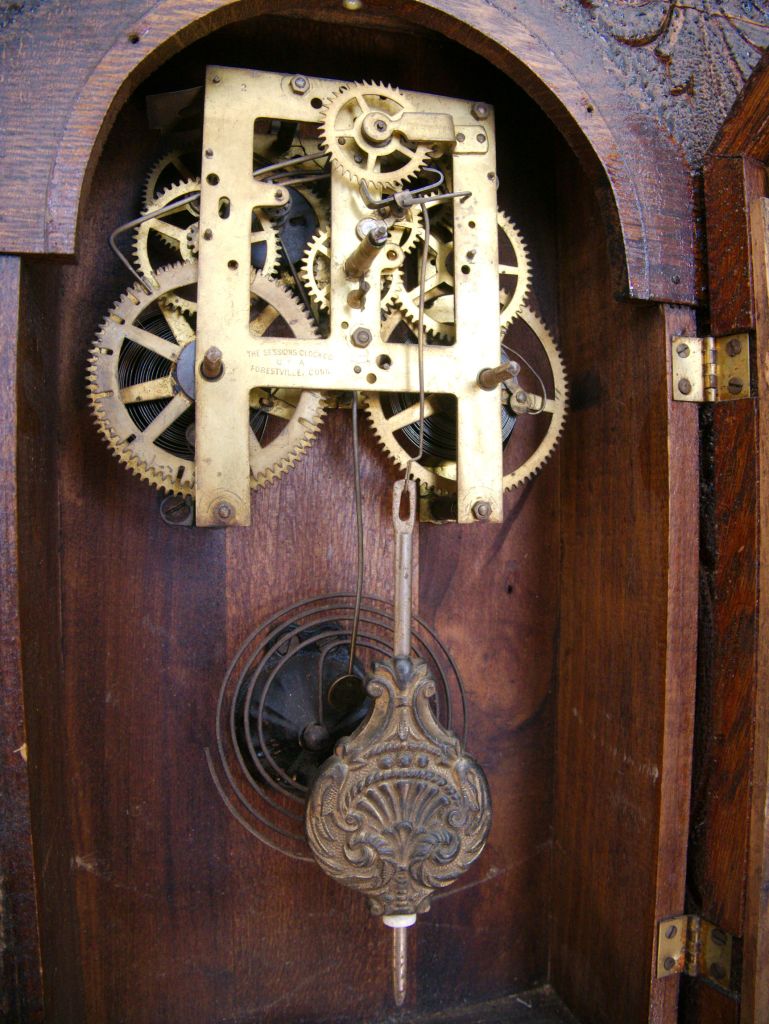
The movement, as found, note the pendulum leader hanging off the crutch loop

There was negligible wear on the strike side.

As I noted in a previous article the center cannon is quite stiff and I was never able to eliminate the stiffness completely but the clock runs well.

Final thoughts

Stripping an antique clock case should always be considered a last resort. While it may be necessary to remove old, damaged, or unsightly finishes in some cases, stripping can irreversibly damage the wood and compromise the value of the clock. It’s important to exhaust all other options, such as repairing and restoring the existing finish before resorting to stripping.

If stripping is the only viable option, it’s crucial to approach the process carefully and with the utmost care to avoid further damage to the clock case.

And so there you have it. A case that was completely stripped, a new top coat, a newish dial added, and a movement that required minor servicing and now the clock is ready to be sold at some point in the spring after a few weeks of testing.
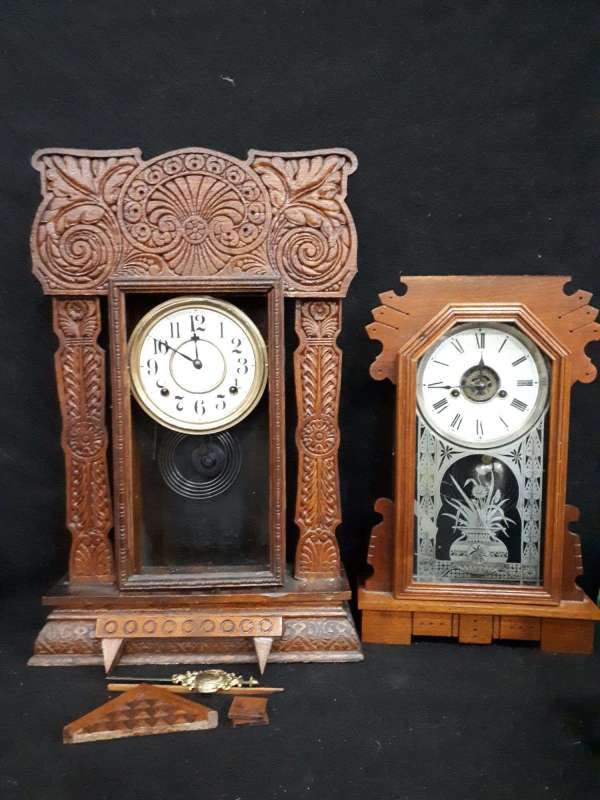
Grand Assortment by Sessions – is the assortment really that grand?

This is not the first Grand Assortment clock from the Sessions Clock Co. that I have worked on. In June 2019 I repaired a family member’s clock. It is exactly the same model.

Auction photo

The Grand Assortment was sold “six in a case” to retailers who then sold them separately. The name “assortment” seems appropriate and I am not surprised that some collectors refer to them simply as the Grand. Selling clocks in lots of 6 was a fairly common practice in the early part of the 20th century. An individual could probably order one of the clocks either directly from Sessions or working through a retailer but would normally select one from a retailer’s shelf.

Styles of Grand Assortment

Tran Duy Ly shows this Assortment model from the 1915 catalogue. It was likely made earlier but this style of clock was well on its way out by about 1915. This is Grand No. 3 and the price was $4.00, a day’s salary for a working man. All were eight-day runners but could be ordered with alarm (45 cents extra), cathedral bell (45 cents more), or standard wire bell.

This one was purchased at auction for $35 and listed as “not-tested”. “Not-tested” is an interesting auction term for “it may or may not work and it probably doesn’t”.

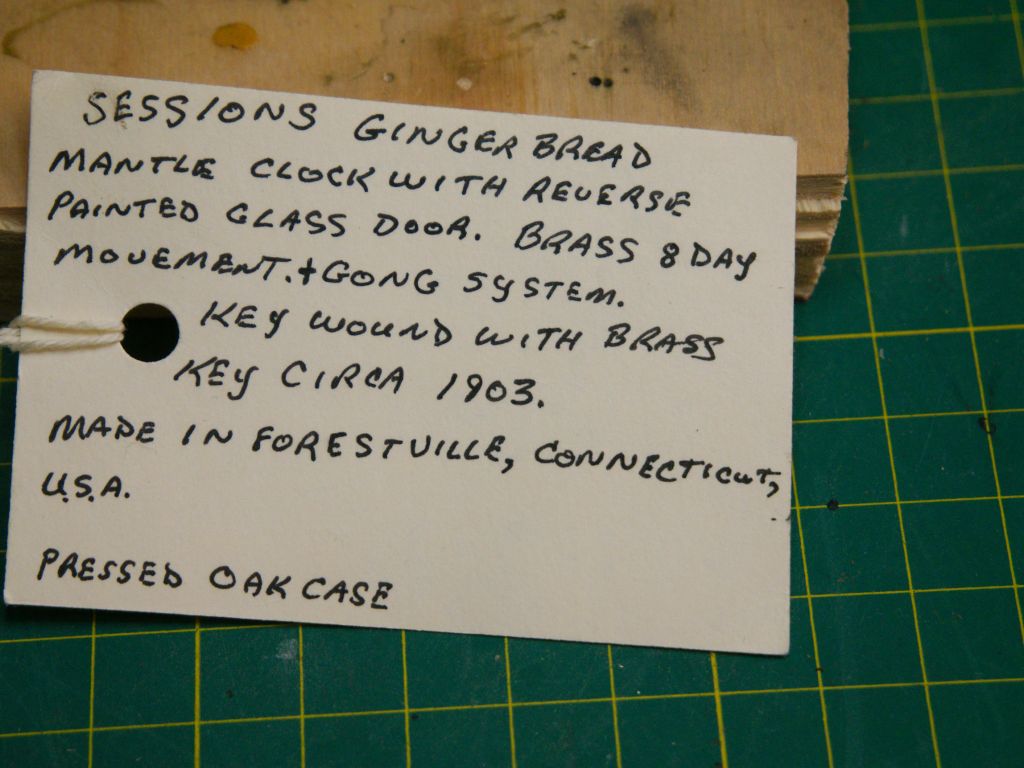
The note came with the clock (1903 is the year Sessions began making clocks)

Gingerbread clocks also called “kitchen clocks” were introduced after the American Civil War and remained popular until the end of World War I. The term is derived from the tradition of making decorated gingerbread houses which began in Germany in the early 1800s. The broad application of the gingerbread style applied to almost anything including clocks.

However, gingerbread clocks have polarizing designs. Collectors either love them or hate them. I am not particularly fond of the design of this one but I can see how many at the time were attracted to the style.

The clocks’ cases were steam-pressed oak and occasionally other hardwoods were used. Various designs were pressed by a heat-bond process which was quite advanced for the time. It was a time-saver, spectacular designs were pressed within seconds and it saved on labour costs. Hundreds of thousands of these steam-pressed oak-cased clocks were made and all are now well over 100+ years old.

The clock is 22 inches tall, ten inches wide with a 6-inch dial. It is a time-and-strike movement striking the hour and half-hour on a coiled wire gong.

I am not a huge fan of Sessions’ movements, particularly from this vintage. Too many helper springs, frustrating to re-assemble, and setting up the strike side is always finicky plus the poorly designed weak clicks are prone to failure (yet they’ve lasted this long!). Set up properly they will run reliably for years and are reasonably good time-keepers for a spring-driven clock.

Is it worth fixing? Certainly, there is nothing fundamentally wrong with the movement but the case is in rough shape and will require considerable intervention. The paper dial on tin is also in poor condition. Quite often the crown is broken, pieces missing or cracked which is the case for this one and unfortunately, it is not very well glued back together.

The Plan

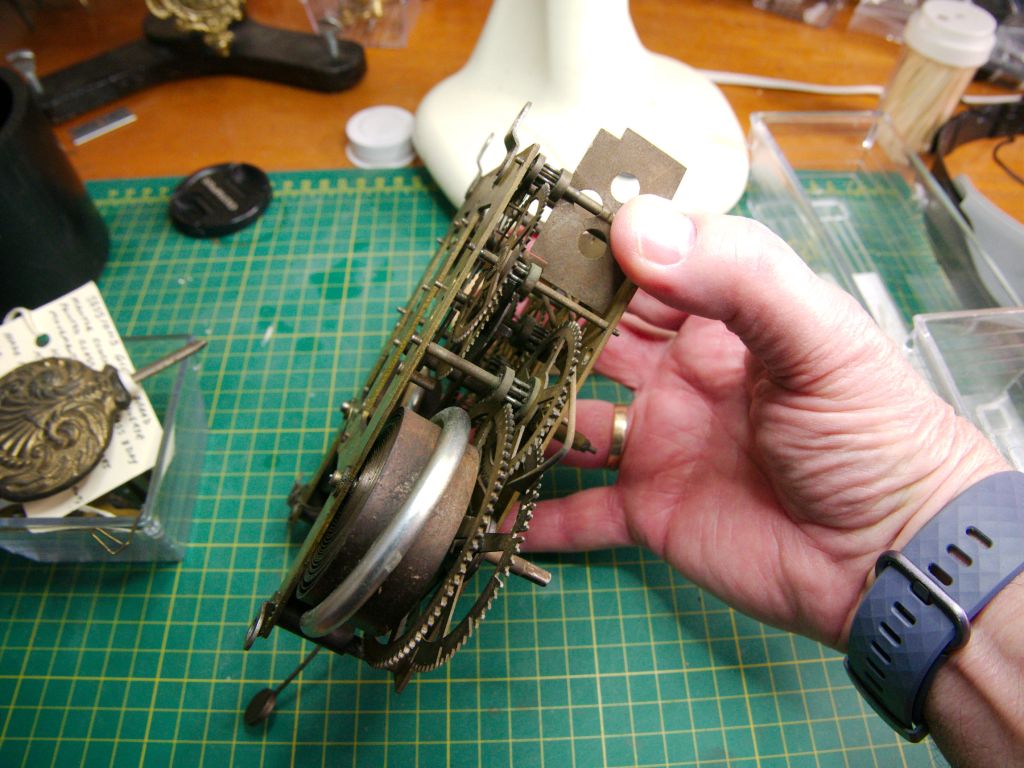
The movement should be fairly easy to service. I don’t see a lot wrong with it upon initial inspection. As expected it is quite dirty but I don’t see a lot of wear. I won’t know conclusively until I take it apart. The plan is to put the movement in proper running order.

A dirty movement but there does not seem to be a lot of wear

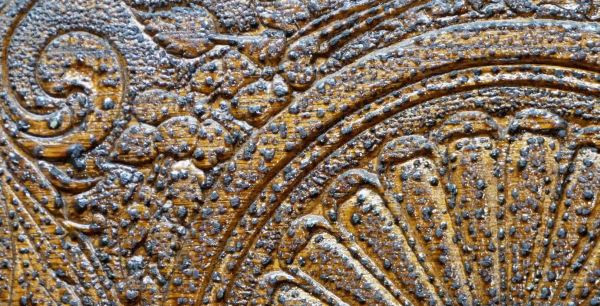
The finish is badly aligorated and will need a lot of work. “Aligorated” means that over time the surface of the case was exposed to heat and high humidity causing the shellac to coagulate in clumps resulting in a mottled finish. I will attempt to renew the finish which might involve stripping the finish. That may sound extreme but it may be the only solution.

The dial is in poor condition

Rust has bled through the paper dial and as such it is beyond hope and will be impossible to restore. I may change out the Roman numeral dial with an Arabic dial from an E. Ingraham gingerbread clock from the same period. The dial size is exactly the same and the centre canon and winding arbours fit perfectly. Checking on the internet I note that there are several Grand Assortments with Arabic dials.

Once the movement is serviced and the case is redone, there should be a dramatic improvement. I have already decided that I will not be keeping it as it will be resold to offset equipment costs.

Website Powered by WordPress.com.

Up ↑