A Guide to Choosing Antique and Vintage Clocks as Unique Gifts

As the holiday season approaches, the search for a unique and meaningful gift becomes crucial. Antique or vintage clocks, often overlooked, can make a delightful and “timely” present. Whether you’re knowledgeable about clocks or a novice, finding the right one requires some understanding, and I’m here to provide you with some helpful pointers and explanations.

Why Buy an Antique or Vintage Clock?

People are drawn to antique or vintage clocks for sentimental reasons, the desire to own something antique, or the allure of a unique old mechanical clock. These reasons often top the list for those considering such a purchase.

Antique, Vintage or collectible

Determining the age of a clock can be tricky but a well-informed seller can confidently provide accurate information about the clock’s age to potential buyers, ensuring a fair and transparent transaction. Moreover, a clock’s age can often be determined through a date stamp on the movement or labels, providing accurate dating information for both sellers and buyers.

Generally, anything over 100 years old is considered antique, while vintage refers to items less than 100 years old but more than 30 years old. Items younger than 30 years are often called collectibles.
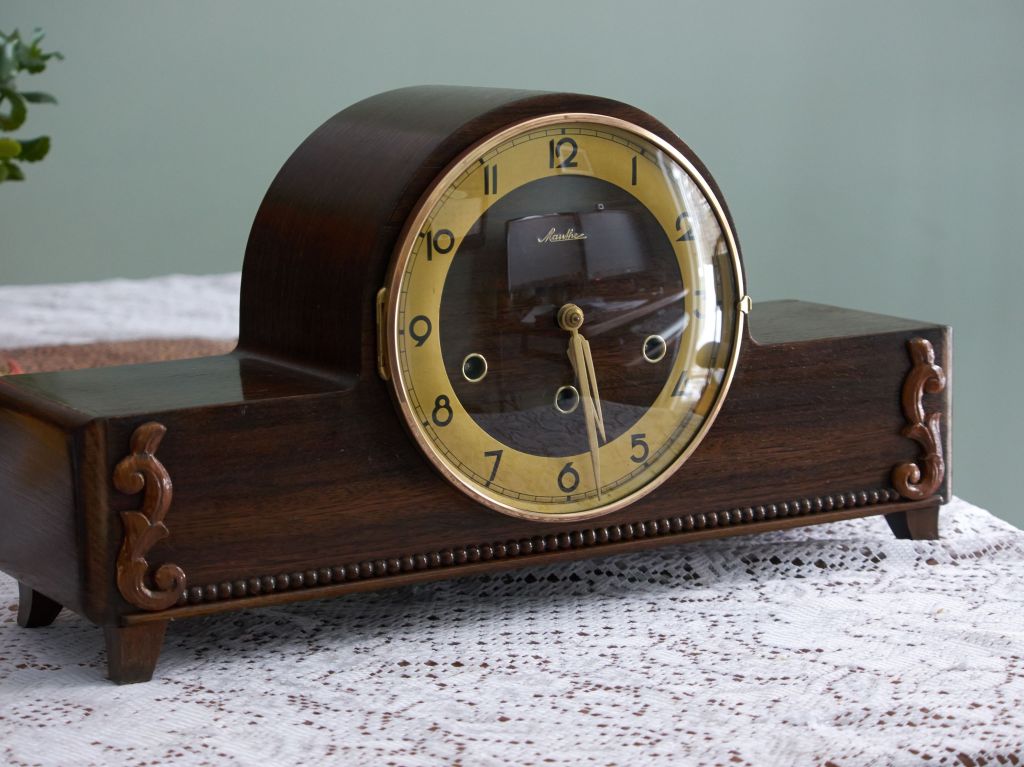
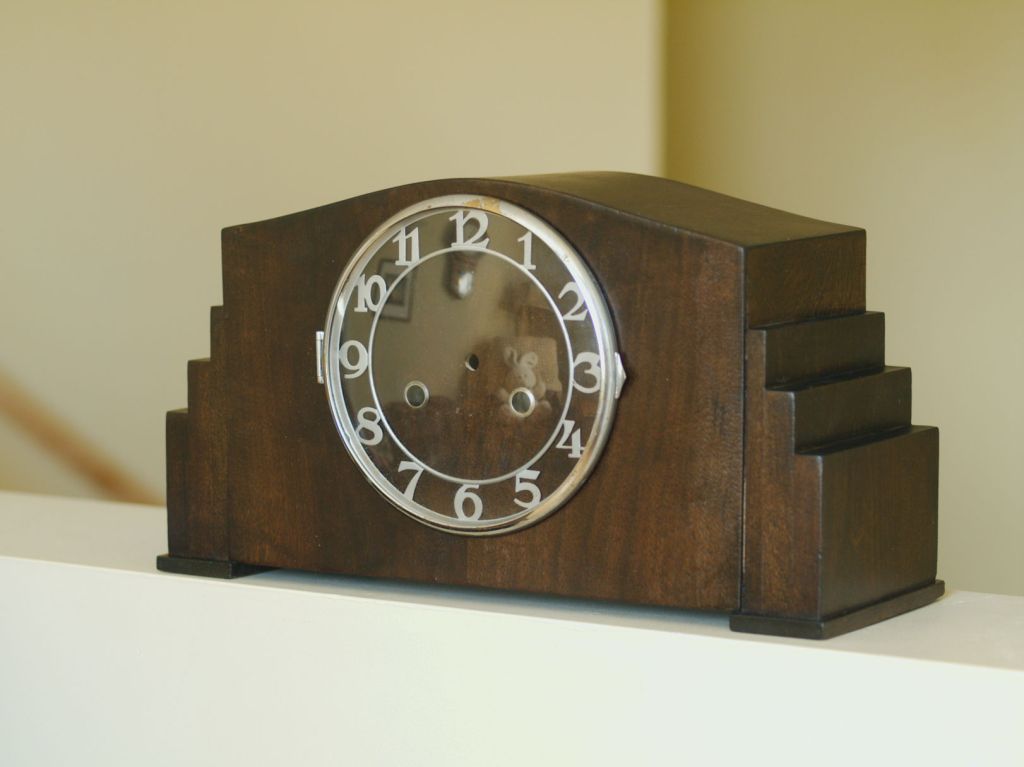
A Mauthe vintage clock from the 1940s

Types of Clocks: Mechanical or Otherwise

While there is a wide variety of clocks available, this article focuses on mechanical clocks both vintage and antique. Quartz clocks are common but have limited value. Electro-mechanical and electromagnetic clocks, while intriguing, are best left to expert collectors. Electric clocks from the 1930s and 1940s might intrigue the buyer but can be difficult to maintain and a non-functional clock can be potentially dangerous to those with a limited knowledge of electrical devices.

Choosing the Right Clock and Placement

Consider the available space when selecting a clock. Mantel clocks need shelves or tables, while wall clocks come in various sizes and styles and placement is less of a challenge. Although wall clocks require minimal space, some are hesitant to puncture a wall with a nail.
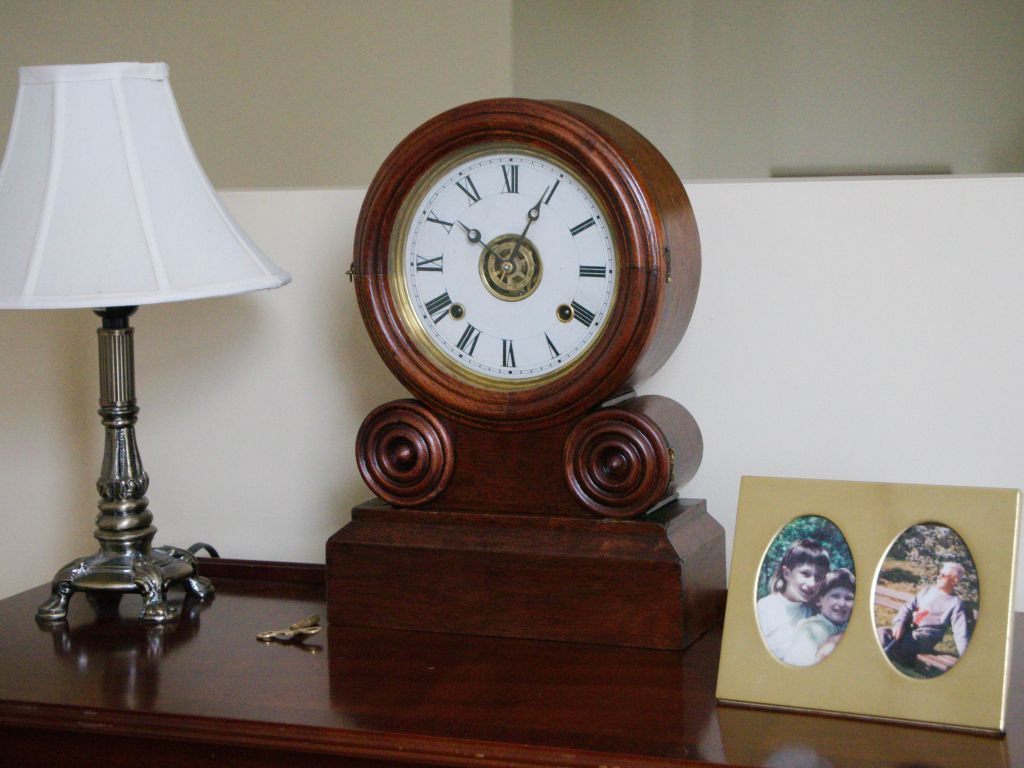
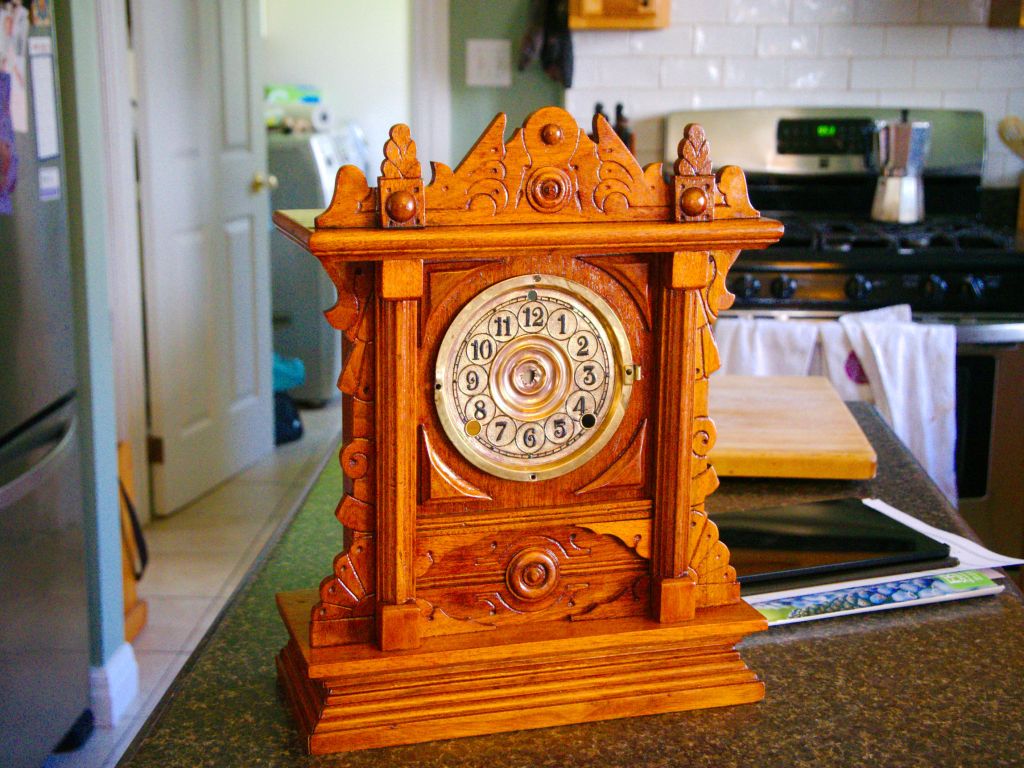
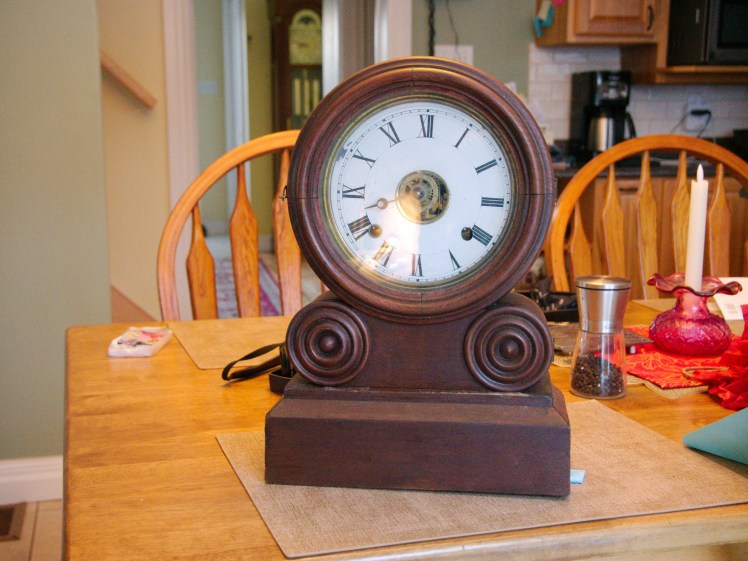
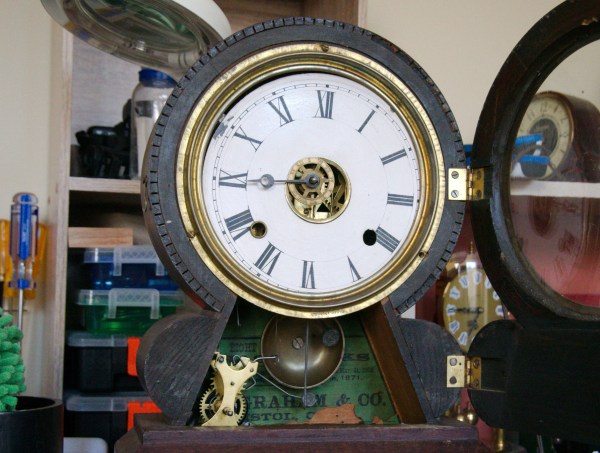
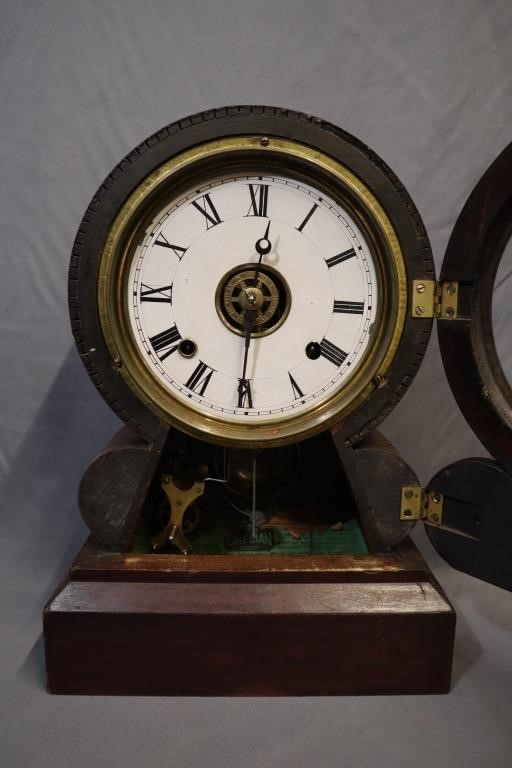
Ingraham Grecian
Ingraham Grecian shelf or mantel clock

Grandfather clocks (otherwise known in some circles as tall case, long case, and hall clocks), particularly those with impressive craftsmanship require ample floor space and a keen appreciation from the recipient.
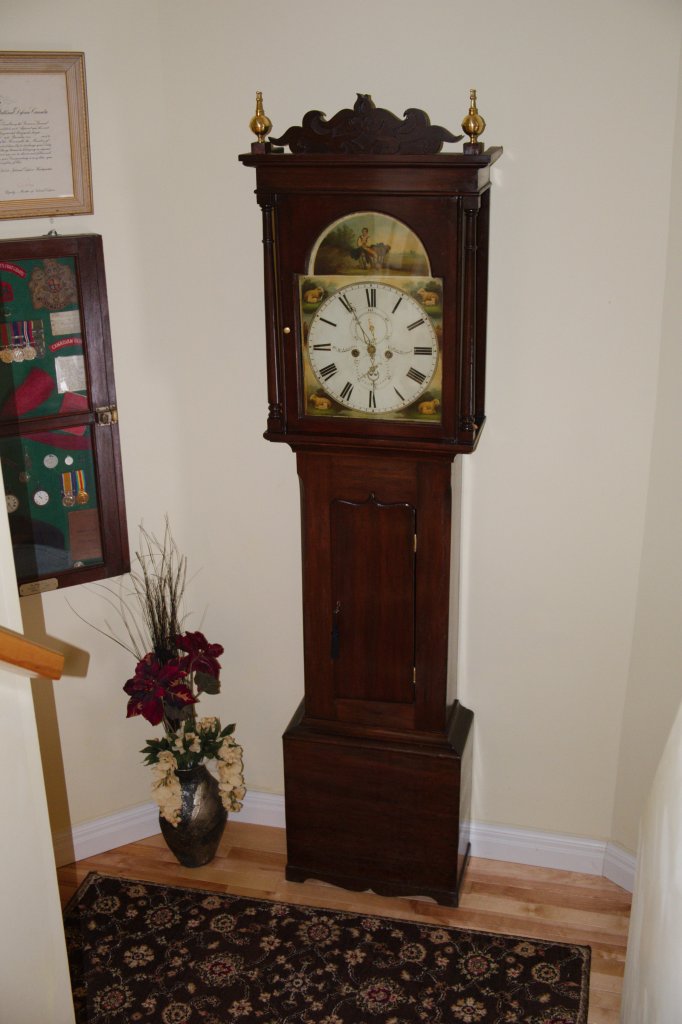
Scottish tall case clock
Know the recipient if you are gifting a tall case clock

Furthermore, gifting a grandfather clock to an appreciative recipient ensures that it becomes a cherished heirloom, to be passed down through generations.

Cottage clocks, alarm clocks, and novelty clocks are compact, allowing them to fit into small spaces and be placed virtually anywhere.

This Sessions cottage clock is only 9 inches tall

Working or Non-Working Clock?

Ideally, a working clock recently serviced by a professional is the best choice and has the highest value. If a functional clock is used purely for decorative purposes, it can later be sold without affecting its value.
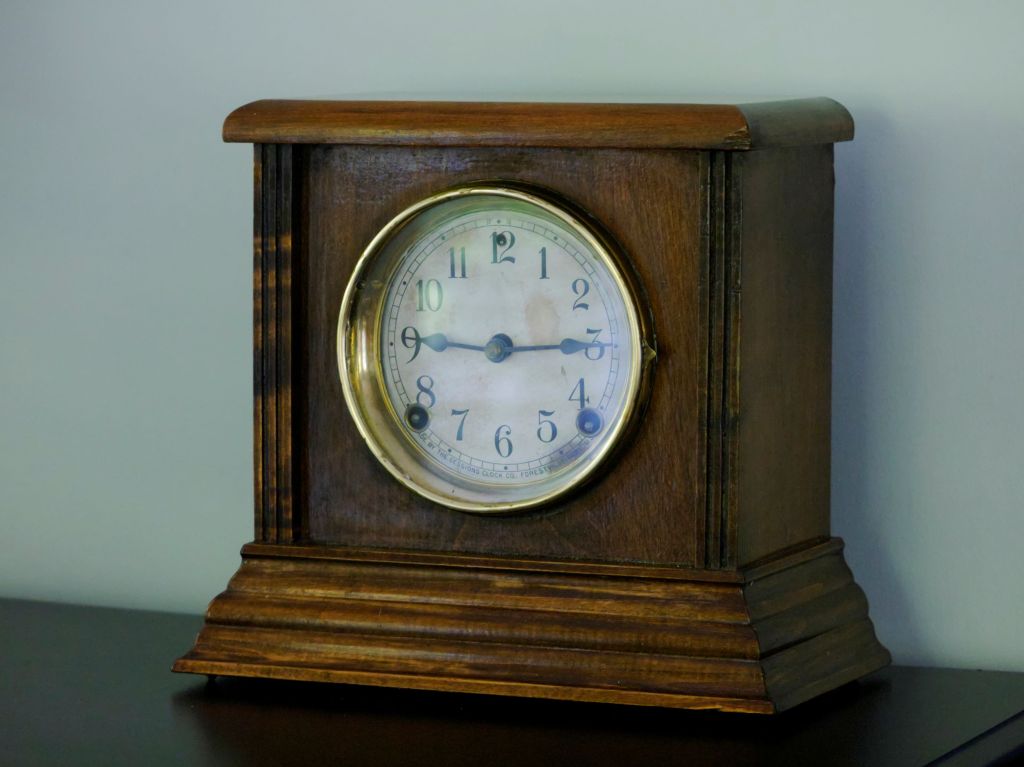
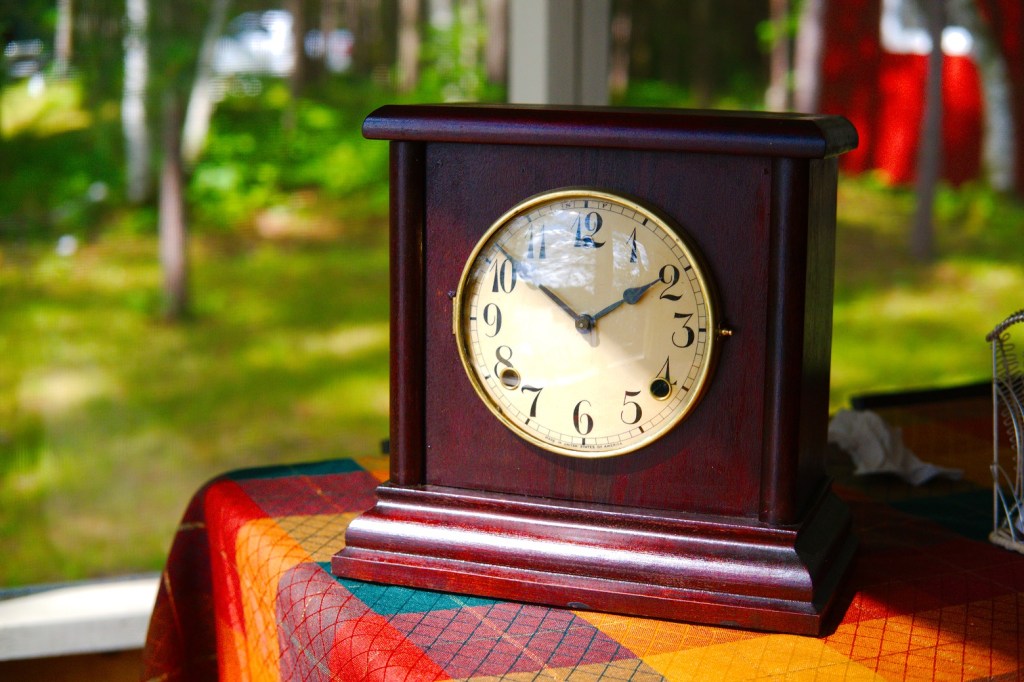
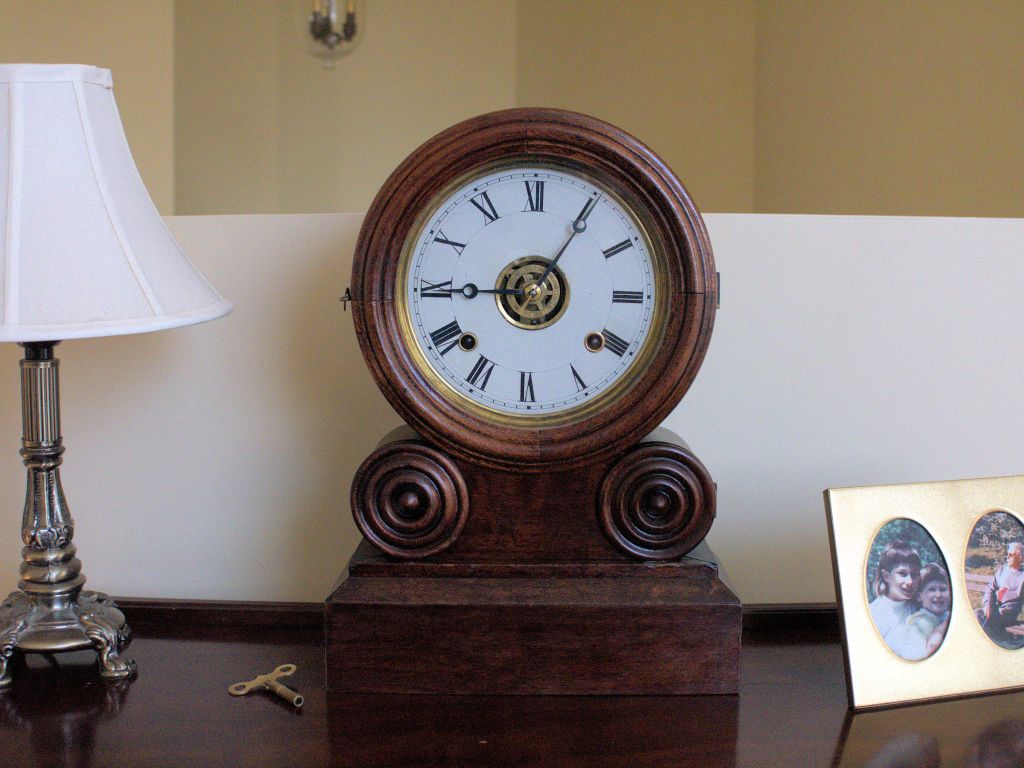
Sessions American No. 2
Sessions American No. 2, a working clock gifted as a decoration

If the clock serves a primarily decorative purpose, non-working ones can still be considered. Clocks as decorations often add a touch of vintage charm to a space, enhancing its aesthetic appeal. They can also evoke a sense of nostalgia, reminding individuals of days gone by. In addition, antique clocks with intricate designs can be conversation starters, becoming focal points in a room and reflecting the owner’s unique style and taste.

Tips for Clock Buying:

  1. Give preference to clocks that are operational; they are typically better maintained and can be easily resold by the recipient.
  2. Explore platforms like Facebook Marketplace, eBay, or local online sale sites. Opting for local transactions is favored because it eliminates the inconvenience of shipping, and meeting the seller in person provides the buyer with the flexibility to reconsider the purchase.
  3. Common clocks such as mantel clocks from the 1930s and 1940s are affordably priced, while unique or rare pieces might come at a much higher cost. In the realm of clocks, the determining factor for pricing isn’t solely the age of the clock, whether it’s 120 years old or 50. Rarity plays a significant role in establishing the value of a clock instead.
  4. Steer clear of clocks featuring directional arrows at the winding points; many of these are mass-produced Chinese clocks that come with powerful mainsprings, posing risks if they malfunction.
  5. The clock’s manufacturer is only vital if you’re seeking an exceptionally unique piece and are willing to spend significantly; instead, concentrate on the overall quality of the clock and its visual appeal.
  6. Conducting research is crucial to making a well-informed purchase decision. Examples are online resources, realized auction sales, networking, antique store visits, and books/publications.
  7. Be wary of any alterations, as they not only impact the clock’s value but can also alter its historical and aesthetic integrity. Thoroughly understanding the clock’s originality through basic research ensures a more satisfying and meaningful purchase.
  8. Whenever feasible, examine the clock in person to prevent unexpected disappointment. During the inspection, pay attention to the clock’s condition, checking for signs of wear, damage, or repairs. Examine the clock’s movement, and listen for any unusual sounds. Assess the quality of the materials and craftsmanship, ensuring they align with the stated age and value of the clock. Confirm the presence of any original parts, as replacement parts (hands, dial face, pendulum bob, etc.) can affect its authenticity and worth. Finally, if possible, request a demonstration of the clock in action to ensure it operates smoothly and accurately.

I hope these insights help you find the perfect clock for your special someone. I want to emphasize that I am not engaged in the business of selling clocks. Although I occasionally sell clocks locally, it’s solely to manage my personal collection and not as a commercial endeavor. Please be aware that I do not have clocks available for sale.
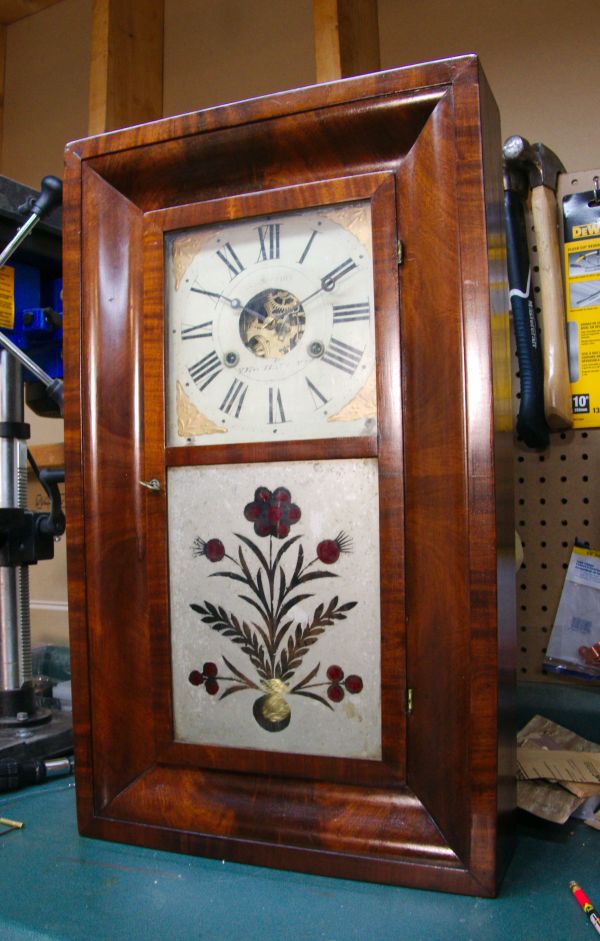
Best clock acquisition of 2021

The time has come to determine the best clock acquisition of the past year. As a clock hobbyist, I have had little difficulty locating interesting clocks over the years, and despite the seemingly never-ending pandemic, I have scored a few in 2021 though the past year has been leaner than most.

In the early days of collecting, simple time and strike vintage mantel clocks were my principal focus so that I could take them apart, repair them if necessary, and generally advance my learning. Many of those clocks have been either sold or gifted. For the past three years, I have shifted my focus toward collecting interesting clocks, rare clocks, or clocks that have a special provenance that even includes the odd mantel clock.

My wife is my best clock finder. Our discussions often go something like this; “did you see that wall clock on Facebook?”. “Let me see. Yeah, it looks good, what do you think? Make an offer?” and off we go. Sometimes I will accept the offer from the seller without negotiating because I feel it is a fair price and other times there is some wheeling and dealing prior to firming the sale.

At the end of the post, you will have an opportunity to vote on what you think is the best in 2021.

In no particular order, here are my finds for 2021.

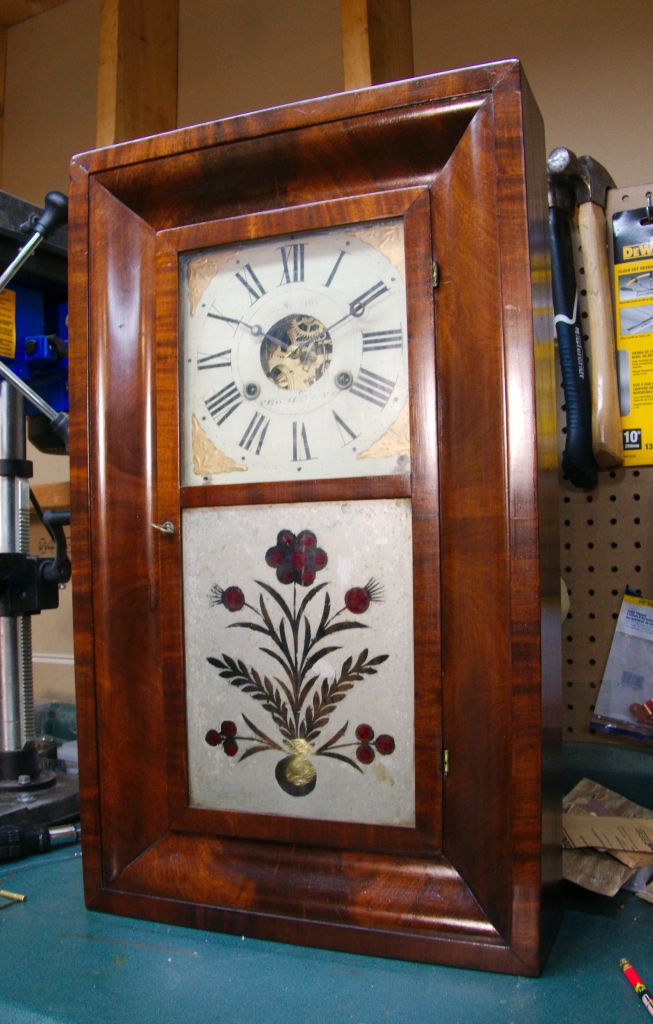
Sawin banjo clock

This is a garage sale find and even though it was purchased in the spring of 2021 it is still a work in progress. The clock is over 180 years old and in pretty decent shape.

Sawin weight driven banjo clock

It is a weight-driven banjo but it has no markings. An educated guess is that it was made by John Sawin of Boston or one of his associates on or close to 1840. I have completed minor veneer work on the case and have replaced the broken glass dial. The movement has been serviced but I am now looking at clock parts supply sources to replace a badly bent suspension spring. I want to avoid paying an outrageous price for the complete assembly; suspension spring, leader and spike.

Gilbert mantel or Shawville clock

I call this the Shawville clock because it spent most of its life in Shawville, Quebec (Canada).

It was a family clock for many years and following a death in the family, all possessions were either sold off or given away, a very common practice today. It has a time-and-strike Gilbert movement in a mahogany tinted case that has led a kind life since its manufacture in 1917. It is simple and unadorned and that’s what I love about it. I serviced the movement, cleaned the case, replaced a broken hour hand and now it is on prominent display in our home.

Gilbert time and strike

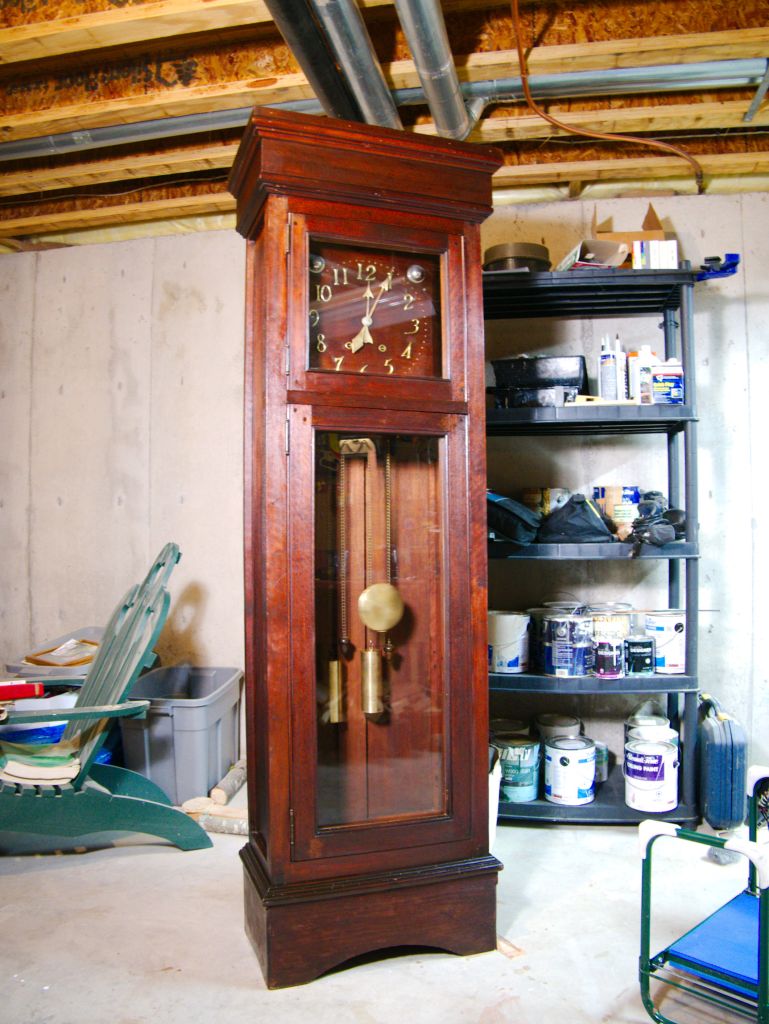
New Haven tall-case clock

An interesting $90 acquisition is this New Haven tall-case clock with a secret. Wow, a tall-case clock for $90, you say. Despite the look of a weight-driven clock, it is, in fact, a spring-driven clock. I was unaware of this until I walked through the door of the seller. I bought it anyway.

New Haven tall case clock

The weight cans are empty shells and they are simply there for show. The movement is quite large, eight-day, of course, and looks to be very robust. Despite my best efforts to determine if it was originally weight driven it had to have been spring-driven from the start, in other words, no evidence of a seat board or any additional holes for mounting the movement to the case. This appears to be an early “kit clock”, i.e. movement, dial face, hands, pendulum, “weights”, and ladder chains bought from the New Haven Clock Company and fitted to a pre-made case.

The case was very dark from years of accumulated dirt and grime and vigorous scrubbing revealed a wonderful red oak finish.

Waterbury Wren mantel clock

Ansonia Syria

Another clock with a secret is actually a disappointment. I found it in an antique store and it reminded me of an Ansonia Syria I had worked on for a friend last year, so, I was drawn to it.

Waterbury Wren mantel clock

It has a Waterbury case and what I thought was a Waterbury movement, but no.

It is missing the brass bezel and glass which is easily replaced but what is most disappointing is the mismatched movement, a Seth Thomas time and strike, which obviously replaced the original movement presumably because it was worn out. The movement is well-made and runs well but at the end of the day, the clock is destined to be sold.

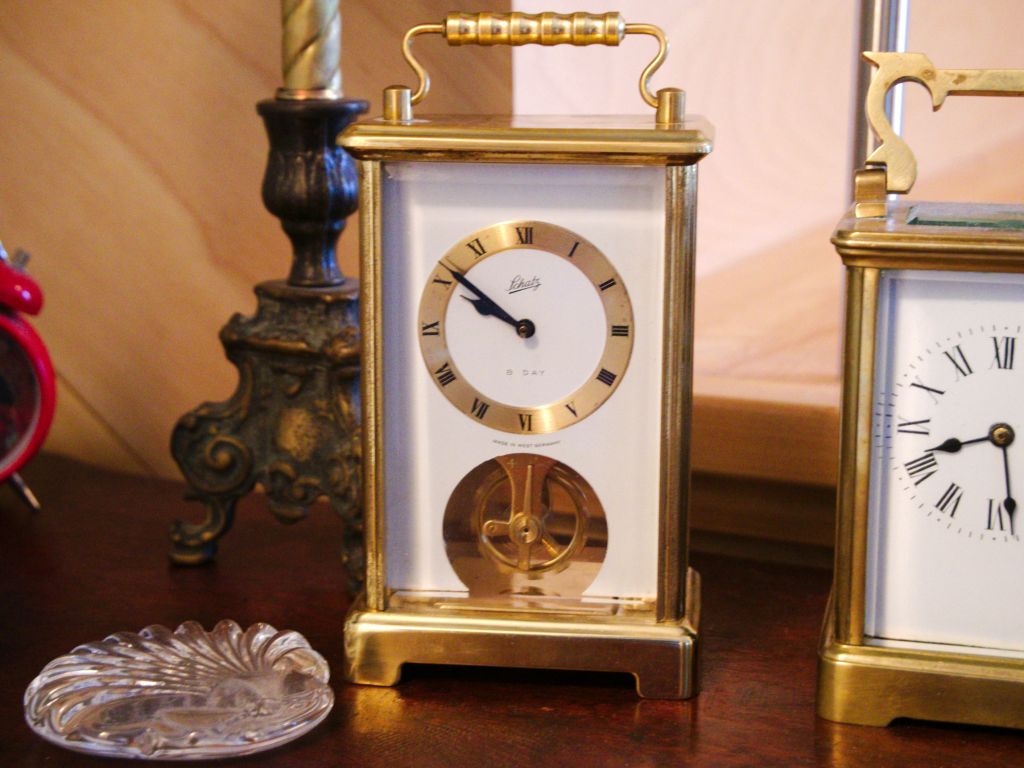
Schatz Schatz carriage clock

This is a Schatz carriage clock made by August Schatz and Sohne of Germany. Thousands of these were sold and given as gifts through the 60s and 70s. It has an interesting lower visible escapement and an exposed movement.

Schatz carriage clock

Although it is working and keeping time it runs for about 4 days and stops. A cleaning is called for (on my list). It has a wind-up key in the back much like a typical alarm clock. It says West Germany on the dial and made, I would say, in the 1970s. August Schatz and Sohne closed in 1985, a victim of slow sales and a shift to quartz clocks by other makers.

Chauncey Jerome ogee clock

This clock is original in many ways, with a nearly flawless case made of mahogany veneer over softwood, moon hands, a wood dial, and a movement that matches when the case was made. Even the pendulum bob looks original. It was missing the suspension spring and rod and a wooden movement block, all easily sourced.

Chauncey Jerome 30-hour ogee clock

It cleaned up nicely and was a good candidate for a fresh coat of traditionally prepared shellac. I have three other 30-hour ogee clocks and this one is the most original of the bunch.

E. Ingraham Grecian shelf clock

This is a very nice shelf clock from an estate auction. It is an Ingraham Grecian clock with an alarm feature. If you have ever used the alarm on an old antique clock your first impulse is to throw it through a window, it is so loud and it goes on and on till the spring winds down.

Ingraham Grecian
Ingraham Grecian 8-day shelf clock

It came with incorrect hands and I had the darnedest time sourcing them but searching various suppliers in Canada and the US paid off. The case has been cleaned and the movement serviced including the infuriating alarm.

Fleet Time Co. mantel clock

An inexpensive clock that had huge potential but left me frustrated. Fleet Time Co. of Montreal had a short life of 4 years before the Second World war when they lost their source of German movements.

Fleet Time case
Fleet Time clock

I stripped the case and re-glued some sections, applied a walnut stain and I was very pleased with the final result. I serviced the movement, wound the time side completely, and BAM, kerplunk! the sound of a mainspring exploding. Sometimes you can get away with just replacing a mainspring and other times, like this, it took out the barrel teeth and a leaf pinon on the second wheel. I placed it in a plastic bag and it is now on a shelf in the basement awaiting donor parts.

Hamburg American Clock Company. (HAC) mantel clock

This German-made mantel clock has an interesting 14-day movement, an early production type from HAC. HAC is short for the Hamburg American Clock Company, a German company which had a long history up to the time it was absorbed by Junghans in the late 1920s. This clock was made in or around 1895.

HAC mantel clock
HAC 14-day mantel clock

It was another estate sale find. The case is nondescript and nothing special, but quite elegant.

So…..

Tell me what you think and I will reveal what I believe is my best acquisition this year in the next post. Let’s see if we agree.

E. Ingraham Grecian shelf clock – first look and action plan

This article is the first look at one of my latest online auction finds, an E. Ingraham & Company shelf clock known as the Grecian.

The Ingraham Clock Company operated under a number of minor name variations over the years, E. Ingraham, E & A Ingraham, the E. Ingraham Company, E. Ingraham and Company from 1844 to 1885. Later The Ingraham Company made electric clocks and wristwatches. McGraw-Edison now owns the company and quartz clocks bearing the Ingraham name are still manufactured.

Ingraham Grecian shelf clock
Ingraham Grecian shelf clock, a day after the auction purchase

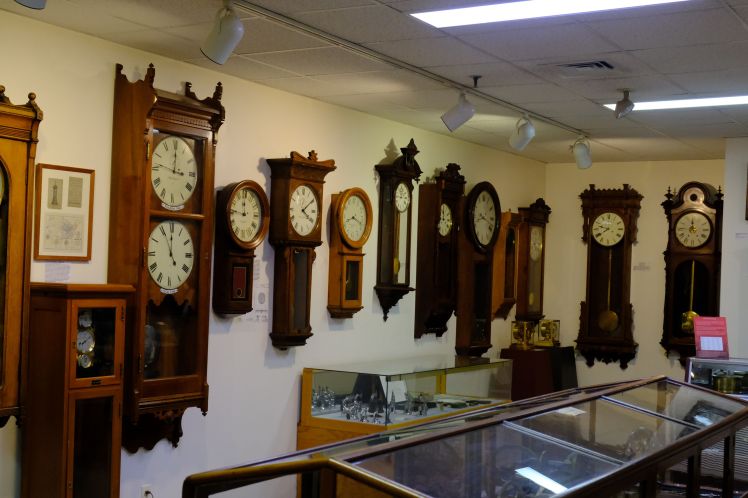
Although not rare the Grecian is quite collectible. Patent dates on the label date the clock to around 1871. The only other one I have seen is at the American Watch and Clock Museum in Bristol Connecticut, a mosaic maple and walnut version.

American Watch and Clock Museum in Bristol Connecticut

It is a handsome clock with clean lines. The E. Ingraham Grecian 8-day time and strike shelf clock is neoclassical in design. It is not only aesthetically pleasing to patrons of the nineteenth century but remains so today.

It is a distinctive clock. It has a moulded Rosewood bezel, carved volutes below the dial frame (or rosettes as Ingraham called them in his patent letters), and a Rosewood veneered case. The dial frame and bezel are one section that makes up the hinged front access door. There are walnut cased versions and mosaic as well but Rosewood has a certain exotic allure. Elias Ingraham was a case designer and no doubt had a hand not only in the design but the choice of woods used for case construction.

This clock was bought at an online auction in early January 2021. From the auction photos, I expected a clock that needed work and now, after having received it, I am pleasantly surprised that will not take much to service the movement and clean the case.

General condition 

The case is Rosewood but because of the buildup of dirt and grime over the years, the grain and texture of the wood are hidden. Upon closer examination, there are some small chips of veneer missing from the corner edges of the base, not surprising given the age of the clock. The rounded top and volutes are perfect.

There is some wear on the top part of the base under the door and that is to be expected. The curved wood bezel is in very nice condition. The backboard has age-related cracks in two places but will not require a repair. There is a slight corner separation on the left side of the base but everything else is tight. The door clasp looks good.

Ingraham Grecian shelf clock

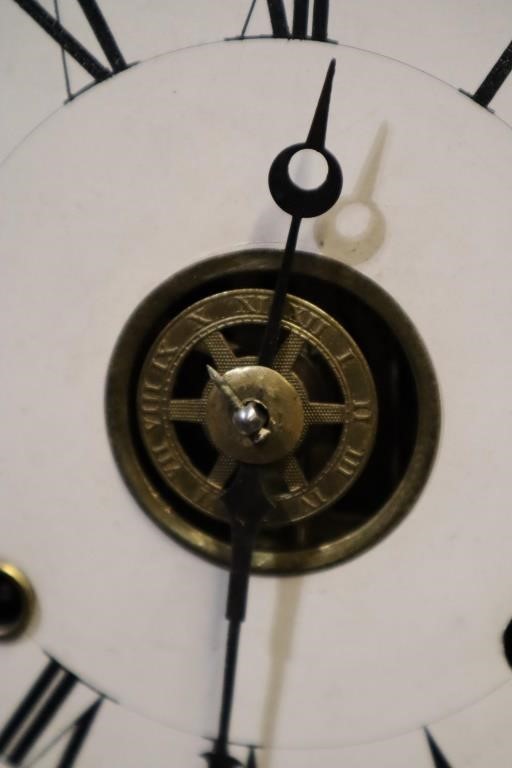
The dial screws came out too easily and the screw holes are well worn. The dial has been taken off more than a few times to make adjustments. The dial is also misaligned as a result of the new screw holes. Both the minute and hour hands are incorrect. The moon hour hand is too short and the minute hand is a slender spade. Both will be replaced.

Ingraham Grecian shelf clock

The painted zinc dial face, which for some reason is detached from the brass bezel, appears to be original with some flaking on the edges. There is a missing time side grommet. The alarm dial is loose, not seemingly attached to anything, and came off easily once the hands were detached. The brass bezel needs a good cleaning.

Ingraham Grecian shelf clock
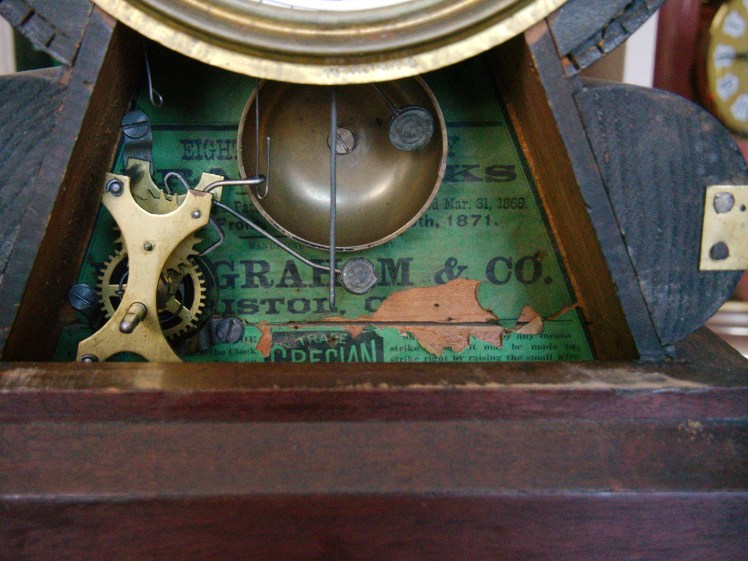
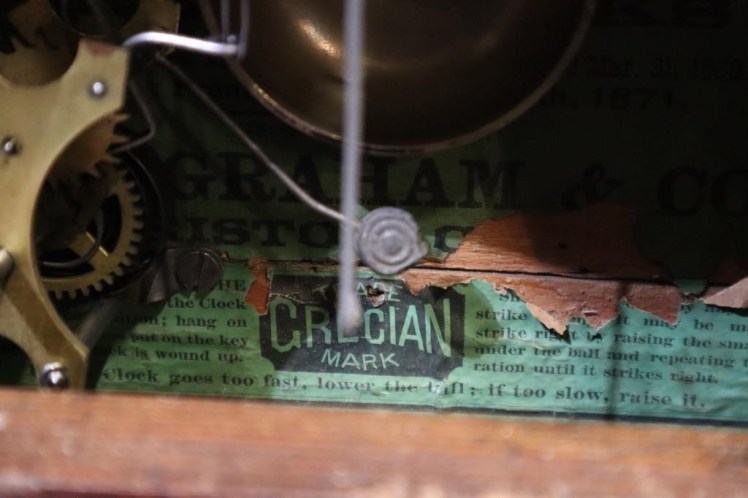
Ingraham Grecian shelf clock, fair label, cast brass bell

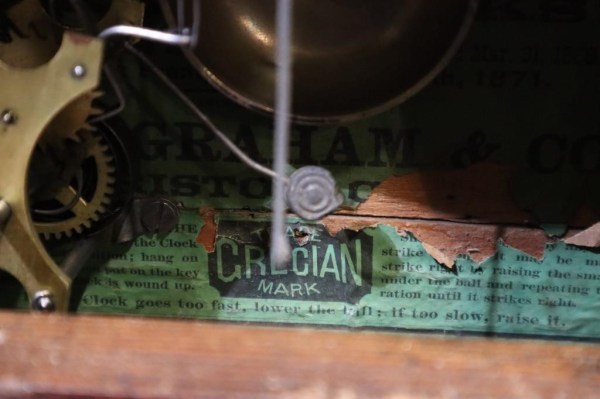
The unique green triangular label inside the case is in fair condition with pieces missing at the lower cracked section of the backboard. I found a loose 3cm piece at the bottom of the case which can easily be glued back in place. The alarm mechanism is in excellent condition. The spring on the alarm is typically broken on these old clocks; this one is fine. I doubt if it has seen much use. The bell is cast brass and there are two strike hammers; one on the inside, which is for the alarm, and one on the outside, the hour-strike hammer.

I was told by the seller that the clock would run for a few minutes, even strike but then it stops, which tells me that nothing is broken. The crutch loop is twisted around the pendulum rod and since there is no impulse it is not surprising the clock would stop. I doubt it ran more than a few seconds.

It is a pinned movement. Later movements have screws or bolts holding the plates together. The movement might have been worked on in the past although it is hard to tell. The two lower pins look original but the top pins look like replacements. If it was worked on it was done with care. There are no tell-tale signs such as marks, scratches, and punch marks that indicate past servicing. Since the mainsprings are wound tight I won’t know the extent of wear until I take the movement apart.

I can only guess that the butchered crutch and the detached dial are the results of someone who did not know what they were doing when making an attempt to get the clock to run.

The plan of action

The case: clean all wood surfaces thoroughly with Murphy’s Soap. Cleaning will no doubt remove remnants of the old shellac and new shellac prepared in the traditional manner (flakes and alcohol) will be applied to all the exterior surfaces. The finish will then be dulled with 4X0 steel wool.

The movement: The movement will be completely disassembled and inspected for wear, and cleaned. New bushings will be installed if needed. I made some adjustments to the crutch and ran the clock for two days and it was striking correctly during that period. The mainsprings look to be in good condition and provide plenty of power. The alarm mechanism which might never have been operational, will be taken apart and cleaned. The alarm dial is a friction fit and will be tightened up once the movement is reinstalled and should work as intended. The crutch loop will be repaired.

The dial: I will leave the dial as-is despite a little paint loss on the edges. Once the dial is aligned properly these should be hidden, for the most part. The dial pan has separated from the bezel. A past tinkerer used cellophane tape to secure the dial pan to the bezel and even attempted to solder two of the tabs, poorly I might add. These are fixable. More difficult is sourcing a 2 3/4 inch moon minute hand.

Well, that’s it for now. I plan to get started fairly soon. The only thing stopping me is a Seth Thomas #2 that has stopped and needs a look-see. There will be more on the Ingraham clock later.

Auction find – E. Ingraham & Co. Grecian shelf clock

I was the successful online bidder for an E. Ingraham Grecian time and strike shelf clock in early January 2021. My wife and I had to travel 3 hours, from one part of Nova Scotia to another, to pick the clock up but since we were taking a small staycation in the nearby area the antique shop was on our way.

It is a very interesting design and I researched not only this clock but the period that influenced its design.

Let’s travel back in time to Duncan Phyfe, a prominent American furniture designer (1768-1854). His interpretation of fashionable European trends made him a major influence in the Neoclassical movement in the United States impacting an entire generation of cabinet-makers. The era of Greek furniture design quickly came to the clock world in the form of “Grecian” clocks made by a number of clock manufacturers including Joseph Ives, E. N. Welch, Seth Thomas, and Ingraham.

This is the E. Ingraham & Co.’s interpretation of the Grecian clock, called appropriately enough, the “Grecian”.

Ingraham Grecian Harris and Sons auction photo
Ingraham Grecian, auction photo (with permission Harris & Sons)

The design is a classical influence and it is not only aesthetically pleasing to patrons of the nineteenth century but remains so today. It has a molded Rosewood bezel with carved volutes below the dial frame. The dial frame and bezel are one section that makes up the hinged front access door. I have seen walnut-cased versions and mosaic maple and walnut as well. The mosaic versions are probably the most desirable.

Elias Ingraham was a case designer and no doubt had a hand not only in the design but the choice of woods used for case construction.

Ingraham Grecian Harris and Sons auction photo
Ingraham Grecian auction photo (with permission Harris & Sons)

It has a paint-on-zinc dial, moon-shaped hands, and Roman chapters. The Grecian model was available as a 30-hour spring-driven, time and strike, 30-hour time and strike with alarm, 8-day time and strike, and 8-day time and strike with alarm. This one is the 8-day time and hour-strike alarm version. All models strike on a cast bell made of iron, or in this case, brass. Features such as exotic/mixed woods, alarm, and 8-day function would have been an extra charge at the time. The clocks were made between the years 1868 and 1883 with an 1880 catalog price of $5.25 for the 30-hour clock with alarm.

Ingraham Grecian Harris and Sons auction photo
Ingraham Grecian auction photo (with permission Harris & Sons)

It has a green triangular-shaped paper label inside the back panel of the case which is in fair condition. There are 3 patent dates on the label, September 30, 1862, March 31, 1868, and June 6th, 1871. The newest clocks of this model would have had October 8, 1878, and still newer, November 11, 1879 patent dates so, this clock was made after 1871 and before 1878. The fact that the clock can be dated within a 5 year period is a plus.

Ingraham Grecian alarm dial
Ingraham Grecian alarm dial auction photo (with permission Harris & Sons)

Once I receive the clock and look it over more carefully I will post my first impressions and the work that must be done to restore both the clock movement and the case to its former glory. Stay tuned.

Website Powered by WordPress.com.

Up ↑