
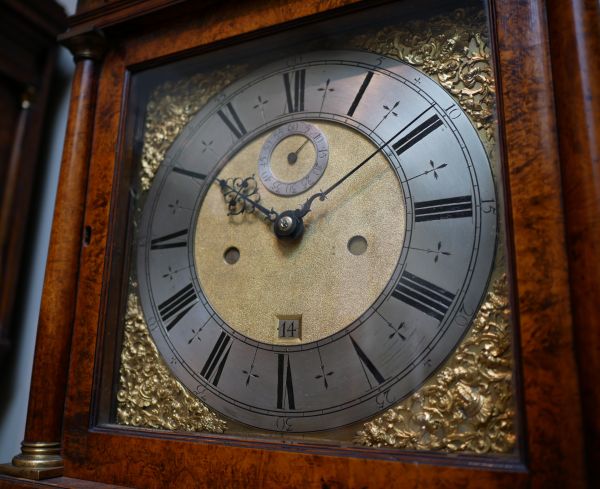
Thomas Tompion (baptized July 25, 1639– died, November 20th, 1713) was an English clockmaker and watchmaker, often referred to as the “Father of English Clockmaking.” He is renowned for his exceptional craftsmanship and significant contributions to the development of clockmaking during the late 17th and early 18th centuries.
In fact, Tompion is the most celebrated of all English clockmakers.
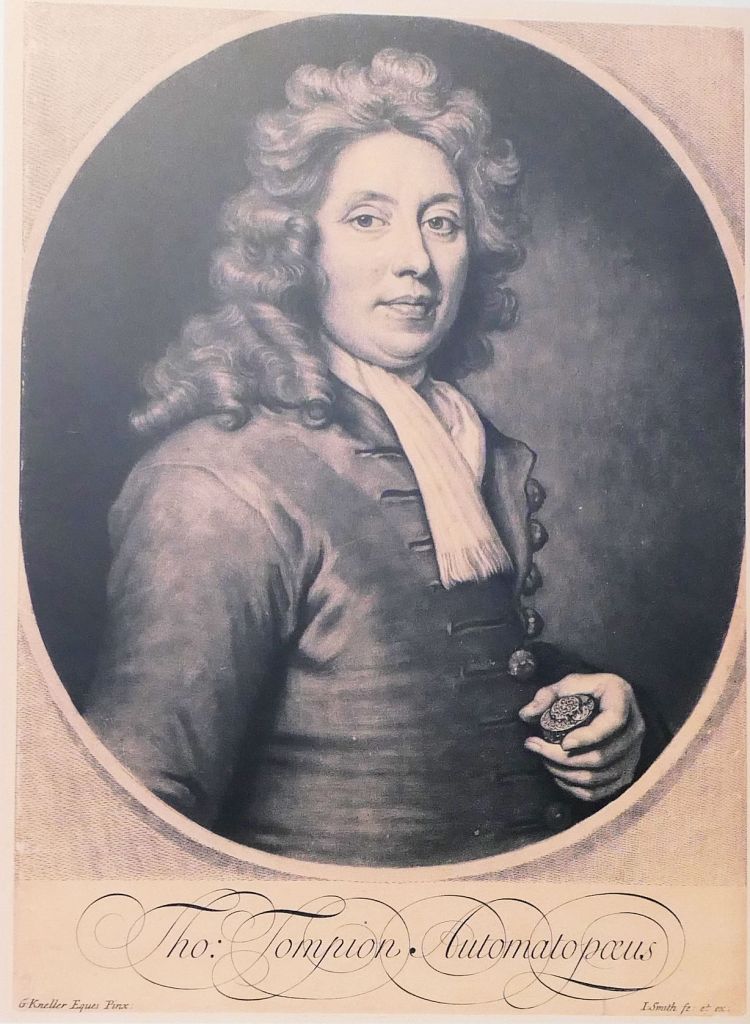
Born in Bedfordshire from a family of blacksmiths he moved to London in 1671 and was soon employed by the physicist Robert Hooke. Hooke was credited as one of the first scientists to investigate living organisms at the microscopic level. Hooke introduced him to leading scientists and royalty and as a result, Tompion received commisssions from Charles II, William III, and Queen Anne.
His business was based on Water Lane, Fleet Street, and he built a reputation for quality and ingenuity across Europe.
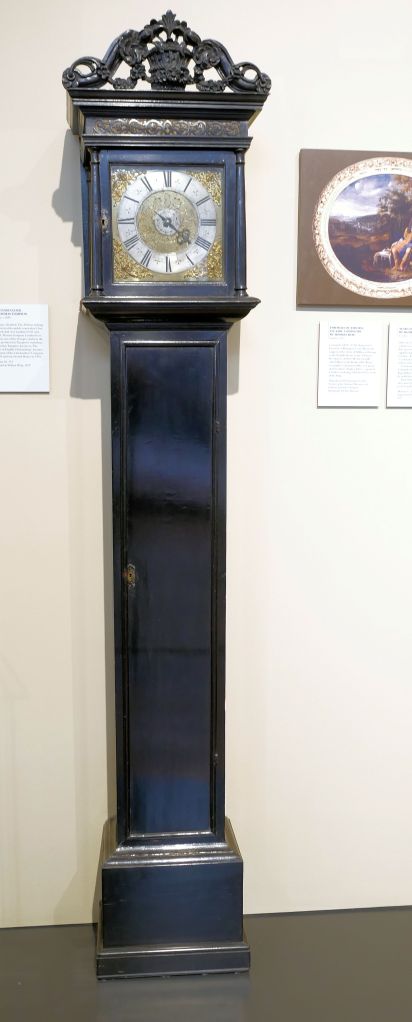
Tompion’s clocks and watches were known for their accuracy, elegance, and innovative design. He played a key role in advancing the precision of timekeeping, particularly through his work on escapements and the introduction of the balance spring in watches, which greatly improved their accuracy.
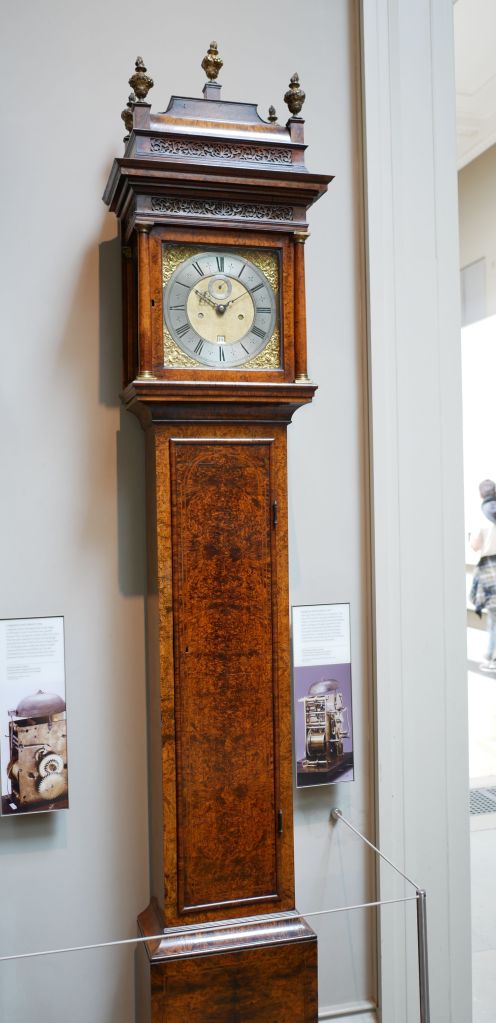
Tompion produced a wide range of timepieces, including table clocks, longcase clocks, bracket clocks, and pocket watches.
His clocks were often highly decorative, featuring intricate engravings and fine materials.
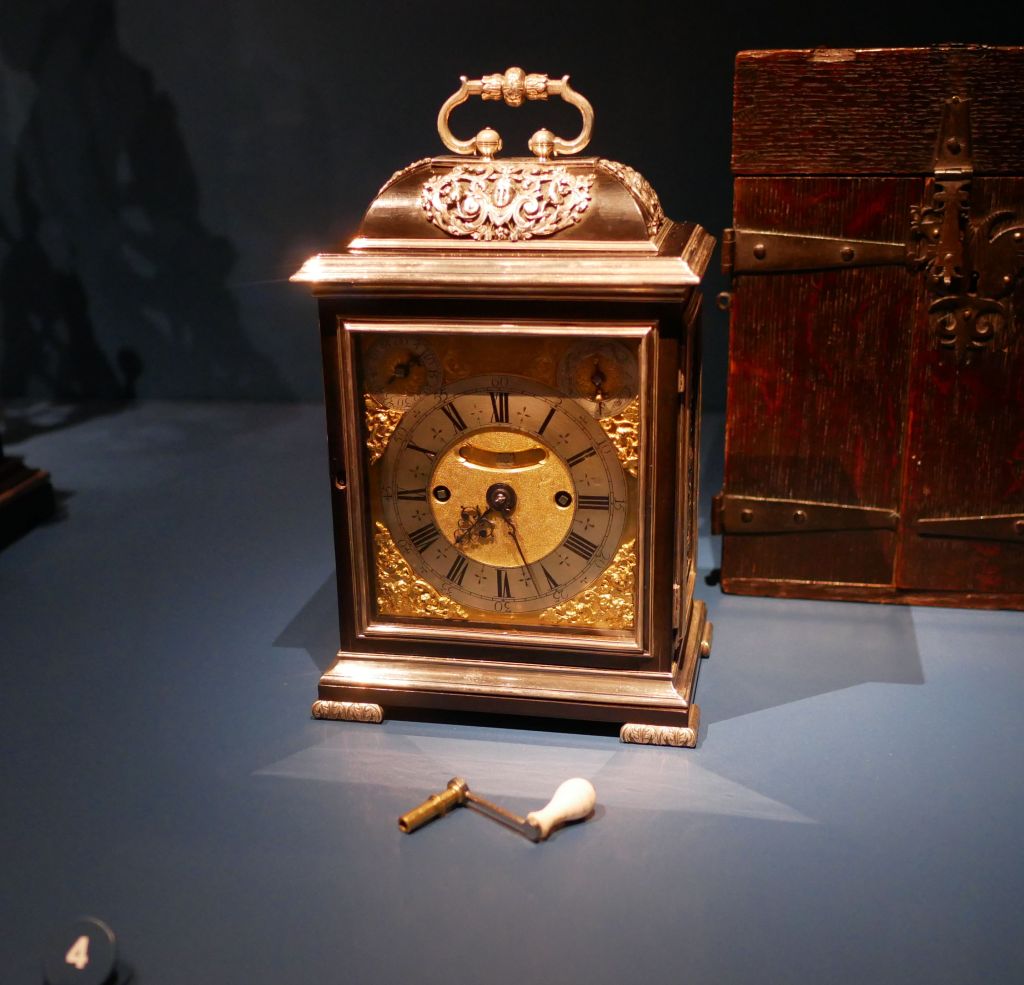
He was also a mentor to several important clockmakers, including George Graham, who later became a prominent figure in the field. Graham invented the deadbeat escapement, a crucial improvement over previous escapement designs, allowing for greater accuracy in clocks. Two clocks in my collection, an Arthur Pequegnat Moncton and a Seth Thomas #2 have Graham deadbeat escapments.
Tompion was also Master of the Clockmakers’ Company from 1703 to 1704 (London). He made regulators for Greenwich Royal Observatory – one of the most prestigious commissions of his career.
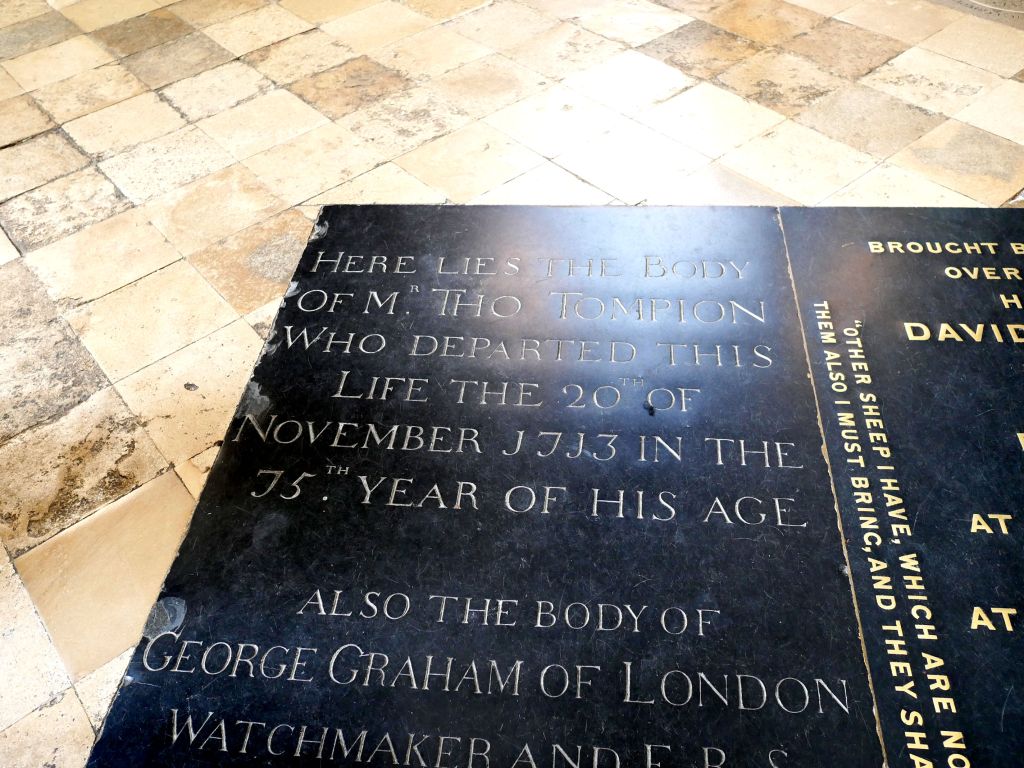
While visiting the UK this spring, I stopped by Westminster Abbey, where Tompion is laid to rest.

It is fitting that Graham is also buried in the same place.
Tompion’s work is highly prized by collectors, and many of his clocks are now housed in museums and private collections around the world.
Having a Tompion clock would be a real treasure, but it’s far beyond my budget. The nearest I’ll get to a Tompion clock is seeing one in a museum.
 Antique and Vintage Mechanical Clocks
You must be logged in to post a comment.