The last two years have taught us to be very thankful for family, friends, and relationships. Of course, we all wish we could be celebrating the holidays in a very different way in 2021 but just when we thought we were seeing the end of the pandemic another wave is crashing over us.
Unfortunately, celebrations will be confined to immediate family and close friends. Who would have thought the pandemic would last as long as it did and through all of this we must press on and continue to be vigilant. Is there an end in sight? I certainly hope so.
Holiday in Lego Land
The pandemic has taught us to appreciate the simpler things in life and during this festive season of giving and receiving, let us take time to slow down and be thankful for what we have.
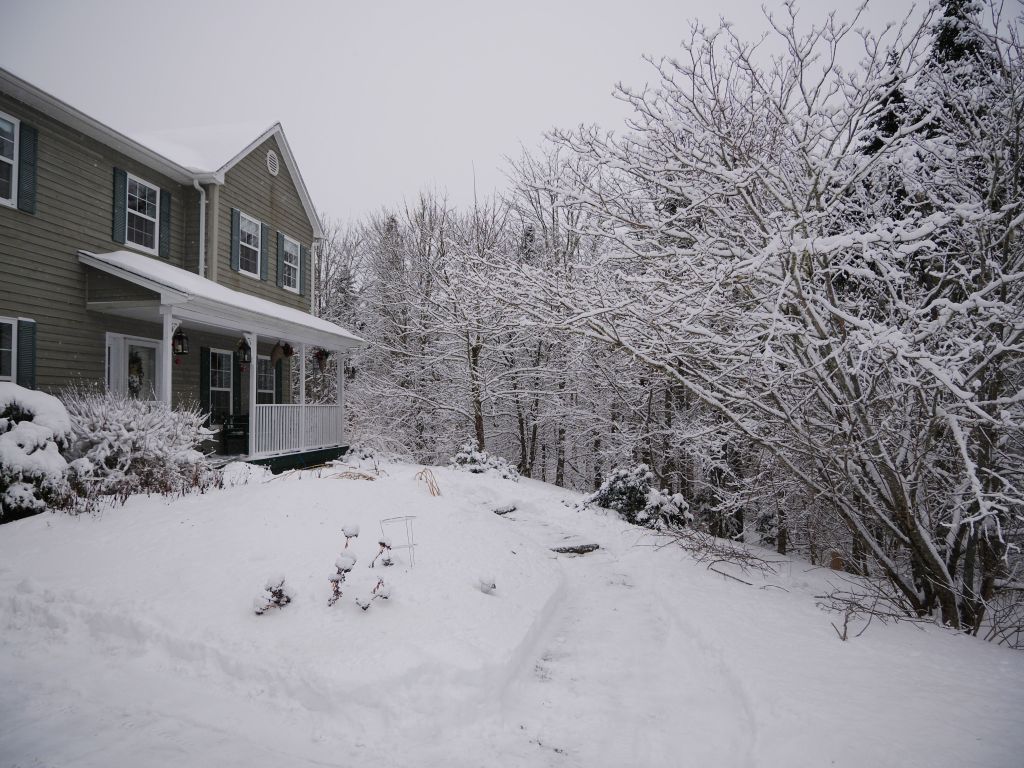
Christmas at home
May this wonderful time of the year touch your heart and the hearts of your loved ones in a special way.
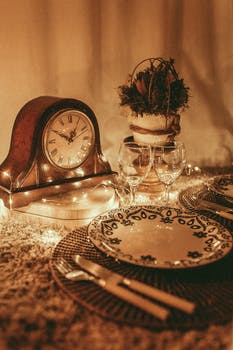
If there is a clock under the tree consider it a timely gift to remind you of days gone by and of happy memories when families got together to celebrate love, togetherness, and a feast to remember.
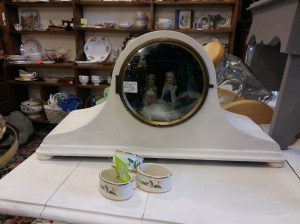
I understand the sentiment but a sad end to a tambour style clock
The holiday season is not about getting what you want but appreciating what you have.
Wishing you much happiness not just today, but throughout the coming year.
I would also like to take this opportunity to thank all my visitors, viewers, and subscribers for making antiquevintageclock.com the best year yet.
Every clock enthusiast has their own way of doing things and each has a different approach to clock restoration. Am I different? Not really, but I have put some thoughts to paper that you might find interesting.
Like everyone I started out knowing virtually nothing about clock restoration but learned as I went. As I gained confidence and improved my skillset I took on greater challenges.
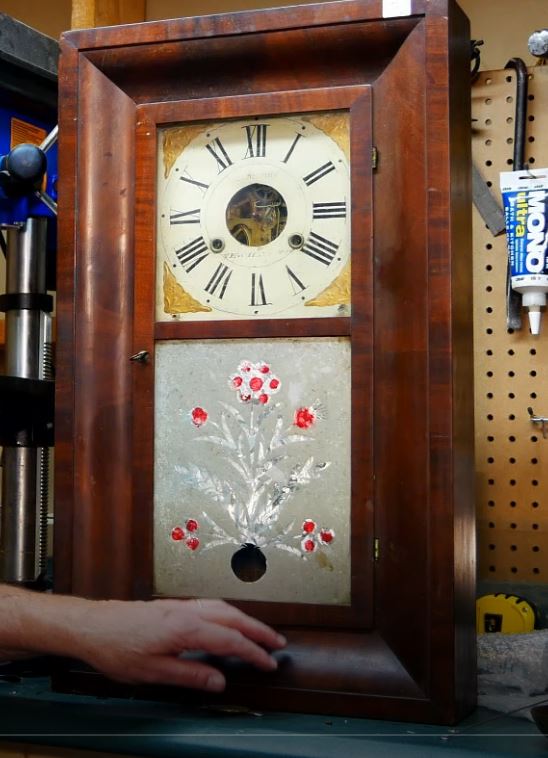
Not long ago I bought a nice 30-hour non-running Chauncey Jerome ogee. I would not consider this clock a huge challenge but it will help explain my approach to clock restoration.
The case is from the 1840s and based on my research, the movement is from the same period. There are a few things wrong with it and that is expected from a 176-year-old clock.
Four Options
The clock case and movement are very dirty and the clock certainly has some issues but I am happy to report that a lot is original. It is on my bench. Now, what do I do with it?
I have four options:
Do nothing. Leave everything as-is, preserve the patina and display the clock without servicing the movement or cleaning the case.
Service the movement so that it is in running order but do nothing to the case, again preserve the patina.
Clean and refresh the case but leave the movement as-is.
Service the movement and clean the case, making small repairs if necessary.
Option 1. There are very few clocks where I would do absolutely nothing. If the movement is beyond my capability or requires a complex repair and the case requires extensive repairs or any intervention on my part will potentially make it worse, I will leave it alone.
Option 2. Not a good option for me. There is no point in servicing a movement if is going back into a dirty case and risk the movement becoming contaminated with dirt and debris.
Option 3 If the movement is beyond my capability or requires a complex repair I will leave it alone and proceed with cleaning the case.
Option 4. This is my preference. My end goal is minimal invasive intervention which means that I will service a movement and address wear issues where necessary. I will refresh the case if it is grimy and requires a good cleaning. I am not a strong believer in patina which one reader opined is just another word for dirt. As much as possible, I use original materials and techniques when working on the case. This includes the use of hot hide glue, traditional shellac (flakes mixed with shellac lacquer), and fasteners like old slot head screws, and square nails.
In rare cases where I am met with a significant challenge, I will perform a complete restoration with the goal of bringing the clock back to its original condition. I call this extreme restoration.
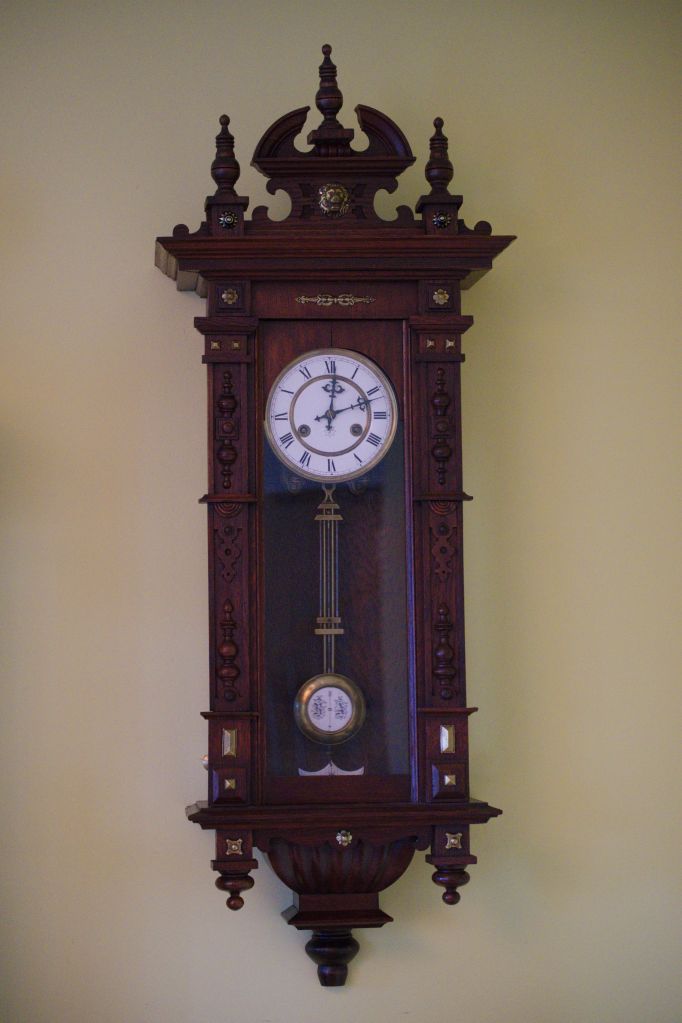
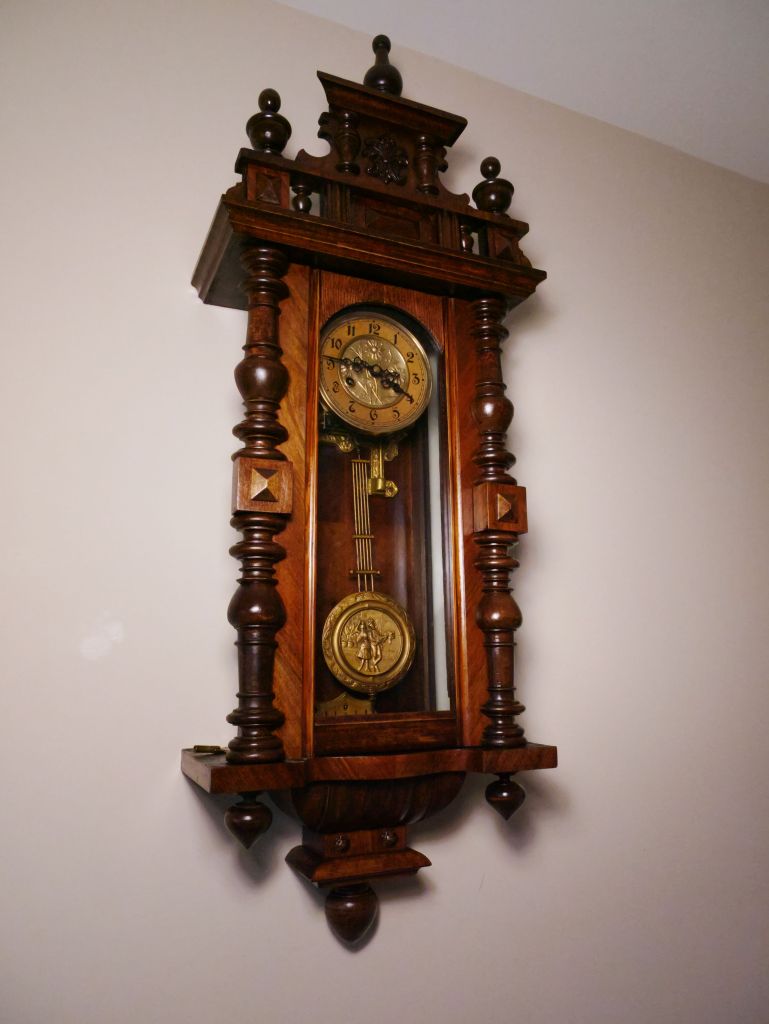
Here are two examples. Both of these clocks are running daily.
I believe that some amount of intervention is not only necessary but desired by collectors and I also believe that there are situations where a wholesale ground-up restoration is the only option.
In the case of this miniature Vienna Regulator cleaning and oiling the movement, and polishing the brass was the only intervention.
Miniature one-weight Vienna wall clock
My position regarding changes to a clock
My end goal is a functional clock that presents well. As far as I’m concerned a non-working clock must become a working clock because that is the nature of its existence.
If a clock has important provenance and extensive repairs to the movement and/or case alter it in a negative way and I will leave it alone.
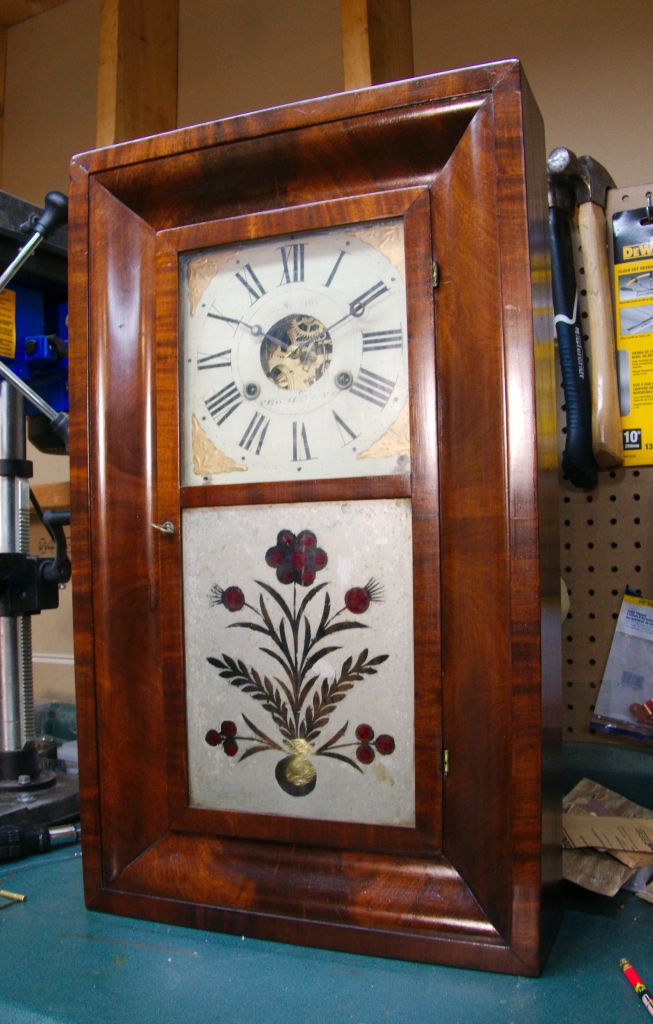
And what does the ogee clock i mentioned in the beginning of this article look like now?
Restored Jerome ogee
I am sure you will agree that it is not a dramatic change at all but it is now a working clock that presents well.




 Antique and Vintage Mechanical Clocks
You must be logged in to post a comment.