A Box of Parts, and a Special Clock That Journeyed Through Time

Every old clock has a story to tell — where it came from, who owned it, and the moments in time it quietly witnessed. Unfortunately, as clocks are sold, traded, or passed down, those stories often get lost along the way. The clock may keep ticking, but the people and places behind it fade into mystery. Every so often, though, one comes along with its story still intact, and that’s always special — it connects you not just to the clock, but to the lives that once revolved around it.

The clock I’m about to write about came with a story; in fact, it came in pieces, and that’s where the adventure begins. Piecing it back together wasn’t just a repair job; it was a bit of detective work, trying to uncover what happened to it and how repairs were addressed along the way. Every screw, every bit of wear, had something to say — and that’s what makes this hobby so fascinating.

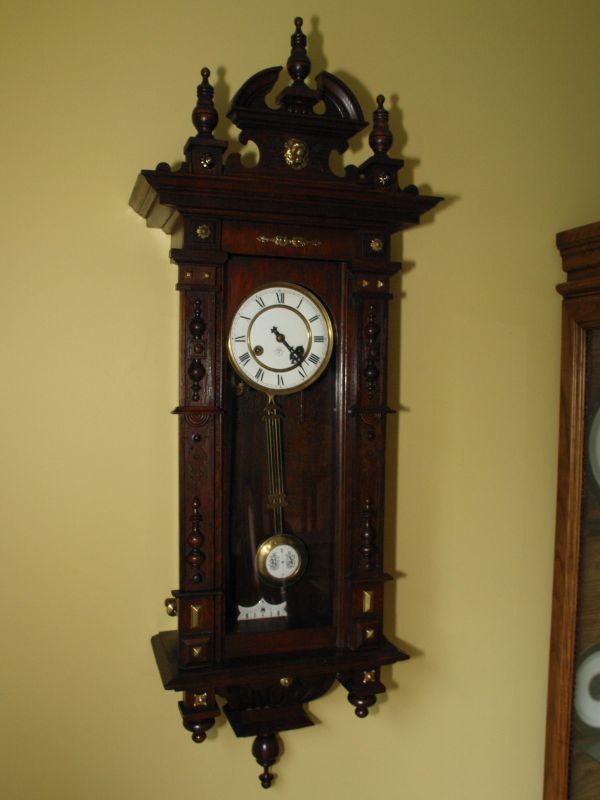
One of the most remarkable clocks in my collection is a Junghans Crispi wall clock that survived the 1917 Halifax Explosion. I know this because the previous owner told me their family had kept it for more than a century, passing it down from one generation to the next. When it finally came to me, it wasn’t much to look at — just a box of parts and fragments of what once had been. After all those years, I suspect the family decided it was time to let it go, perhaps hoping someone would bring it back to life.

And that’s exactly what I set out to do. Piece by piece, gear by gear, I restored the Crispi to its former dignity. During the restoration process, I discovered that not everything about the clock was original. Most of the case components had survived — including the top crown, crown base, and bottom section, finials, beat plate, many case decorations, the movement, dial and hands, and pendulum — but the frame had been rebuilt. I knew it immediately when I observed Robertson screws on the backboard.

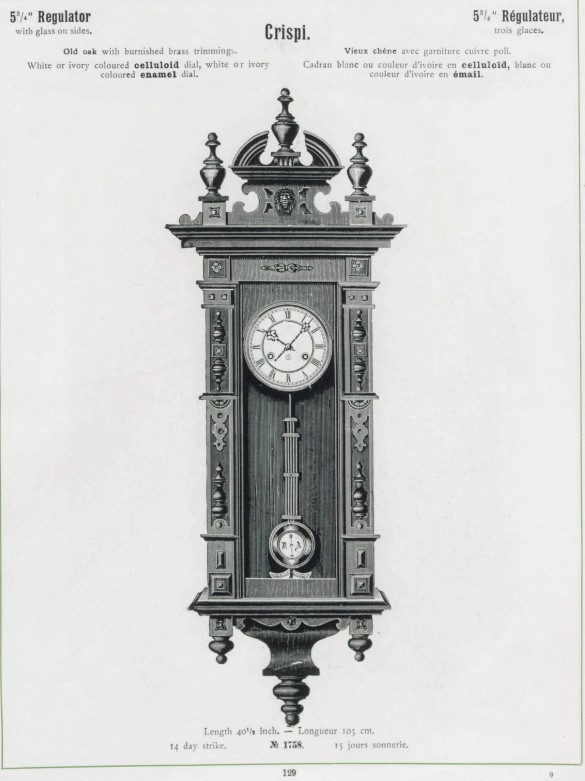
A catalog image from the Junghans website was extremely helpful

The frame was skillfully and carefully crafted from solid oak, suggesting that when the clock fell from the wall during the Halifax Explosion, the original frame must have shattered beyond repair. Despite the excellent woodworking skills, the previous owner knew very little about clock repair, so it was left as an incomplete project and sat in a box for decades, gathering a thick blanket of dust and grime.

Junghans clock in pieces
A box of parts

Restoration included new glass panels, re-staining the case, sourcing a few case parts, and servicing the movement.
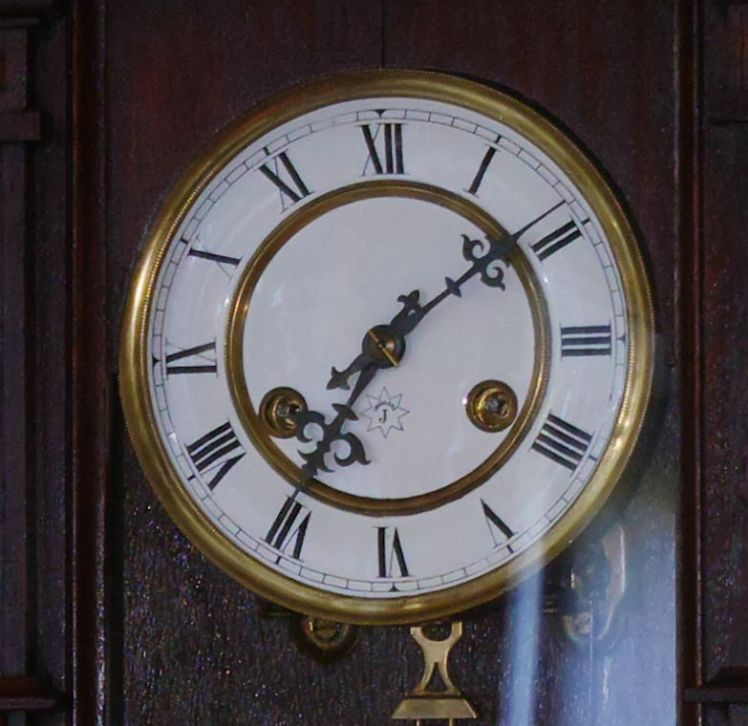
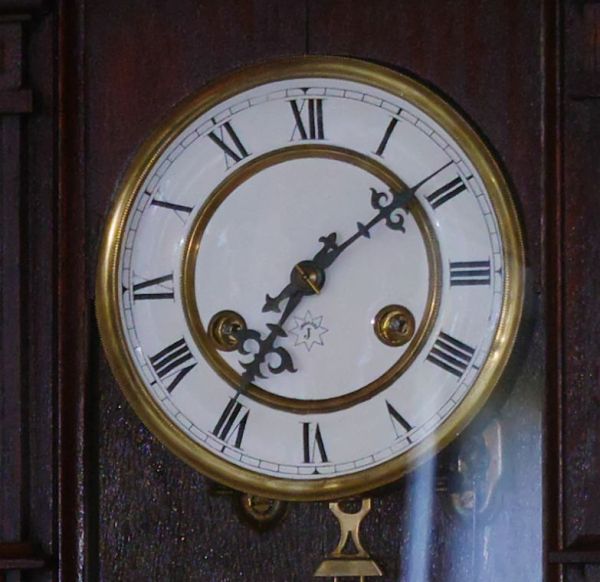
Junghans Crispi dial face
Junghans Crispi dial face and hands

When the case was restored and the movement was finally ticking again, I sent a photo of the finished clock to the family who had sold it. They never replied, and I can only imagine they felt a pang of seller’s remorse seeing it whole and beautiful once more.
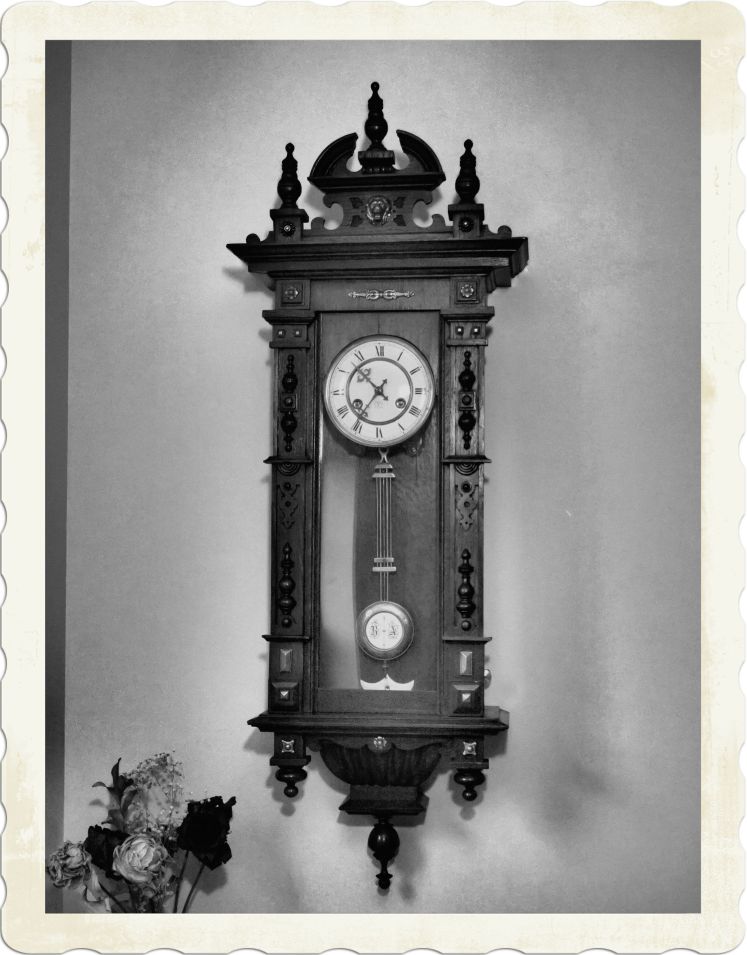
Junghans Crispi time and strike wall clock

Even now, every time I walk past it, I can’t help but picture that December morning in 1917 — the moment when the blast shook the city and sent the clock crashing from its wall in a small North Halifax home. It must have lain broken for decades, silent witness to one of the darkest days in Canadian history. Today, it keeps perfect time once again, a survivor with a story that still speaks through its steady, patient tick.
Dating a Historic Junghans Crispi Wall Clock

In the winter of 2017, I took on the restoration of a Junghans Crispi wall clock, made in Schwenningen, Germany. Built in the Vienna Regulator style, the clock came to me as a box of parts—an exciting challenge, especially once I learned of its remarkable history.

This clock survived the Halifax Explosion on December 6, 1917. I discovered it through an online listing and was immediately intrigued. While I wasn’t sure at first how far I’d go, I soon committed to restoring it to its full 19th-century glory.

Most of the clock is original: the movement, pendulum, coil gong, case crown, backboard, columns, and decorative trim. The front frame had been rebuilt about 30 years ago using modern materials. Though not fully authentic, the work was done with care and is largely hidden. I had no issue keeping it intact.

To complete the restoration, I replaced two small decorative trim pieces using birch and my vintage router, matching the originals as closely as possible. The result blended in beautifully.

The design reflects a time of grand ornamentation and eclectic influence, not its place of manufacture.

Was the effort worth it? Absolutely. The clock is now fully restored and running beautifully. Its resonant chime fills the house, and its unique presence always draws attention. More than a timepiece, it’s a piece of history and a cherished family heirloom.

When was the Clock Made?

I always wanted to determine the exact date of the clock, and when I first received it, I guessed it was made around 1900. While on the NAWCC forum site, someone posted an image from a Junghans catalog and suggested the clock was made in 1899. That seemed plausible, and I was satisfied it was made then.

1893 catalog
1894 catalog
1898 catalog

More recently, while browsing the historical index on the Junghans website, I discovered catalog images dating as far back as 1893, with listings for 1893, 1894, and 1898. It appears the clock was last produced in 1898.

There are subtle design differences between the 1893 and 1898 versions. The 1898 model features simpler clock hands, a beat plate, and longer crown finials. The pendulum design is also slightly different. Otherwise, the two versions look nearly identical. Based on these design changes, I believe my clock was made in either 1897 or 1898.

Final Thoughts

Researching your clock is one of the most rewarding parts of restoration. It deepens your connection to the clock and often uncovers fascinating history you might otherwise miss. In my case, exploring online forums and archival catalogs helped me more accurately date the Junghans Crispi and appreciate its evolving design. Manufacturer archives, collector communities, and historical indexes are invaluable tools; don’t overlook them. Every clock has a story, and with a bit of digging, you might be surprised by what you find.

Closing In on a Cure: The Ongoing Battle with a Junghans Crispi Movement

Back in 2017, I took on the restoration of a Junghans Crispi wall clock—a project that began with enthusiasm but has since tested my patience more than once. While the case restoration went smoothly, the movement has been another story. Despite professional servicing, bushing work, and later my own repair attempts, the strike side has never been entirely reliable.

Junghans Crispi wall clock, circa 1899

Over the years, the clock ran well for a while, then faltered, especially in the strike train. A broken lever spring, a bent arbor, erratic striking, and a few close calls with delicate repairs have all played a part. In late 2024, the clock began stalling just before the warning phase, prompting me to extract the movement from its case to determine the cause of the stoppage.

Now, in Spring 2025, I’ve returned to the movement with a fresh perspective. The time side still runs fine, but the strike side remains unreliable. Based on my experience with similar movements, I suspect a combination of issues: a weak strike mainspring, one or more bent pivots, and poor alignment between the paddle and star wheel.

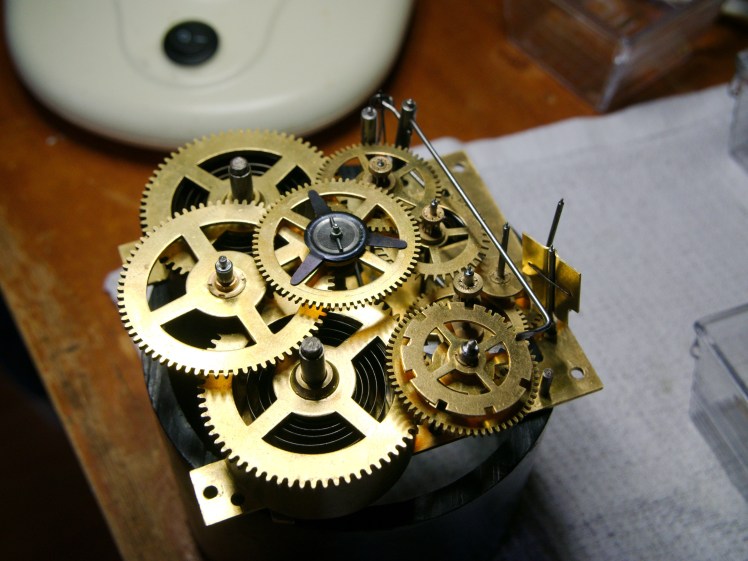
Junghans movement work
Junghans movement with the rear plate removed

In this post, I’ll walk through the next phase of troubleshooting—cleaning the movement, inspecting the spring, inspecting pivots, and adjusting the star wheel—to see if this clock, stubborn as it is, can finally be brought into reliable service.

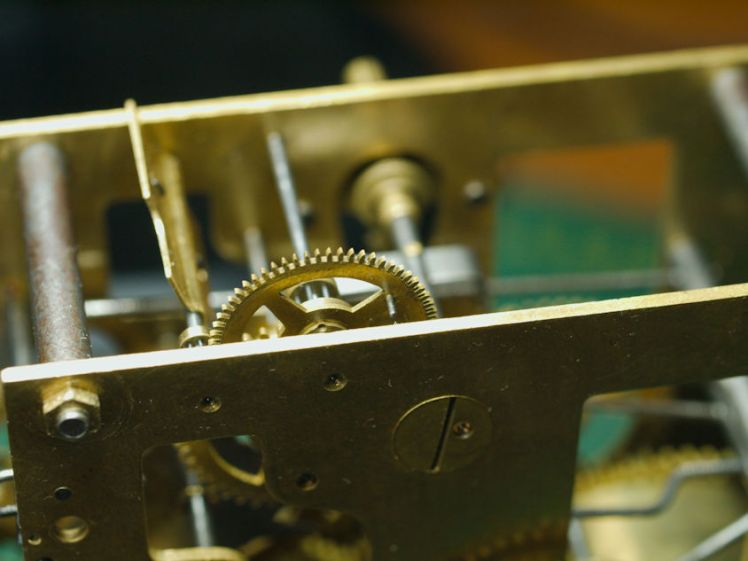
Junghans movement showing hammer and suspension components

The first part of this two-part series can be found here.

Minor issues, But Nothing Too Troubling

After having disassembled the movement, cleaning it thoroughly, and inspecting for pivot and bushing wear as well as the possibility of a broken lever spring and a bent pivot, I am now satisfied that there is nothing mechanically wrong with the movement.

I assembled it and ran the time side for several days. The time train ran smoothly. I then wound the strike side and discovered two issues. One, the stop wheel was not in the correct position. For warning to take place, it should rotate about half a turn, which will set up the strike. The locking pin should be in the 10 to 12 o’clock position. The photo below shows it in the 2 o’clock position.

The locking pin is at the 2 o’clock position when it should be between the 10 and 12 o’clock positions

To make this adjustment, there is no need to take the movement apart; simply loosen the movement nut nearest the fan as well as slightly loosen the nut on the time side. Of course, if in the process of testing the strike side, it is important to double-check that both mainsprings are let down before opening up the plate. Once the fly and the locking wheel are free, they can be positioned correctly. The locking point is also determined by the cam, and the lever must be in its slot while the adjustments are taking place.

The Strike Hammer Tail

The other issue is the strike hammer tail.

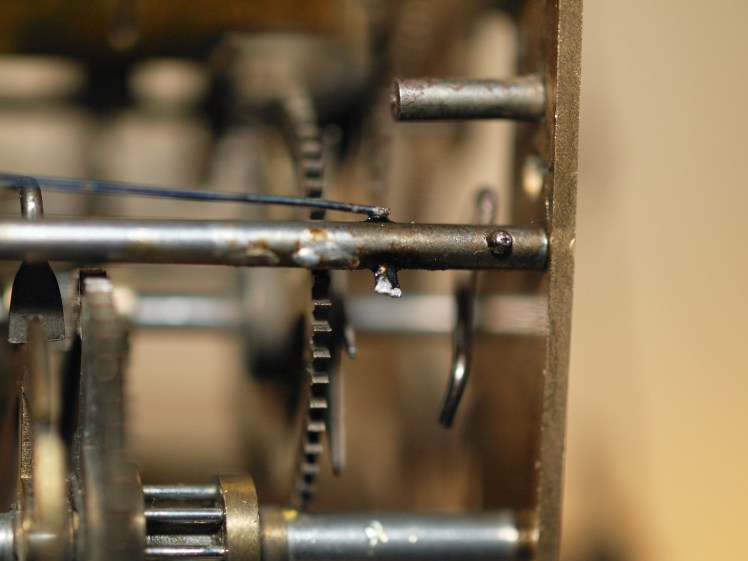
Once reassembled, I also discovered that the hammer tail was resting on one of the star points. At rest, the strike paddle must sit between two star points. When the hammer tail rests on a star point, it impedes the action of the strike train. The hammer tail must be clear of the lifting star at the end of each strike sequence.

Hammer tail is resting on one of the stars of the star wheel, the lever spring on the hammer arbour is shown

I believe I have found the problem with the strike side. However, there are two more adjustments that are needed before I put the movement on a test stand. One, the hammer lever spring is not providing any tension. I know that if I risk bending it, it will snap, but I will take that chance. I have repaired lever springs in the past, and it should be an easy fix if I break it. The other issue is a loose click on the strike side, which will require completely disassembling the movement to access the rivet from the inside. Once these two items are attended to, I can test the movement.

It’s still a work in progress, but I feel I’m very close to achieving a successful resolution to issues regarding the movement.

Crispi Wall Clock Movement by Junghans | My Nemesis

I have never been completely happy with how the movement runs in this Junghans Crispi wall clock. When I got the clock in 2017, I jumped right into restoring the case because it was an interesting challenge to put the clock together from a bunch of parts.

Junghans wall clock, circa 1899, model – Crispi

Now, eight years later, the clock continues to disappoint. The case remains in great shape, but the movement has been a consistent letdown.

Very dirty movement
Movement as found, about as dirty as it gets

Let’s take a step back in time.

Winter 2017

After completing the work on the case, I turned my attention to the movement. During the disassembly and reassembly process, I accidentally broke not only the strike paddle but also a retention spring. In 2017, my skills weren’t advanced enough to repair the paddle and retaining spring myself, so I had the movement professionally serviced.

Junghans movement
Broken strike paddle

During its 2017 service, the paddle was repaired and a new spring was installed. In addition, the movement had received extensive bushing work: six bushings on the front plate and six on the rear.

Three months later, I picked up the clock and hung it on my dining room wall. It ran perfectly for over two and a half years.

Spring 2020

For some undetermined reason, the strike became erratic—it would strike incorrectly, fail to strike at all or strike incessantly until the mainspring ran down.

I had a number of other clock projects on the go so I kept the time side going and left it on the wall until later that year.

December 2020

In December, I disassembled the movement and discovered a slightly bent arbor on the strike side cam wheel. All other pivots were straight, and there were no noticeably worn pivot holes—everything else appeared to be in good condition.

I did notice a small amount of dirty oil around many of the pivots. While I was initially a bit surprised, it’s not entirely unusual after more than two years of regular operation.

Unfortunately, disaster struck again. While manipulating the plates, I snapped the paddle arbor retention spring—again! This time, however, I was able to repair it myself.

There was just enough of the original spring left to reuse. The wire is very thin (0.5 mm), extremely brittle, and breaks easily under even light pressure. Using a micro drill with a 0.5 mm HSS bit, I carefully enlarged the existing hole in the plate, reinstalled the spring, and secured it with Threadlocker Red to bond it firmly in place.

The movement was reassembled and tested. After the testing period the movement was returned to its case and ran well until about 6 months ago.

Fall 2024

While the time side was running well, the erratic striking returned, and after a few weeks, the clock began stopping just before the warning phase. I wound both the time and strike sides again to replicate the problem, and each time it stopped at the warning point. Feeling frustrated, I left the clock on the wall, wound only the time side, and still it stopped. Since I had other projects to tend to, I decided to leave this one on the back burner for a while.

Junghans clock
The movement on a test stand

Spring 2025

Since I was free of immediate projects, I removed the movement from its case and placed it on the test stand. As expected, the time side ran fine. It was serviced not so long ago. For the last couple of months, however, it has been striking erratically or not at all. It enters warning without issue, but seems to almost stall during the striking process. I want to address this issue, but I also want to disassemble the movement to clean up both the pivots and the bushing holes, as the oil is dirtier than I expected.

Judging from similar movements I’ve worked on, I believe there are three issues at play:

  1. A power issue, which suggests the mainspring is weak.
  2. One or more bent pivots, preventing the wheels from turning freely.
  3. The paddle is not correctly positioned in relation to the star wheel. The hammer begins lifting immediately at the drop-off, which stalls the strike train. Once it gets going again, the hammer lifts easily and quickly. I’ll try repositioning the star wheel to allow more run time before the hammer paddle is engaged.

The first issue means replacing the strike-side mainspring. The second issue involves manipulating pivots. There is always a risk of breaking a pivot when attempting to straighten it, not a pleasant experience, as re-pivoting is necessary.

Check back later for an update on what I discovered—which of the three issues turned out to be the culprit, and whether I was finally able to fix a clock that, at times, seems determined not to be fixed.

If I had to take one antique clock from a “burning house” which one would it be

We have been facing a challenging spring here in Nova Scotia, as the threat of wildfires has been looming over us.

In May 2023, our community in Nova Scotia has been devastated by the occurrence of two uncontrolled wildfires. The dire consequences of these fires include the evacuation of thousands of individuals and the tragic loss of hundreds of homes.

Residing in a rural area with our house nestled amidst beautiful trees, we can’t help but have a constant awareness of the potential for fire.

While it’s crucial to prioritize safety and well-being in emergency situations, it’s understandable that certain personal belongings/items hold significant value to us. They include ID, cell phones, credit cards, vehicle titles, keys, flashlights, passports, a portable hard drive containing all personal photos, and essential clothing but if I find myself with a moment to select just one antique clock during a speedy evacuation what would it be?

My wife prompted this discussion when she asked, “What clock would you take?

Selecting a specific antique clock to save from a “burning house” is a subjective decision based on personal preferences, sentimental value, and the uniqueness of each clock. However, here are a few factors I might consider when making my decision:

  1. I might choose a clock that holds special meaning to me or my family. It could be a clock that has been passed down through generations or one that has sentimental value attached to it.
  2. I would consider the rarity and historical significance of the clock in question. If a clock’s origins is significant or it is known for its craftsmanship or historical importance, I might prioritize saving such a clock.
  3. If one clock is in better condition or has the potential for easier restoration, it might be a good choice to save.

Here are 5 clocks that would be high on my list and the reasons why. But in the end, I could only take one!

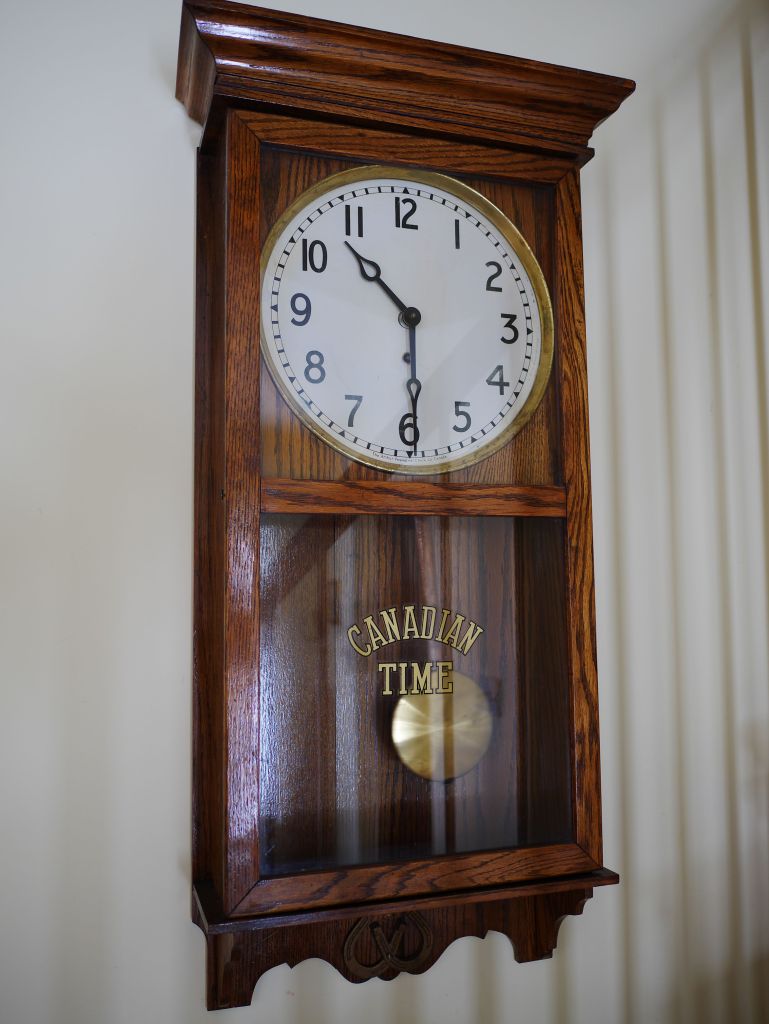
Pequegnat Canadian Time

Pequegnat Canadian Time

I have had this clock for a number of years, and have serviced it twice. The clock’s case, on the other hand, has remained untouched and remains in exceptional condition. This particular clock holds a special place in my collection as one of the earliest examples of the eight Pequegnat clocks I own. It spent its life in the waiting area of a train station located 1/2 drive from my home.

Sawin Banjo Clock

Sawin banjo clock

Dating back to the 1840s, this exceptional timepiece exemplifies the pinnacle of meticulous movement craftsmanship. While the case and movement do not bear any explicit “Sawin” markings, various indicators strongly suggest that it was crafted by John Sawin himself or one of his associates or apprentices. Notably, this clock stands out for its straightforward construction, lacking side rails or ornate embellishments such as painted tablets or gilt decorations. It is precisely this simplicity in design that captivates me, as it allows the clock’s elegance and craftsmanship to take center stage.

Junghans Crispis time and strike wall clock

Junghans Crispi

This clock underwent a comprehensive restoration process involving countless hours of work, including disassembling, creating new components, servicing the movement, and refinishing the case. The restoration required a significant amount of labor and attention to detail. The clock holds a captivating story as it was rescued from a house that endured severe destruction during the Halifax Explosion in 1917.

Single-weight Vienna Regulator

Single-weight Vienna Regulator

The sheer beauty of this clock makes it incredibly challenging to part with. Its design epitomizes the finest qualities of the 1880s Vienna style. Unlike the later Viennese clocks, which often leaned towards ornate and ostentatious features, the clocks from this particular period maintain their elegance and embrace a more refined and understated aesthetic. The clock’s classic, simple lines are a testament to the enduring allure of the Vienna style during that era.

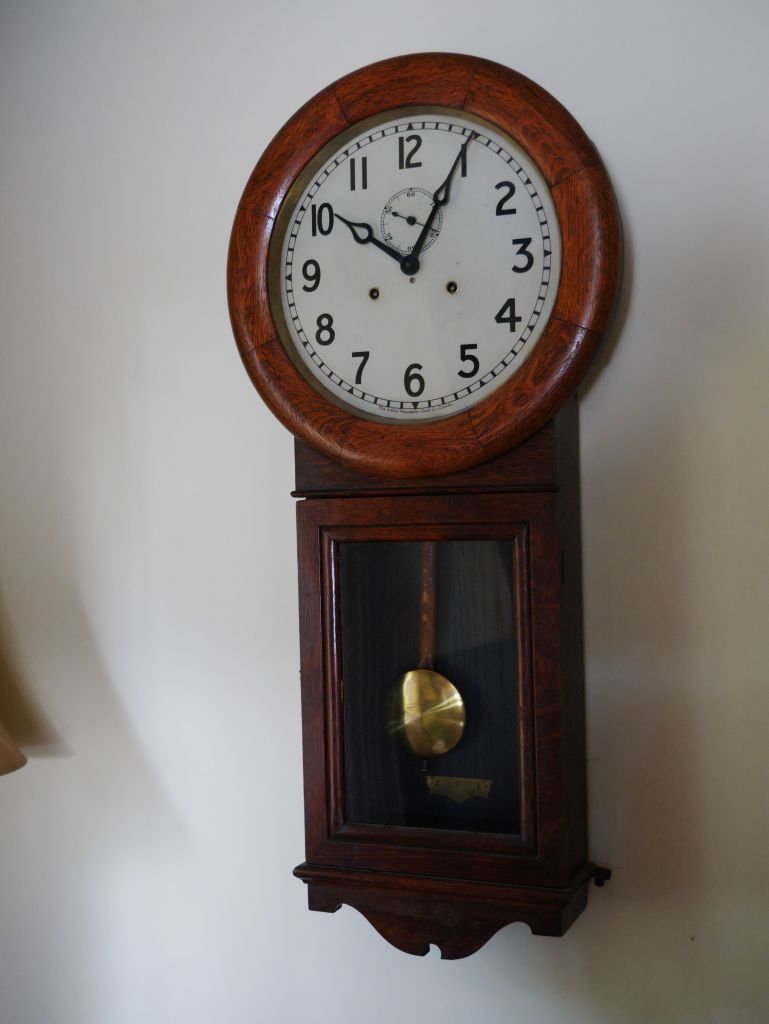
Arthur Pequegnat Canadian Time

Arthur Pequegnat Moncton

It is quite possible that this clock was located in a train station or some other commercial setting, given its robust construction and durability designed to withstand potential mistreatment. Additionally, its timeless design features are reminiscent of the classic lines commonly associated with the 1920s era. The clock’s sturdy build and elegant aesthetics perfectly capture the spirit of that period, adding to its overall charm and appeal.

E. Ingraham Huron

Rare Ingraham Huron found on a local online for-sale site
E Ingraham Huron

This clock resided in the charming vicinity of Bridgewater, Nova Scotia. It came into our possession during a challenging period for a couple undergoing a difficult separation, as sentimental items often find their way to new homes in such circumstances. Among the clocks in my collection, this one stands out as one of the few that underwent professional servicing, ensuring its optimal functionality. Notably, this clock holds a relatively rare status, being produced by the E. Ingraham Clock Co. during the brief span of two years, between 1878 and 1880.

And now it boils down to the one to choose?

Although I hold great admiration for all of these clocks, if I were constrained by space and could only choose a single one to take with me, it would have to be the Junghans Crispi. As mentioned earlier, this clock embodies the qualities that I value, such as its exceptional craftsmanship and timeless appeal. Its unique design, combined with the renowned Junghans brand, makes it a standout choice in the collection. Given the limited space, the Junghans Crispi would be the clock I couldn’t bear to leave behind, as it represents the epitome of my preferences and holds a special place in my heart.

Website Powered by WordPress.com.

Up ↑