The Rise of the German Box Clock: A U. M. Müller Example

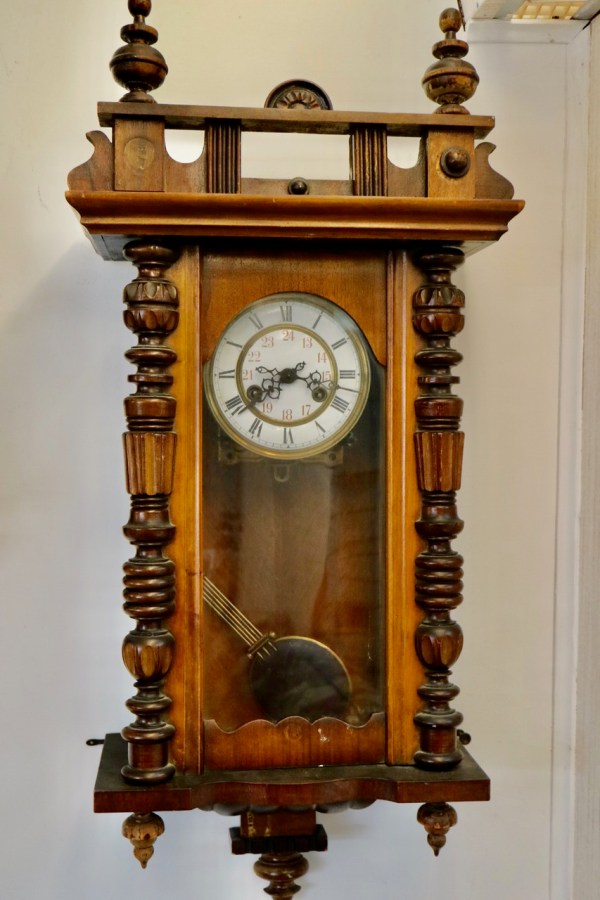
U. M. Müller clocks were once a familiar name in households across Europe, yet today the brand is not as widely recognized among collectors as some of the larger German makers. That is a bit surprising, because the company produced clocks that could easily stand beside the finest German manufacturers of the early twentieth century.
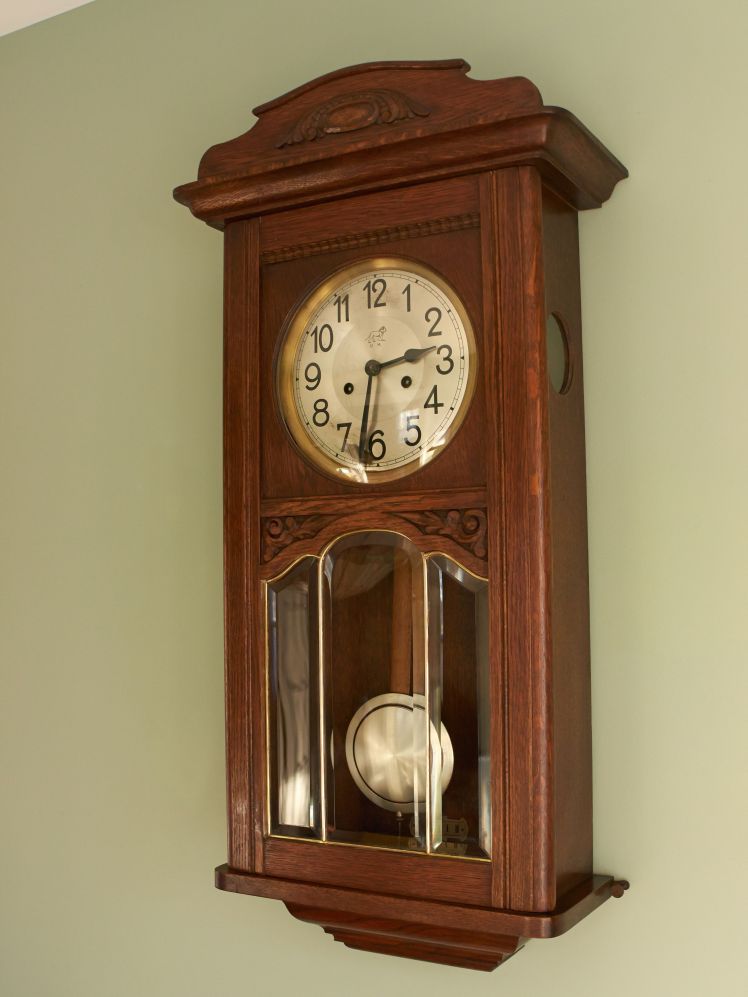
One area where U. M. Müller truly excelled was with their box clocks. At a time when tastes were shifting away from the tall and highly ornate Vienna regulators, these clocks offered something different—cleaner lines, practical design, and a price that appealed to the growing middle class. By the 1930s, the sleek German box clock had largely replaced the Vienna regulator in many homes, quietly marking the end of an era.
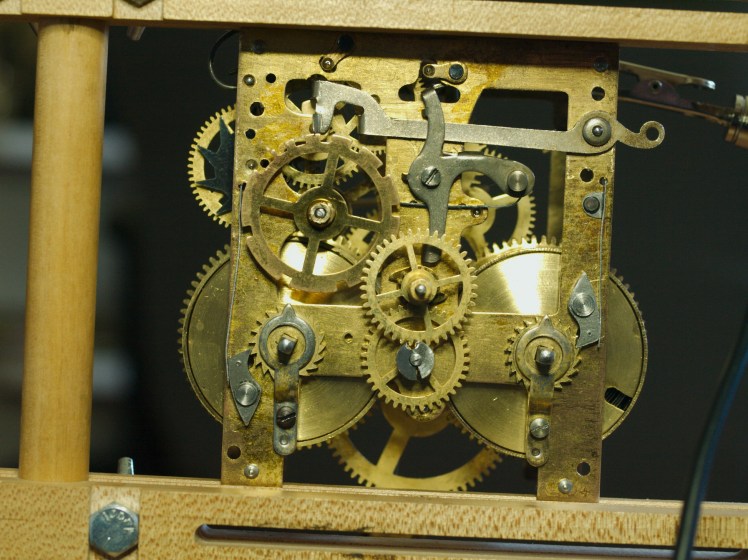
Note the count wheel location on the outside of the front plate

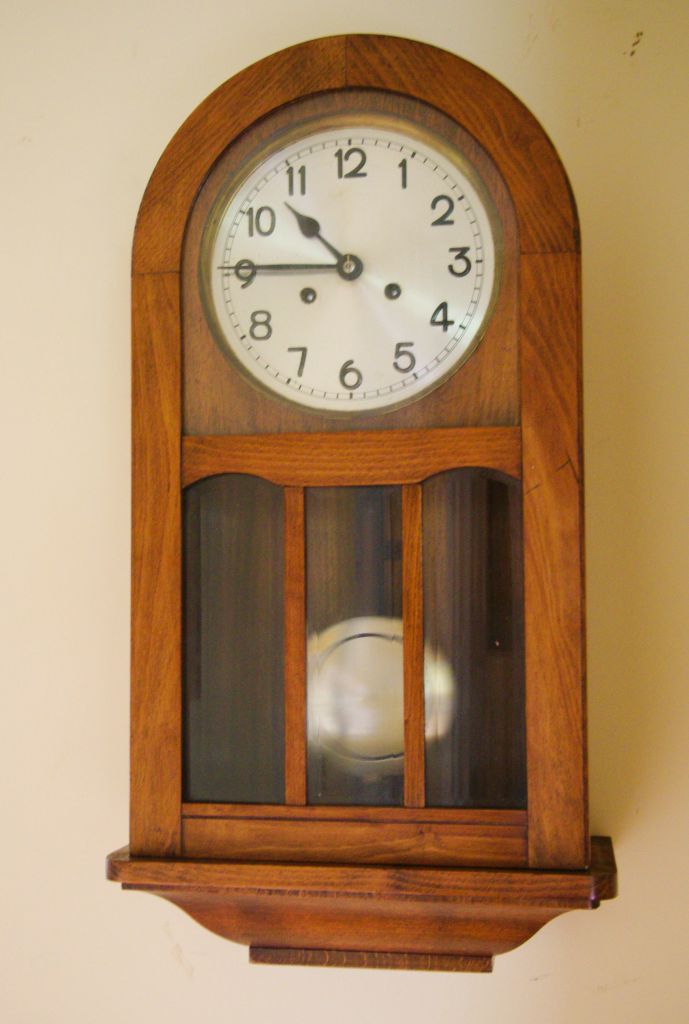
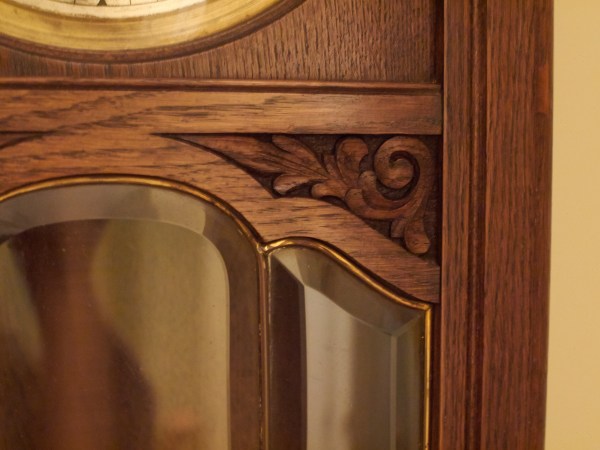
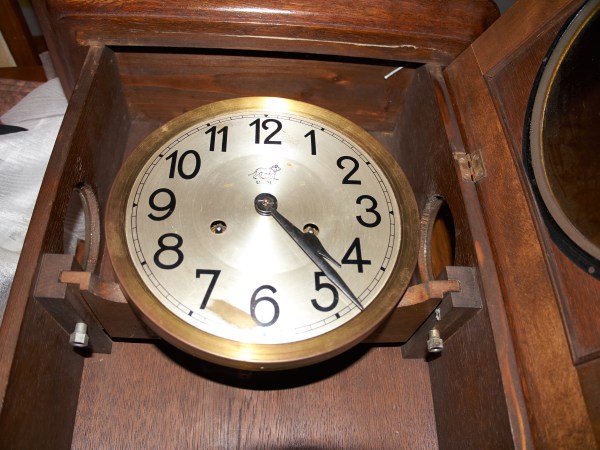
This particular U. M. Müller is a striking example of that transition. The oak case has a stately presence, highlighted by delicate carved inlays on the door, brass strip framing, and a fixed wooden crown. A brass bezel frames the metal dial, which carries classic spade and spear hands. The beveled glass, also set in brass, adds a refined touch. On the back, wall stabilizers ensure the clock hangs securely—another reminder that this was a clock designed not only to look good, but to perform reliably day after day.

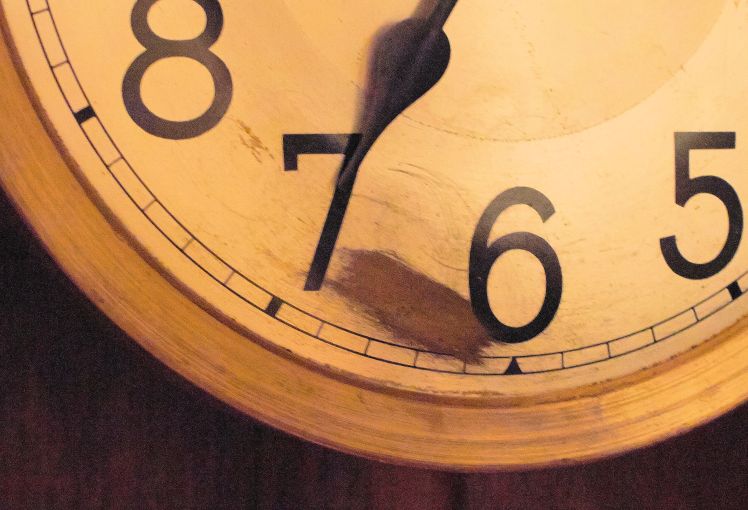
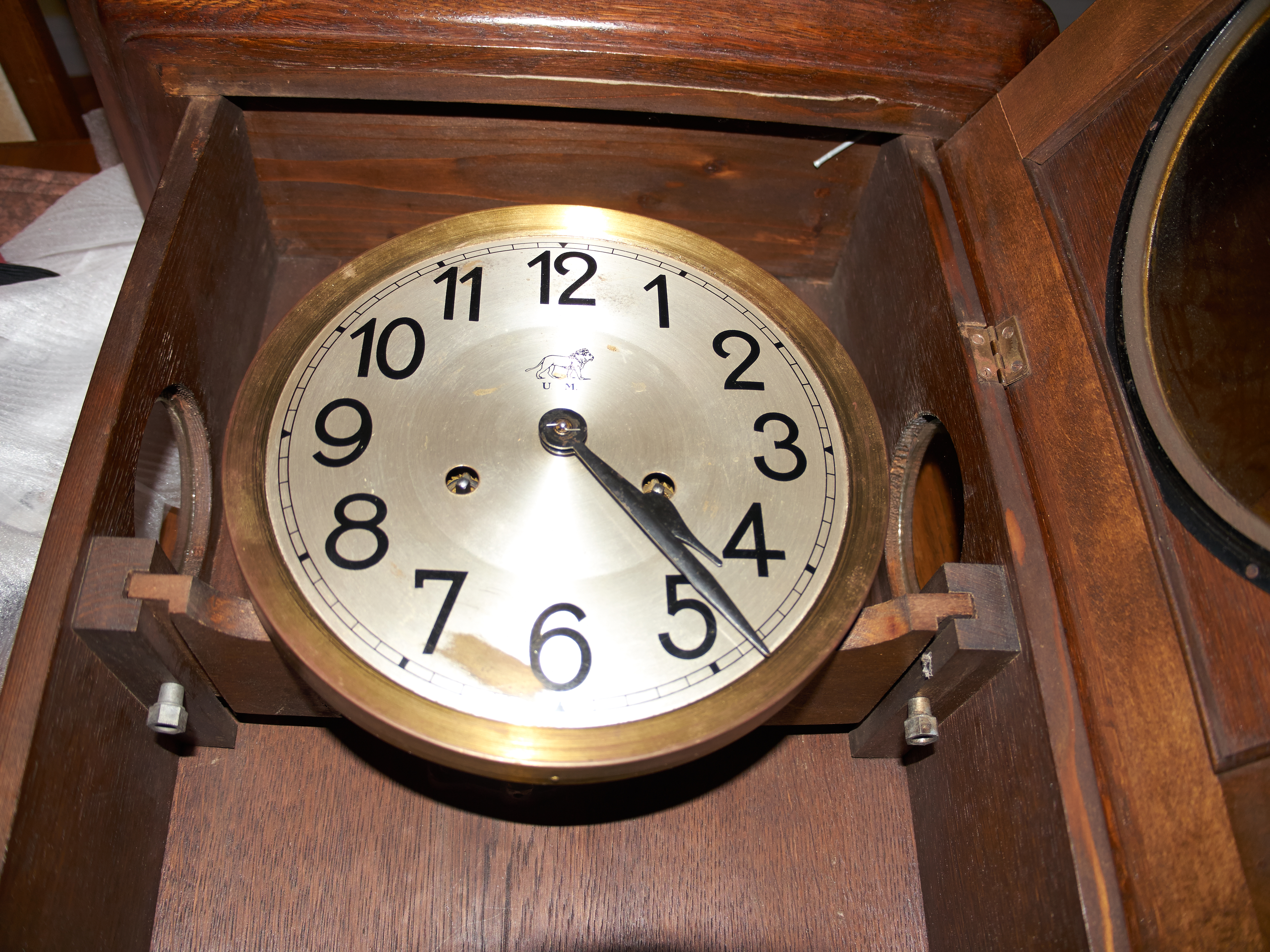
The case itself has aged beautifully over the decades, with no noticeable scratches or blemishes. The dial, however, tells a different story. Its surface bears the marks of long service, including an abrasion between the numbers 6 and 7 where the paint has worn through to the bare metal. While it is not something that can really be repaired, it does give the clock a bit of honest character—evidence of the many years it faithfully kept time on someone’s wall.
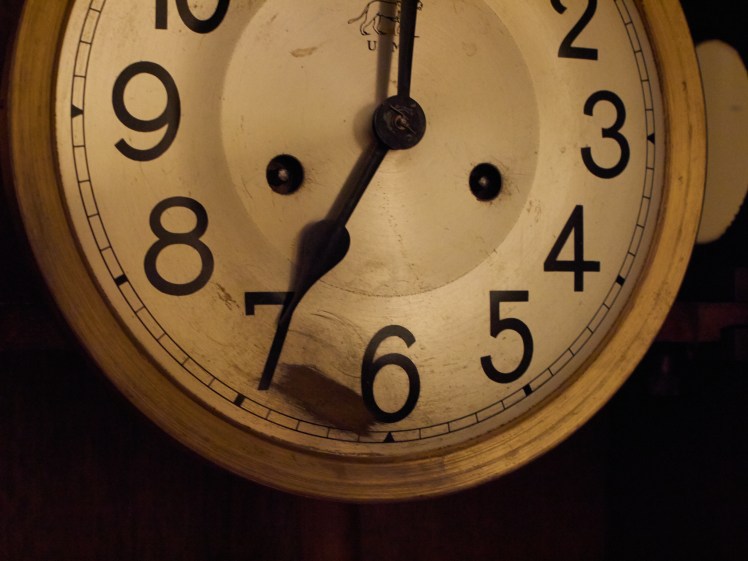
U M Muller clock dial

Inside is a classic count wheel time-and-strike movement that strikes on a coiled gong. The strike is bold and full on the half-hour and the hour, but never harsh or overpowering. Like most spring-driven clocks, one should not expect chronometer precision, but this example runs just as these clocks were meant to—steady, dependable, and capable of keeping “regular” time across its full eight-day cycle.
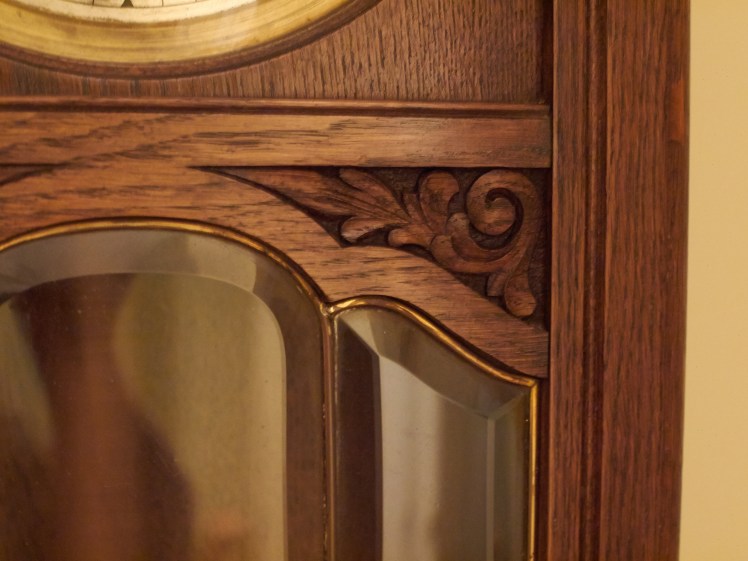
After a careful cleaning and waxing, the oak case shows what it must have looked like when new, more than ninety years ago.

Collectors sometimes date U. M. Müller clocks using the small lion trademark on the dial. A raised tail generally indicates a clock made before 1930, while a lowered tail—like the one on this example—places it in the mid to late 1930s.

According to Schmid’s Lexikon, the company’s history dates back to 1867 in Mühlheim, Germany. Ownership changed hands several times over the years, including a period under R. Schnekenburger around 1880.  The company operated as R. Schnekenburger GmbH a.d. Donau before facing financial difficulties, and acquired by Gebrüder Müller in 1923. The firm developed a reputation for building solid, handsome clocks that were both reliable and affordable. Müller clocks were competitive with other German makers such as Junghans, Kienzle, and Gustav Becker, though often at a slightly lower price point aimed at the middle-class market.

In the end, this U. M. Müller is a fine reminder of a moment when clock design was changing. As the grand Vienna regulators slowly disappeared from the walls of European homes, clocks like this stepped in to take their place—simpler, practical, and built for everyday life. Nearly a century later, it still does exactly what it was meant to do: quietly mark the passing of time while adding a bit of character to any room.

Related Articles

  • UM Müller box clock | servicing the movement: I bought this clock in 2013, and while it has been very reliable and running daily, like all things mechanical, it requires attention from time to time.
  • UM Muller box clock;  not a household name in its time, yet U. M. Müller produced clocks that could stand proudly beside the finest German makers of the early 20th century.
  • German Box clocks: a journey into clockmaking history: the popularity of Vienna Regulator clocks began to wane towards the early part of the 20th century. The more modern and less ornate design of the box clock appealed to changing tastes and preferences after World War I.

Safely Using Brasso: Polishing Tips for Antique And Vintage Clock Collectors

After retiring from active duty, my father continued to serve in a reserve unit for several years. As a child, I still remember the formal occasions that called for his ceremonial uniform, when every detail had to be perfect. Before heading out, he would sit down with a tin of Brasso and a soft cotton cloth, patiently polishing each brass button and his service medals until they gleamed. The smell of the polish and the steady rhythm of his work became part of the ritual, a quiet reminder of the pride he carried in his service to Canada.

Brasso metal polish

My father trusted Brasso, and so did many who regarded it as a reliable metal polish, valued for its ability to restore the shine to brass and copper.

Yet, as effective as it is, using Brasso without care can do more harm than good. Antique clock collectors, in particular, should be cautious since many valuable parts can lose their patina or protective finish if polished too aggressively.

Read The Instructions

When using Brasso, it is important to start with restraint. Less is more! Always read the instructions on the label and, if possible, test it on a small hidden section before committing to polishing the entire surface. Apply it sparingly with a soft cloth, working in gentle circular motions. Ensure you are in a well-ventilated space, as the fumes can be strong for some. Once the polish has done its job, buff thoroughly with a clean cloth to remove any residue and bring up the shine.

For detailed work, I use cotton swabs, which are excellent for accessing tight spaces.

A Word Of Warning

What you should not do is just as important. Brasso should never be applied to lacquered, painted, or plated surfaces, as it will strip away the finish and expose the bare metal. Special caution is needed with brass bezels around painted dials—Brasso will eat through the paint very quickly (yes, I know from experience). It should also be avoided on plastics, wood, and gemstones, as it can permanently scratch or stain them.

Some time ago, I purchased an U. M. Muller box clock. Everything about it was perfect except for the dial. A small section of paint was missing, likely the result of someone attempting to clean it with an abrasive cleaner (photo below). This is exactly the kind of damage Brasso can cause on a dial.

Irreversible damage to a clock dial

Immersing objects in Brasso is also not recommended—the product is made for surface polishing, not soaking. If you are working with thin layers of gold or silver plating, Brasso is too aggressive and will wear them away over time. Finally, don’t leave residue behind; always wipe the parts clean to prevent streaks or uneven tarnish from developing later.

Clock cases, dials, and movement parts often have lacquer, plating, or original patinas that Brasso can irreversibly damage. The very character of an old clock—its aged glow or mellow surface tone—can be lost with a single overzealous polishing. In horology, a gentle hand is usually best. Cleaning and preservation are preferable to aggressive polishing, especially if the clock has historic or sentimental value.

Tarnished weight on the left, polished weight on the right

Using Brasso brings back the shine, but it’s only temporary. No matter how well it’s polished, brass will eventually react with its surroundings and tarnish again.

Brass weights and pendulum polished on a 1970s Hermle wall clock

Since Brasso contains ammonia, avoid skin contact, and rinse thoroughly with water if it gets into your eyes.

Safer Alternatives

If you are hesitant about using Brasso, there are safer alternatives. Mild soap and warm water can often remove surface grime without damaging the finish. I often used diluted Murphy’s Soap as an effective general cleaner. A simple mixture of vinegar, salt, and flour is a time-honored homemade polish that is less abrasive. For light cleaning, microfiber cloths can work wonders, often restoring a soft luster without the need for any chemicals at all.

A Wide Variety Of Cleaners

Commercial products such as Maas, Wright’s Brass Polish, Flitz, Twinkle, or Simichrome are also designed to clean metals while being gentler on delicate surfaces. I have not used these products myself, but I know several clock repairers who vouch for them. Personally, Brasso has always worked as expected.

The Science Of Brasso

When you apply Brasso, you’re essentially removing oxidation, dirt, and surface tarnish with abrasives and solvents. The surface looks bright afterward, but it isn’t “sealed.” Over time, the copper in the brass reacts with oxygen, moisture, and even substances in the air like sulfur compounds. This leads to the gradual formation of oxides and sulfides — the brownish tarnish we recognize.

Unless you coat the polished brass with a protective barrier such as lacquer, wax, or a clear sealant, this reaction is inevitable. Most brass weights in vintage tall-case clocks are coated with lacquer, but handling them over time allows sweat to eat through the lacquer, causing the weights to tarnish. Use cotton gloves when handling lacquered weights.

Within my circle of clock enthusiasts, there is plenty of debate about the use of Brasso, with both positive and negative claims. For me, however, Brasso remains the preferred product for cleaning brass. Although Brasso remains a useful product, it is not the only choice and not always the best one. The key is to use restraint, and when in doubt, take the gentlest approach possible.

There are times when the best polish for a cherished object is simply to leave its history, patina, and character intact.

My Antique Wall Clock Collection: A Quick YouTube Tour

Allow me to take 5 minutes of your time to watch my video of 19 wall clocks in my collection. Each wall clock is identified by its maker, where known. The video features background music throughout, with a brief segment of sound highlighting the winding of a Mauthe wall clock. Otherwise, there is no dialog.

My only requirement is that the clock must be in good working order and have an appealing appearance.

19 wall clocks in my collection

My entire collection consists of 85 clocks. Many are on display in my home, and some are in the process of restoration or repair.

Check out my Pequegnat clock video as well.

German Box Clocks: A Journey into Clockmaking History

The popularity of Vienna Regulator clocks began to wane towards the early part of the 20th century. The more modern and less ornate design of the box clock appealed to changing tastes and preferences after World War I, leading to the gradual replacement of Vienna Regulators with box clocks. The box clock design stood the test of time, enduring for over 30 years.

Gustav Becker weight-driven Vienna Regulator

The German “box clock” is a type of antique clock that became popular in the early 20th century, particularly in the period following World War I. These clocks are sometimes also referred to as “box wall clocks” or “wall box clocks” due to their design and placement on walls.
German "box" clock by Mauthe
German box clock by Mauthe

Key features and characteristics of German box clocks are its design and appearance since the box clock represents a departure from the designs of the Vienna Regulator clocks. Instead, box clocks embraced a more minimalist and utilitarian design. They typically have a simple rectangular or square wooden case with clean lines, a simple crown, glazed features and often lack the intricate carvings and embellishments seen in earlier clock styles.

Numerous German manufacturers, such as Mauthe, Gustav Becker, The Hamburg American Clock Company, Muller, Hermle, and Kienzle, were involved in the design and construction of box clocks.

U M Muller box clock

Box clocks employ a weight-driven mechanical movement or a spring-driven movement. For the cost conscious, spring-driven box clocks were within the budget of most households.

Whether the movements use weights or springs to power the clock’s operation, they require periodic winding to keep accurate time. The run times were typically 8 days though some were made to run for 14 days. The movement is always housed within a wooden case and is typically viewable through glazed side ports.

Kienzle time and strike box with round top

The clock dials on box clocks are typically white or silvered dials with either Arabic or Roman numerals to indicate the hours. Most box clocks have simple black spear or spade hands for better contrast and easy readability.

$299 Mauthe wall clock
Mauthe box clock

A prominent feature of box clocks is the pendulum, which might be quite plain or ornate, which swings beneath the clock’s dial and is visible thorough a bevelled glass panel. The pendulum’s length is adjusted to regulate the clock’s timekeeping accuracy.

Some box clocks include a chime feature that makes a musical tone on the quarter hour while other have a strike feature that rings the hour or half-hour. A clock face with three winding arbours signifies a chiming clock, whereas a clock with two winding points indicates a striking clock. This adds a pleasant sound to mark the passing of time.

The vast majority of box clocks were produced in Germany. German clock-makers were renowned for their precision and craftsmanship, making Germany a hub for clock manufacturing during that era.

Box clocks were widely used in homes, offices, schools, and other public spaces. Their minimalist design made them versatile and suitable for various interior styles.

Daniel Dakota box clock from the 1960s

Caution should be exercised against copies. In the 1960s, the Chinese reintroduced the box clock design and inundated the market with numerous 31-day clocks, sold under various names, with Daniel Dakota being the most widely recognized brand. However, these clocks did not match the quality and craftsmanship of the traditional German box clocks. During the same vintage period, certain Korean and Japanese clocks demonstrated acceptable quality standards but most are to be avoided.

Today, German box clocks are sought after by collectors and antique enthusiasts for their historical significance, craftsmanship, and unique design. They serve as reminders of a bygone era and continue to captivate people with their appeal.

If you are interested in acquiring a box clock, it’s essential to verify its authenticity and condition, as well as consult with experts or appraisers to ensure its value and authenticity.

The State of the Antique and Vintage Clock Market: Buy or Sell in 2023?

will antique and vintage clock prices go up or down in 2023? Is this the time to buy or sell? Allow me to share my insights and observations.

According to the United States Government, the term “antique” is reserved for items that are over a century old. Webster’s dictionary defines an antique as a work of art, piece of furniture, or decorative object made at an earlier period and according to various customs laws at least 100 years ago. Wikipedia defines antiques as applying to objects at least 100 years old.

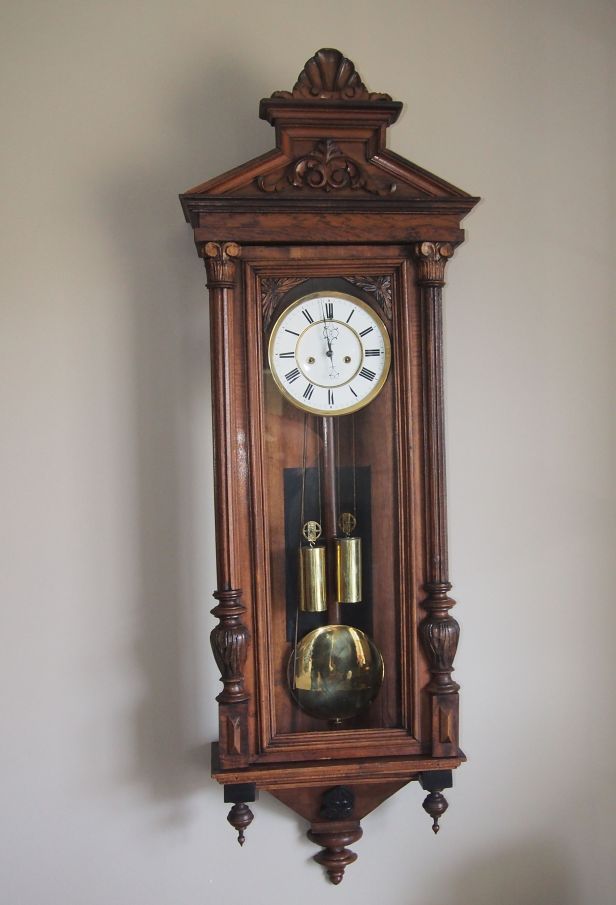
Vienna Regulator C. 1870

On the other hand “vintage”, according to most sources, is a period that is less than 100 years but more than 30 years. Definitions of vintage may vary. In the jewelry business, for instance, vintage may be considered as anything 10 to 20 or more years.

There is no true “standard” pricing for any vintage or antique clock. As with most objects, there is a price range that most would consider reasonable. Similar to many other items, vintage or antique clocks do not have a set standard price. Instead, there exists a range of prices that most people would view as reasonable. Having said that, prices for common antique clocks have largely stagnated over the past several years while rare and highly prized clocks appear to have retained their value.

People who frequently purchase antique or vintage clocks are likely aware that the clock market has been experiencing a decline in prices for some time. Is 2023 a good time to sell or buy? Of course!

McLauchlin tall case clock, Scotland, C. 1848

How are clock prices set?

Setting the price for an antique or vintage clock is not a straightforward process. It involves various factors, such as the condition of the clock, its history, and the seller’s personal experience in the market.

Some sellers may price their clocks higher than their actual value to leave room for negotiation, while others may count on buyers’ lack of knowledge about the true value of the clock. However, a well-informed buyer can use their knowledge to find a great deal, by looking for prices consistent with reputable auction houses and online marketplaces.

Junghans Corner feet finished
Junghans Sydney C. 1913

Factors affecting the sale of clocks

As said, high-end and truly rare clocks, such as those with historical significance or exceptional craftsmanship, have managed to retain their value in the market. However, even for these clocks, sales are still largely based on market conditions and demand. For example, if there is a sudden influx of similar clocks on the market, it could drive down the demand and price for those clocks. Therefore, while rare clocks may be more likely to hold their value, they are not completely immune to market fluctuations.

But what conditions influence the sale of run-of-the-mill antique and vintage mechanical clocks and those of slightly better quality?

Two factors have influenced the decline in prices. Common antique and vintage clocks have flooded the market in the past several years driving prices steadily downwards. Secondly, the new generation of millennials has little interest in antiques and finds it pointless to collect antique and vintage clocks. Sentimental reasons aside, the cost of servicing an antique or vintage clock far exceeds its value.

U M Muller box clock C. 1930

Moreover, modern homes do not have room for clocks as floor and wall space is limited. In an age when families are living in 800-square-foot apartments space is at a premium. That could change as people migrate from dense cities to smaller communities.

And when space is at a premium grandfather clocks and jeweler’s regulator clocks though finely crafted and cost thousands when new are not items many would consider appropriate for the modern family home.

While I cannot predict the future with certainty, based on the prices observed over the past few years, I anticipate that the antique clock market will remain largely unchanged in 2023 and beyond. Currently, it appears to be a buyer’s market, and there may be excellent deals available for those who are knowledgeable and take the time to shop carefully and do their research.

It’s important to remember that knowledge is power when it comes to purchasing antique clocks. Doing your homework can help you identify the most valuable and unique pieces, and can also help you avoid overpaying for items that may not hold as much value. While there may be some great clocks out there, it’s crucial to approach the market with a discerning eye to ensure that you get the most value for your money.

Antique and vintage wall clock collection

It has taken me 6 years to assemble my collection of antique and vintage clocks. Although I have many clocks, wall clocks are my particular favorites. Check out my collection of antique and vintage wall clocks in this YouTube video I made in January 2019.

Feel free to comment.

A Pig in a Poke

“A pig in a poke” is an old expression but it still has relevance in the clock world today. What does it mean? It means something that is bought or accepted without knowing its value or seeing it first. Or, another way of putting it, a deal that is foolishly accepted without being examined first. If you have been to a live auction you might have experienced winning a bid on that seemingly expensive hall table, for example, only to find it was made in Indonesia.

My own personal example. I bought an antique wall clock (100+ years old) on EBay a year ago and from the write-up it looked great. I was eager to see it. When it arrived I began to notice a few things right away and little details later on despite the description that it was “all original”. The glass on all three sides was said to be original, clearly it was not. The clock hands were off of an Ogee clock and poorly attached, The movement was made during the same period the clock was made however the pendulum sits very low in the case leading me to believe that it (the movement) may not be original. The rod gong was probably added later. Normally the gong is in back of the pendulum. There are two different styles of weights though the differences are almost imperceptible. I could go on but the point is this: do not trust any seller absolutely in your online dealings. Luckily for me the clock works and shows well.

Gustav Becker two weight regulator
Gustav Becker two weight “Vienna Regulator”

Typically sellers will describe just about everything they feel the buyer needs to know but leave out essential details. This is called omission. It means that something in the description is deliberately left out for whatever reason. Is it unethical? Perhaps. However, sellers do not have an obligation to tell you everything about an item you are interested in since there are no disclosure laws in online dealing. That is why it is important to ask questions, lots of questions prior to any purchase.

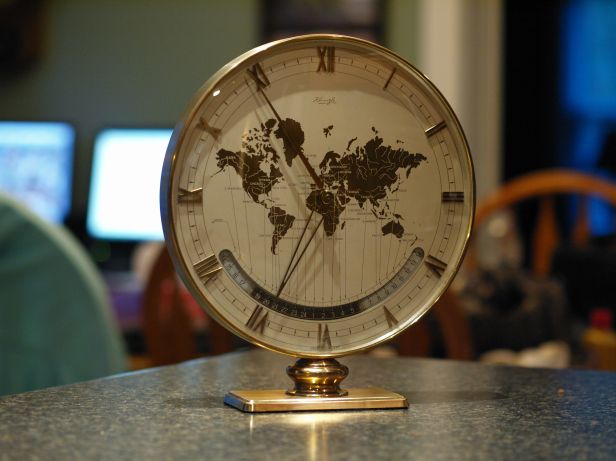
The other day I followed postings on Facebook regarding a clock purchase. The person was quite proud of the fact that he had an attractive Art Deco clock coming in the mail. He provided only one photo of the clock showing its face and base. The style was similar to this clock.

Kienzle World Time clock

It was the only photo provided by the seller and with good reason. It was advertised as an 8-day clock because that is what it said on the clock face. It arrived several days later. This individual thought he was getting a mechanical clock but discovered when it arrived that the original movement had been taken out and replaced with a cheap quartz movement. Naturally he was dismayed. Caveat Emptor some would say but in this case the seller could have been more forthright. However, let me reiterate, the time to ask key questions is before the purchase.

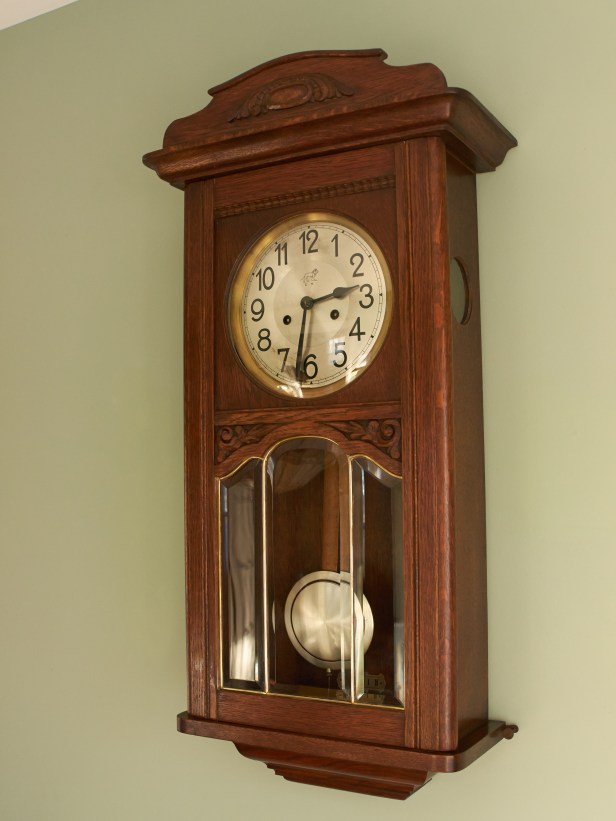
The other day, again on Facebook, a fellow had bought a German box clock very similar to this one from my collection. When it arrived he proudly showed off his new acquisition.

after a good cleaning (4)
U M Muller German “box clock”, time and strike

The clock was keeping great time though the pendulum was very high up in the box and could barely be seen through the front glazing. It looked very odd. When he presented a photo of the inside of the clock it was clear that the seat board was handmade and it was obvious that the movement was originally mounted within a much smaller case.

Some weeks ago I was looking for banjo clock and I saw a couple on a local for-sale site. One was very intriguing. The only photo was of the outside of the clock; nothing showing the movement. I thought if it is weight driven it would be an excellent deal. I contacted the seller by email and  I asked if it were weight driven and he said he thought so but he also mentioned that it came with a winding key for the spring. Thanks I said.

Let the buyer beware. If you buy something you take responsibility to make sure it is what you intended to buy. Ask enough questions so that you are absolutely satisfied you know what you are getting otherwise you may be getting a pig in a poke.

Let me know if you have had similar experiences.

Clocks in their natural surroundings

I noticed this topic in a well frequented clock forum site and it prompted me to write this article.

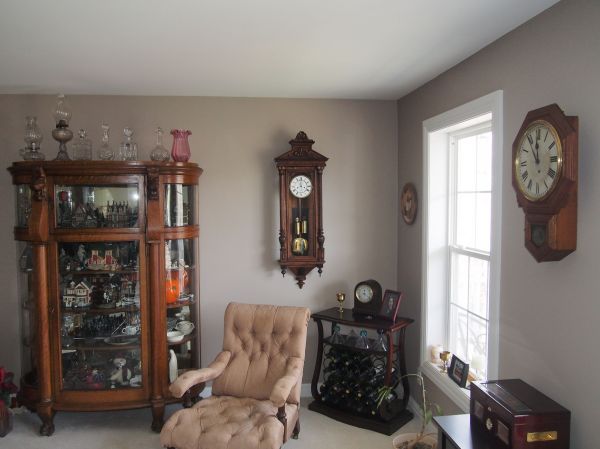
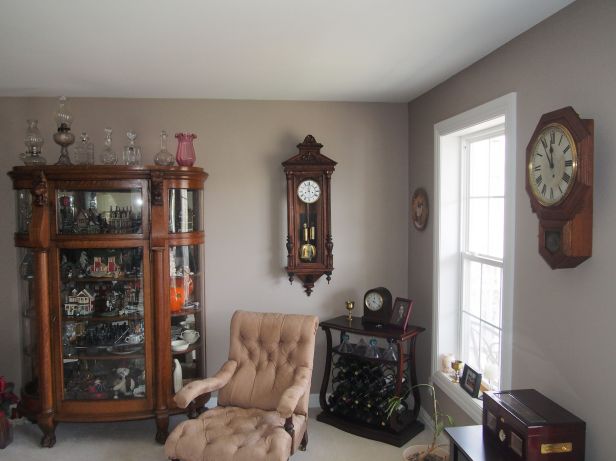
Many clock collectors realize that presentation is everything. I have about 25 clocks on display in my home and in each case I try as much as possible to situate the clock so that it catches the eye, enhances the room and stimulates conversation from friends and family.

I try not to place more than one clock in one particular location. However, I also recognize that some collectors wish to display their entire collection by having multiple clocks in one particular spot. If this is your choice, it makes perfect sense to group your clocks into types. They may be according to maker, style, type, vintage / age, or country of origin. For example, a collection might have wall clocks in one area or room, shelf clocks in another area or room, European clocks in one area, North American clocks in another and so on. I have observed that some presentations are very well thought out with a distinct theme running through while I have seen other collections that are haphazard and confusing. It takes a little care and attention when arranging your collection.

Some collectors place limits on how many clocks are displayed at one time and how many are actually running at one time. Most of the clocks I have on display are running continually but I tend to allow some clocks to stop for a “break”. Occasionally I will change the location of some clocks for a little variety keeping in mind that some are quite sensitive to being moved.

Let me show you some examples of my arrangements. You can see just three clocks in the following photo. There are in fact 7 clocks in this room but since it is a fairly large room the clocks can be nicely spread out. The most prominent is a 2-weight Gustav Becker circa 1902 which I have written about in several posts. It is 51 inches in height and certainly commands the room. At the bottom centre is a Seth Thomas time and strike round-top cottage clock made in the 1930`s and to the right is an Ansonia time-only short drop octagon, circa 1895.

clocks in a living room
Clocks in a front room

If you prefer your collection confined to one room rather than spreading the clocks throughout the house, that is certainly another option. While some prefer to consolidate their collection in one area of the house others, like myself, prefer to have clocks in almost every room. It is a matter of choice and of course, what your partner can tolerate.

RS Ridgeway clock_2
Ridgeway tall case clock

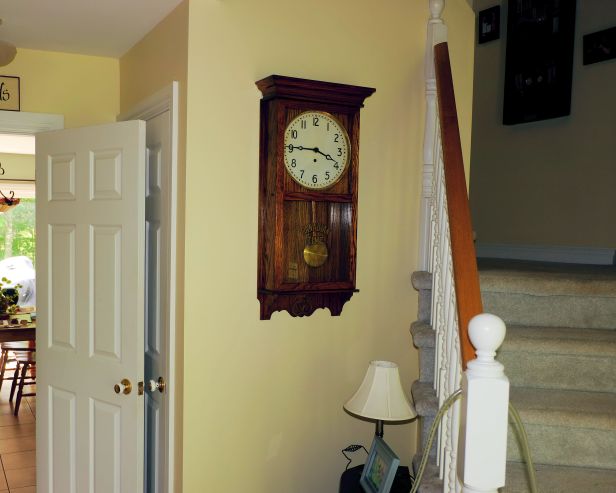
In another example my Ridgeway tall case (or grandfather clock) is one of two clocks in an entrance hallway. Unfortunately, this tall case clock is the only one I have room for. If I find another, this one would have to go. The other clock in the entrance hallway is an Arthur Pequegnat Canadian Time wall clock seen here.

RS Pequegnat
Arthur Pequegnat Canadian Time clock

RS AP repaired_5
Arthur Pequegnat Brandon schoolhouse clock

This schoolhouse clock is on the second floor of my home. We have a very simple rule; no striking clocks on the second floor for obvious reasons. The sound of a striking clock tends to keep some folks awake.

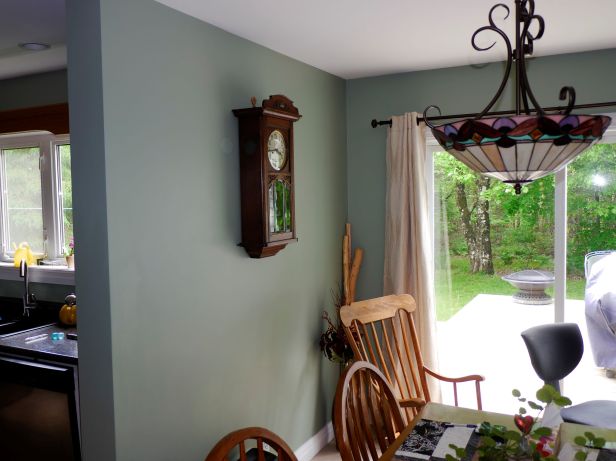
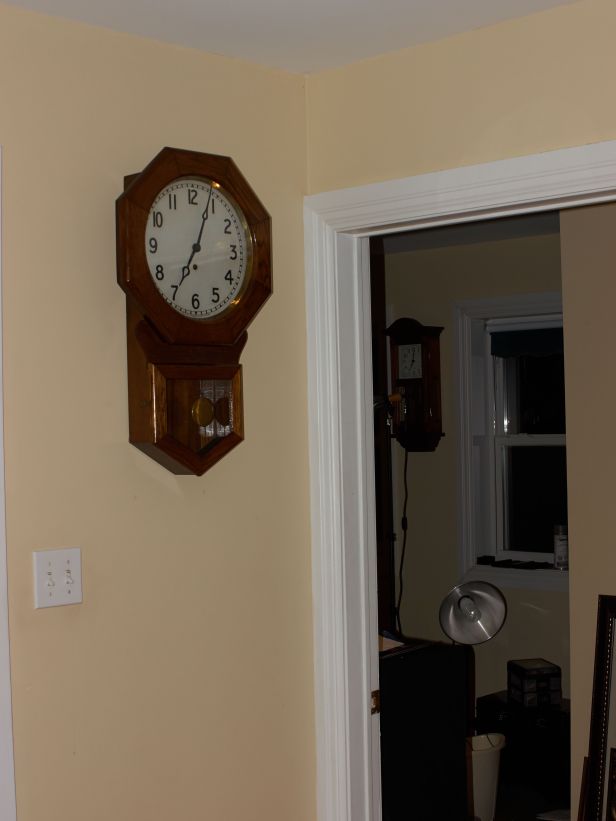
This U.M. Muller time and strike wall clock is our go-to kitchen clock.

RS Kitchen clock
U M Muller wall clock

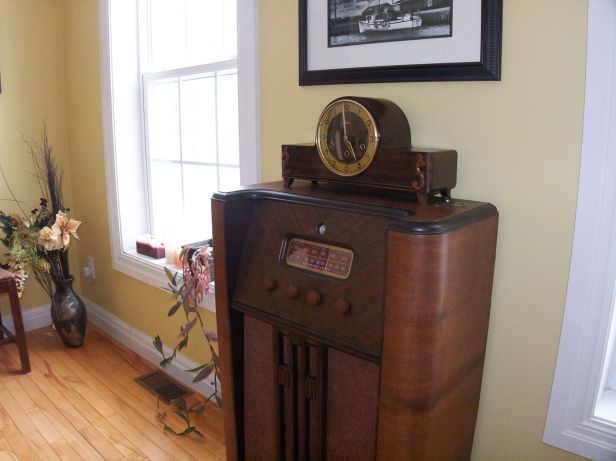
And finally here is a Mauthe Westminster chime mantel clock appropriately placed on top of a 1947 Stromberg Carlson console radio in our dining room.

RS Mauthe mantle clock (28)
Mauthe mantel clock

It does not take much to carefully place clocks in the home but it does require some amount of thoughtfulness, care and attention. Let me know what you think about arranging your collection.

Clock collectors understand the importance of presentation when displaying their collection. While it’s generally recommended to avoid placing multiple clocks in one location, some collectors choose to showcase their entire collection together. In such cases, grouping the clocks based on maker, style, type, vintage/age, or country of origin can create a cohesive and visually appealing arrangement. Thoughtful and well-planned presentations with a distinct theme running through them tend to be more successful than haphazard and confusing displays.

It’s common for collectors to set limits on the number of clocks displayed and running at any given time. Some clocks may be allowed to stop for a “break” while others continue to run continuously. Occasionally changing the location of clocks can add variety, but it’s important to consider the sensitivity of certain clocks to being moved.

For example, in one photo, there are three prominently displayed clocks in a large room, including a 2-weight Gustav Becker clock from 1902, a Seth Thomas round-top cottage clock, and an Ansonia short drop octagon clock. The arrangement allows the clocks to command attention without overcrowding the space.

Another option is to confine the collection to one room, while others prefer to have clocks distributed throughout the house. The choice depends on personal preference and the tolerance of one’s partner.

In an entrance hallway, the Ridgeway tall case clock shares space with an Arthur Pequegnat Canadian Time wall clock. The limitations of the hallway restrict the number of clocks displayed.

A schoolhouse clock is placed on the second floor, following the rule of avoiding striking clocks in upper-level rooms to prevent disturbing sleep.

The kitchen features a U.M. Muller time and strike wall clock, which serves as a reliable timepiece for the household.

Lastly, a Mauthe Westminster chime mantel clock sits atop a 1947 Stromberg Carlson console radio in the dining room, adding a touch of elegance to the space.

Arranging a clock collection requires thoughtful consideration, care, and attention. It’s essential to find a balance between showcasing the clocks and maintaining a visually pleasing and harmonious environment. Each placement decision contributes to the overall aesthetic and impact of the collection within the home.

U M Muller Box Clock

Probably not a household name in its time, yet U. M. Müller produced clocks that could stand proudly beside the finest German makers of the early 20th century. Their box clocks, in particular, became strong competitors, capturing a market that was shifting away from the ornate Vienna regulator toward something more modern, practical, and affordable. By the 1930s, the sleek German box clock—with its simpler lines and middle-class appeal—had all but closed the Vienna regulator era.

This particular U. M. Müller is a striking example. The oak case features delicate carved inlays on the door, brass strip framing, and a fixed wood crown, giving it a stately presence. The brass bezel surrounds a metal dial with spade and spear hands, while beveled glass framed in brass completes the look. Wall stabilizers ensure a secure mount, reminding us that this was a clock built not just for beauty, but for reliability.

after a good cleaning (4)
All original German box clock

The case itself has aged beautifully, with no noticeable scratches or blemishes. The dial, however, tells a different story—its surface bears marks and abrasions, including one between the 6 and 7 where the paint is worn through to bare metal. It is not repairable, but it does speak to the long life and service this clock has seen.

U M Muller clock (9)
Incorrect use of a cleaning agent

Inside, the movement is a classic rack-and-snail time and strike. The clock chimes on a coiled gong—bold at the half hour, more resonant on the hour, but never harsh. As with most spring-driven movements, one should not expect chronometer precision. Still, this example proves steady and reliable, keeping “regular” time across its full 8-day cycle.

U M Muller clock (2)
Inlay carvings meets brass strip framing

After a careful cleaning and waxing, the case now shows hints of what it must have looked like when new—over 90 years ago.

U M Muller clock (4)
2 screws are loosened to remove the movement

Collectors often date U. M. Müller clocks by the lion trademark on the dial. A raised tail indicates pre-1930 manufacture; a lowered tail, as on this example, places it in the mid to late 1930s.

after a good cleaning (1)
An attractive addition to our kitchen

According to Schmid’s Lexikon, the company’s roots trace back to 1867 in Mühlheim. After passing through several hands—including R. Schnekenburger around 1880 and later Gebrüder Müller—the brand built a legacy of solid, handsome clocks that still charm collectors today.

Website Powered by WordPress.com.

Up ↑