Ogee clock prices seem to be at their lowest level in years. If you have your heart set on an Ogee clock, there is probably no better time to buy than now.
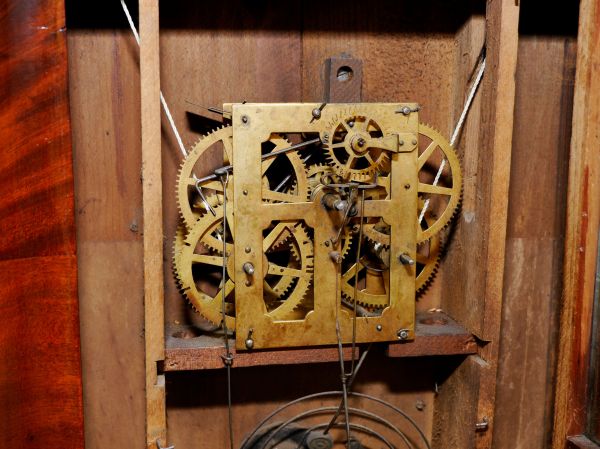
Ogee clock; clock design that originated in the United States in the 1830s, distinguished by a case (usually pine) the front outer edges of which are curved into an S-shape (ogee). This shape is formed by the union of a convex and a concave line. A mass-produced variant of the shelf clock, the ogee clock stands about 30 inches (75 cm) high and is usually weight-driven. The movements were usually made of brass and were made to run for 30 hours or eight days. (Brittanica.com)
Earlier this year (2018) I bought three Ogee clocks at an estate auction. There were about a dozen clocks up for bid, some gingerbreads, a couple of mantel clocks and a few Ogee clocks. Fearing that the auction would bring out collectors I surmised that the clocks would fetch somewhat higher prices. Though there were many clocks there were few aficionados. I scored three clocks, all were in very good condition though they were running poorly.

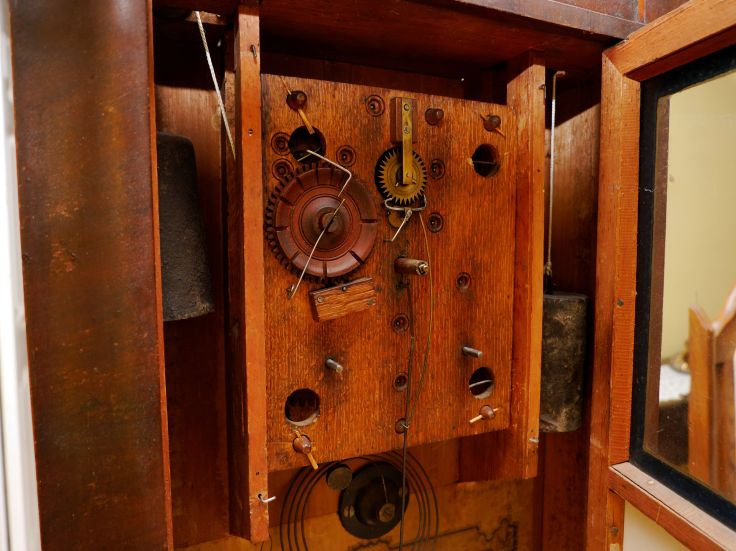
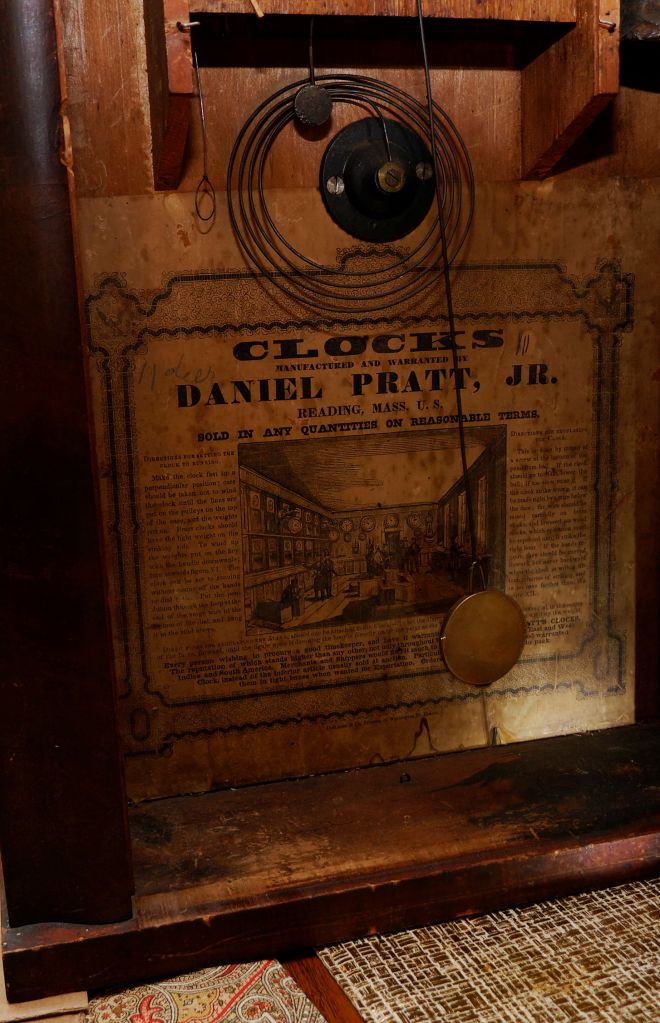
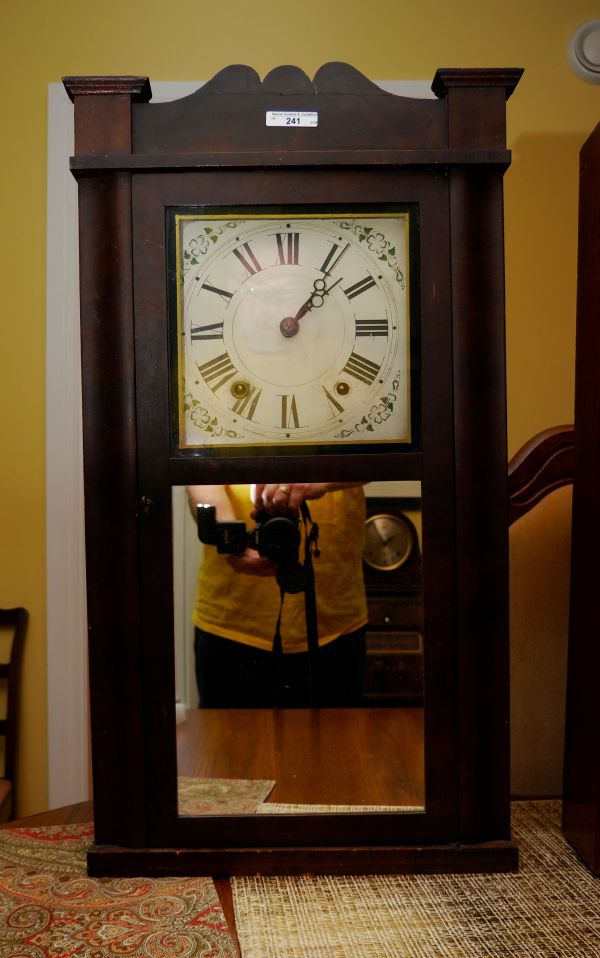
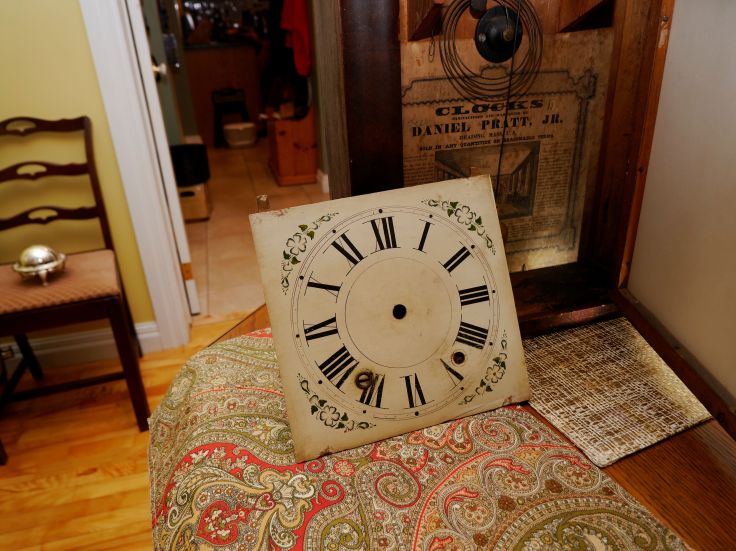
This Daniel Pratt Jr clock caught my eye. It is reverse ogee and splat, time and strike with wood movement made in the mid-1830s. My winning bid was a mere 30CDN. Ogee clocks with wood movements have sold for at least 200CDN in years past and eBay asking prices for Daniel Pratt Jr. clocks are typically between 60US and 200US. Although Ogee clocks have hit rock bottom in Canada the same may not be true elsewhere.
I have written about the decline in clock prices in a previous post. There is a legion of unwanted clocks out there. EBay and other online sites are flooded with ordinary antique clocks though special interest clocks still command higher prices. Many reasons are attributed to the decline though the poor economy in recent years is a major factor. Since 2008 clock prices have been dropping steadily and an upward direction in the near future looks dim. Prices are at or near the bottom. As the economy improves and antique buyers return to the marketplace we will see an uptick in values. In the meantime, now is certainly the time to buy.
I paid 60CDN each for the other two Ogee clocks, one a Chauncey Jerome 30 hour time and strike, circa 1857, the other, a George H. Clark 30 hour time and strike, circa 1860.
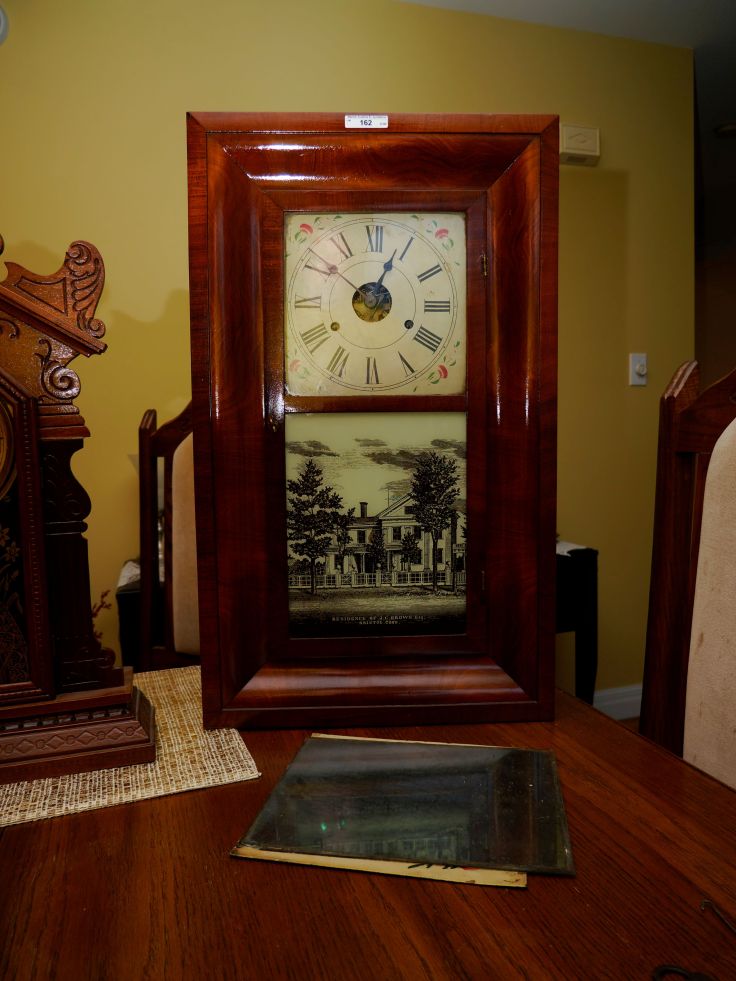
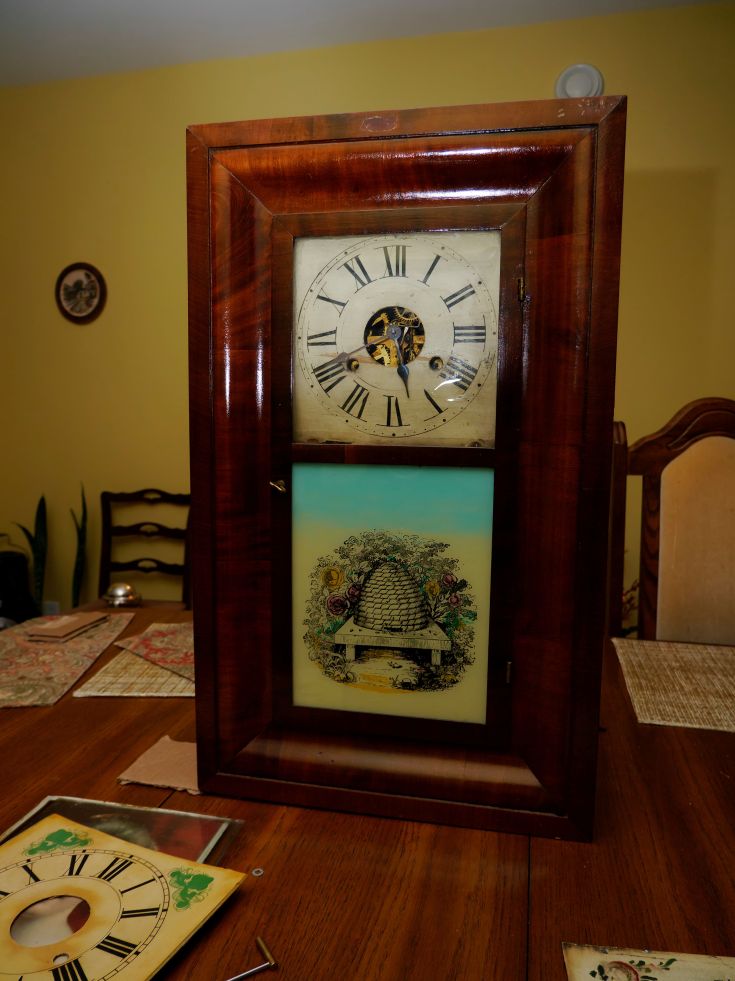
Sellers are posting inflated prices but a clock is only worth what the buyer will pay. Do your research and learn to shop with a critical eye and you be rewarded.
 Antique and Vintage Mechanical Clocks
You must be logged in to post a comment.