
Ansonia cottage clock – a neglected clock brought back to life

Last summer (2017) my sister asked me to look at her newly acquired Ansonia time-only 1-day cottage clock (circa 1895). “How much did you pay for it”, I said. “Only $25 but it doesn’t work, something is wrong with it,” she said without being specific. And she was correct.

The clock would have not cost much at the time, perhaps a dollar or so but today people collect small clocks such as this and prices can be higher than the more common mantel clock. In those days for an extra 50 cents you could buy a time and strike cottage clock with an alarm feature but his one is pretty basic. They were cheaply built, somewhat disposable since very few made their way to the repair shop and not as many have survived.

Several months have gone by and I thought I should take a look at the clock, repair the movement, spruce up the case and dial face and return it to my sister in working condition. Having completed a number of other projects I decided I had time to tackle this one.
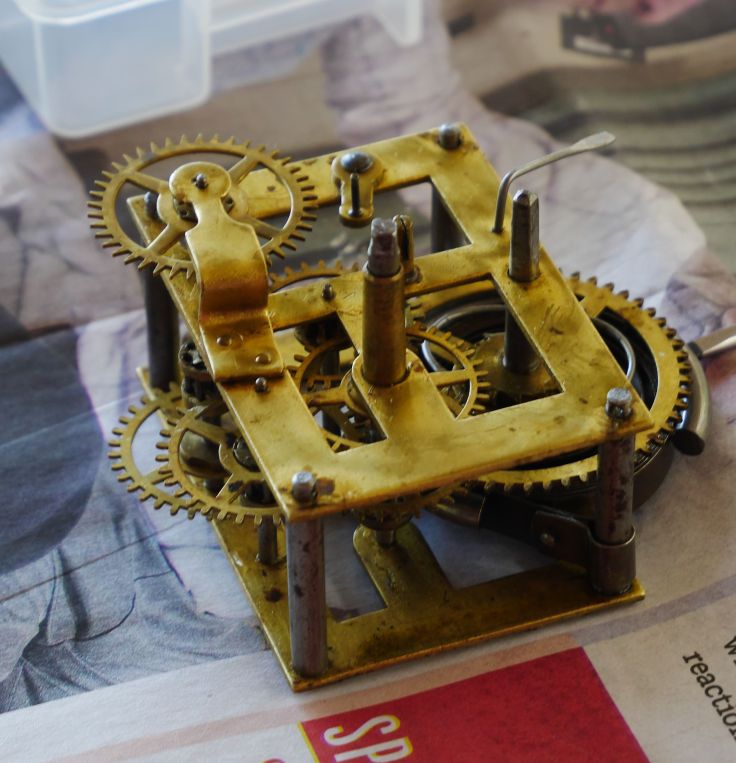
Time-only 30 hour movement

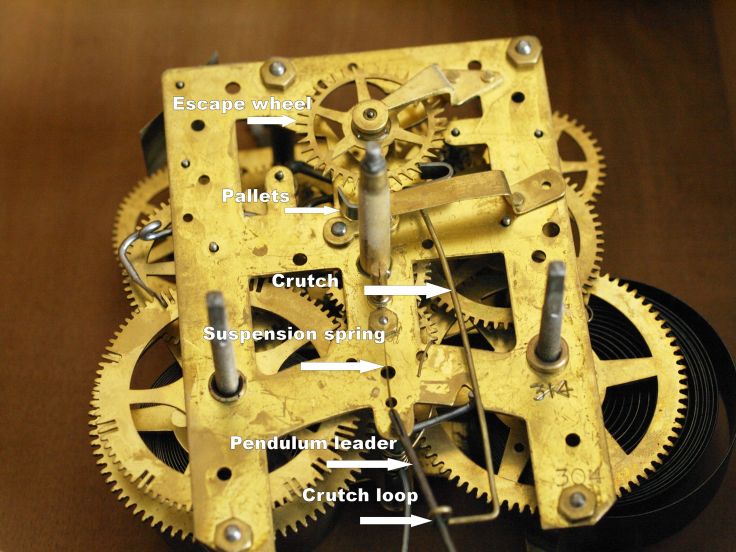
It was dirty as expected and the gears generally loose, particularly the winding arbour. It was clear something around the mainspring was amiss. The click was loose and would not engage every time.
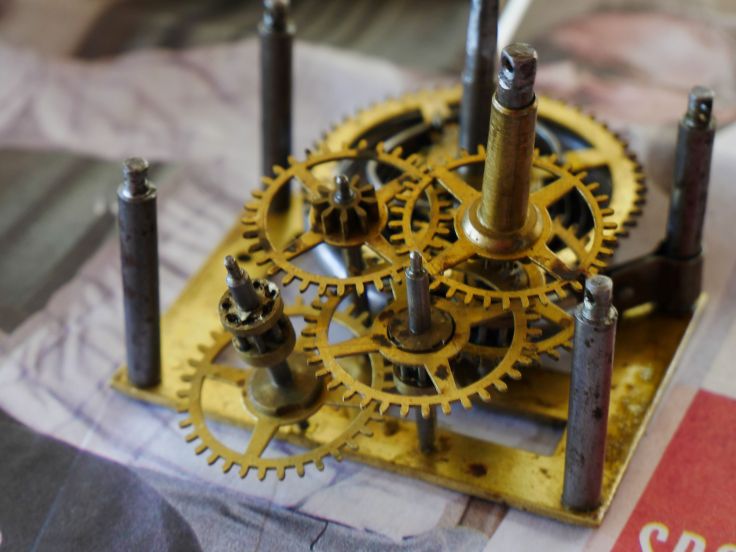
Top plate is removed
The top plate is removed

Time-only movements are the simplest to work on and this is no exception. If you are starting out in the world of mechanical clocks this is the movement to begin with. The movement is very small in comparison to mantel or kitchen clocks and measures only 2 inches wide by 3 inches tall. Despite its diminutive size, it is easy to work on. The case itself is only 9 1/2 inches tall by 7 inches wide by 3 1/2 inches deep.

The movement had been worked on before. The click anchor screw was stripped and there were punch marks on the escape wheel bridge.
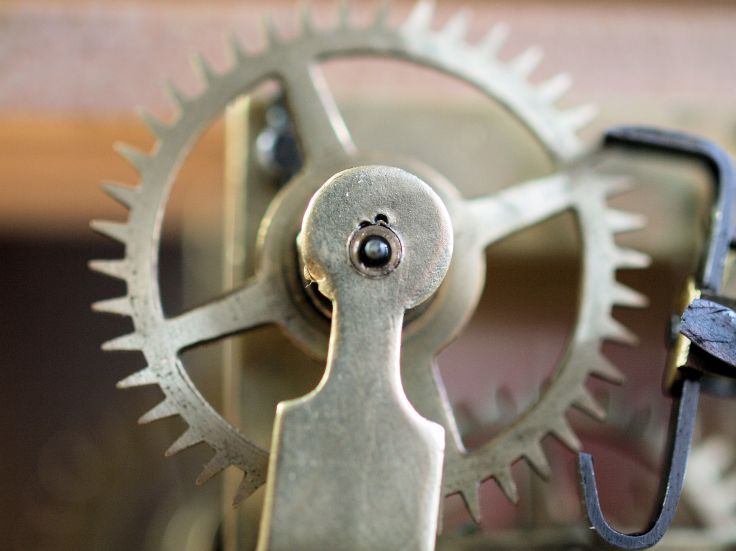
New bushing but 2 punch marks are still showing
New bushing but 2 punch marks are visible

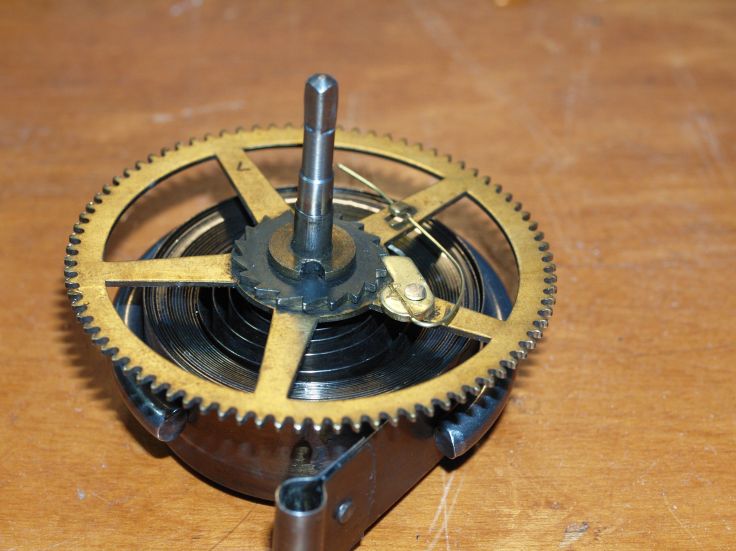
The most troubling issue was the main wheel arbour which had detached from the gear. It took a few punches on the brass shroud to push it in back into place and secure the wheel to the arbour. Not the prettiest of repairs but very functional. The click was also loose and would barely engage the ratchet. It took a couple of hits with a hammer on the holding pin to secure it tightly in place.
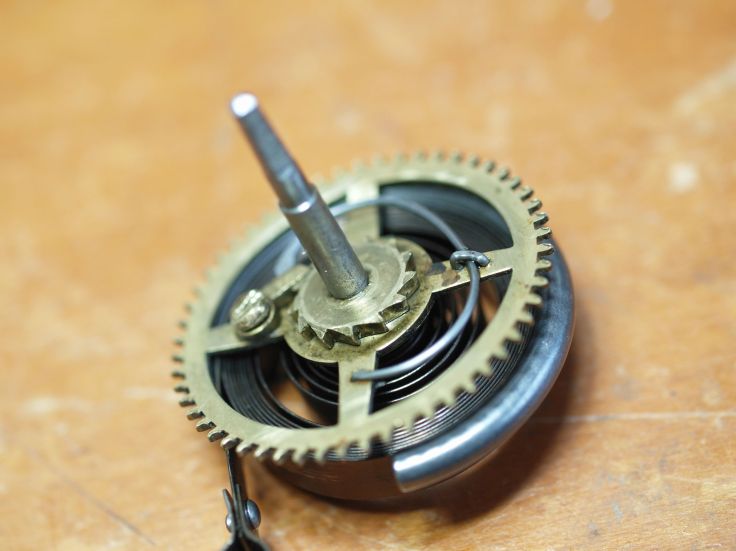
The arbour is now secured to the wheel and the click has been repaired

Four bushings were installed, the centre arbour (rear), the rear of numbers 2 and 3 wheels and the escape wheel bridge.
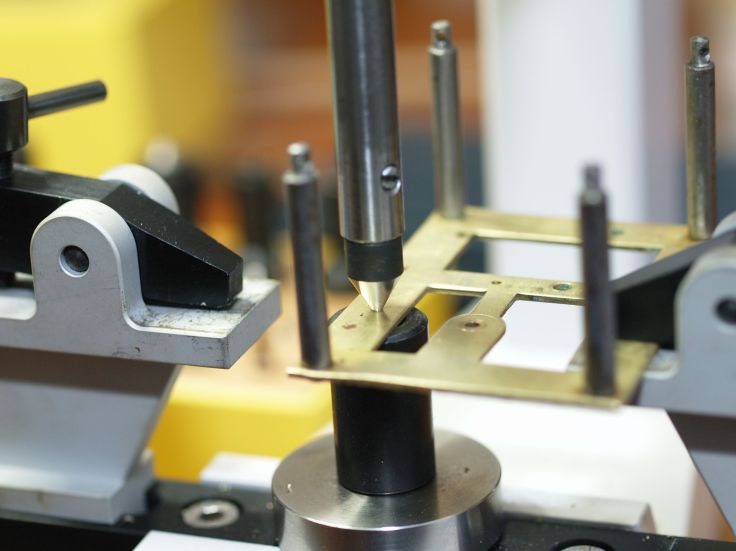
Centering prior to drilling a hole for a bushing
Centering prior to drilling a hole for a bushing. You can also see how small the plate is

The clock was mounted on the test stand and run for several days without issue. Once testing was completed it was returned to its case.

The numbers on the dial were somewhat faded. I decided to address the numbers with a little paint.
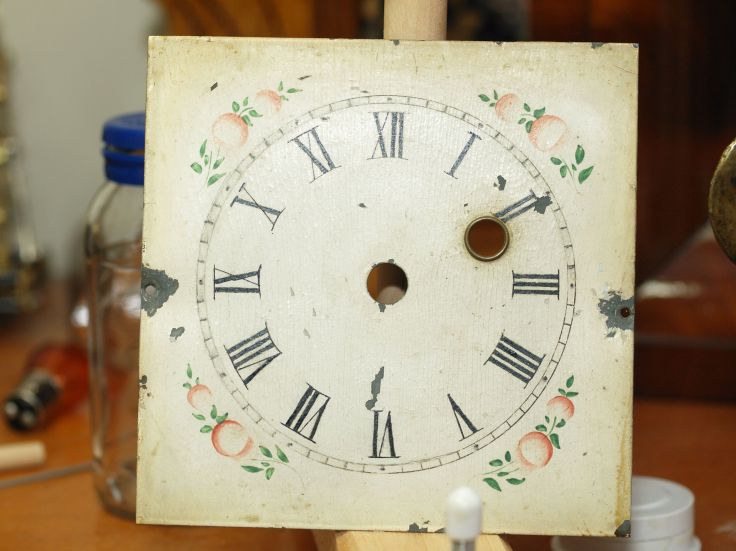
Faded numerals on dial face
Faded numerals on the dial face

I was concerned about being too invasive when touching up the dial but I thought the numerals should stand out a little more. I used a number 2 paintbrush and touched them up using flat black acrylic metal paint and a Sharpie pen for the small lines. The effect is subtle without being over the top.
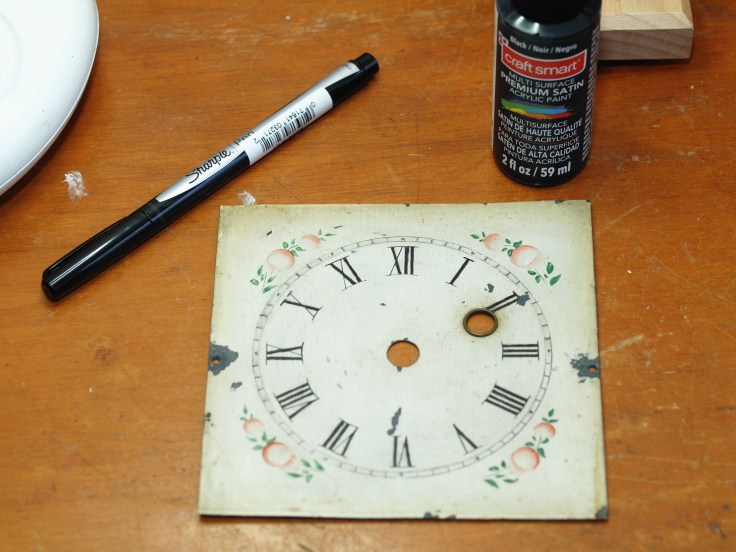
After touching up the numbers with paint and a Sharpie for the thin lines
After touching up the numbers with paint and using a Sharpie and straight-edge for the thin lines

The case was cleaned up with a toothbrush and Murphy’s Soap. There is some finish loss on top but I will leave that as-is.

Here is the completed project. The movement is now back in its case.
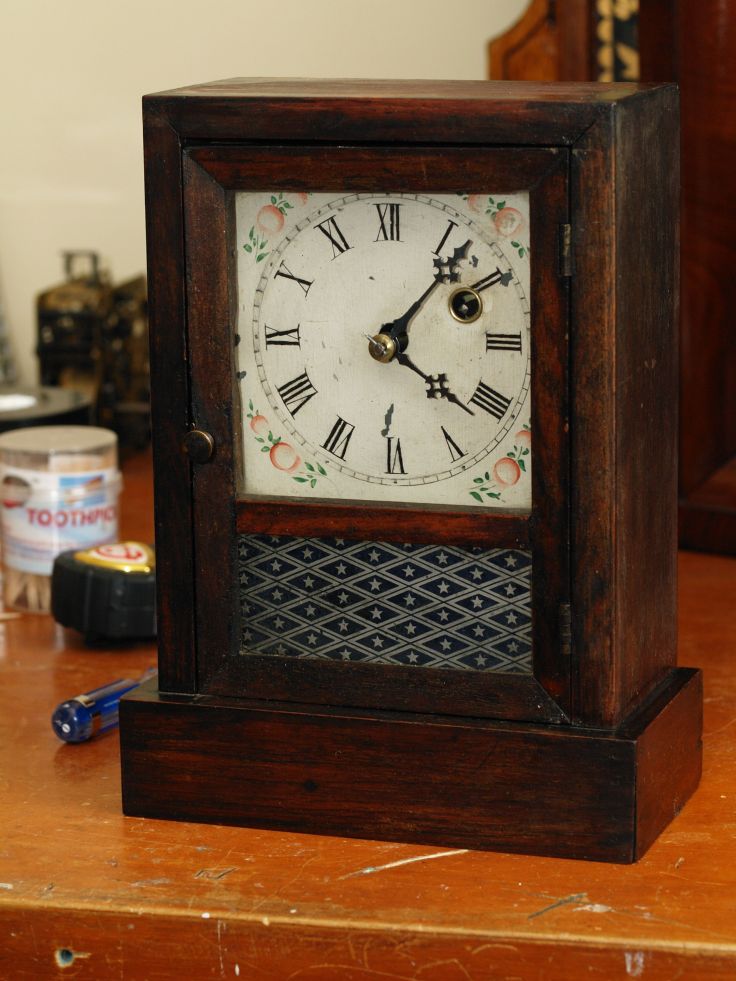
Assembled, in beat and ticking away strongly

The hands, which appear original, are attached and the clock is running better than it has in years.

I am sure that my sister will be pleased when the clock is returned to her.
More fascinating terms – the language of clocks

Regular reader and contributor JC suggested a few more clock terms I thought readers and fellow horologists might find interesting.

My source for this article is the Watch and Clock Encyclopedia by Donald de Clarke, published by Bonanza Books (1984) which is still available on Amazon.

Gridiron pendulum: A pendulum consisting of alternating steels and brass rods coupled together to compensate for downward expansion so that the centre of oscillation of the pendulum remains consistent with changes in temperature, invented by John Harrison in 1725.

final look
Gridiron pendulum on a Junghans Crispi wall clock

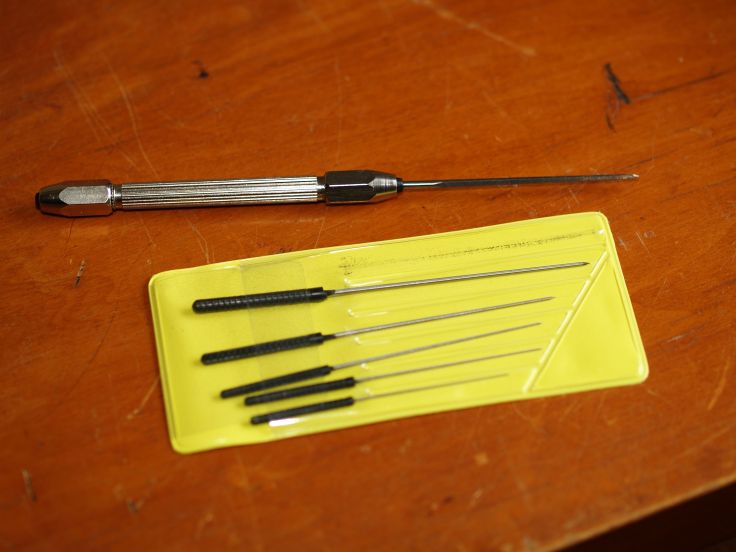
Broaches: To broach is to open and enlarge a hole. A Broach is a steel cutting or smoothing tool with a tapered or parallel sided edge used to cut or “finish” holes in a clock plate. Used to enlarge and then finish (smooth) a newly installed bushing on a clock plate.

Swiss made smoothing broaches
A set of Swiss made smoothing (or finishing) broaches

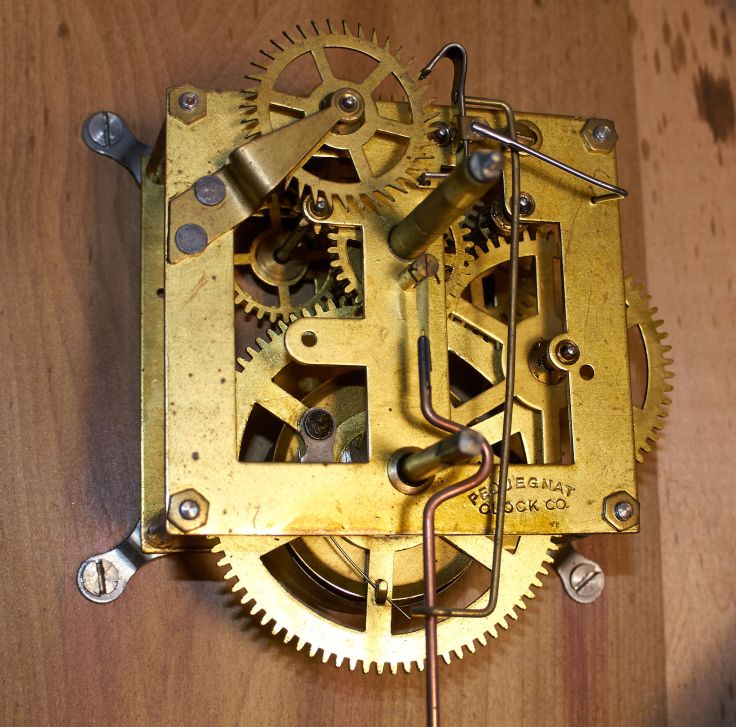
Motion Works: The train or wheels of a clock directly connected with the hour and minute hand.

Great wheel: The teeth that form part of the barrel of the going barrel. It is also the wheel to which the mainspring is attached.

The motion works of a clock; the largest wheel on this movement is the great wheel (Pequegnat Clock Co.)

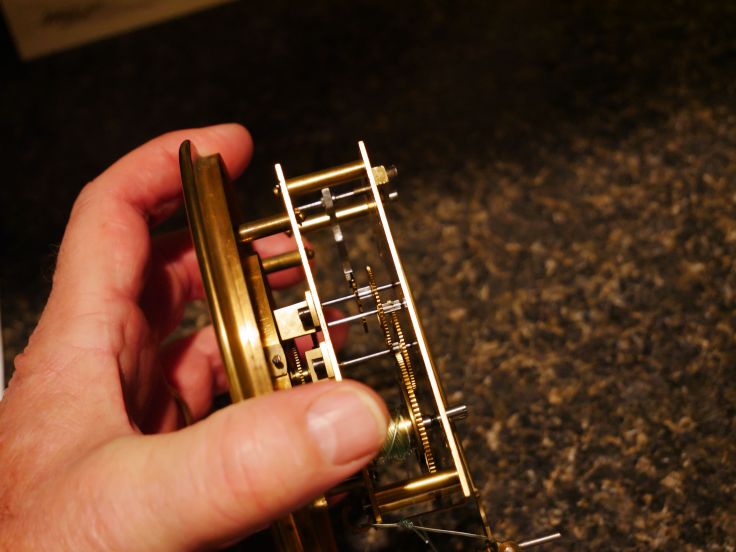
Maintaining Power: A method to maintain the driving power while the weight is being lifted or mainspring with fusee is being wound. In effect keeping the mechanism going while winding.

Weight driven movement with maintaining power
Weight driven movement with maintaining power, (unmarked Vienna Regulator)

Huygens Endless Rope Drive: It is a method of providing maintaining power to drive the clock while the weight was being raised. The endless cord passes over pulley A which is attached to the great wheel and supports the driving weight B, it then passes over pulley C which has a ratchet to support small weight D. As cord E is pulled down to wind the clock ratchet C turns under it’s click to raise weight B which continues to drive the clock as it supplies torque to wheel A. This ingenious system is found in some 18th century long-case clocks.

Huygens endless rope

Locking Wheel (or Count Wheel): A count wheel is the wheel that determines the number of blows to be struck in striking mechanisms.

The left wheel with notches is the count wheel

Ratchet wheel: A toothed wheel into which a click engages permitting the wheel to revolve in one direction only.

Click replaced
Toothed ratchet wheel and click

Cam: Usually a disk so that upon revolving it transmits movement to or exerts pressure upon a connecting unit.

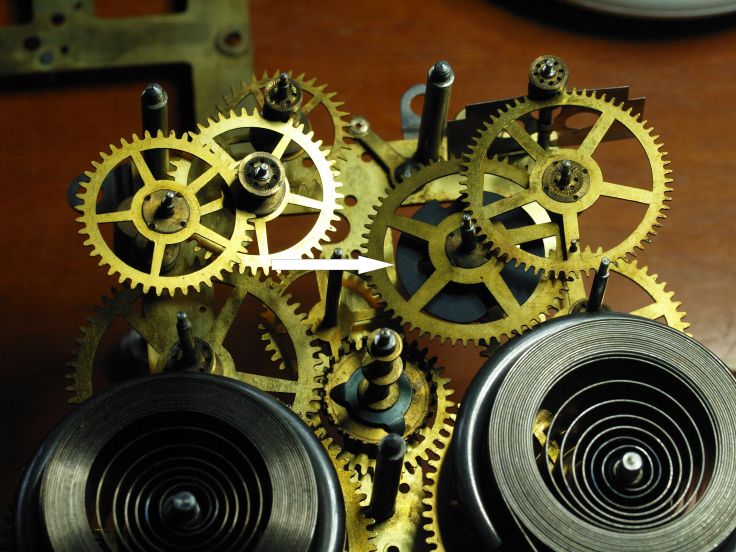
Arrow showing location of a cam
Arrow showing location of a cam, the fly is located in the upper right

Fly: Often called the governor or controller of a chime or strike train. It is the last piece in a train of wheels.

The language of the clock world always amazes me. There are a plethora of other clock terms that I will be happy to explore in future blogs.

Website Powered by WordPress.com.

Up ↑