
Sessions Grand Assortment – finally completed!

I am not a huge fan of gingerbread clocks which were very popular in America at the turn of the 20th century. Every major manufacturer made them and they sold like hotcakes. Thousands have survived and a quick perusal of online auction sites any day of the week will reveal dozens if not hundreds of them.

The Sessions Clock Company of America was a prominent clock manufacturer in the early 20th century, producing a wide range of clocks that included mantle, wall, and grandfather clocks. Founded in 1903 in Connecticut, the company quickly gained popularity for its combination of both traditional and modern styles. Although the company ceased production in the 1950s, Sessions clocks remain popular among collectors and clock enthusiasts. Sessions gingerbread clocks were particularly popular.

The gingerbread designs were created by using high-pressure rotary presses on oak wood that had been pre-steamed to soften it.

The Grand Assortment 8-day time and strike gingerbread clock from around 1915 was a big seller for Sessions and the model was found in many American homes of the day.

And so, we have my Sessions clock won at auction in early 2022. This clock has had a hard life of neglect.

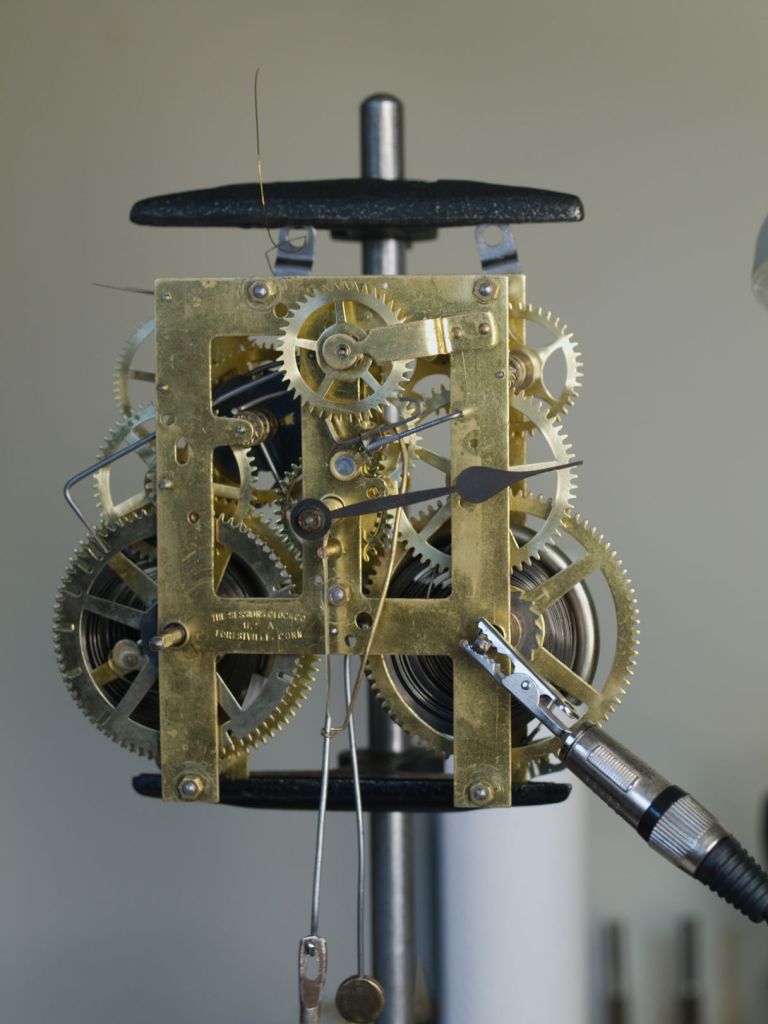
This clock took many months to complete. I was not quite certain what to do with the case so I worked on the movement initially. I have serviced a fair number of Sessions movements over the years so servicing was fairly routine with the exception of one small issue mentioned below.

Rather than leave the case as-is I knew I knew that invasive intervention was the only option.

Auction photo

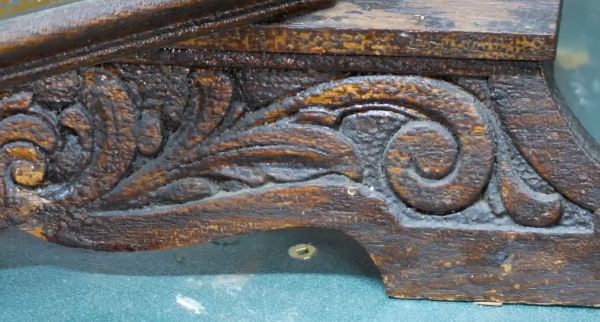
The case was completely stripped, not something I wanted to do but it was in such poor condition. For example, note the bottom right base section shown below.

The entire case was similar to this

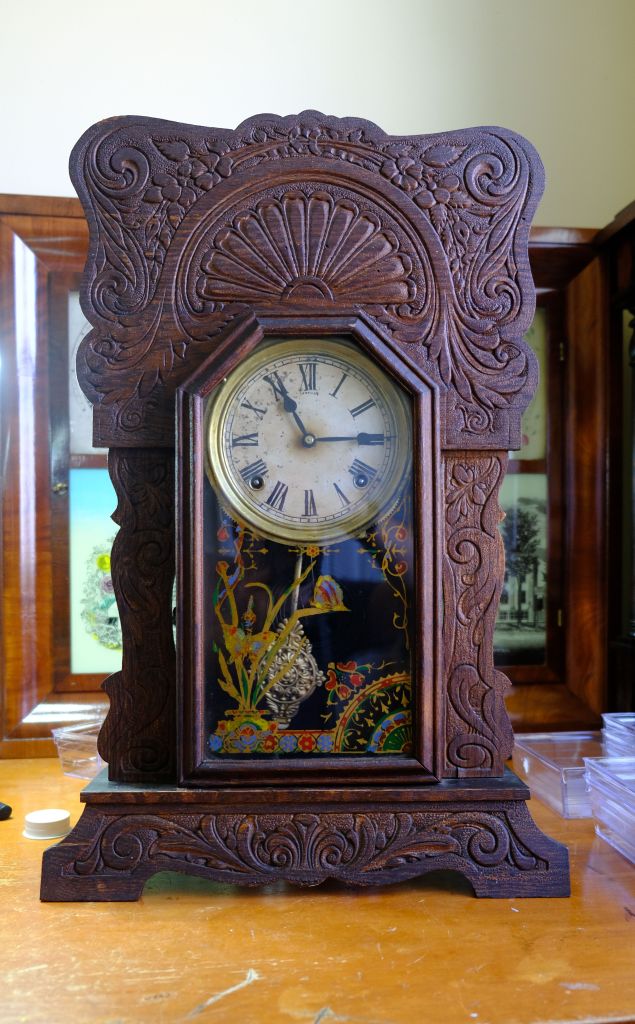
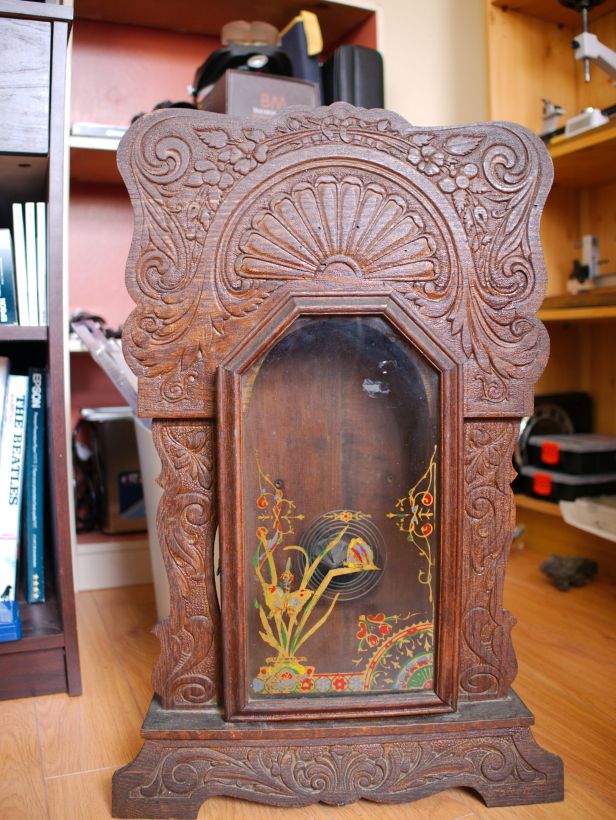
After much rubbing, scrubbing, using a commercial nontoxic stripper, and the application of 2 coats of traditional shellac the results were better than expected.

The clock is complete, the slight darkness on the right is my shadow

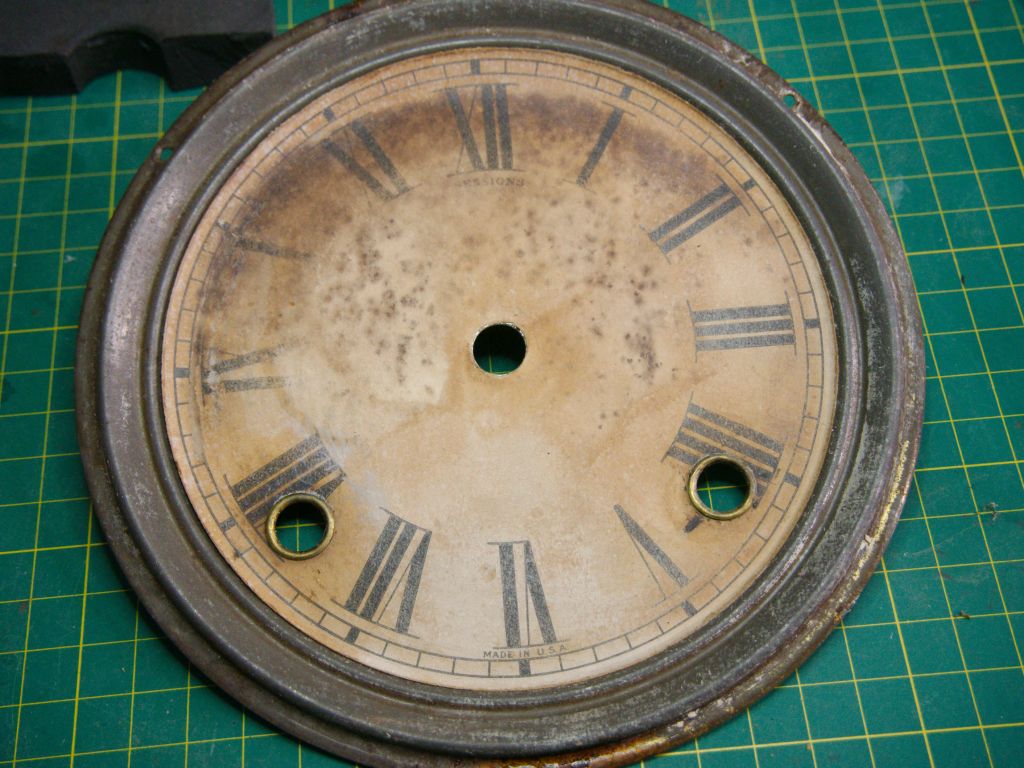
I can usually resurrect a dial but this one had too much foxing as they say in the clock world. Foxing is the gradual process of rust oxidizing through the paper dial over a long period.
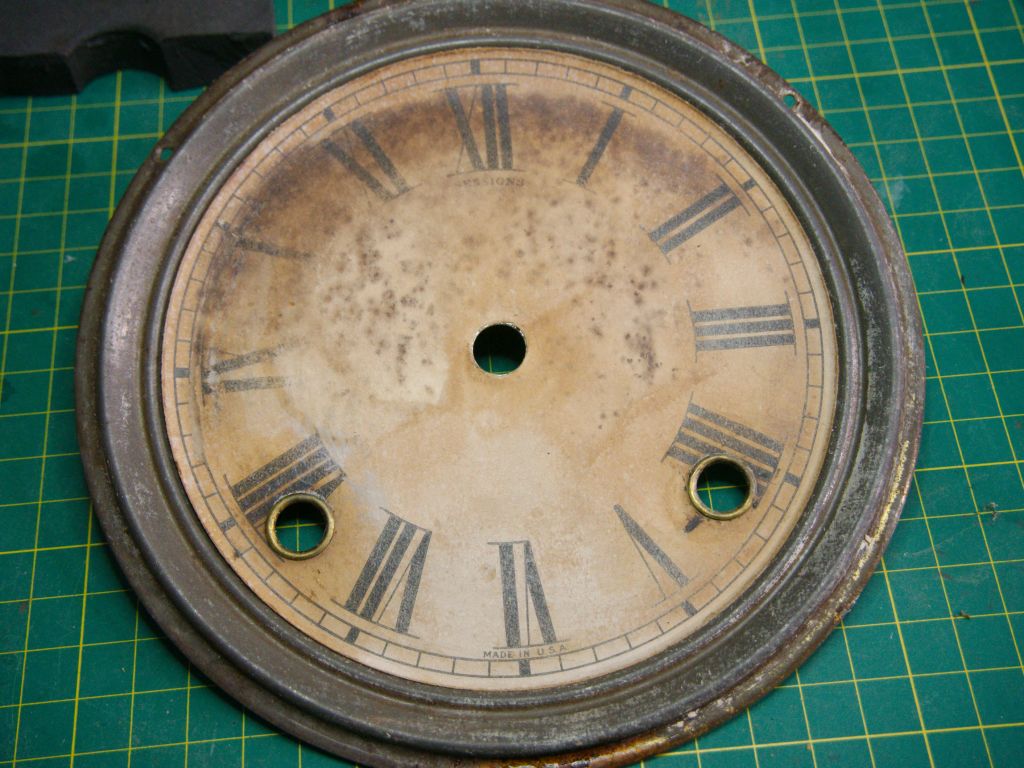
Sessions dial pan

Rather than source a new paper dial I decided to go with a dial from an Ingraham gingerbread parts clock and since the diameter, the center arbor and winding holes are standard it was an easy fit.

Anyone familiar with the Grand Assortment line would note that they were fitted with Roman Numerals rather than Arabic dials but I don’t think the buyer of a clock like this would see it as an issue.

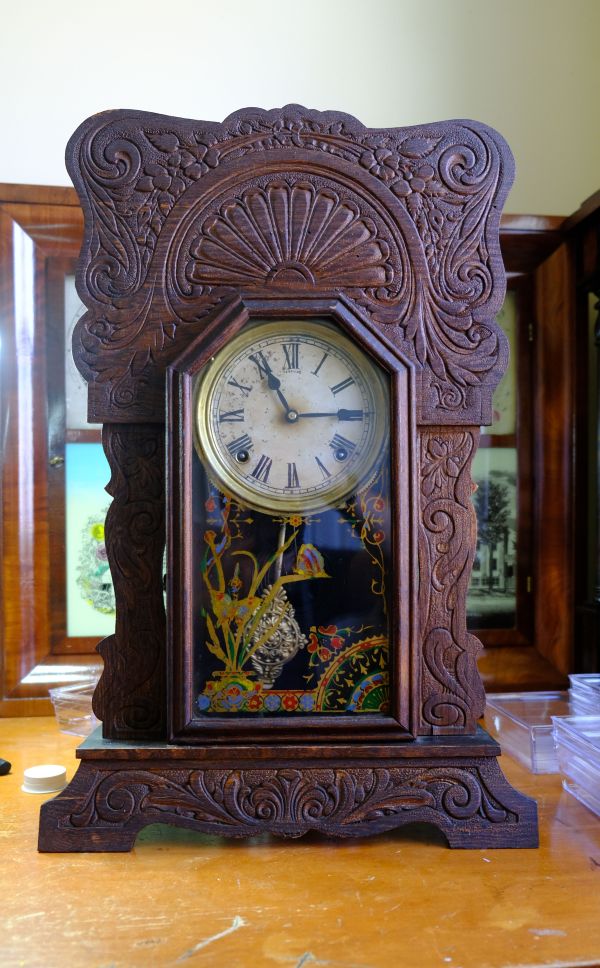
Here is the clock from a slightly different angle.
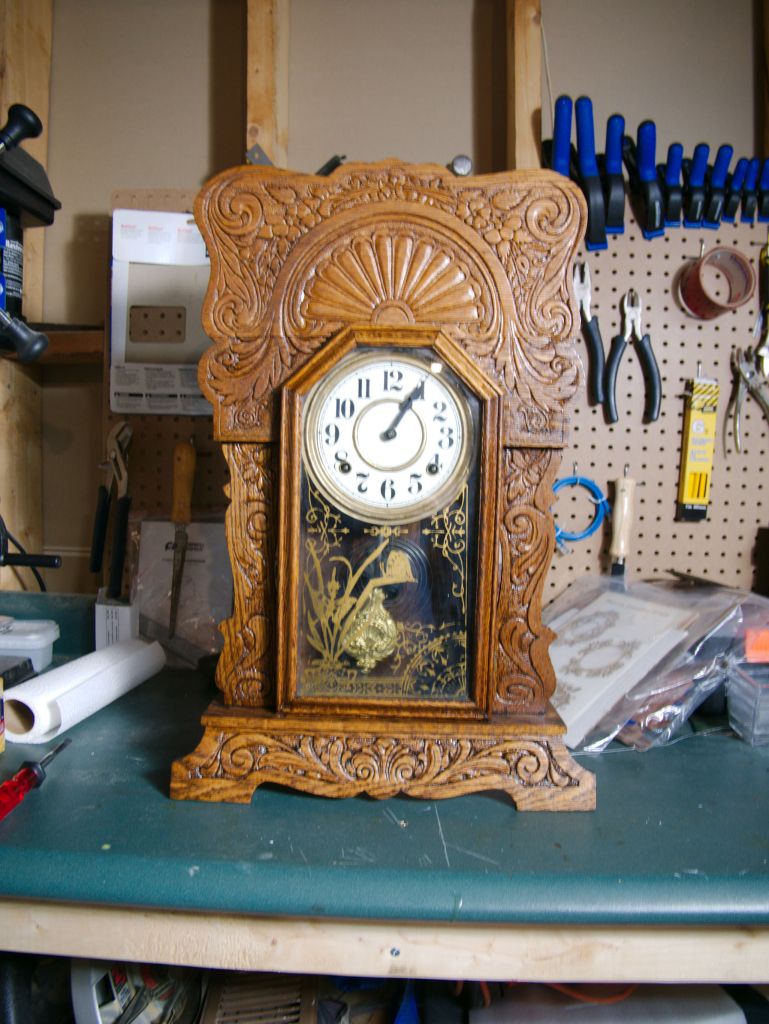
Straight on shot

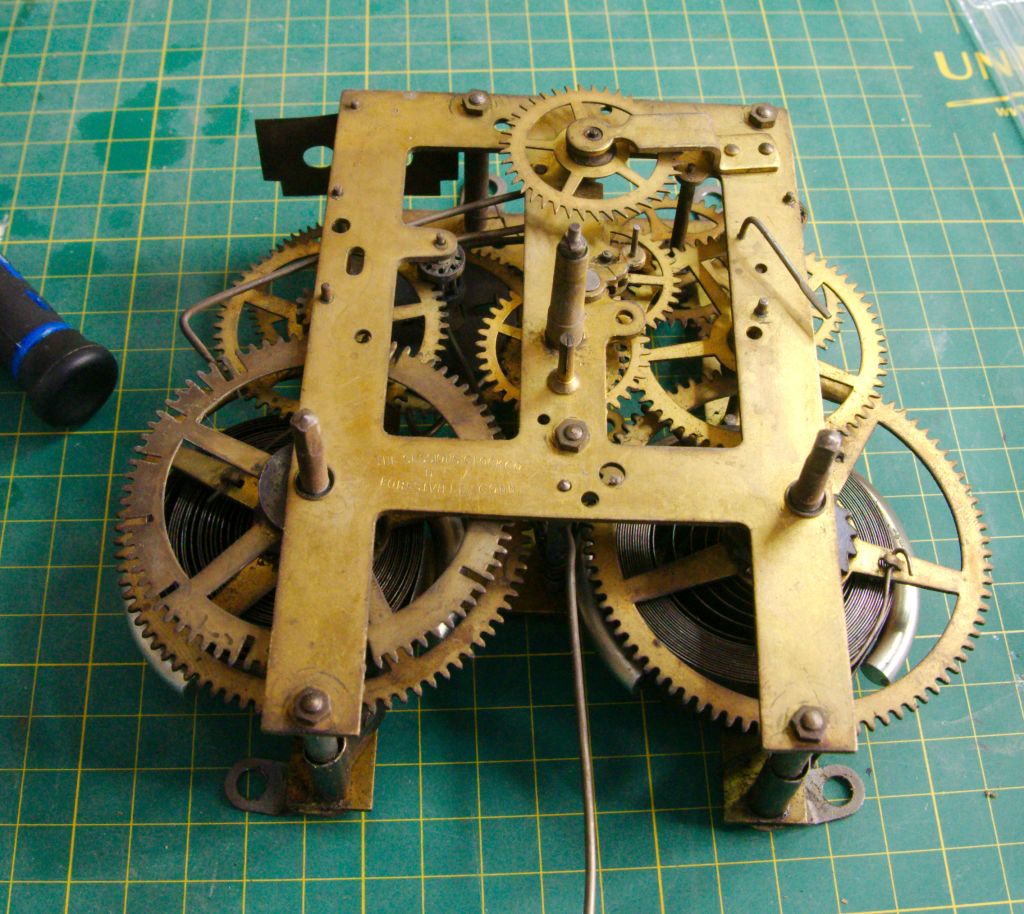
The Movement

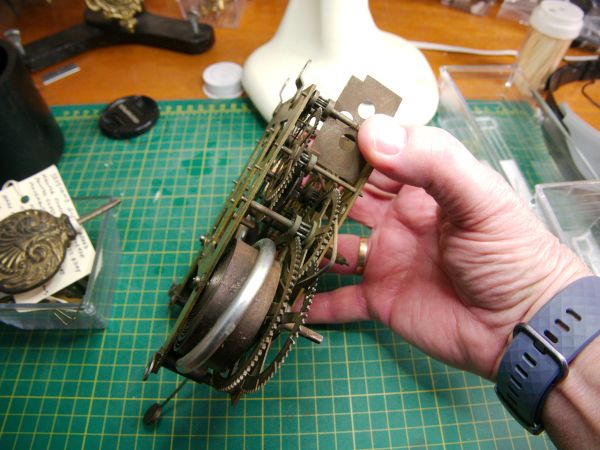
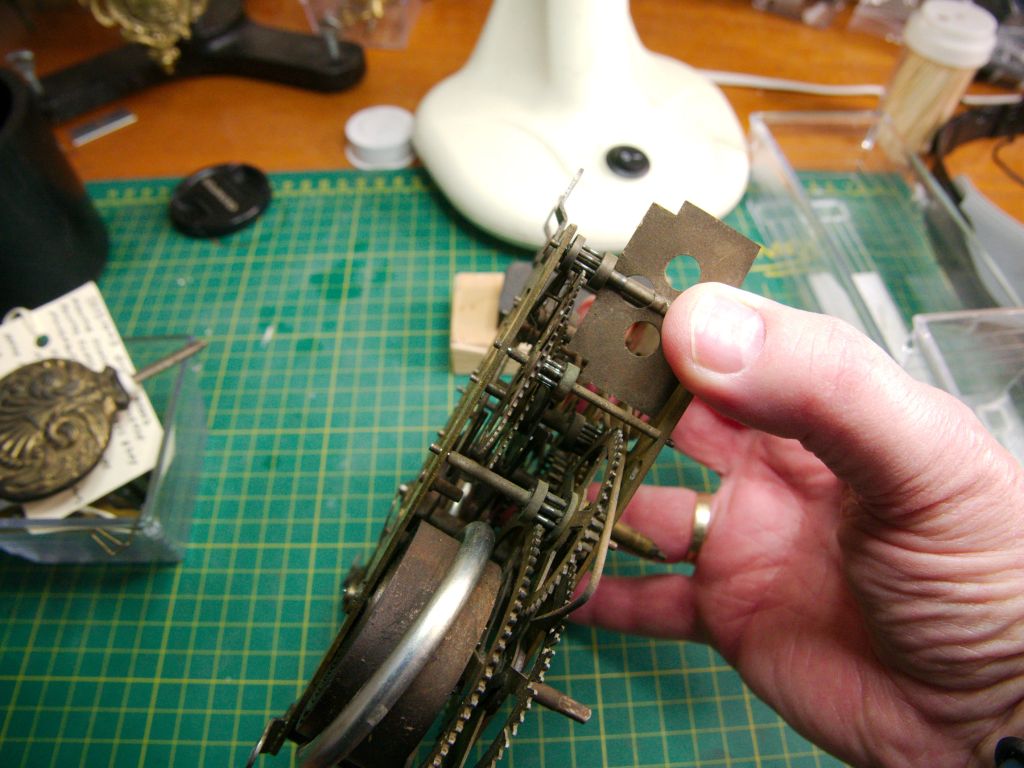
I began with new bushings on the escape wheel rear plate and third and fourth wheels on the time side and finally the second wheel back plate for a total of 4 bushings on the time side.
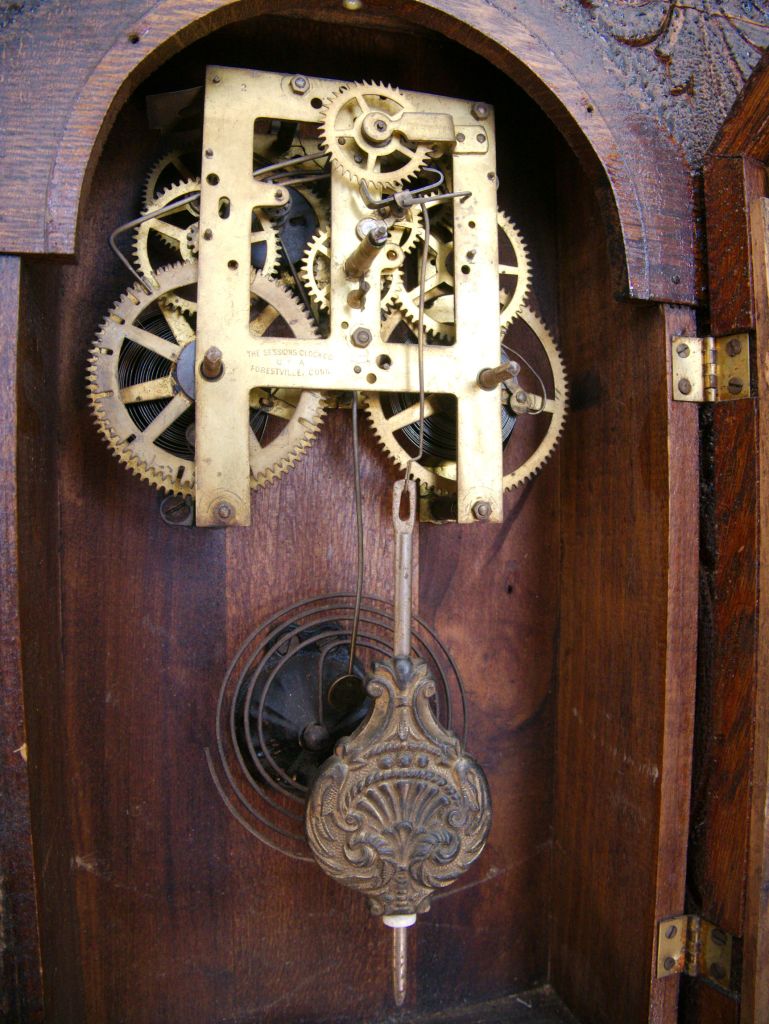
The movement, as found, note the pendulum leader hanging off the crutch loop

There was negligible wear on the strike side.

As I noted in a previous article the center cannon is quite stiff and I was never able to eliminate the stiffness completely but the clock runs well.

Final thoughts

Stripping an antique clock case should always be considered a last resort. While it may be necessary to remove old, damaged, or unsightly finishes in some cases, stripping can irreversibly damage the wood and compromise the value of the clock. It’s important to exhaust all other options, such as repairing and restoring the existing finish before resorting to stripping.

If stripping is the only viable option, it’s crucial to approach the process carefully and with the utmost care to avoid further damage to the clock case.

And so there you have it. A case that was completely stripped, a new top coat, a newish dial added, and a movement that required minor servicing and now the clock is ready to be sold at some point in the spring after a few weeks of testing.
Stripping a clock case is a travesty, or is it?

I have saved a few clocks that were one step closer to a garbage bin by taking an aggressive approach to clock case restoration. Is stripping a clock case a travesty?

Firstly, I am not a huge fan of gingerbread clocks which were very popular in America at the turn of the 20th century. Every major manufacturer made them and they sold like hotcakes. Thousands have survived and a quick perusal of online auction sites any day of the week will reveal dozens if not hundreds of them.

The designs were created by using high-pressure rotary presses on oak wood that had been pre-steamed to soften it.

Auction photo

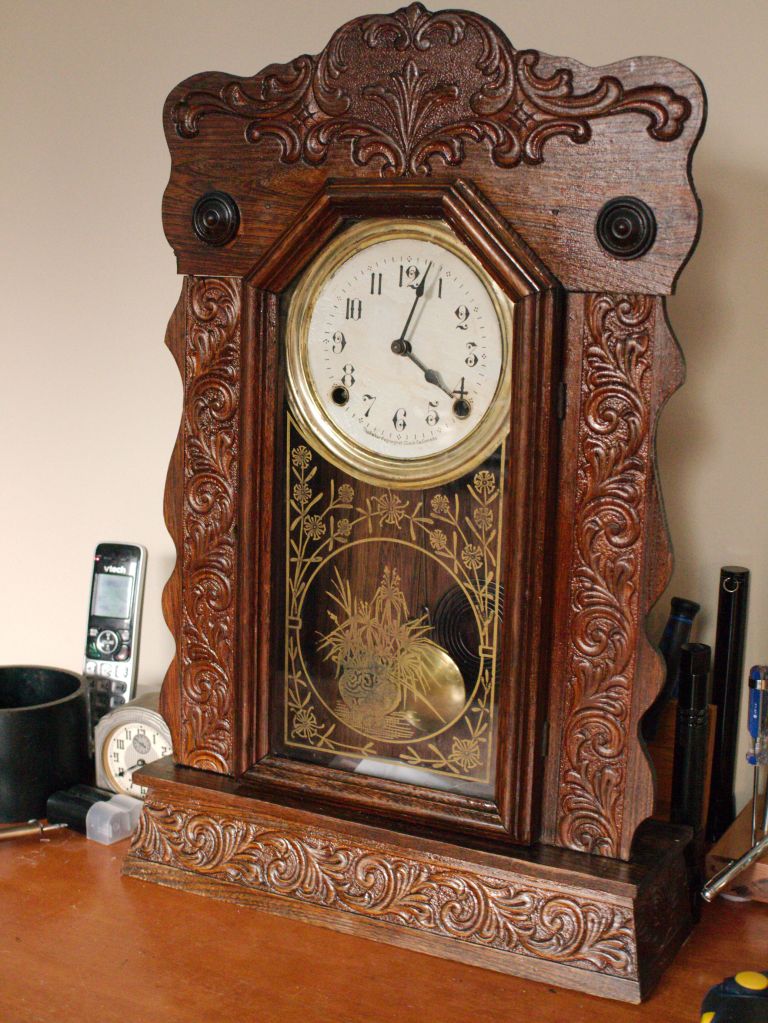
Gingerbread clocks are quite large for a shelf clock and generally unattractive, in my opinion. The only other gingerbread I have, besides the Sessions clock which is the subject of this article, is an Arthur Pequegnat Canuk 8-day time and strike added to my collection in 2019. The Canuk is nicely balanced, well-proportioned, and mildly attractive for a gingerbread clock.

The Sessions Grand Assortment #1, is the ugly duckling of the clock world.

Arthur Pequegnat Canuk

The design of the top is not consistent with the side rails and the base. The crown looks overbearing. It is not very well-balanced and out of proportion but it was the style of the time and thousands upon thousands were sold.

This clock was acquired as part of an auction lot and was relatively inexpensive. I plan to revitalize the case and service the movement but I am not sure at this point whether or not it is worth keeping.

What to do with the case? Here are two shots of the case, the base, and the crown.

Base section

The mottling is what some call alligorating. Over time heat, moisture (stored in an attic or garage), dust, and dirt cause the shellac to coagulate into lumps or globules similar to the skin of an alligator. It is not fun to remove and drastic measures are required to put right.

Crown section

In the past when met with a similar situation I have tried a number of approaches; lacquer thinner, sanding, alcohol, a mixture of cleaners, and so on but the only way to get rid of it entirely is to strip the case. Does stripping diminish the value of a clock? Perhaps, but if done correctly it might even enhance its desirability.

Grand Assortment

The photo above shows a Grand Assortment I worked on in 2019. Obviously, someone added the colouring to the tablet making it somewhat worse rather than better. I cleaned the case of dirt and grime but left the finish as-is. This one has darkened with age but it looks acceptable.

For my Grand Assortment, the only thing that remains is a very aggressive approach. So, off to the shop it goes.

Hmm, is it a Grand Assortment #1 or #1 in an Assortment of Grand clocks?

Sessions time and strike movement with a stiff minute hand

Most mechanical clocks have an hour hand concentric with the minute hand with the hour hand making one full turn every twelve hours. The special set of wheels off the centre arbour is called the motion works. Attached to the centre arbour is the minute hand. The hour pipe fits over the centre arbour and to it is attached the hour hand. This set of gears, called the motion works, is driven by the time train and powered by a spring or a weight.

I am working on a movement made by the Sessions Clock Co. It is from a model called the Grand Assortment probably made sometime before 1920. This is Grand Assortment #1 in a series of three.

Slightly blurry auction photo

The case is in rough shape and certainly needs some tender loving care. I thought my major challenge was putting life back into a tired case (another story) but it appears the movement needs resuscitation as well.

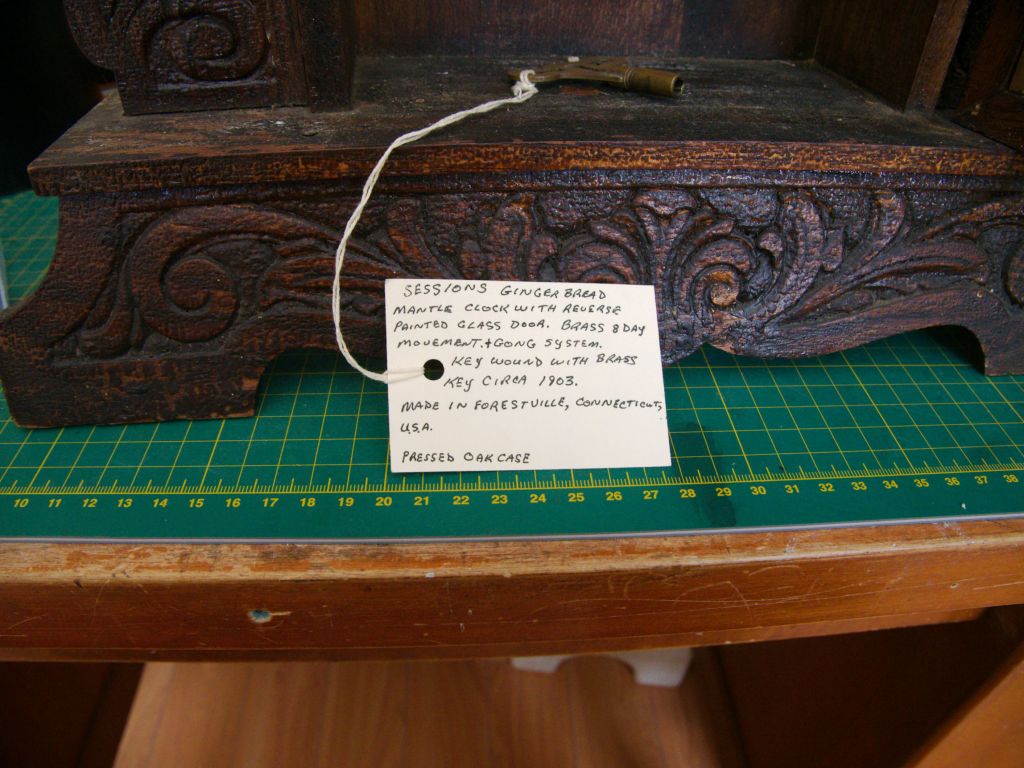
Note from a previous owner, this clock is from around 1915 or so, not 1903

Adjusting the time on the clock is a challenge because the minute hand is very stiff and takes some effort to move it. Something is amiss with the motion works, the time train itself or both.

Motion works at the centre of the movement

I initially cleaned the movement, checked for wear and determined that the little wear I observed should not be enough to affect the running of the clock.

I reassembled the movement and while on the test stand the problem reoccurred, a minute hand that was just as stiff to move as before and after a few hours, the movement simply stopped. I later discovered that the homemade click spring on the time side had unhooked and caught on the second wheel.

As received. Hmm, the pendulum rod is missing

I am not an expert on the meshing depth of gear teeth but I suspect that there is enough wear in the motion works and the time train to prevent the gear teeth from engaging smoothly with the contact point of the next gear, the lantern pinion. The combination of wear in several locations might produce the stiff centre arbour condition. Based on this theory I went ahead with bushing work.

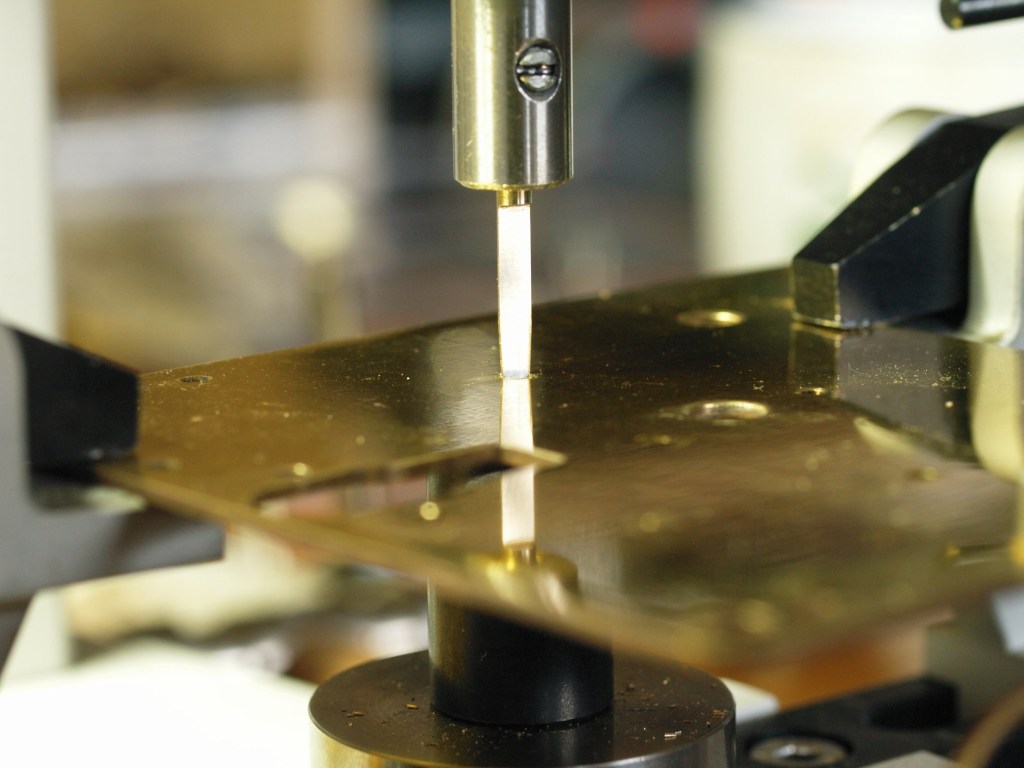
Drilling a hole with Bergeon bushing machine
Drilling a hole in the plate with Bergeon bushing machine

This time I was somewhat more discerning concerning potential wear points and yes, a more careful inspection revealed there was likely enough wear to affect the running of the clock. I began with new bushings on the escape wheel rear plate and third and fourth wheels on the time side and finally the second wheel back plate for a total of 4 bushings on the time side; nothing on the strike side. It looked fine.

Reassembly

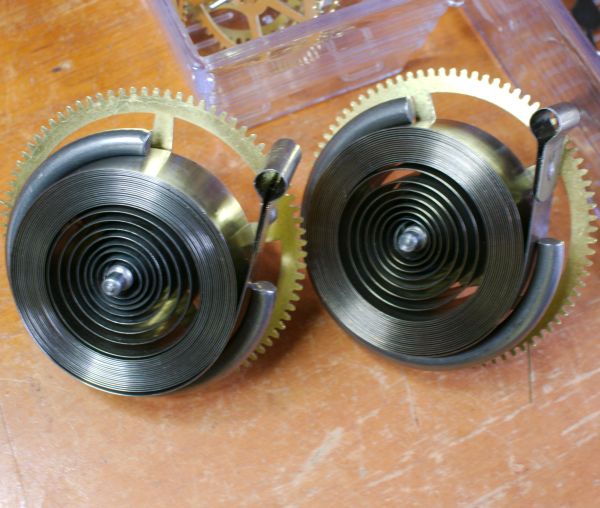
The main wheel arbours on this movement aren’t interchangeable. It is easy to confuse the two. After reassembling the movement I noticed that the plate did not go all the way down on the strike side. I compared the two arbours and the time side arbour is narrower at the top. Swapping them back to where they belonged fixed it.

Sessions mainsprings on this movement are not interchangeable

Setting up the strike side correctly on the first go-around is probably more luck than skill but this time there was no additional fiddling with the correct position of the warning wheel which is just below the fly.

I did not completely eliminate the stiff centre arbor but it is improved and the clock is running well. If I have to take it apart a third time I will check for a bent arbour in the train or the center arbour itself or a bent pivot.

Now to address a pretty sad-looking case.

Servicing a Sessions Grand Assortment time and strike movement

The Grand Assortment was sold “six in a case” to retailers who then sold them separately. The name “Assortment” seems appropriate and I am not surprised that some collectors refer to them simply as the Grand. So, was the “Assortment” a choice among a number of Grands (Grand 1, Grand 2, etc.)?

Auction Photo

Selling clocks in lots of 6 was a fairly common practice in the early part of the 20th century. An individual might order one of the clocks either directly from Sessions or working through a retailer but would normally select one from the retailer’s shelf.

This clock was bought at auction in the spring (of 2022). The plan is to fix it up and sell it to offset a recent equipment acquisition. I am not normally in the business of selling clocks but will sell the odd one locally to keep my collection manageable.

The clock case needs quite a bit of work which I will address in a future article.

The movement looks good but it is very grimy, no surprise there. We’ll get to that later in this post.

The Sessions dial

The dial, however, may not be salvageable. One option is a new paper dial, and another is a replacement with a suitable and period-correct alternative. I have the same size Arabic dial from an Ingraham gingerbread that I might use. Manufacturers interchanged Roman Numerals and Arabic dials on some models and I have seen at least one Grand Assortment on the internet with an Arabic dial so, an Arabic dial may be a good look.

These Sessions models were around for a number of years up to 1915 or so and like everything else the gingerbread clock fell out of style. I imagine this one sat on a shelf as a decoration for a good number of years after that.

The movement

Apart from having an even coating of dirt and grime all over the movement, there is surprisingly little wear.

A very dirty movement

Most Sessions movements I have come across have had a hard life and usually require a fair bit of intervention in terms of repairs including numerous new bushings. This movement may not need any as far as I can determine during my initial assessment. As a matter of fact, this is probably the least worn Sessions movement I have ever worked on. It is not without issues, however.

Judging from pivot scratch marks, wrench marks on the plate around the pillar nuts, mangled helper wires, and a replacement spring for the click on the time side it certainly has been worked on in the past, likely cleaned more than once.

A coating of dirt all over the movement

There was a film of rust on the mainsprings, not enough to write them off and they still have plenty of power left in them.

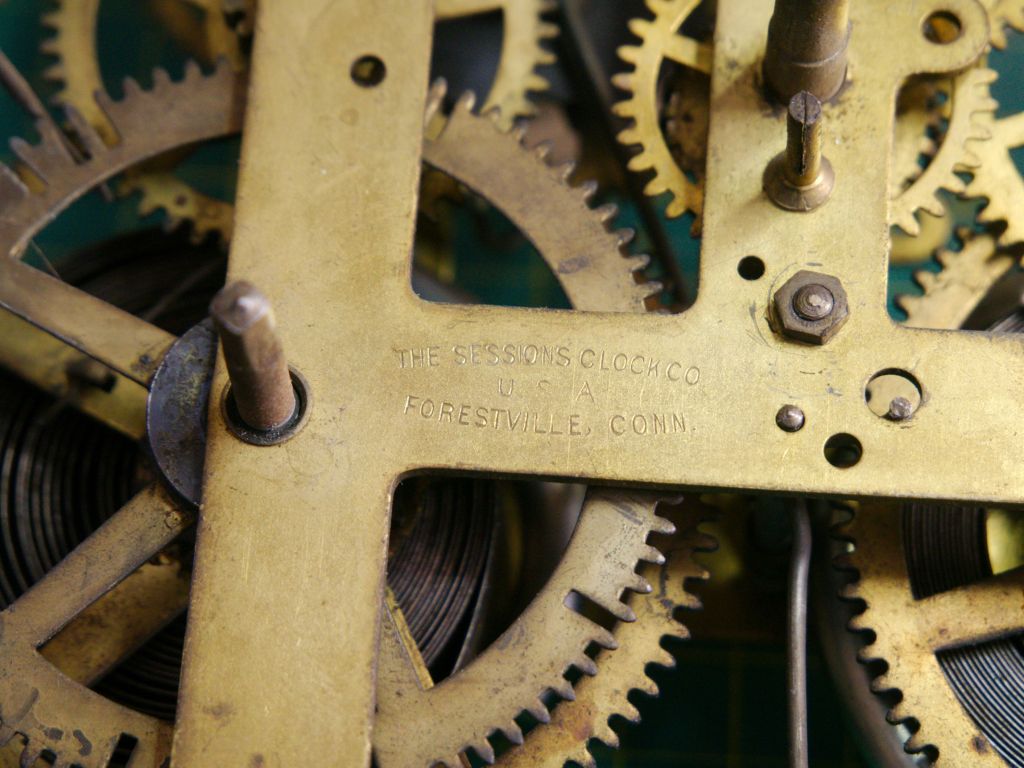
Trademark

Clicks are a documented weakness in Sessions’ movements. Both sides were in good condition although I had to re-attach the click spring on the time side. A past repairer had attempted a fix and replaced the original wire with a steel replacement wire that looks homemade, but it works. It just needed tightening.

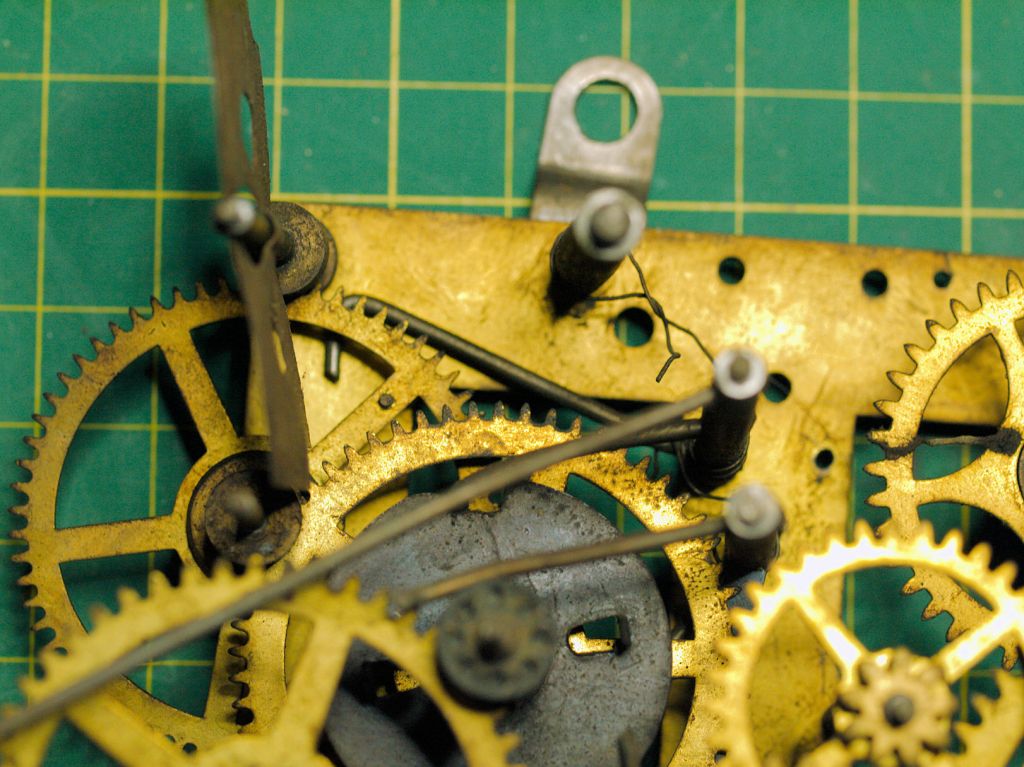
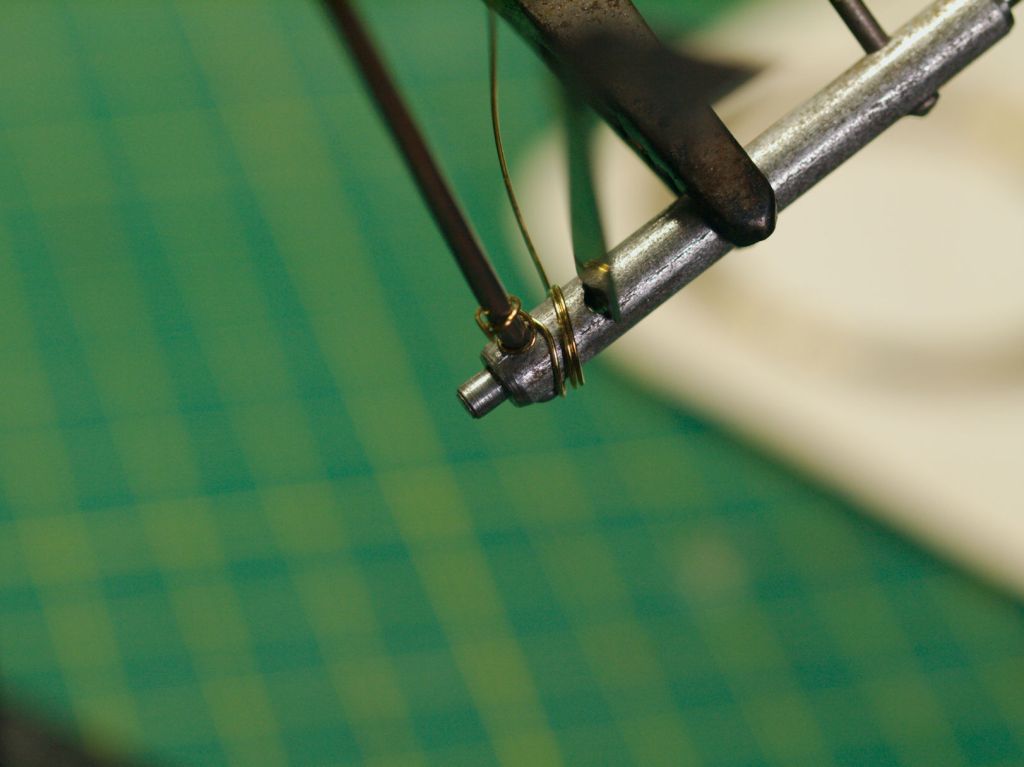
The helper springs were evidently broken at some point and shortened. One was wrapped around the top pillar post and the lifting lever was wrapped around the count lever. Both should be attached to a pillar. I was able to reuse one but the other had to be replaced.

Helper springs top center

Most, but not all, American time and strike clocks have helper springs to maintain tension on lifting and locking levers. Springs are occasionally removed from a movement either because they are broken and/or repairers do not understand their function.

New helper spring

The mainsprings are in good condition. They were cleaned and oiled.

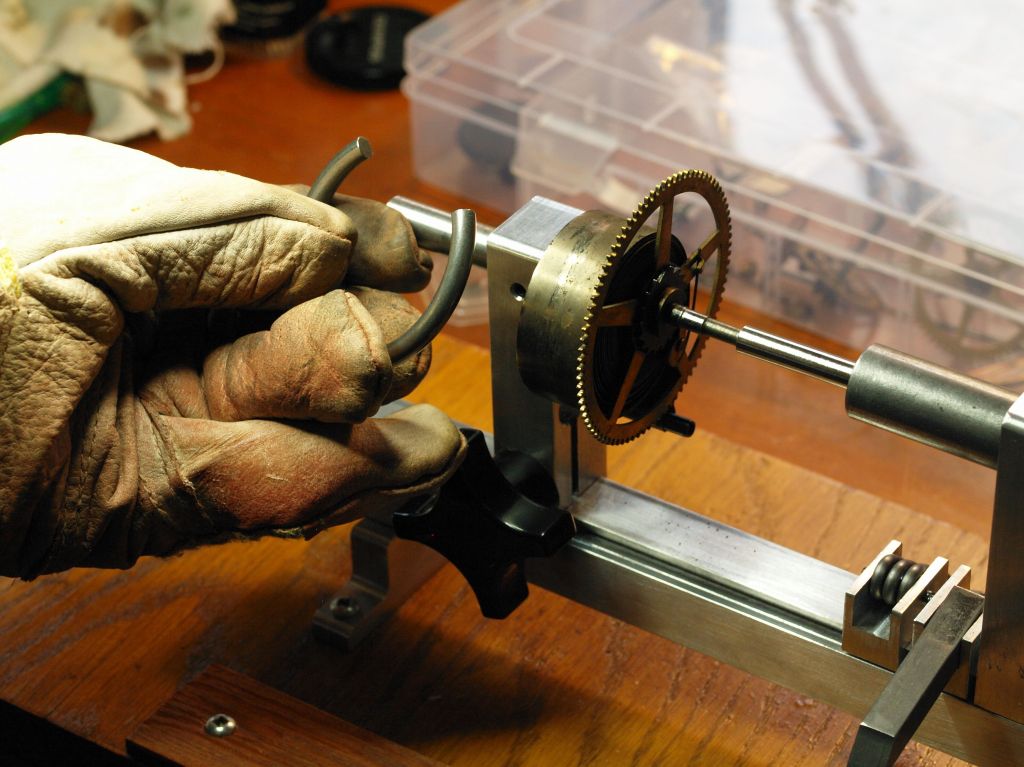
Mainspring retention clip to restrain the power of the springs

No bushing work is required for this movement which is a rarity for old American clocks I have come across. All pivots were polished, pivot holes pegged out and now for reassembly.

This is a fairly easy movement to reassemble but the strike side count and drop levers must be in the correct position in order for the strike side to function correctly. That means the drop lever is in the slot of the cam and the count lever is in the deep slot of the count wheel. The lock pin on the wheel just below the fan must also be next to the locking lever.

Sometimes I get it right the first time but often I must separate the plates on the top corner and re-adjust the locking wheel.

Everything in place but the escape wheel

Once re-assembled it is placed on the test stand for several cycles.

On the test stand

The next step is addressing the clock case finish.

The clock case needs quite a bit of work and may require stripping, not something I do as a matter of routine but in its present condition, it will never attract a buyer.

Sessions Grand Assortment #3 gingerbread clock

This is the only true gingerbread clock I have in my collection, temporarily. By this summer (2019) it will be returned to a family relation.

Dial and movement has been removed; notice the 4-colour tablet design

Can you get this thing working, my sister said? Sure, I said. Grand Assortment is an odd name for a Sessions clock, I said. The name certainly lacks imagination, but this particular clock is one of three in a series and sold for $4.00 in 1915 and could be configured with alarm and/or cathedral bell. This particular clock is Grand #3.

Continue reading “Sessions Grand Assortment #3 gingerbread clock”

Website Powered by WordPress.com.

Up ↑