Daylight Saving Time and Mechanical Clocks — A Love-Hate Relationship

Twice each year, most people casually change the time on a microwave or stove clock and carry on with life. Those of us who collect mechanical clocks, however, prepare for what can only be described as a seasonal endurance event.

Yes — Daylight Saving Time has arrived again.

For the general public, DST is a minor inconvenience. For a clock enthusiast, it is an expedition. Every mantel clock, wall clock, regulator, and stubborn little alarm clock must be persuaded — politely — to agree with the new official time. Some cooperate willingly. Others protest by striking eleven when it is clearly ten, or by refusing to strike at all until properly consulted.

The original idea behind Daylight Saving Time was admirable enough: shift the clocks to make better use of daylight and enjoy longer evenings outdoors. In practice, it often means losing an hour of sleep in March and spending the next week wondering why everything feels slightly out of rhythm.

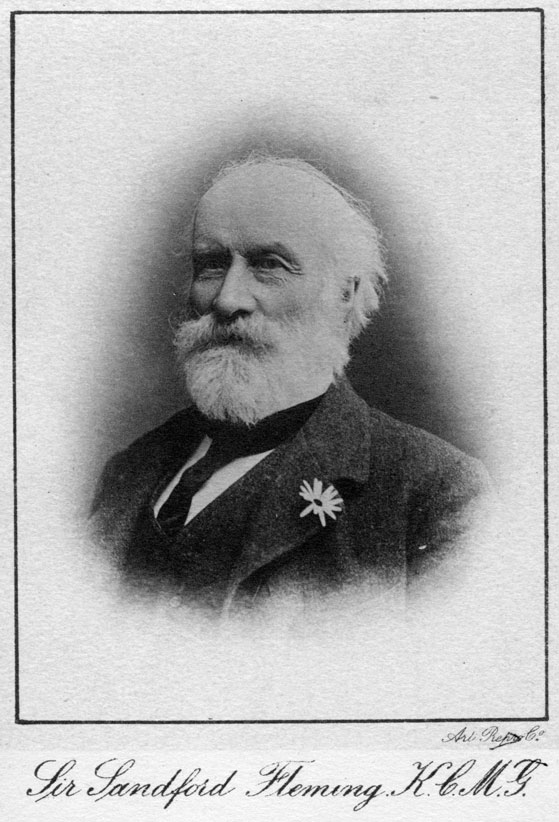
Interestingly, a Canadian helped set this whole process in motion. Sir Sandford Fleming, engineer and champion of standardized time zones, gave the world a sensible system for telling time. One doubts he imagined future generations standing on step stools twice a year, carefully advancing minute hands while negotiating with century-old movements.

Today, about 70 countries still observe DST, while others — including Japan, India, and China — have wisely decided that time works perfectly well without seasonal tinkering. Here in Canada, in most parts, we continue the tradition, guided by the familiar phrase: “Spring ahead, fall behind.”

For mechanical clocks, the rule is simple: move the minute hand forward one hour and allow the clock to do the rest. Let the chimes play out naturally. Patience is essential. Mechanical clocks have survived world wars, house moves, and generations of owners — they will not be rushed simply because politicians have decided it is suddenly an hour later.
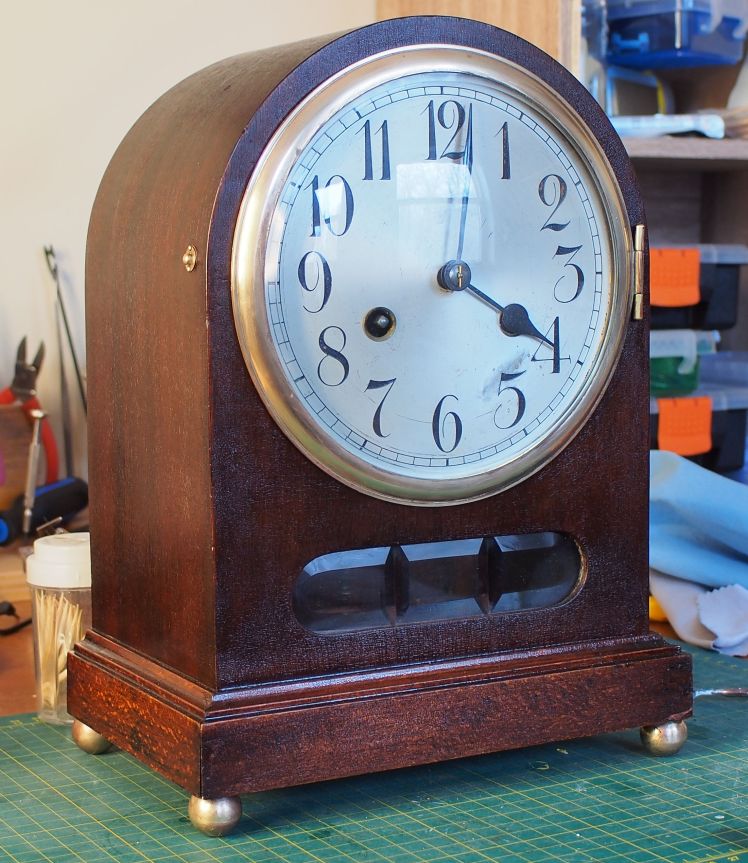
In my home, adjusting the clocks takes long enough that by the time I finish, at least one seems ready to be wound again. And without fail, a week later I will discover a lone clock quietly living in the previous time zone, proving once again that clocks, like people, resist change.

There is growing talk of abandoning Daylight Saving Time altogether. Many argue it is unnecessary in our modern world of automatic devices and artificial lighting. It is about as useful as a chocolate teapot! I suspect few would celebrate its disappearance more enthusiastically than those of us surrounded by ticking reminders of the past.

The push to abolish seasonal clock changes in Canada is slowly gaining momentum. Quebec, Nova Scotia, and New Brunswick have all considered the issue, although none have yet passed binding legislation.

Recently (March 1, 2026), the province of British Columbia announced that it would change its clocks for the final time on March 8 and remain on daylight saving time year-round.

Ontario has already passed legislation making daylight saving time permanent, but the change will only take effect if neighbouring Quebec adopts the same approach.

At present, Saskatchewan (one of Canada’s western provinces) and Yukon (one of the northern territories) remain on standard time year-round and do not adjust their clocks twice a year.

Until that day arrives in Nova Scotia and those “affected” parts of the world, we will continue the ritual — key in hand, listening to the familiar chorus of strikes and chimes — adjusting not just our clocks, but ourselves, twice a year.
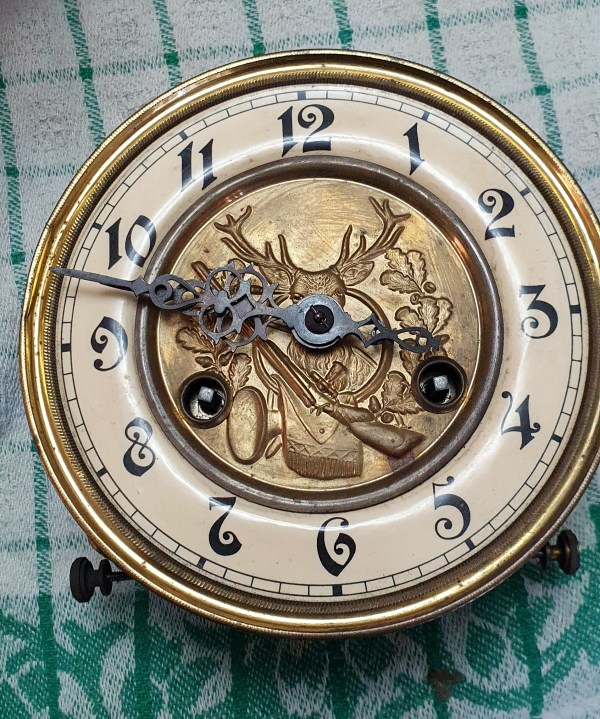
Keeping Time on My Terms: A Collector’s Stand Against ST

Every November (on the 2nd, this year), the world around me dutifully prepares for the ritual of changing our clocks. People reset their watches, adjust their microwaves, and twist the dials on their alarm clocks, as if to say, “We control time.” Meanwhile, I stand back — mainspring key in hand — and quietly refuse to participate.

It’s not rebellion for rebellion’s sake. I’ve simply grown tired of this twice-yearly charade. Standard Time feels right to me — stable, natural, and predictable. My clocks, especially the older ones, seem to agree. They’ve ticked along for over a century without needing my permission, and when I leave them alone, they reward me with consistency.

I’ve even written to my local member of parliament with a request to present a private member’s bill to put an end to this archaic practice. Crickets!

Daylight Saving Time was born out of good intentions — saving energy, maximizing daylight, and encouraging productivity. But in practice, it’s a nuisance for clock collectors and repairers. Resetting thirty or more mechanical clocks is no small task. There’s always one that resists the change, another that insists on striking at the wrong hour, and a few that make their displeasure known by stopping altogether.

Beyond the inconvenience, though, I find something philosophically off about altering time by decree. The sun hasn’t moved. The Earth hasn’t sped up or slowed down. Yet twice a year, we pretend it has, and we call it progress.

So, my clocks and I will continue to live on “Ronnie Standard Time.” Visitors might find the house confusing — one room chiming on the hour while another is sixty minutes behind — but that’s all right. In this home, time isn’t dictated by legislation. It’s kept the old-fashioned way: by gears, gravity, and the steady heartbeat of a pendulum.

When November 2nd arrives and everyone else is falling back, I’ll be staying put — right where time belongs.

Until November 3rd, that is!

Daylight Saving Time: Why It’s Time To End This Unpopular Inconvenience

One of life’s unavoidable inconveniences is the act of adjusting our clocks either forward or backward in November and March. It is called Daylight Savings Time or DST. The goal of DST is to make better use of daylight by prolonging the amount of time we can spend outside during daylight hours.

The argument for the abolishment of Daylight Saving Time (DST) is gathering steam. It is cumbersome, and unnecessary in today’s world. Presently, out of 195 countries globally, approximately 70 utilize DST in some capacity, with notable exceptions being Japan, India, and China among major industrialized nations.

Around 1890, Sir Sandford Fleming, a Canadian engineer credited with significant railway projects and devising an internationally accepted standard time scheme, was instrumental in the early adoption of DST.

Currently, residents in these 70 countries, including Canada, must adhere to DST conventions, adjusting their clocks forward in spring and backward in autumn. In Canada, the saying “Spring ahead, Fall behind” helps in remembering the biannual time adjustments, occurring on the second Sunday in March and the first Sunday in November.

For mechanical clocks with analog dials, simply advance the minute hand by one hour on March 9th. If the clock has a chime or a mechanism with a countwheel strike, allow it to operate naturally at the quarter-hour or the half-hour.

Despite its widespread usage, there’s a growing movement in Canada to abandon DST, citing its impracticality and lack of necessity.

Why Nova Scotia Should Eliminate Daylight Saving Time

When local daylight time approaches Sunday, November 3, 2024, at 2:00 AM, clocks will be set back one hour to 1:00 AM local standard time instead. As a result, on November 3, 2024, sunrise and sunset will occur approximately one hour earlier than the previous day. This change means there will be more daylight in the morning and less in the evening, which may be viewed positively or negatively depending on your perspective on whether to maintain daylight saving time or eliminate it altogether.

While DST was initially implemented to save energy by extending daylight hours, studies have shown that the actual energy savings are minimal, and in some cases, it may even lead to increased energy consumption due to factors like air conditioning usage. Businesses may face disruptions during the transitions due to scheduling conflicts and decreased productivity, as employees adjust to the time change.

Some argue that the original environmental benefits of DST are no longer relevant due to changes in modern energy consumption patterns and lifestyles.

Spring Forward | Fall Back

“Spring Forward – Fall Back” is a phrase most often heard in the USA and Canada. In North America the word “fall” is used to denote the season, while other English-speaking countries call it autumn. Set your clocks forward 1 hour in the spring at the start of DST (Daylight Saving Time), and 1 hour back in the fall when DST ends.

Records show that the phrase “spring forward, fall back” has been in use at least as far back as the early 20th century. It is the practice of advancing clocks during summer months so that evening daylight lasts longer, while sacrificing normal sunrise times.

Not all regions observe DST, which can create confusion and complications for scheduling across time zones, particularly for businesses and travel.

Let’s eliminate DST!

I suggest everyone contact their local government representative to advocate for this change.

I have recently written my government representative to address this matter.

Dear Sir,

I hope this letter finds you well. As a constituent in your riding, I would like to raise a matter of public interest that I believe would benefit many people across our province: the elimination of Daylight Saving Time (DST) in Nova Scotia.

While originally introduced with the intention of conserving energy, there is growing evidence that Daylight Saving Time no longer serves this purpose effectively. Studies have shown that the energy savings are minimal, if not non-existent, in modern times. Moreover, the biannual time changes disrupt sleep patterns, negatively affect mental and physical health, and contribute to increased workplace and road accidents in the days immediately following the switch.

Many regions across the world have already moved to eliminate DST, recognizing the advantages of maintaining a consistent time schedule year-round. In Canada, several provinces, including British Columbia and Ontario, have considered or are already making steps towards abandoning the practice. The province of Quebec is also probing the time change drop.

Nova Scotians, like others, would benefit from this shift. Adopting a consistent time schedule year-round would improve productivity, support public health, and reduce confusion for businesses and individuals. Additionally, many people today are calling for more stability in their routines, which this change would support.

As my MLA, I encourage you to advocate for the discontinuation of Daylight Saving Time in Nova Scotia. I believe this move would be widely appreciated by many residents, and I am hopeful that it can become a part of the legislative agenda in the near future.

Thank you for your time and attention to this matter. I look forward to hearing your thoughts on this issue and any steps that may be taken in this direction.

Sincerely,
Ron Joiner

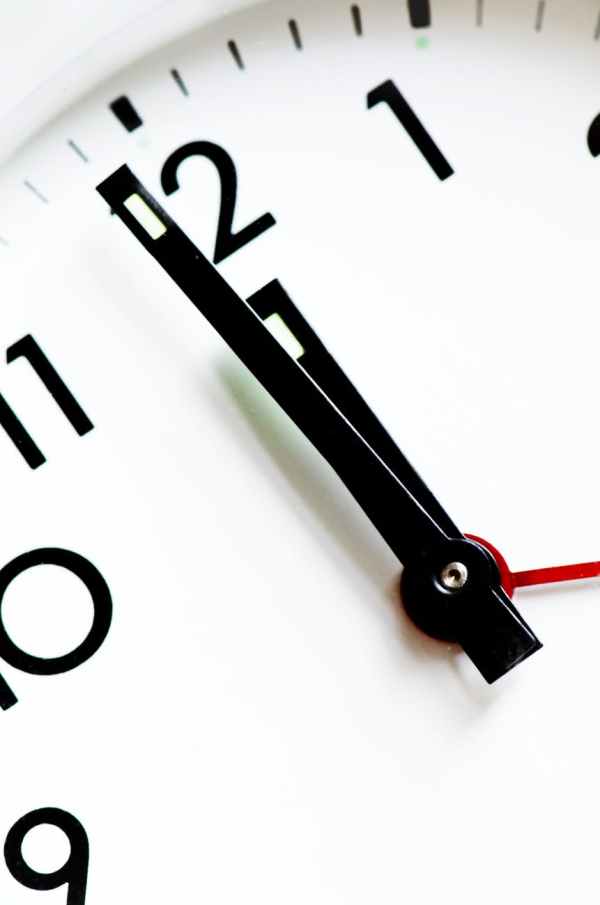
Set your clocks ahead this weekend

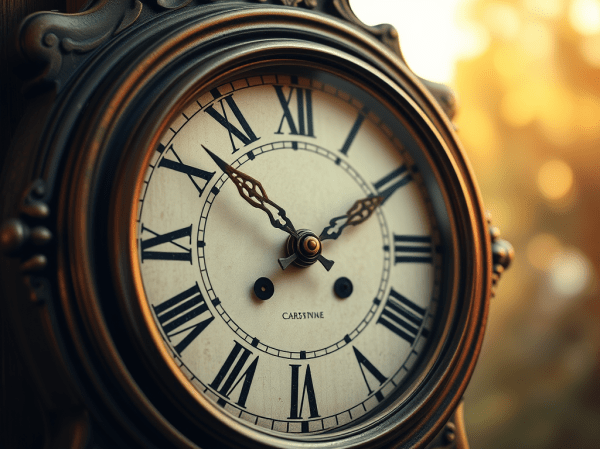
Photo by Stas Knop on Pexels.com

One of life’s unavoidable inconveniences is the act of adjusting our clocks either forward or backward in November and March. It is called Daylight Savings Time or DST. The goal of DST is to make better use of daylight by prolonging the amount of time we can spend outside during daylight hours.

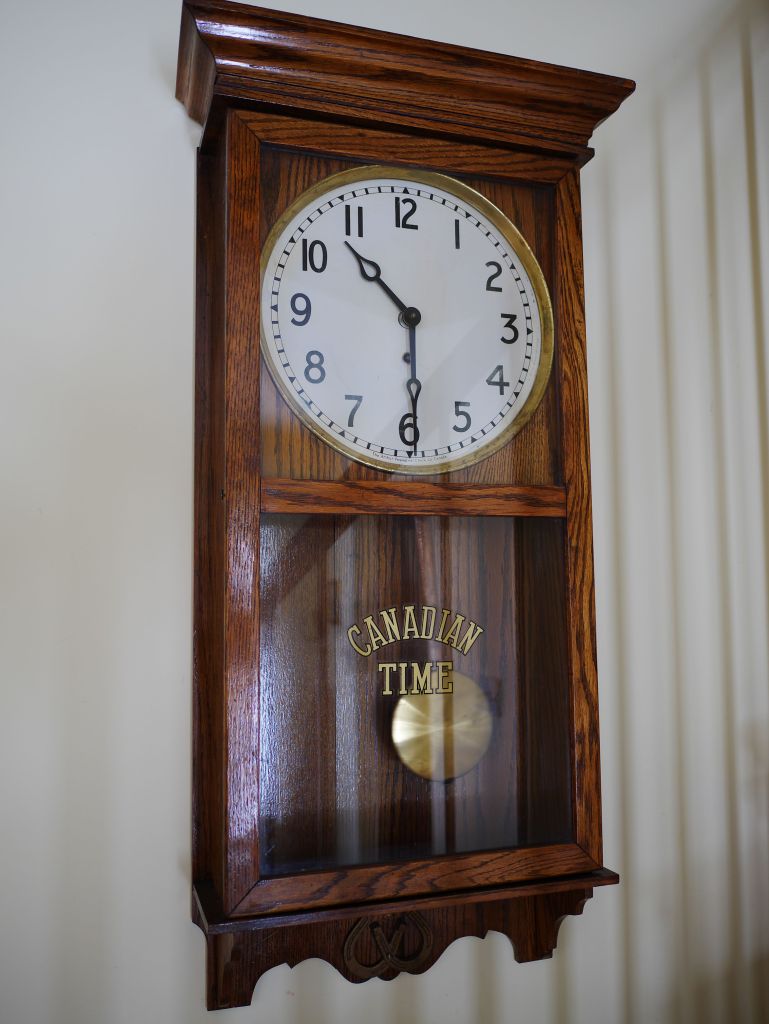
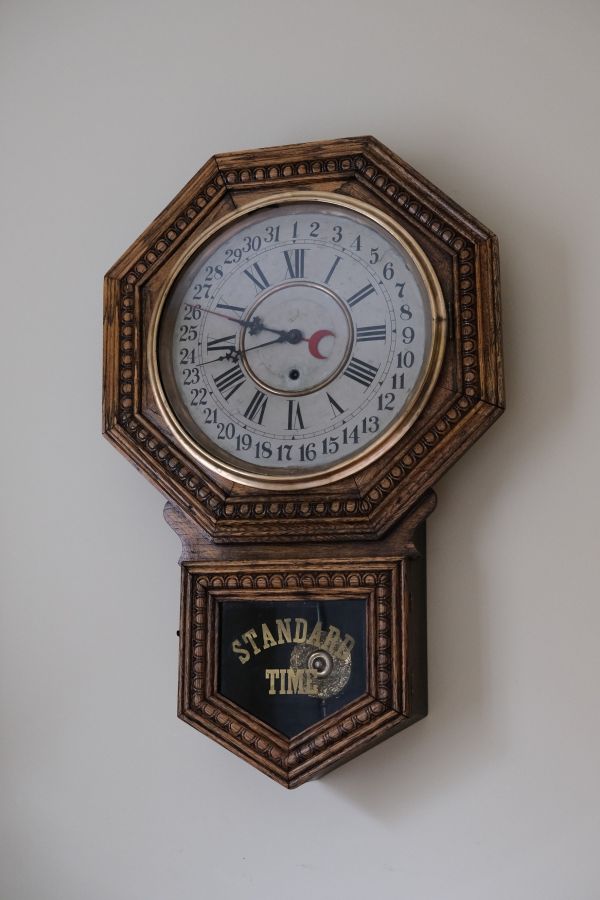
Arthur Pequegnat Brandon schoolhouse clock

The argument for the abolishment of Daylight Saving Time (DST) is gathering steam. It is cumbersome, and unnecessary in today’s world. Presently, out of 195 countries globally, approximately 70 utilize DST in some capacity, with notable exceptions being Japan, India, and China among major industrialized nations.

Around 1890, Sir Sandford Fleming, a Canadian engineer credited with significant railway projects and devising an internationally accepted standard time scheme, was instrumental in the early adoption of DST.

Currently, residents in these 70 countries, including Canada, must adhere to DST conventions, adjusting their clocks forward in spring and backward in autumn. In Canada, the saying “Spring ahead, Fall behind” helps in remembering the biannual time adjustments, occurring on the second Sunday in March and the first Sunday in November.

Those possessing mechanical clocks with analog dials, simply advance the minute hand by one hour. If the clock has a chime or strike mechanism, allow it to operate naturally at the quarter-hour or the half-hour.

Despite its widespread usage, there’s a growing movement in Canada to abandon DST, citing its impracticality and lack of necessity.

Three arguments for eliminating Daylight Savings Time

Here are three commonly cited reasons for eliminating the cursed Daylight Savings Time convention:

One of the main arguments against daylight saving time is its impact on human health. The abrupt shift in the clock can disrupt people’s sleep patterns, leading to sleep deprivation and increased stress. Studies have shown a rise in heart attacks, strokes, and even car accidents in the days following the time change. By eliminating DST, people would maintain a more consistent sleep schedule, promoting better overall health and well-being.

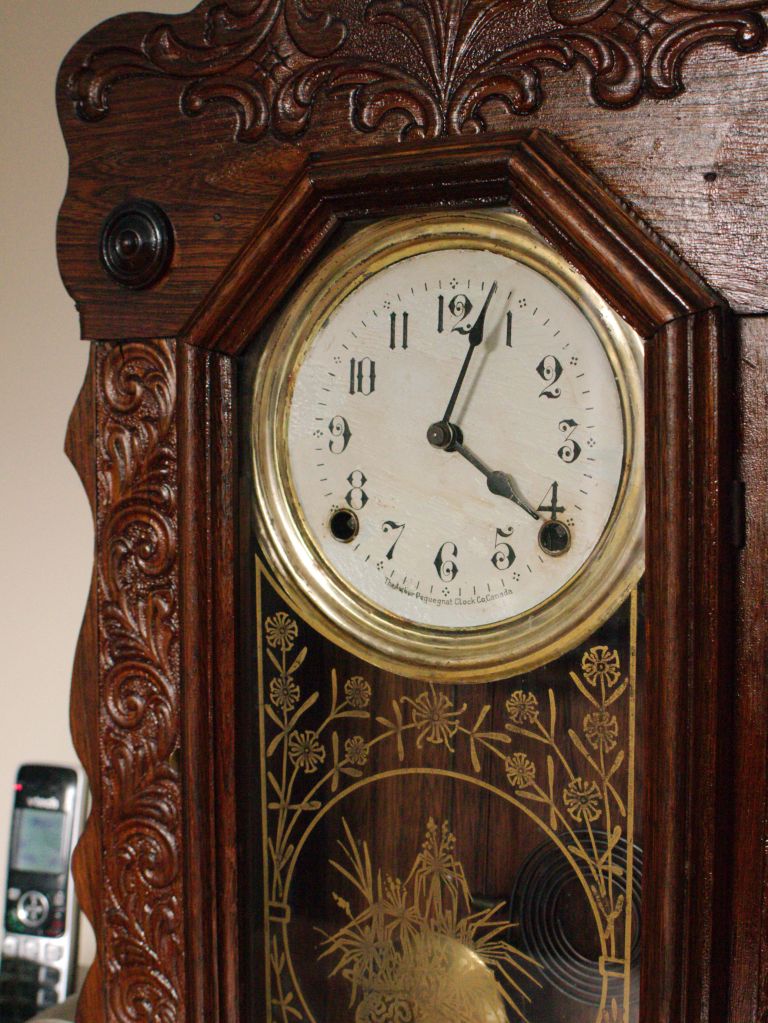
A made-in-Canada Pequegnat clock from the 1920s

Critics argue that the practice of changing clocks twice a year imposes economic costs on businesses and individuals. The process of adjusting various devices, systems, and schedules can be time-consuming and costly. Moreover, the disrupted sleep patterns of employees can lead to decreased productivity in the workplace. By eliminating DST, businesses would avoid these costs and potentially see a boost in productivity due to a more rested workforce.

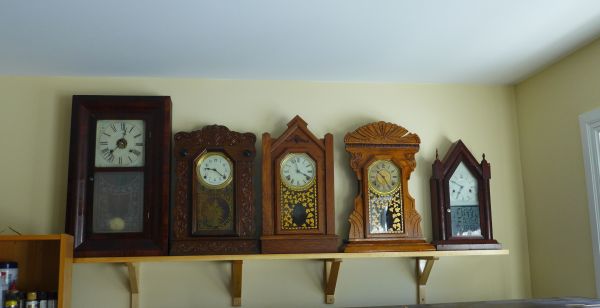
Canadain made ogee style clock

One of the original reasons for implementing daylight saving time was to conserve energy by making better use of natural daylight during the longer days of summer. However, with advancements in technology and changes in energy consumption patterns, the energy-saving argument is now considered outdated. Modern studies have shown that the energy savings from DST are marginal, if any, and in some cases, it might even lead to increased energy usage due to higher air conditioning demands on hot evenings. Therefore, proponents of eliminating DST argue that the energy conservation rationale no longer holds, making it unnecessary to continue the practice.

30-hour shelf clock from the USA

These arguments, among others, have fueled ongoing debates about the relevance and effectiveness of daylight saving time, leading to discussions and policy changes in various regions.

But not in Nova Scotia, Canada. Prepare to set your clocks backward on November 5th at 2:am.

Let’s end Daylight Savings Time

When Daylight Saving Time (DST) begins, we lose an hour. When it ends, we gain an hour. There are several reasons why some people advocate for ending daylight saving time (DST):

Disruption of sleep patterns:

Changing the clocks forward or backward by an hour can disrupt people’s sleep patterns, leading to fatigue and other health problems.

Safety concerns:

Studies have shown that there is an increase in traffic accidents and workplace injuries in the days following the time change. This is because people are more tired and less alert than usual.

Economic costs:

There are costs associated with changing clocks in devices and systems, such as transportation schedules and software. Additionally, there may be decreased productivity due to the disruption of sleep patterns.

Limited energy savings:

While DST was originally implemented as a way to save energy, studies have shown that the energy savings are minimal and may not be worth the disruption to people’s lives.

International coordination:

Not all countries observe DST, and those that do often have different start and end dates. This can cause confusion and difficulties in coordinating international travel, commerce, and communication.

Overall, ending DST could provide benefits for public health, safety, and economic efficiency.

In Canada?

Some provinces in Canada have been waiting to ditch the seasonal change but have cited a consistency with the US as a reason for the delay. The time change consistency is vital so as to align trading between the two countries. US bills have repeatedly failed to pass but once all the US states enact their own changes the federal go-ahead is the next step.

Yukon and most of Saskatchewan keep their clocks the same year-round. Yukon made the switch for the last time in March 2020, and standard time is now permanent.

DST is a relic of our past. Let’s just put it out of its misery.

Seasonal changes in DST may be a thing of the past

On March 15, 2022 British Columbia (Canada) announced that the province is ready to spring forward with permanent daylight savings time (DST) as soon as the United States signs off on national legislation.

Now approved by the senate the U.S. House of Representatives must take the time to review the bill. If it passes, the expectation is Washington, Oregon and California will move to permanent daylight time. The change would not take effect until 2023.

The argument to keep daylight time permanently is that it would increase light at the end of the day and is already observed eight months of the year.

On Tuesday, in a statement, B.C.’s Premier said British Columbians told them loud and clear in a public consultation last year they want to stop falling back and springing forward each year.

Should BC abandon DST it will not take long for the other 9 provinces and 3 territories (Northwest Territories, Nunavut, and Yukon) to fall in line.

This is great news. I have advocated scrapping this silly DST thing for years. First used in 1908, in Thunder Bay, Ontario it spread throughout the world to 70 countries and affects 1 billion people every year, so, time’s up!

And to all the disappointed farmers out there who supposedly support DST and will miss it, it’s time to choose another field!!

Daylight Savings Time ends – time to set your clocks behind one hour

Let’s get rid of DST. It is anachronistic, a dumb nuisance and there is no place for it in our modern world. Today, of the 195 countries in the world, approximately 70 countries utilize Daylight Saving Time in at least a portion of the country. Japan, India, and China are the only major industrialized countries that do not observe some form of daylight saving.

Circa 1890: Sir Sandford Fleming ( 1827 – 1915 ), Canadian engineer responsible for the Inter-Colonial Railway and the Canadian Pacific Railway, as well as devising an internationally accepted scheme for standard time. (Photo by Hulton Archive/Getty Images)

For the present, we, in those 70 countries, have to live with it.

So, set your clocks back one hour if you live in an area where the convention is still followed.

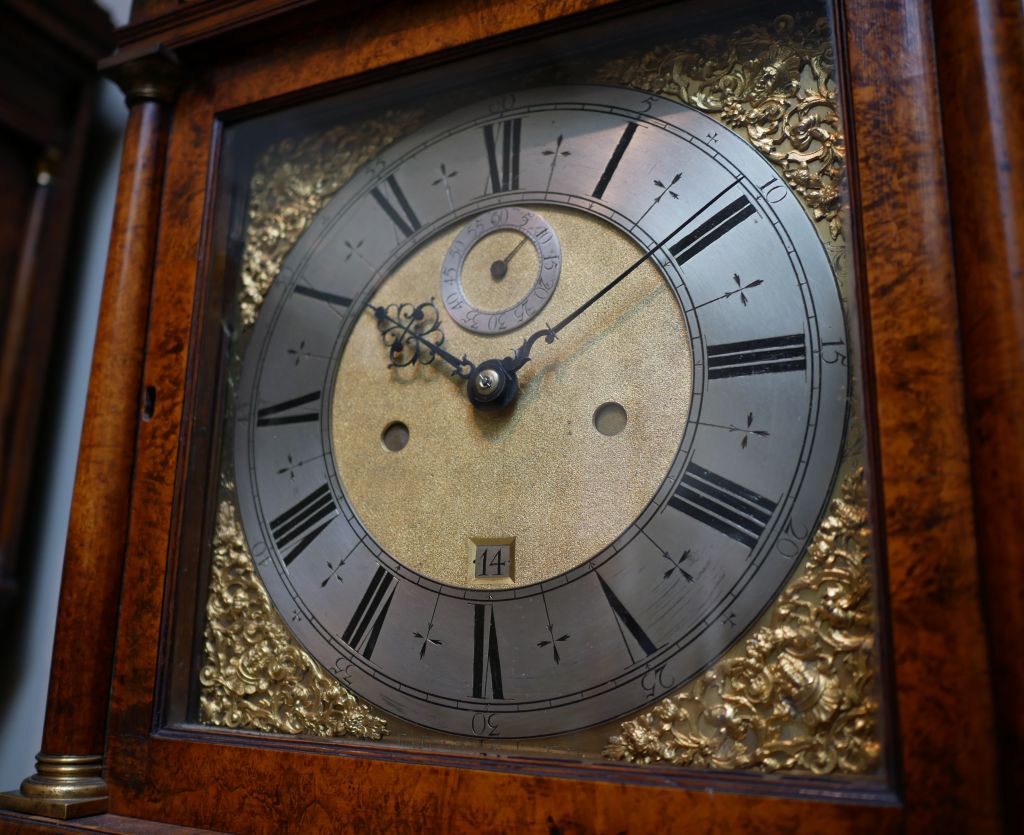
Top showing face and crown detail
Set your clocks

Typically, regions that use daylight saving time adjust clocks forward one hour close to the start of spring and adjust them backward in the autumn to standard time. In Canada, we have a little expression, “Spring ahead, Fall behind” to make it easy to remember what to do twice a year. In Canada, it is the second Sunday in March and the first Sunday in November.

There has been a push to scrap the time-switch in Canada. It is stupid, needless, and senseless. Are you listening Nova Scotia government?

Daylight savings Time – let’s end this nonsense

Daylight savings Time; let’s follow the province of British Columbia’s (BC) lead and get rid of DST.

In the meantime set your clocks back one hour if still you live in an area where the convention is still followed.

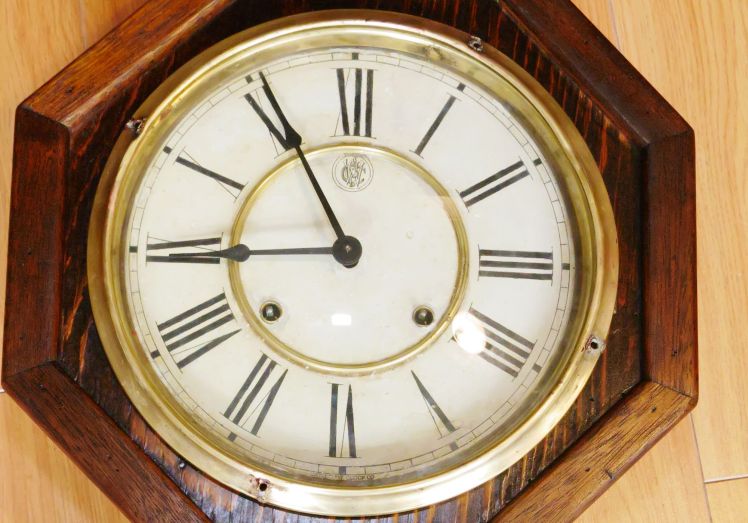
Waterbury drop octagon dial

Typically, regions that use daylight saving time adjust clocks forward one hour close to the start of spring and adjust them backward in the autumn to standard time. In Canada we have a little expression, “Spring ahead, Fall behind” to make it easy to remember what to do twice a year. In Canada, it is the second Sunday in March and the first Sunday in November.

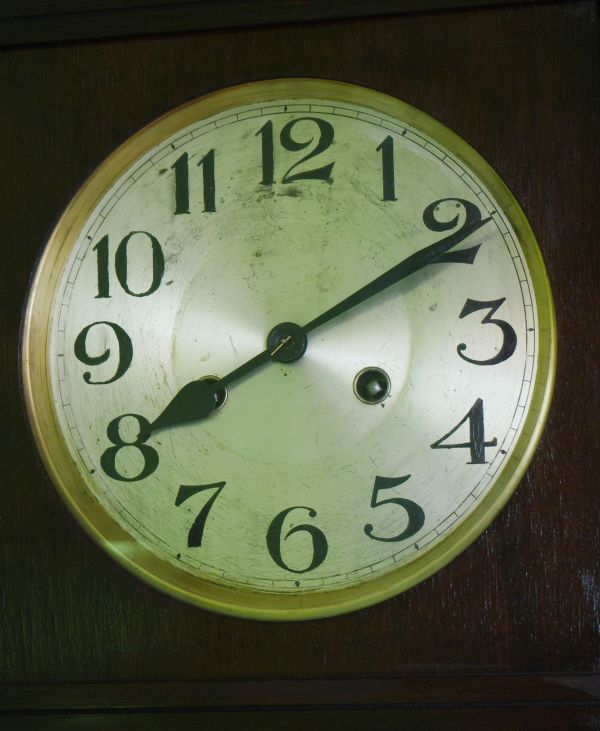
Vienna Regulator dial

As mentioned there has been a push to scrap the time-switch in Canada. British Columbia (western-most province of Canada) petitioned to end daylight saving time in the province back in 2015. Tens of thousands supported the move to end daylight-savings time.

Continue reading “Daylight savings Time – let’s end this nonsense”

Website Powered by WordPress.com.

Up ↑