
I have been collecting clocks for over twenty years and for the past 11 years I have been building my collection of vintage and antique clocks, repairing them, and restoring them.
I often reflect back to that first “real” antique clock that my wife and I purchased at an antique store in Blockhouse, Nova Scotia in the fall of 2000. Blockhouse is about 2 hours from our home and during our Saturday excursion in the area, we stopped at various craft and antique stores to see what we could find.
The store is long gone but I remember the day we browsed through the store, looked at several antique clocks, and decided upon a Seth Thomas mantel clock.

At the time we thought we were happy with the price we paid though as my knowledge of antique clocks grew I discovered that we paid far more than what it was worth. Still, no regrets.
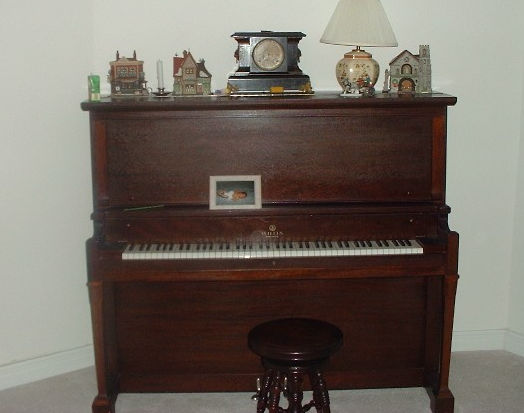
It sat on an old Willis upright piano for a number of years and since then it has moved to our dining room where it is on prominent display.
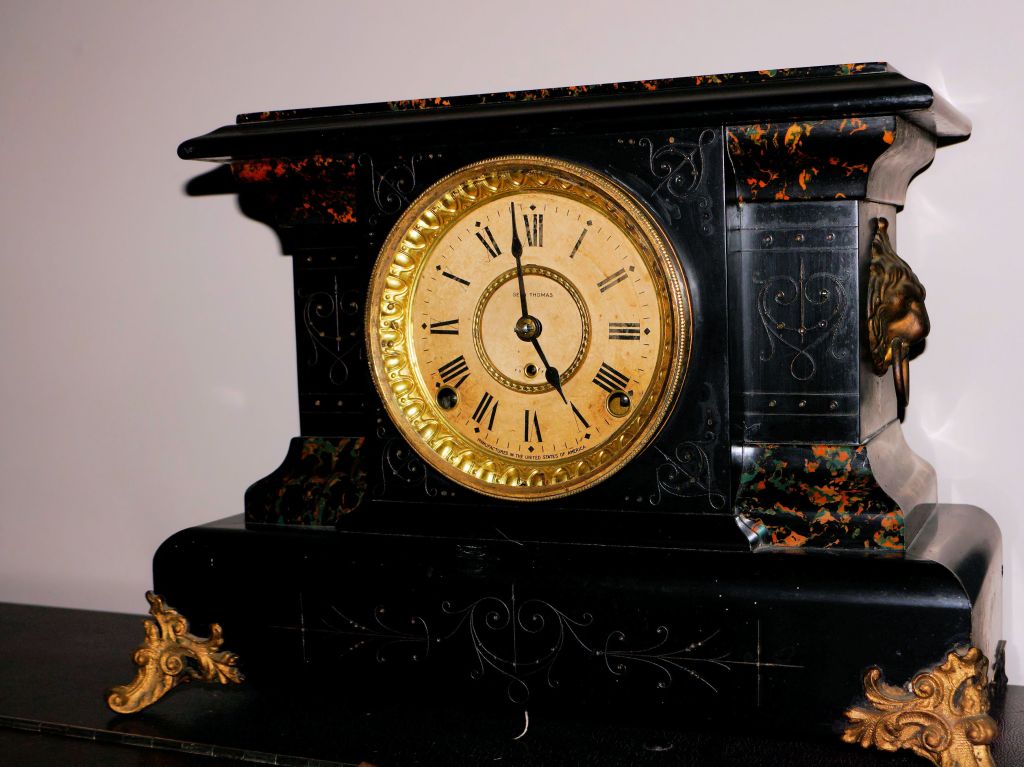
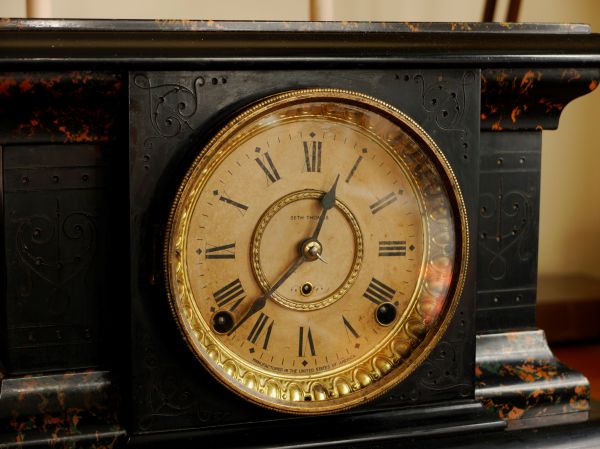
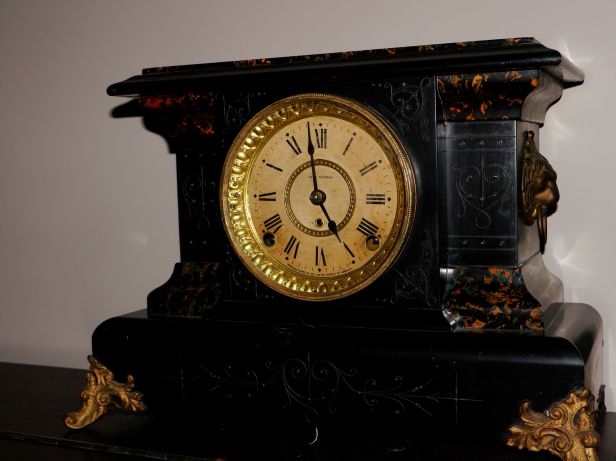
The clock is an 8-day Seth Thomas time and strike. It is in an ebony case with adamantine features. These clocks are known to collectors as “Black Mantel Clocks”, and were popular from 1880 to 1931. The date on this clock is 1907.
Adamantine veneer was developed by the Celluloid Manufacturing Company of New York City and was covered by U.S. Patent dated September 7, 1880. Seth Thomas Clock Company purchased the right to use the Adamantine veneer in 1881. At that time Seth Thomas stamped the year of manufacture on the bottom of each case.

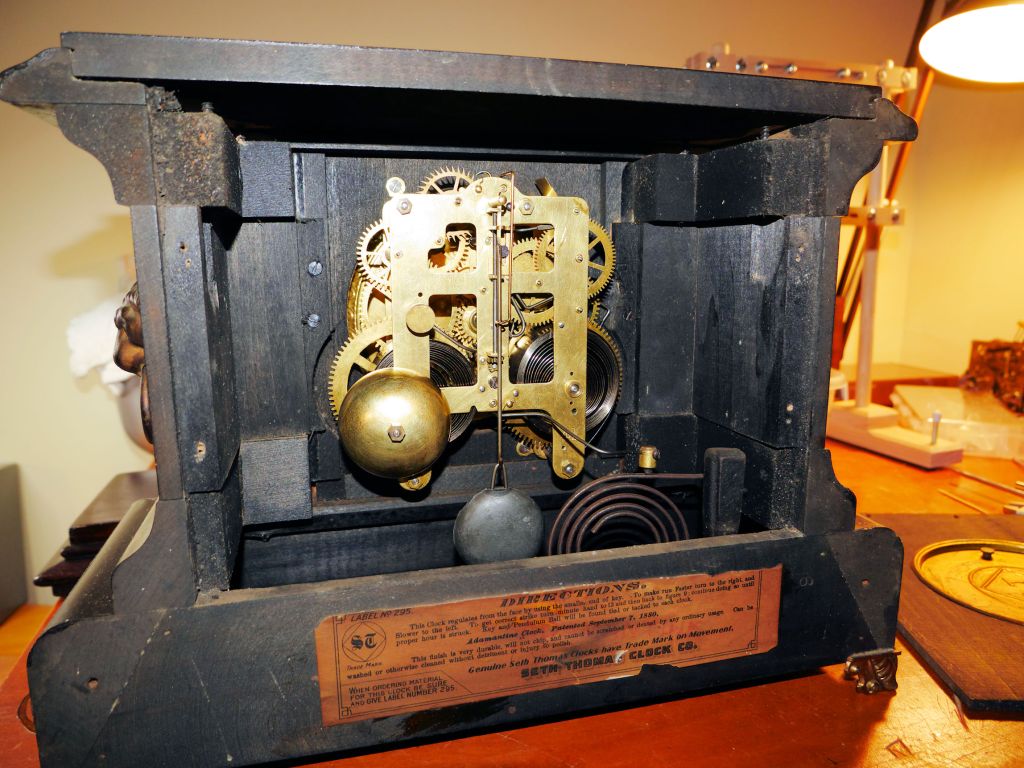
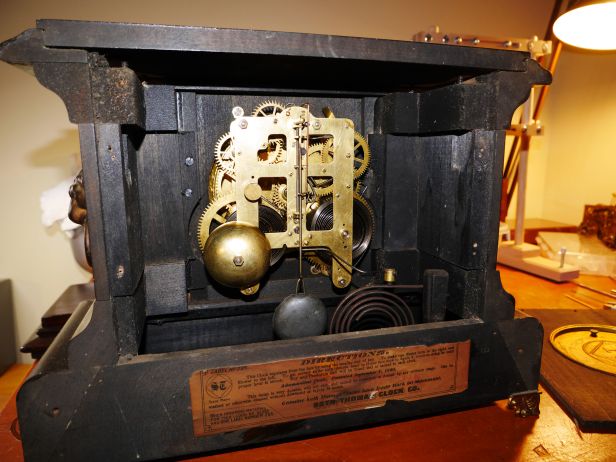
The movement had to be cleaned but it was in surprisingly good condition with one issue, a stripped regulating gear. Because the gear is stripped the clock cannot be regulated by inserting the small end of a 2-ended key into the front dial. However, it has an adjustable pendulum and I will stick with that until I find a donor movement.

We ran it for a number of years until 2016 when I took the clock apart, cleaned it, and installed 4 new bushings.
It is not a clock that I keep running continuously but every month or so I wind it up and run it since antique clocks need to be “exercised” occasionally.

Given its sentimental value, it will stay in my collection.
 Antique and Vintage Mechanical Clocks
You must be logged in to post a comment.